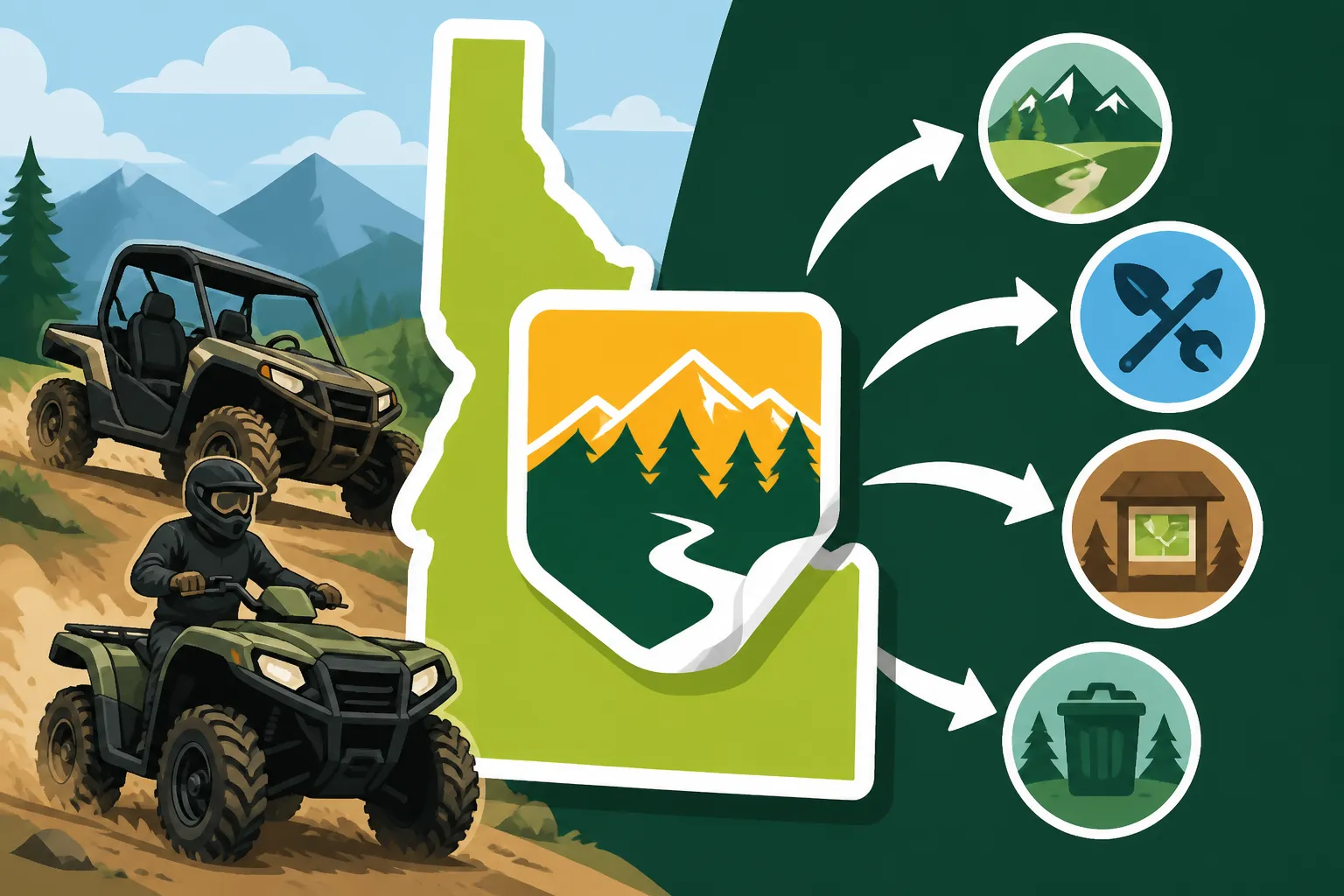
Where Idaho OHV Sticker Money Goes
It’s a common frustration to shell out money for a sticker or a fee and wonder, "Where does all this actually go?" When you buy that Idaho OHV sticker, you might just see it as another required expense. But that little sticker is actually a direct investment into the very trails and riding areas you love, and this guide will peel back the layers to show you precisely how your sticker money helps maintain, improve, and even expand Idaho’s incredible off-highway vehicle opportunities.
The Idaho Trail Fund – Fueling Idaho's OHV System
Many riders might not realize that when they purchase their annual Idaho OHV sticker, they're directly contributing to a vital resource: the Idaho Trail Fund. This fund isn't just a generic pot of money; it's specifically earmarked to enhance and sustain the state's vast network of trails and riding opportunities for off-highway vehicles. It's the lifeblood that keeps the dust flying and the engines purring on well-maintained paths across the Gem State. Without this dedicated funding, the quality and accessibility of Idaho's OHV trails would drastically decline, leaving riders with fewer places to explore and less enjoyable experiences.
What is the Idaho Trail Fund?
At its core, the Idaho Trail Fund is a dedicated account managed by Idaho Parks and Recreation (IDPR), specifically for the benefit of motorized recreational trails and associated facilities. Think of it as a savings account for all things OHV in Idaho. Its primary purpose is to receive and disburse funds collected from OHV sticker sales, restricted vehicle plate fees, and other related sources. This centralized management ensures that the money generated by riders is reinvested directly back into the OHV community, rather than being diverted to other state programs. It’s a mechanism designed to protect and promote the riding lifestyle that so many Idahoans and visitors cherish.
This fund supports a wide range of activities, from the smallest trail repairs to large-scale infrastructure projects. It's about ensuring that when you head out, whether it's on a quad, a side-by-side, or a dirt bike, the trails are safe, accessible, and enjoyable. The decisions on how to allocate these funds are often made with input from various stakeholders, including local OHV clubs, land management agencies, and IDPR staff, aiming for the most impactful use of resources. This collaborative approach helps to address the most pressing needs and prioritize projects that benefit the largest number of riders.
How Sticker Fees Directly Contribute
Every dollar collected from the sale of an Idaho OHV sticker funnels directly into the Idaho Trail Fund. This isn't a trickle; it's a consistent flow of revenue that ensures the fund remains solvent and capable of supporting ongoing projects. While the exact cost of an OHV sticker can vary slightly, the significant portion of that fee goes straight to work for the trails. This direct pipeline means that the more stickers that are sold, the more resources are available to improve and expand the OHV system. You can get more details on [Idaho OHV Sticker Price This Year] to understand the current investment.
It’s important to understand this direct link because it highlights the collective power of the OHV community. When you buy your sticker, you're not just complying with the law; you're actively participating in the preservation and enhancement of your sport. This is why organizations like IDPR emphasize the importance of compliance – every sticker counts towards a better riding future. Even when you renew your Idaho OHV sticker online, that digital transaction is feeding directly into this critical fund, funding projects that make a real difference on the ground.
Beyond the Trails – Broader Benefits
While "trail fund" might conjure images solely of dirt paths, the benefits of your sticker money extend far beyond just the riding surface itself. The Idaho Trail Fund also helps support the broader ecosystem of OHV recreation. This includes everything from the development of staging areas and trailheads, complete with amenities like restrooms and adequate parking for trailers, to the creation of clear and informative signage that helps riders navigate and understand local regulations. These often-overlooked components are crucial for a complete and enjoyable riding experience.
Furthermore, a portion of these funds supports educational initiatives aimed at promoting safe and responsible riding practices. This means funding for safety courses, public awareness campaigns about staying on designated trails, and efforts to minimize the environmental impact of OHV use. It's about fostering a culture of respect for the land and for other users, ensuring that these resources remain pristine for generations to come. Even things like mapping projects and the dissemination of useful information through websites or pamphlets are indirectly supported, enhancing the overall OHV experience for everyone.
How Idaho Parks and Recreation Manages the Funds
Managing a fund of this magnitude, with statewide impact, is a significant undertaking. Idaho Parks and Recreation (IDPR) acts as the steward of the Idaho Trail Fund, taking on the responsibility of not only collecting the revenue but also carefully allocating it to where it will do the most good. This isn't a unilateral process; IDPR works closely with various partners, including federal land management agencies, county entities, and local volunteer organizations, to ensure that the funds are distributed effectively and transparently.
Grant Programs for Local Organizations
One of the most impactful ways IDPR utilizes sticker money is through grant programs that benefit local OHV clubs and other organizations. These grants allow community groups to propose and execute projects that directly improve local riding areas. Imagine a small club identifying a section of trail that needs bridge repair, or a new staging area that would alleviate parking issues at a popular trailhead. Through these grants, these projects can become a reality. Services like LawDepot might even be used by these clubs to draft agreements or applications, ensuring all legalities are covered when pursuing such grant opportunities or managing volunteers.
These grants cover a wide spectrum of work, including trail maintenance, construction of new trails, signage installation, and even the purchase of specialized equipment like trail grooming machines. The beauty of this system is that it empowers the very people who know the trails best – the local riders and volunteers – to drive improvements in their own backyards. This localized approach ensures that the funds are addressing specific, on-the-ground needs, resulting in immediate and tangible benefits for riders. For those interested, [Idaho Trail Grants and Where They Come From] provides more insight into this process.
State-Level Trail Maintenance and Development
Beyond supporting local initiatives, IDPR also directly manages and funds larger, state-level trail maintenance and development projects. These might include extensive re-routes of trails to address erosion issues, the construction of major bridges over waterways, or the development of new, multi-use trail systems that span across different jurisdictions. These projects often require significant resources and coordination with federal partners like the U.S. Forest Service and the Bureau of Land Management (BLM), which manage vast tracts of land in Idaho.
This centralized oversight ensures that Idaho's OHV trail network remains cohesive and well-connected, offering diverse and expansive riding opportunities. It's also about proactively addressing potential environmental impacts and ensuring the long-term sustainability of the trails. For instance, maintaining proper drainage on trails prevents erosion that could otherwise harm water quality. These larger efforts are critical for preserving the high-quality backcountry experiences that draw so many riders to Idaho.
Educational Initiatives and Safety Programs
A portion of the Idaho Trail Fund is also dedicated to educational initiatives and safety programs, which are vital for fostering responsible riding and reducing accidents. This includes funding for programs like the [Idaho OHV Safety Course Requirements] for young riders, ensuring they learn the rules of the trail before hitting the dirt. These courses cover everything from proper riding techniques to environmental etiquette and the legal aspects of OHV operation in Idaho.
Beyond formal courses, funds also go towards creating and distributing educational materials, developing public awareness campaigns about safe riding distances, the importance of helmets, and how to share trails respectfully with other user groups like hikers and equestrians. Enforcement support, such as training for law enforcement officers who patrol OHV areas, also benefits from these funds, helping to ensure that rules are followed and that riders have a safe environment. Think of it as investing in the knowledge and behavior that protects both riders and the natural landscapes they enjoy.
The Tangible Impact on Your Riding Experience
Ultimately, knowing where your OHV sticker money goes isn't just about understanding state budgets; it's about recognizing the direct, tangible impact it has on your personal riding adventures. Every time you throw a leg over your quad or buckle into your side-by-side, you're experiencing the fruits of these investments. From the smooth section of trail you just navigated to the clear signage pointing the way, your sticker fee is at work, enhancing every aspect of your time outdoors.
Better Trails, Better Access
The most immediate and noticeable impact of the Idaho Trail Fund is, without a doubt, the improvement and expansion of trails. When funds are used for maintenance, it means fewer fallen trees blocking your path, smoother surfaces without bone-jarring washouts, and better drainage to prevent muddy bogs. It’s the difference between an enjoyable, flowing ride and a frustrating struggle. These funds allow trail crews – often a mix of paid IDPR staff and dedicated volunteers from local OHV clubs – to work year-round, addressing issues as they arise and preparing trails for peak seasons.
Beyond maintenance, new trail construction provides more options and reduces congestion on existing routes. This might mean extending an existing loop, creating a challenging new climb, or opening up access to previously inaccessible areas. Think about trails like those around the Danskin Mountains OHV Area Near Boise, or the extensive networks in the Idaho Panhandle. The quality and breadth of these experiences are directly tied to the consistent funding provided by sticker sales. It’s an investment in your adventure, ensuring there's always something new and exciting to explore.
Sustaining the OHV Lifestyle
Your OHV sticker money isn't just about the immediate fix; it's about sustaining the OHV lifestyle for the long haul. This involves careful planning and strategic investments to ensure that Idaho's natural resources are protected while still providing outstanding recreational opportunities. This includes funding for environmental impact assessments before new trails are built, rehabilitation efforts for areas that have seen heavy use, and initiatives to control invasive species. Ensuring the balance between recreation and conservation is a continuous effort, and your sticker helps make it possible.
Furthermore, these funds support crucial relationships between IDPR, private landowners, and federal agencies. Sometimes, a trail might cross private land, or require easements and agreements to ensure continued access. Document services, perhaps even through platforms like LawDepot, could be used to draft these complex agreements, securing access for riders for years to come. This behind-the-scenes work is essential for the long-term viability of the trail system and for preserving the freedom to ride across diverse landscapes, whether it's riding [Idaho Trails That Link Two Mountain Towns] or just enjoying a local loop.
Accountability and Transparency
Idaho Parks and Recreation strives for transparency in how the Idaho Trail Fund is managed and spent. Riders aren't left in the dark wondering if their money is simply disappearing into a bureaucratic void. IDPR typically publishes annual reports and information online detailing how funds were allocated, which projects were completed, and where the money had the most impact. You can often find this information by checking the IDPR website or contacting their registration phone line directly for specific inquiries about [Idaho Parks and Recreation Registration Phone Line].
Local OHV clubs, such as those discussed in [Idaho OHV Clubs and Trail Adoption], also play a critical role in this accountability, often working closely with IDPR and acting as advocates for their riding communities. By being involved, whether as a volunteer or simply by staying informed, riders can ensure their voice is heard and that the funds are being used effectively to enhance their passion. It's a system built on mutual benefit, where every sticker contributes to a vibrant and well-maintained OHV future in Idaho.
| Allocation Area | Typical Projects Funded | Direct Rider Benefit |
|---|---|---|
| Trail Maintenance & Repair | Brushing, erosion control, bridge repair, signage, clearing downed trees | Smoother, safer, better-marked trails; reduced obstacles |
| Trail Development & Expansion | New trail construction, re-routes, land access agreements | More riding options, less congestion, new destinations |
| Staging Areas & Facilities | Parking lot improvements, restrooms, loading ramps, kiosks | Easier access, better amenities at trailheads |
| Safety & Education | OHV safety courses, public awareness campaigns, enforcement training | Safer riding environment, knowledgeable riders |
| Equipment & Administration | Trail grooming machines, grant program management, mapping software | Efficient trail work, effective fund distribution |
| Environmental Stewardship | Habitat restoration, invasive species control, reclamation of disturbed areas | Healthy landscapes, sustainable riding for the future |
Disclaimer
This article is for general informational purposes only and does not constitute professional advice. Laws, prices and regulations vary by location and change over time. Consult a qualified professional for guidance on your specific situation.