What an Idaho Deputy Asks a Rider For
There's nothing quite like the feeling of hitting a perfectly maintained Idaho trail, the engine humming beneath you, and the vast wilderness stretching out ahead. But let's be honest, that moment of zen can be instantly shattered by the sight of flashing lights in your rearview mirror or a ranger waving you over. It's a jolt of anxiety many of us have felt, wondering if we've forgotten something crucial. This guide is here to strip away that uncertainty, walking you through exactly what an Idaho deputy, sheriff, or forest service ranger might ask for when they stop an OHV rider, whether you're deep on a forest road or cruising a legal county route.
The Basics: What Every Rider Should Have on Hand
When you're out enjoying Idaho's incredible backcountry or using a designated county road for OHV access, the last thing you want is a legal hiccup. Law enforcement officers, whether they're a county deputy, an Idaho Parks and Recreation (IDPR) ranger, or even a Forest Service patrol, are primarily focused on safety and compliance. They want to ensure you and your machine are legally permitted to be where you are, and that you're operating safely. Having your essential documents ready can make a brief encounter a quick and pleasant one.
Proof of Ownership and Identity
This is foundational. Think of it as proving who you are and that the machine you're riding actually belongs to you, or that you have permission to use it. Deputies are always on the lookout for stolen machines, and having your paperwork in order is the quickest way to clear any doubt. A valid photo ID, like your driver's license, is always a must for identification purposes, even if you're not riding on a road that requires a license.
For proof of ownership of your off-highway vehicle (OHV), the most direct evidence is your machine's title. Idaho titles every ATV over 50cc, so if your machine meets that criteria, you should have one in your name. If you recently purchased the machine, a bill of sale can serve as temporary proof, especially if you're still in the process of transferring the title. Resources like LawDepot offer templates for creating a robust bill of sale that clearly documents the transfer of ownership. If you're riding a machine that isn't registered in your name, such as one borrowed from a friend or family member, it’s always a good idea to carry a signed letter of permission from the owner, along with their contact information, just to avoid any misunderstandings. Keeping these documents, or at least copies, in a waterproof bag on your machine or in your riding pack is a smart move.
Current Idaho OHV Sticker and Plate
Perhaps the most common thing a deputy will look for, besides safe riding, is your current Idaho OHV sticker. This little decal is much more than just a piece of paper; it's your contribution to maintaining the very trails you enjoy, funding things like trail grooming, signage, and upkeep. Every OHV that operates on public lands or designated roads in Idaho is required to display a current sticker. You can learn more about [What an Idaho OHV Sticker Costs Each Year].
For machines that are designed to be street-legal on designated county roads, you'll also need an Idaho restricted vehicle plate, often called an "R" plate. This plate indicates your machine meets the minimum requirements for limited road use and allows you to traverse certain county roads to connect trails or access services. The plate will have a space for your OHV sticker, so make sure it's properly affixed. The deputy will be checking that the sticker is current, properly displayed, and corresponds to the machine you're operating. If your machine has an "R" plate, knowing [Idaho's Restricted Vehicle Plate Explained] can be really helpful, and you'll want to ensure you're correctly [Displaying a Sticker on an Idaho R Plate] on it. For machines only used on trails, the sticker typically goes on the rear fender or another visible spot as per IDPR guidelines.
OHV Safety Course Certification (for younger riders)
Idaho takes the safety of its younger riders very seriously. If you have a rider under the age of 16 operating an OHV on public lands or designated routes, they are generally required to have successfully completed an approved OHV safety course. This course teaches vital skills and knowledge, helping to prevent accidents and ensure responsible riding habits from a young age. A deputy or ranger will absolutely ask to see proof of this certification if they stop a younger rider.
Parents, it's your responsibility to ensure your children have this certification and carry it with them. Imagine the frustration of having your family ride day cut short because a deputy discovers your 14-year-old doesn't have their certificate. It's an easy fix to avoid. You can find out more about [Idaho's OHV Safety Course for Young Riders] and what specifically counts as the certification. It’s important to remember that there are [Idaho Age Rules for Riders Under 16] that dictate not only who needs the course but also what size machines they can operate and if direct adult supervision is required. Keep that certificate, or a clear digital copy if accepted by the authorities you're in contact with, readily available.
Road-Specific Requirements for OHVs
While Idaho offers incredible trail riding, many of us also use our OHVs on designated county roads to connect trail systems, access campgrounds, or even run into town for supplies. When you transition from trail to tarmac, even a gravel county road, you're entering a different regulatory environment. Deputies are particularly vigilant about road-legal compliance for the safety of everyone sharing the road.
Driver's License and Liability Insurance
This is a big one. As soon as your tires hit a road designated for OHV use, the rules shift significantly. For any operator to legally drive an OHV on an Idaho county road, they must possess a valid driver's license. This isn't just a suggestion; it's a requirement to ensure that anyone operating a motor vehicle on a public road has demonstrated a basic level of driving competence. A deputy will absolutely ask for your driver's license.
Beyond the license, you'll also need proof of liability insurance. Just like with cars, if you're operating an OHV on a public road, you need to be financially responsible in case of an accident. This insurance covers damages or injuries you might cause to others. Many standard auto insurance policies won't automatically cover an OHV, so it's critical to ensure you have specific coverage for your machine, especially if you plan on using it on roads. The deputy will ask for proof of this insurance, so have your insurance card or policy declaration readily accessible. Understanding [Driver's License and Insurance on an Idaho Road Ride] and the specific [Idaho Liability Insurance Minimums for Riders] is key to a hassle-free experience.
Essential Road-Legal Equipment
When you convert your OHV for road use with an "R" plate, you're taking on the responsibility to ensure it meets certain equipment standards designed for road safety. A deputy will be looking to see if your machine is properly equipped to share the road safely with other vehicles. This typically includes:
- Headlights: You'll need at least one, and it must be functional, illuminating the road ahead. Riding after dark without proper headlights is a major safety hazard and a quick way to get pulled over.
- Taillights and Brake Lights: These are crucial for visibility from the rear and to signal when you're slowing down or stopping. They need to be bright and easily seen by other drivers.
- Horn: A working horn is essential for signaling other drivers or alerting pedestrians to your presence.
- Mirrors: You typically need at least one rearview mirror, properly affixed, to allow you to see traffic approaching from behind.
- Turn Signals: While not always strictly required for all OHVs on all roads, many riders choose to install them for enhanced safety and clarity of intent, especially on busier routes. For specifics, you might want to review [Lighting Rules for Riding After Dark in Idaho] and [Mirrors on a Road-Legal Side-by-Side]. If your machine is equipped for road use, expect a deputy to check that these items are in working order.
Helmet and Eye Protection Rules
Safety gear is always a good idea, but it becomes a legal requirement for certain riders, particularly when on designated roads. In Idaho, any OHV operator or passenger under the age of 18 is legally required to wear a U.S. DOT-compliant helmet. This rule is absolute and designed to protect young riders from head injuries. A deputy will absolutely be checking for helmet compliance among younger riders. Even if you're over 18 and not legally required to wear one, it's always recommended for your own safety on any terrain.
Beyond helmets, eye protection is also a critical component of safe riding, and a deputy may inquire about it. Whether it's goggles or a face shield, eye protection shields you from dust, debris, insects, and anything else that could impair your vision, especially at speed on a road. While a specific law might not cover adults for eye protection on all roads, it’s a basic safety practice that officers promote. Don't leave home without it. Keep yourself informed on [Idaho Helmet Rules for Riders Under 18] and the importance of [Goggles or a Face Shield on the Road].
Beyond Paperwork: Observational Cues and Conduct
While having your documents in order is paramount, deputies and rangers also observe your behavior and the condition of your machine. These are often the initial triggers for a stop, and how you conduct yourself and maintain your OHV can significantly influence the outcome of the interaction.
Operator Sobriety and Conduct
This is non-negotiable. Operating an OHV, whether on a trail or a road, under the influence of alcohol or drugs is extremely dangerous and illegal. Deputies are trained to look for signs of impairment, such as erratic driving, swerving, inappropriate speed for conditions, or a general lack of control. If an officer suspects you are impaired, they will absolutely stop you and conduct field sobriety tests.
Beyond impairment, your general conduct on the trail or road is important. Reckless driving, excessive speed in populated areas, or riding in a way that endangers others can also lead to a stop. Even just being observed riding aggressively or unsafely can prompt an officer to pull you over for a chat. Always be respectful to law enforcement. A calm, cooperative attitude goes a long way. Be aware of [Idaho Alcohol Limits for OHV Operators] and the serious consequences of [A DUI on an OHV in Idaho]. It's not just about fines; it's about potentially losing your driving privileges and risking serious injury to yourself or others.
Machine Condition and Modifications
The way your machine is set up and maintained can also catch a deputy's attention. Two key areas are often under scrutiny: mufflers and machine width. Idaho, like most states, has rules about muffler noise, especially in areas near residences or sensitive wildlife habitats. Aftermarket exhausts that are excessively loud or lack a spark arrester (which prevents hot sparks from igniting dry vegetation) can lead to a citation. A deputy might stop you if your machine sounds exceptionally loud, indicating a potential violation of noise ordinances or a missing spark arrester. Always ensure your machine has a properly functioning muffler and a U.S. Forest Service-approved spark arrester when riding on public lands. This is covered by [Mufflers and Spark Arresters] and [Idaho Noise Rules Near Mountain Towns].
Another important consideration, particularly on designated trails, is your machine's width. Many trails in Idaho have width restrictions, often 50 inches or 60 inches, to protect the trail surface and prevent damage to natural resources. If your side-by-side is a wider model, or you've added aftermarket accessories that push it beyond legal trail limits, a deputy or ranger might stop you. They'll likely carry a measuring tape. Understanding the specific restrictions of the trails you plan to ride is crucial, especially for [Wide Side-by-Sides on Narrow Idaho Trails].
Respecting the Rules of the Trail and Road
Finally, a significant portion of law enforcement's role is to ensure riders are respecting the rules of the land. This means staying on designated trails and roads, adhering to posted speed limits, and avoiding private property. Veering off marked trails, particularly in sensitive environmental areas, can cause significant damage and is often illegal. If a deputy observes you riding in an unauthorized area, expect a stop and a possible citation for resource damage.
Speed limits are not just for paved roads. Many gravel roads, even those in remote areas, have posted speed limits that apply to OHVs. Exceeding these, especially in areas with blind curves, dust, or other potential hazards, is unsafe and can draw a deputy's attention. Similarly, trespassing on private land, even unknowingly, is a common issue. Always know whose land you are on, and if it's private, ensure you have explicit permission. You can be cited for trespass, even if you weren't intentionally breaking the law. Pay attention to signs and be aware of your surroundings. Knowing the general [Speed on an Idaho County Road] and understanding [Idaho Trespass Rules Along Forest Roads] are vital for respectful and legal riding.
| Document / Item | Trail Only (Public Land) | Designated County Road (with R-Plate) |
|---|---|---|
| Photo ID (Driver's License) | Recommended / Often Asked for | Required |
| OHV Title / Proof of Ownership | Recommended | Recommended |
| Current Idaho OHV Sticker | Required | Required (on R-plate) |
| Idaho Restricted Vehicle Plate | Not needed | Required |
| OHV Safety Certificate (<16) | Required | Required |
| Driver's License (>16) | Not needed | Required |
| Liability Insurance | Not needed | Required |
| Headlights, Taillights, Brake Light | Not always required for trail (check local rules) | Required (if operating at night or poor visibility) |
| Horn | Not required | Required |
| Mirrors | Not required | Required (at least one rearview) |
| Turn Signals | Not required | Recommended (some local rules may vary) |
| DOT-Compliant Helmet (<18) | Required | Required |
| Eye Protection | Recommended | Recommended |
| Spark Arrester | Required | Required |
| Legal Muffler | Required | Required |
What to Do During a Stop
Okay, so you've been flagged down. It happens to the best of us, even when we're doing everything right. How you handle the interaction can significantly influence the outcome. Staying calm, being cooperative, and understanding your rights and responsibilities are key.
Staying Calm and Complying
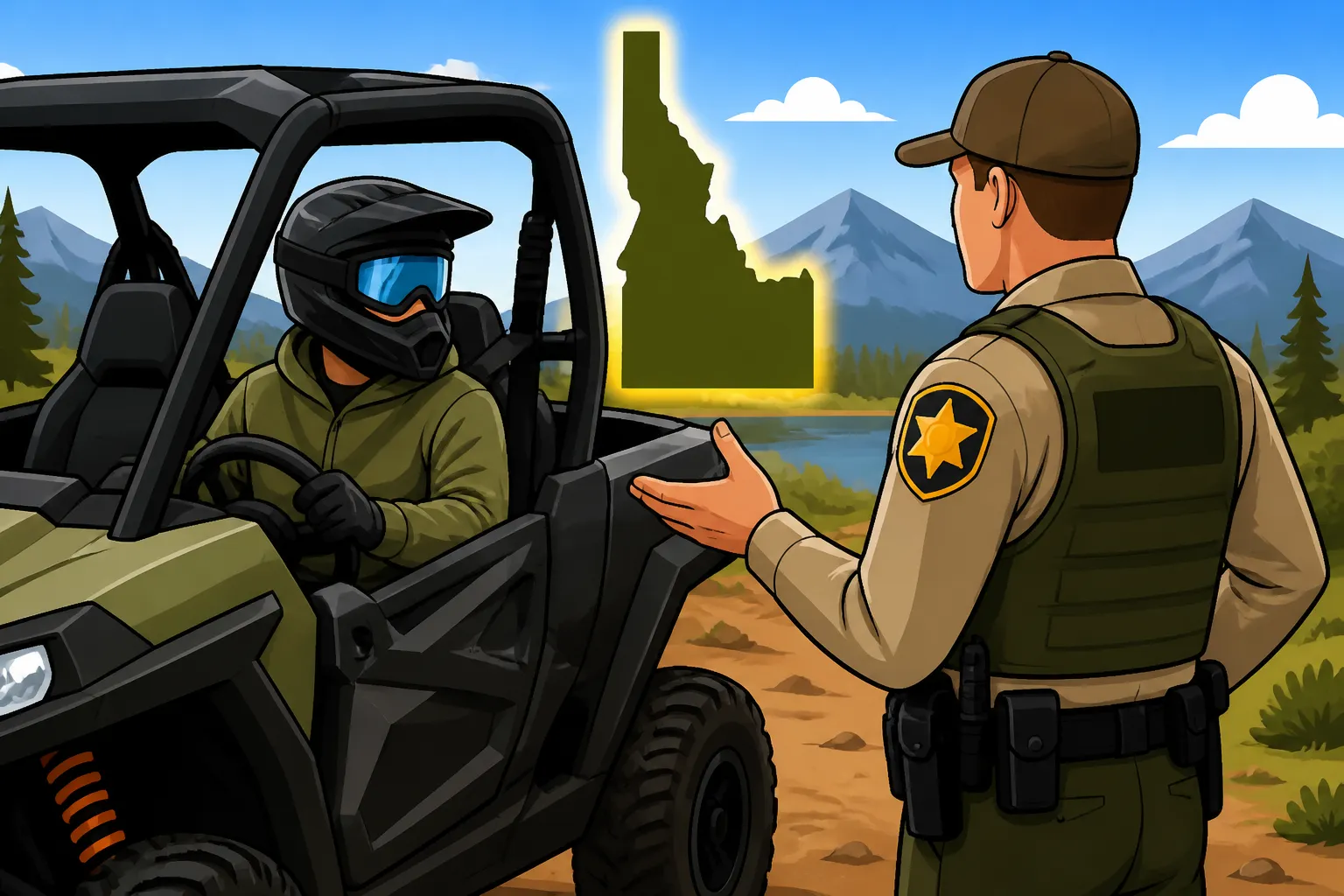
First and foremost, when you see those lights or a ranger waving you over, pull over safely and promptly. Find a secure spot where you're not blocking traffic or creating a hazard. Turn off your engine and keep your hands visible, preferably on the handlebars or steering wheel. This immediately signals to the officer that you are cooperative and not a threat. Remember, they don't know you, and their primary concern is their safety and yours.
Answer any questions truthfully and respectfully. Avoid arguing or becoming confrontational. If you're unsure about something, it's okay to say "I don't know" or "I'm not sure." If you are asked to produce documents, inform the officer where they are before reaching for them. For instance, "My registration is in my waterproof pouch here," before you start digging. This transparency helps ease any tension. Even if you're certain you haven't done anything wrong, a calm demeanor will always serve you better.
Producing Requested Documents
The deputy will almost certainly ask for your identification and the documents related to your OHV. Be prepared to present your driver's license, your current Idaho OHV sticker and any associated restricted vehicle plate paperwork, and your proof of insurance if you're on a road. If you're a younger rider, have your OHV safety course certificate ready. You should always aim to have these documents, or at least clear copies, on your person or securely stored on your machine. For instance, some riders use waterproof document holders attached to their OHV. Thinking ahead about [Keeping Paperwork on the Machine] can save you a lot of fumbling and stress.
If you don't have a document readily available, be honest about it. For example, "I apologize, officer, I seem to have misplaced my safety certificate, but I can assure you I took the course." While honesty is often appreciated, it doesn't always absolve you of a missing document, but it's a better starting point than trying to make excuses or being evasive. Sometimes, a deputy might be able to verify information through their dispatch, but you shouldn't rely on it. Having physical proof in hand is always the best scenario. Some legal documentation services like LawDepot can help you organize and print copies of important documents like bills of sale or permission letters, ensuring you have them when needed.
Understanding Citations and Penalties
If, after the interaction, the deputy decides to issue a citation, accept it calmly. You can ask clarifying questions about the violation, such as "Can you explain what code section this refers to?" or "What are my options for resolving this?" However, this is not the time to argue your case. Save that for court if you decide to contest the ticket.
Citations for OHV violations can range from minor infractions with a small fine, like an improperly displayed sticker, to more serious offenses like reckless operation or DUI, which can carry substantial fines, loss of riding privileges, and even jail time. For example, you can face significant [Idaho Fines for an Unstickered OHV in Idaho]. You'll typically have a court date or a deadline to pay the fine. If you believe the citation was issued in error or you have a valid defense, you have the right to challenge it in court. Learning about your options for [Fighting an OHV Ticket in Idaho] can be beneficial if you find yourself in this situation. Always read the citation carefully, understand the charges, and follow the instructions provided by the officer or on the ticket itself.
Disclaimer
This article is for general informational purposes only and does not constitute professional advice. Laws, prices and regulations vary by location and change over time. Consult a qualified professional for guidance on your specific situation.