Choosing a First Quad for a Nine-Year-Old
Bringing a quad or side-by-side into your family for a 9-year-old can feel like a really big step, full of excitement but also a mountain of questions about how to pick the right machine, keep them safe, and stay on the right side of Idaho's rules. This guide is here to untangle all of that for you, walking you through the critical choices for a first ATV or UTV, navigating Idaho's specific regulations for young riders, and handling all the necessary ownership and registration paperwork, so you and your child can enjoy the trails confidently and legally.
Matching the Machine to Your Young Rider's Abilities and Size
Choosing the very first off-highway vehicle (OHV) for a 9-year-old isn't just about picking a cool color or the latest model; it's fundamentally about safety, control, and fostering a positive riding experience. You want a machine that is appropriate for their physical size, strength, and developing coordination, not one they'll quickly outgrow in terms of power, but also not one that will overwhelm them from day one. This initial decision is perhaps the most important one you’ll make.
Understanding Age and Engine Size Guidelines
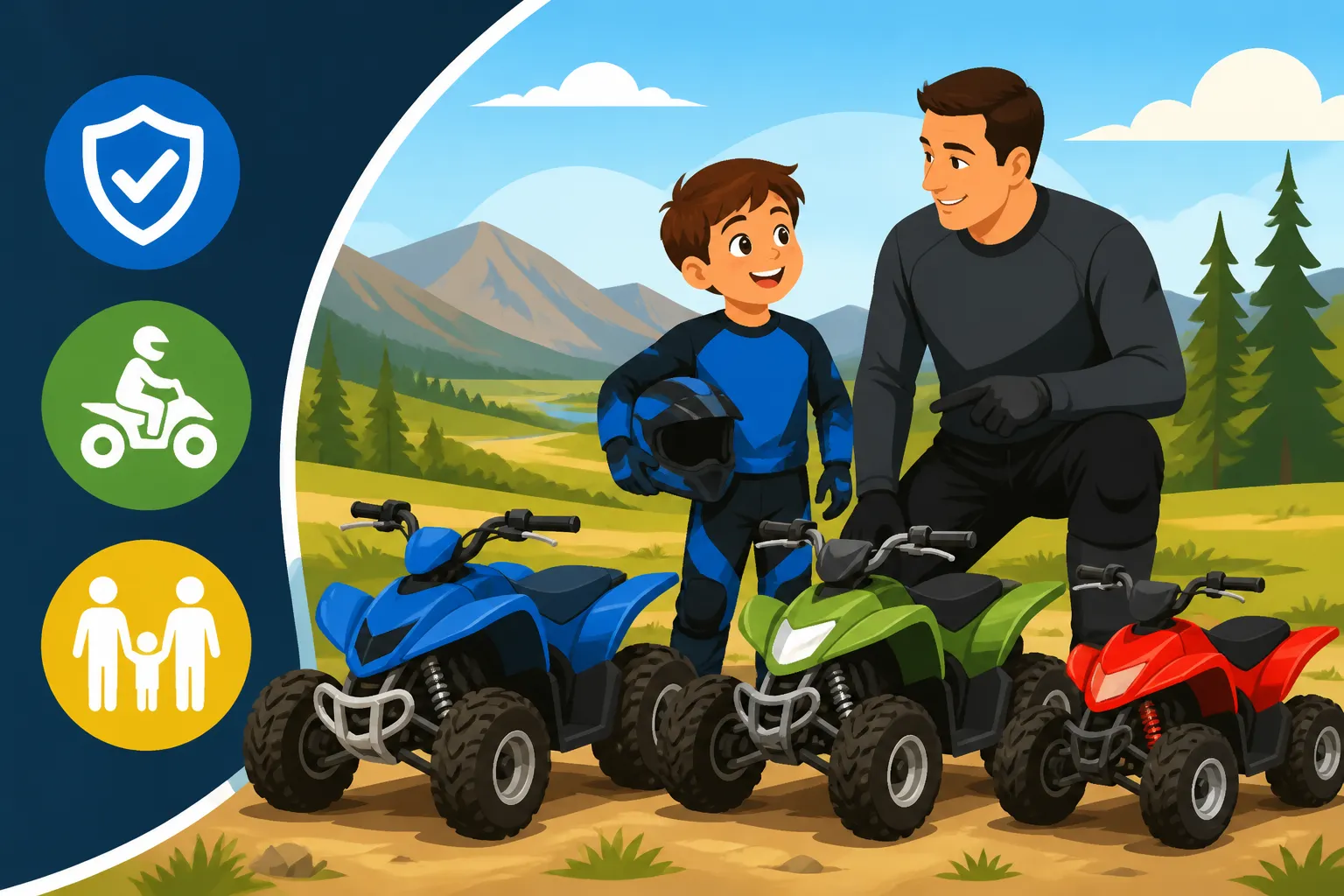
It’s tempting to think a child will "grow into" a larger machine, but that's a dangerous misconception when it comes to off-roading. A quad that's too big or too powerful for a 9-year-old can lead to a loss of control, increasing the risk of accidents. Most manufacturers and safety organizations provide guidelines that link engine size to age. For a 9-year-old, you're generally looking at youth-specific ATVs with smaller engine displacements, often in the 70cc to 90cc range. These machines are designed with features like throttle limiters, smaller chassis, and lighter weights that are more manageable for younger riders. They also typically have lower top speeds, which is a huge benefit for learning.
Beyond the numbers, think about the rider's physical fit on the machine. Can your child comfortably reach the handlebars, brake levers, and footpegs while seated? Can they easily shift their weight and maintain balance when standing slightly on the footpegs? If they're struggling to even reach the controls, the machine is too big, regardless of its engine size. Remember, proper fit allows for proper control, and control is paramount for safety. It's often better to start smaller and build confidence than to go too big and create an intimidating or unsafe situation.
Essential Safety Features and Machine Stability
When evaluating a first quad for your child, look for specific safety features that are non-negotiable. A throttle limiter is an absolute must-have. This device allows you, the parent, to control the maximum speed of the ATV or UTV, progressively increasing it as your child gains experience and skill. Many youth models come with a simple screw-type limiter that you can adjust with a wrench. Another critical feature is a kill switch, preferably one that can be tethered to the rider or remotely controlled by an adult. This allows the engine to be shut off instantly in an emergency.
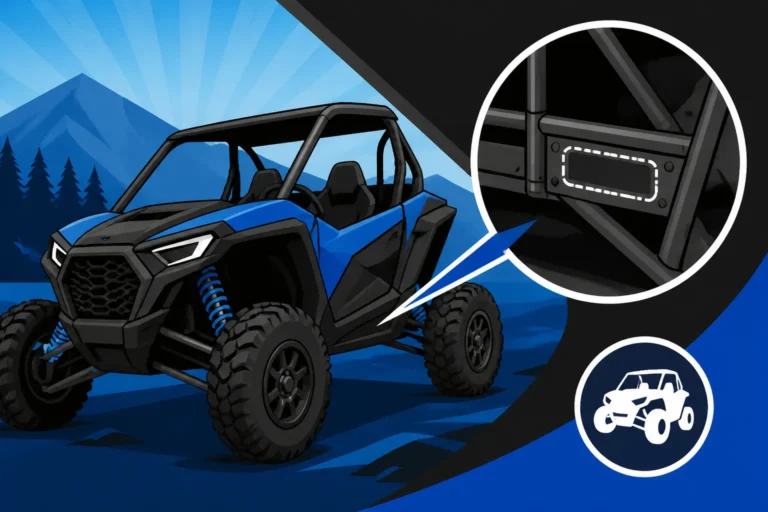
Stability is also key. A wider wheelbase and lower center of gravity contribute to a more stable machine, which is especially important for beginner riders who are still learning weight distribution and turning techniques. Youth ATVs are designed with these considerations in mind. For a side-by-side (UTV), look for models with proper seat belts, roll-over protection structures (ROPS), and safety nets or doors. Even if these machines feel inherently more stable than an ATV, a 9-year-old still needs to be securely fastened and protected. Always consider the terrain your child will primarily be riding on. Rocky, uneven trails demand more stability than flat, open fields.
Navigating Idaho's Rules for Youth OHV Riders
Idaho is a fantastic state for OHV enthusiasts, but it also has clear rules, especially when it comes to youth riders. Understanding these regulations isn't just about avoiding a ticket; it's about ensuring your child's safety and contributing to responsible trail use. Ignoring these guidelines can put your child at risk and potentially lead to legal headaches.
Engine Size Limitations and Supervision
Idaho law specifies limits on engine size based on a rider's age, and it's something every parent needs to know inside and out. For children younger than 11, ATVs are restricted to 70cc or less. A 9-year-old would fall squarely into this category. Now, for side-by-sides (UTVs), the rules are a little different: a child under 11 can only operate a UTV if it's designed by the manufacturer to carry multiple passengers, has a roll bar, and the operator is accompanied by an adult who holds a valid driver’s license. This means an adult must be physically riding with the child in the UTV, providing direct supervision and guidance. If your child is riding an ATV, the rules are less about being in the same machine and more about proximity.
Additionally, Idaho law requires direct supervision for all riders under 16 when operating an OHV on public lands. "Direct supervision" means the supervising adult must be within 300 feet of the child and able to observe and respond to their actions. This isn't just about being in the same general area; it's about active, watchful oversight. If you're planning a trip to a popular trail system, familiarize yourself with [Engine Size Limits for Idaho Riders Under 16] to ensure your chosen machine and your supervision plan are compliant. Always remember that these rules are in place to safeguard our youngest riders.
Required Safety Training and Gear
Beyond machine size and supervision, Idaho takes rider education and protective gear very seriously for young operators. Any rider under the age of 16 operating an OHV on public lands in Idaho is required to complete an approved OHV safety course. This course covers essential topics like safe operating procedures, responsible riding ethics, basic maintenance, and environmental awareness. It's a fantastic educational opportunity that goes a long way in preparing young riders for the trails. Many courses are available online, making them convenient to complete from home. Once completed, your child will receive a safety certificate that they should carry with them when riding. You can find more details about these requirements and where to take the course in resources like [Idaho's OHV Safety Course for Young Riders].
Equally important is proper safety gear. A U.S. DOT-compliant helmet is mandatory for all OHV riders under the age of 18 in Idaho, and frankly, it should be mandatory for everyone, regardless of age. A helmet is the single most important piece of safety equipment. But don't stop there. Eye protection, such as goggles or a face shield, is crucial to protect against dust, debris, and insects. Long pants, a long-sleeved shirt, sturdy over-the-ankle boots, and gloves provide additional protection against scrapes, impacts, and exhaust heat. Investing in quality gear for your child is an investment in their safety and comfort. Don't cut corners here; a minor fall can turn serious without adequate protection. For more specific information, check out [Idaho Helmet Rules for Riders Under 18].
Titling, Registration, and Ownership for a Child's Quad
Once you've found the perfect, safe machine for your 9-year-old, the fun really begins – with paperwork! Understanding Idaho's titling and registration requirements is essential to legally operate the OHV, even if it's primarily for a child. This process ensures proper ownership and contributes to the maintenance of Idaho's fantastic trail system.
The Nitty-Gritty of Ownership Paperwork
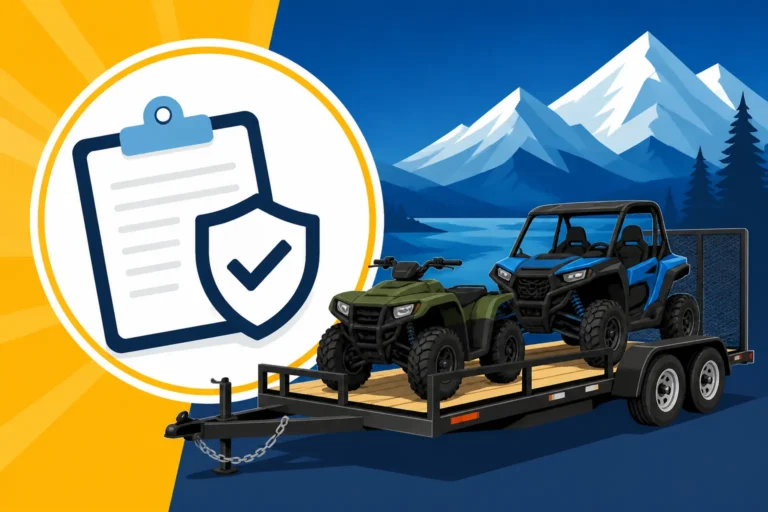
Before you even think about hitting the trails, you need to establish legal ownership of the OHV. In Idaho, most ATVs and UTVs with an engine displacement over 50cc are required to be titled. This means getting a title in your name, or more precisely, the legal guardian’s name, as a 9-year-old cannot legally own property in their own right. When purchasing an OHV, especially from a private seller, a solid bill of sale is your first line of defense and proof of purchase. This document should clearly identify the buyer and seller, the machine's make, model, year, and its Vehicle Identification Number (VIN). A clear statement that the machine is sold "as-is" is common, but you'll want to ensure all parties sign and date it.
Many parents find online resources like LawDepot helpful for drafting formal bills of sale or other legal documents related to OHV ownership. Using a template can ensure you don't miss any critical information. The bill of sale, along with the previous owner's signed-over title (if applicable), will be your primary [Proof of Ownership for an Idaho OHV Title] when you go to the county assessor's office. Make sure the VIN on the bill of sale matches the VIN on the machine and the title exactly. Any discrepancies can cause significant delays. For a youth machine, the title will typically be issued in the parent's or guardian's name. You can explore this further in [Whose Name Goes on a Youth Machine Title].
Getting Your Idaho OHV Sticker and Title
With proof of ownership in hand, your next step is to head to your local county assessor's office to apply for the title and purchase your Idaho OHV sticker. This is the cornerstone of legal OHV operation in the state. The title formally registers the machine in your name, establishing legal ownership. The sticker, on the other hand, is your annual registration that permits the OHV to be ridden on Idaho's public lands and designated trails. Even for a child's machine, this process is the same as for an adult's.
You'll need to pay the applicable titling fees and, generally, Idaho sales tax on the purchase price of the machine, unless you bought it from a licensed dealer who already collected it. The [Idaho Sales Tax on an ATV Purchase] is an important consideration for your budget. Once you have your title application processed and your sticker purchased, you'll affix the sticker to the designated area on your machine (usually on the rear fender for quads or a visible spot on a side-by-side). This sticker is valid from January 1st to December 31st, regardless of when you buy it, so planning your purchase strategically can sometimes save you a few months of use. For the most up-to-date figures on what you'll pay, check out [Idaho OHV Sticker Cost This Year]. The assessor's office will provide a temporary operating permit, and your official title certificate will usually arrive in the mail a few weeks later.
Essential Idaho OHV Requirements for Young Riders
Here's a quick overview of key Idaho requirements specifically impacting a 9-year-old rider:
| Requirement | What it Means for a 9-Year-Old in Idaho | Relevant Action/Document |
|---|---|---|
| Engine Size Limit (ATV) | 70cc or less for riders under 11. | Choose an appropriately sized ATV. |
| Engine Size Limit (UTV) | Can only operate UTVs designed for multiple passengers with roll bars, and an adult with a valid driver's license must be a passenger. | Adult must ride with the child in the UTV. |
| Direct Supervision | Required for all riders under 16 on public lands (adult within 300 feet). | Actively supervise from close proximity. |
| Safety Course | Required for all riders under 16 operating on public lands. | Complete an approved OHV safety course; carry certificate. |
| Helmet | U.S. DOT-compliant helmet mandatory for all riders under 18. | Ensure child wears a certified helmet. |
| OHV Title | Required for machines over 50cc; held by parent/guardian. | Apply at county assessor's office with proof of ownership. |
| OHV Sticker/Registration | Required for all public land use, regardless of rider's age. | Purchase annually at county assessor's office. |
| Other Protective Gear | Eye protection, long pants/sleeves, boots, gloves highly recommended. | Invest in full protective gear for every ride. |
This table summarizes some of the most critical considerations. Remember, these are minimums, and it's always wise to exceed them for maximum safety.
Long-Term Responsibilities and Enjoying the Ride
Bringing an OHV into your family is a long-term commitment that extends beyond the initial purchase and paperwork. It's about instilling a culture of safety, respect for the environment, and continuous learning. Your child will grow, their skills will improve, and their needs from a machine will evolve.
Ongoing Maintenance and Safety Checks
Just like any vehicle, an OHV requires regular maintenance to remain safe and reliable. Before every ride, conduct a quick safety check: inspect tire pressure, check brake function, ensure lights are working (if applicable), and look for any loose bolts or obvious damage. Periodically, you'll need to change the oil, check the air filter, and lubricate moving parts according to the manufacturer's recommendations. Teaching your child about these basic checks as they grow older is a valuable lesson in responsibility and understanding their machine. A well-maintained OHV is a safer OHV.
Beyond the machine itself, continually reinforce safety habits. Always wear all the gear, never ride alone, stick to designated trails, and understand hand signals if riding in a group. Remind them of the importance of staying within the speed limits you set, and respecting other trail users and wildlife. Regular practice in controlled environments, like an open field, can help them hone their skills before tackling more challenging terrain.
Planning Safe and Fun Family Adventures
With all the legalities sorted and safety precautions in place, you’re ready for the best part: enjoying Idaho’s incredible outdoors as a family! Idaho boasts a vast network of OHV-friendly trails, from scenic forest roads to challenging mountain paths. Start with easier, family-friendly trails that match your child's skill level. Many trail systems offer designated youth riding areas or beginner loops, which are perfect for building confidence without intimidation. A great resource is [What Idaho Riders Need Before They Ride] which outlines additional preparations you should consider for any outing.
Always plan your route in advance, know the weather forecast, and inform someone of your itinerary. Carry essential emergency supplies, including a first-aid kit, water, snacks, and tools for minor repairs. Cell service can be spotty in Idaho’s backcountry, so consider a satellite messenger for emergencies. Make every ride an opportunity to learn and grow, emphasizing the joy of exploring nature responsibly. Remember, these machines are tools for adventure, and with the right preparation and respect for the rules, they can create a lifetime of cherished family memories on Idaho’s trails.
Disclaimer
This article is for general informational purposes only and does not constitute professional advice. Laws, prices and regulations vary by location and change over time. Consult a qualified professional for guidance on your specific situation.