Crossing an Idaho County Line Where the Rules Change
There's nothing quite like the freedom of exploring Idaho's vast backcountry on your ATV or UTV, but that sense of liberation can quickly turn to frustration when you realize the rules of the road aren't uniform. Many riders find themselves scratching their heads when crossing an invisible county line, wondering if the road they just legally traveled is suddenly off-limits. This guide is here to untangle that confusion, providing clear, actionable advice so you can navigate Idaho's diverse county ordinances with confidence and keep your adventures rolling smoothly.
The Patchwork Quilt of Idaho OHV Road Rules
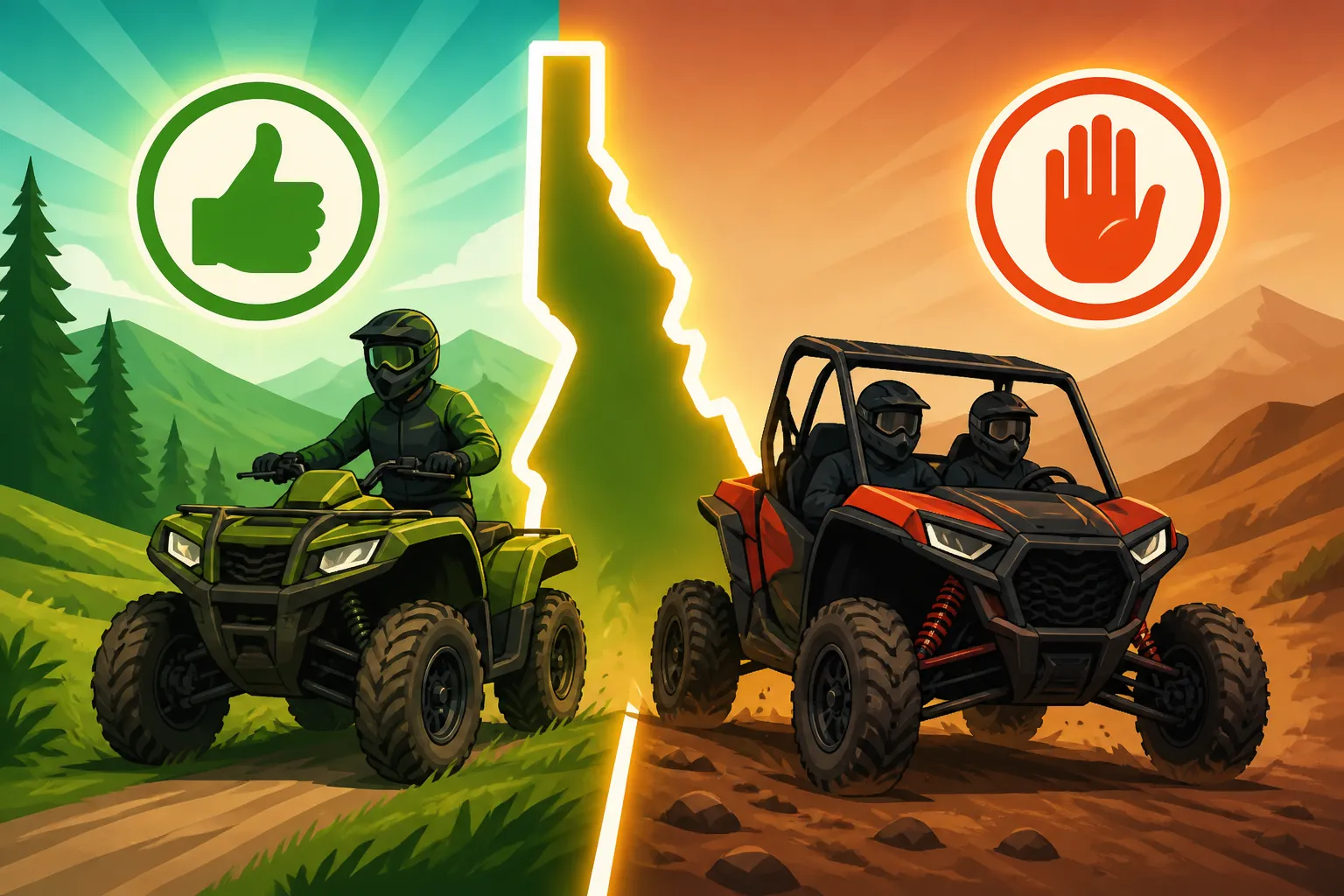
Idaho is a state that champions local control, and while this often leads to communities that feel uniquely their own, it also means a fascinating—and sometimes bewildering—patchwork of rules for off-highway vehicles (OHVs) on county roads. You might be cruising down a gravel road in one county, enjoying open access, only to cross into the next county where that very same type of road is suddenly closed to OHVs without proper signage or a clear explanation. It's a reality that can catch even the most seasoned rider off guard.
Why County Rules Vary So Much
The reasons for this variability are as diverse as Idaho's landscapes. Each county commission, city council, or local governing body has the authority to make decisions that best serve its specific population and environment. In a heavily agricultural county, for example, commissioners might be more inclined to keep roads open to OHVs, understanding that these machines are vital tools for farmers and ranchers needing to access fields or transport equipment. They might see OHVs as part of the rural fabric.
On the other hand, a county with more suburban areas, higher traffic volumes, or a focus on quiet residential communities might opt for stricter regulations, limiting OHV access to certain hours, specific roads, or even prohibiting it entirely. Local politics play a significant role here, with residents, landowners, and different user groups all weighing in on what they believe is best for their community. Sometimes, it's about minimizing noise complaints, reducing dust, or simply managing safety concerns where OHVs might mix with high-speed commuter traffic. Understanding these local drivers can help you anticipate where rules might tighten or loosen.
The Core State Law and Local Discretion
At its heart, Idaho has a set of statewide laws governing OHV use, but these often provide counties and cities with the discretion to either open or restrict local roads. The general state framework allows for OHV use on unpaved county roads that are not part of the state or federal highway system, provided the machine is properly registered, insured, and the operator is licensed and following all traffic laws. However, this is where the local twist comes in. A county can, by ordinance, choose to open or close specific roads or all roads within its jurisdiction to OHVs.
This means that while the state might permit OHV use, a county can issue an ordinance that overrides this general permission, either opening more roads, restricting them further, or adding specific conditions like speed limits or time-of-day restrictions. It’s crucial to remember that a county's decision to open roads is not automatic; it requires an active vote and implementation of an ordinance. If no such ordinance exists, the default state rules generally apply, but interpreting those can still be tricky without local knowledge. This is why knowing [What Idaho Requires Before You Ride a County Road] is foundational, but it's only half the battle.
For instance, you might be riding through Valley County, where many unpaved roads are generally open to OHVs for connecting to trails or reaching remote recreation spots. Then, without a dramatic change in scenery, you might cross into Gem County, which might have different regulations, perhaps limiting OHV access to specific, designated routes or only during daylight hours due to proximity to residential areas or school zones. The underlying state law provides the skeleton, but local ordinances put the flesh on the bones, and that flesh can look very different from one county to the next.
Navigating the County Line: What Changes?
The invisible line between two Idaho counties can sometimes feel like a sudden border crossing into a different country with its own set of laws. What was perfectly legal just moments ago might now put you at risk of a citation, simply because you continued down the same road into a new jurisdiction. The key to stress-free riding is anticipating these shifts and knowing what to look for, so you don't inadvertently find yourself on the wrong side of the law.
Common Rule Differences You'll Encounter
When you cross into a new county, a surprising number of rules can change. While some state laws, like those requiring an OHV sticker or proof of insurance, are constant across all counties, many road-use regulations can be altered at the local level. One of the most common differences is speed limits. A county might have a blanket speed limit for OHVs on all its unpaved roads, or it might designate specific speed limits for certain routes that differ significantly from its neighbor. You might find yourself needing to slow down considerably as you enter a new jurisdiction.
Time-of-day restrictions are another frequent point of variation. Some counties might allow OHV road use from dawn to dusk, while others might permit it 24 hours a day, assuming your machine has appropriate lighting. Conversely, some counties might restrict access during certain hours to minimize noise impacts on residents. Specific road closures are perhaps the most impactful change; a road that was open in one county might be explicitly closed to OHVs once you cross into the next. This can force you to re-route or turn back entirely, which is why pre-planning is so crucial.
Less common, but still possible, are variations in passenger rules (though state law often dictates overall passenger limits) or even specific equipment requirements beyond what the state mandates. For example, while Idaho has a clear [Idaho Helmet Rules for Riders Under 18], an individual county isn't likely to mandate helmet use for adults if the state doesn't. However, they might enforce other aspects more strictly, such as requiring turn signals on roads where the adjacent county is more lenient. It's these subtle, yet significant, shifts that can really complicate a multi-county ride.
Signs, Maps, and Local Ordinances
So, how do you even know when the rules change? Ideally, counties will provide clear signage at their borders or at the entrance to roads with specific restrictions. Look for signs that say "OHV Route," "OHV Access Restricted," or post specific speed limits or hours of operation. Sometimes, a simple county line sign might be your only clue that the rules are about to change, prompting you to remember your research. Unfortunately, not all counties are diligent about signage, especially on less-traveled back roads.
This is where proactive research becomes your best friend. Relying solely on signs in the moment can lead to trouble. Before your ride, you should consult several sources. County websites often publish their local ordinances, which explicitly state which roads are open or closed to OHVs. The Idaho Department of Parks and Recreation (IDPR) website can also be a valuable resource, sometimes providing links or summaries of county rules. Furthermore, Motor Vehicle Use Maps (MVUMs) issued by the Forest Service or Bureau of Land Management often indicate what types of vehicles are allowed on specific routes, though these primarily cover federal lands and don't always reflect county-specific road ordinances perfectly.
The best approach is to seek out the actual local ordinance. Simply knowing [Finding an Idaho County's OHV Ordinance] before you head out can save you a lot of headache. Some counties may have very concise ordinances, perhaps a single paragraph stating "all county roads are open to OHVs unless specifically posted otherwise," while others might have detailed maps and lists of specific road segments. By doing your homework, you can mentally prepare for any changes and avoid the surprise of suddenly realizing you're on a prohibited road.
Preparing for a Multi-County Ride
Embarking on a multi-county OHV adventure in Idaho requires more than just a full tank of gas and a sense of wanderlust. It demands careful preparation and an understanding that "going with the flow" might land you in hot water. Planning ahead, equipping your machine correctly, and having your paperwork in order are all vital steps to ensure a smooth and legal journey across changing jurisdictional lines.
Pre-Trip Planning and Research Tools
The most critical step in preparing for a multi-county ride is thorough pre-trip planning. Before you even load your machine onto the trailer, sit down with maps—both physical and digital—and outline your intended route. Identify every county line you plan to cross. Then, for each of those counties, dedicate time to research their specific OHV road ordinances. Start with the individual county government websites; many have a dedicated section for public works or county commissioners where ordinances are published.
The Idaho Department of Parks and Recreation (IDPR) website is another excellent starting point. While they might not host every single county ordinance, they often provide general information or links to county resources. Online rider forums and local OHV clubs can also be treasure troves of information, as experienced riders often share insights into specific county rules or recent changes. Just remember to verify any forum-based information with official sources, as rules can change.
Consider using GPS apps or mapping software that allow you to layer information or draw your own routes. While no single app might perfectly delineate every county's OHV rules, they can help you visualize your route and identify where county lines fall. Knowing [Reading an Idaho Motor Vehicle Use Map] is also crucial, especially if your ride combines federal, state, and county roads. Your goal is to not only know where you're going but what rules apply at every segment of your journey. Double-checking both counties' rules before a boundary crossing is paramount to avoiding fines or unexpected detours.
Equipping Your Machine for Any Eventuality
Given the potential for varied rules, it’s wise to equip your OHV to meet the strictest requirements you might encounter on your planned route. This means going beyond the minimum state requirements if there's a chance a county you're visiting has tighter restrictions. For example, while Idaho law requires a brake light and headlight, some counties might implicitly or explicitly expect fully functional turn signals for road use, even if others don't. Ensuring you have clear [Turn Signals on an Idaho Restricted Vehicle] can prevent a headache.
Consider adding mirrors that offer good rear visibility; some counties might be pickier about this than others. Products from companies like SuperATV offer a wide range of universal accessories designed to enhance road legality and safety, from robust mirrors to complete turn signal kits. Investing in these types of upgrades can save you from having to turn around or risk a ticket when you enter a county with stricter interpretations of "road legal." It's also smart to ensure your horn is functional and audible, as this is a common requirement for road-legal machines.
Think about other practical equipment too. A small toolkit, a tire repair kit, and a first-aid kit are always essential for any backcountry ride, but they become even more critical when you're traversing potentially unfamiliar territory with changing rules. Having a detailed paper map in addition to your digital navigation is a lifesaver if you lose signal or power, and it can show county boundaries more clearly than some GPS screens. Basically, prepare for the worst, and you'll be ready for anything. Good [Mirrors on a Road-Legal Side-by-Side] are not just about legality, they're about safety on any road.
The Paperwork You'll Need to Carry
Just like equipping your machine, having your paperwork in order for a multi-county ride means preparing for the most stringent requests from any enforcement officer. You should always carry your valid driver's license, proof of OHV registration (your annual sticker), and proof of liability insurance. If you're under 18 or riding a youth-sized machine, you'll also need to have your OHV safety course certificate readily available. It's a lot to keep track of, but crucial.
Beyond the essentials, it's a good practice to carry copies of any specific county ordinances that apply to your route. You can often download these as PDFs to your phone or print them out. While an officer might not engage in a debate about local laws, having the ordinance on hand can help clarify misunderstandings, especially if signage is poor. Also, keep your OHV title or a copy of your bill of sale handy, especially if you're riding a newer machine or one you've just purchased, as proof of ownership can sometimes be requested.
It’s prudent to organize all this paperwork in a waterproof bag or container that you can easily access on your machine. This not only protects your documents from the elements but also makes it easy to present them if you're stopped. Imagine getting pulled over at a county line, and the deputy asks to see your credentials. Being able to quickly and clearly provide all necessary documents demonstrates responsibility and can make the interaction go much smoother. Knowing [Four Things Idaho Riders Must Carry on a Road] is the absolute minimum; carrying more doesn't hurt.
What to Do When the Rules Shift Mid-Ride
No matter how much planning you do, the reality of hitting the trail often throws curveballs. You might miss a small sign, or an unexpected detour might lead you into an unfamiliar jurisdiction. When you realize the rules might be changing as you cross a county line, or when you encounter an unexpected closure, your immediate actions can make all the difference between a smooth adjustment and a potential citation.
Recognizing the Boundary and Adapting
Sometimes, a county line is clearly marked with a sign indicating the new jurisdiction. Other times, it might be as subtle as a change in road numbering, or even just a feeling that the road maintenance has shifted. As you approach what you suspect is a county boundary, or any area where you know rules might change, it's always best to slow down and become more observant. Look specifically for any new signage that indicates OHV restrictions, speed limit changes, or road closures.
If you're unsure, or if your research indicated a significant rule change, pull over safely to the side of the road. This gives you a moment to consult your maps, your pre-researched notes, or even to double-check a downloaded ordinance. Adapting means being prepared to alter your riding style. If the new county has a lower speed limit for OHVs on roads, immediately reduce your speed. If only paved roads are suddenly off-limits, stick to the gravel.
Consider a scenario where you've been riding freely on designated county roads in Lemhi County, known for its OHV-friendly access. You cross into Custer County, and suddenly you notice more "No OHV" signs on paved roads. Your immediate adaptation should be to re-evaluate your route, sticking strictly to unpaved roads or actively looking for designated OHV routes. Trying to push through on a road that suddenly feels "wrong" is an invitation for trouble. It's much better to take a few minutes to confirm your location and local rules than to risk a fine or jeopardize local OHV access for everyone.
Navigating Unexpected Closures or Restrictions
Even with the best planning, you might encounter an unexpected closure or restriction. Perhaps a road you researched as open is now temporarily closed due to construction, weather damage, or a special event. Or, you might realize you've inadvertently ridden onto a road that, according to the local ordinance you just consulted, is explicitly closed to OHVs in this particular county. Your first and most important action is to stop and assess the situation.
If you encounter an unexpected closure, do not try to bypass it. That could lead to trespass charges, resource damage, or even put you in danger. Turn around and look for an alternative route. This is where those paper maps and pre-loaded GPS routes become invaluable. If you're completely lost or unsure of an alternative, it's better to backtrack to a known point or seek help from a local resident (if safe to do so) than to continue blindly into potentially restricted areas. Remember, [Idaho Fines for Illegal Road Riding] can be substantial, and ignorance of the law is rarely an excuse.
If you realize you're on a restricted road by mistake, immediately turn around safely and return to the last point where you knew you were legal. Avoid trying to quickly get through the restricted section. If you encounter an enforcement officer, be polite, explain that you were unaware of the change or made an honest mistake, and demonstrate your willingness to comply. They may be more lenient if they see you're actively trying to rectify the situation. This reinforces the idea that even if you miss a sign or misinterpret a map, a quick and responsible reaction is key.
Resources and Support for Confused Riders
Even the most prepared rider can occasionally feel overwhelmed by the complexity of Idaho's varied OHV rules, especially when traversing multiple counties. Fortunately, you don't have to navigate this labyrinth alone. There are numerous resources and communities available that can provide valuable insights, up-to-date information, and direct support to help you stay on the right side of the law and enjoy your ride.
Local OHV Clubs and Rider Networks
One of the best resources for understanding hyper-local OHV rules is the community of fellow riders itself. Local OHV clubs are often deeply engaged with their county and state parks departments, advocating for access and staying on top of rule changes. These clubs typically have members who have ridden extensively in their local areas and possess firsthand knowledge of specific road designations, subtle unposted restrictions, or even upcoming changes to ordinances. They are often a font of wisdom regarding the nuanced interpretations of laws in their specific regions.
Joining an Idaho OHV club, or at least following their social media pages and forums, can provide invaluable updates. For example, if Idaho County is considering new restrictions on OHV use near a particular scenic byway, a local club might be discussing it months in advance. Many clubs actively work with land managers and county officials on trail maintenance and rule clarification, making them excellent points of contact for questions. They often host rides, which are great opportunities to learn directly from experienced riders about how to navigate specific county boundaries or tricky road segments. [Idaho OHV Clubs and Trail Adoption] often translates to being highly informed.
Beyond formal clubs, online rider networks and forums specific to Idaho OHV riding can also be helpful. While you should always verify information with official sources, these communities can alert you to potential issues, recommend routes, or offer practical advice based on recent experiences. Just remember that what one rider considers "open" might be based on an outdated understanding, so always cross-reference.
State and County Agencies as Information Hubs
For definitive answers and official information, turning to state and county agencies is crucial. The Idaho Department of Parks and Recreation (IDPR) is the primary state agency responsible for OHV programs and can often provide general guidance or point you towards the right local contacts. Their website is a treasure trove of information regarding state-level regulations, safety courses, and sometimes even links to county-specific resources. If you have a general question about Idaho OHV laws, starting with IDPR is a good bet. [IDPR Service Centers and What They Handle] might include answering questions about OHV rules.
For specific county-level ordinances, your best bet is to contact the county clerk's office, the county commissioner's office, or the county sheriff's department directly. These offices are responsible for creating, enforcing, and maintaining local ordinances. A quick call or email to their non-emergency lines can often get you the official information you need for a specific road or area. They can tell you if an OHV ordinance exists, what it entails, and where you can find the full text of the law. While it might feel a bit like calling a government office, these individuals are often happy to help riders understand and comply with local rules, as it benefits everyone.
For example, if you're planning a trip near the Ada/Boise County line and are unsure about specific roads, contacting both the Ada County Clerk and the Boise County Clerk could clarify any ambiguities. Similarly, if you notice an enforcement discrepancy or have a question about a particular road sign, a call to the local county sheriff's non-emergency line can often clear things up. By utilizing these official channels, you ensure you're getting the most accurate and up-to-date information directly from the source.
Disclaimer
This article is for general informational purposes only and does not constitute professional advice. Laws, prices and regulations vary by location and change over time. Consult a qualified professional for guidance on your specific situation.