Idaho Alcohol Limits for OHV Operators
It's easy to get swept up in the freedom of Idaho's vast backcountry, the wide-open spaces, the fresh air, and the feeling of disconnecting from the daily grind on your ATV or side-by-side. For many, that freedom can sometimes feel like an invitation to kick back with a cold beverage, but when that beverage contains alcohol and you're still behind the handlebars, you're not just risking your fun—you're risking everything. This guide is here to cut through the haze and make it crystal clear: Idaho takes impaired OHV operation extremely seriously, and the consequences are far-reaching.
The Harsh Reality: Idaho's Stance on Impaired OHV Operation
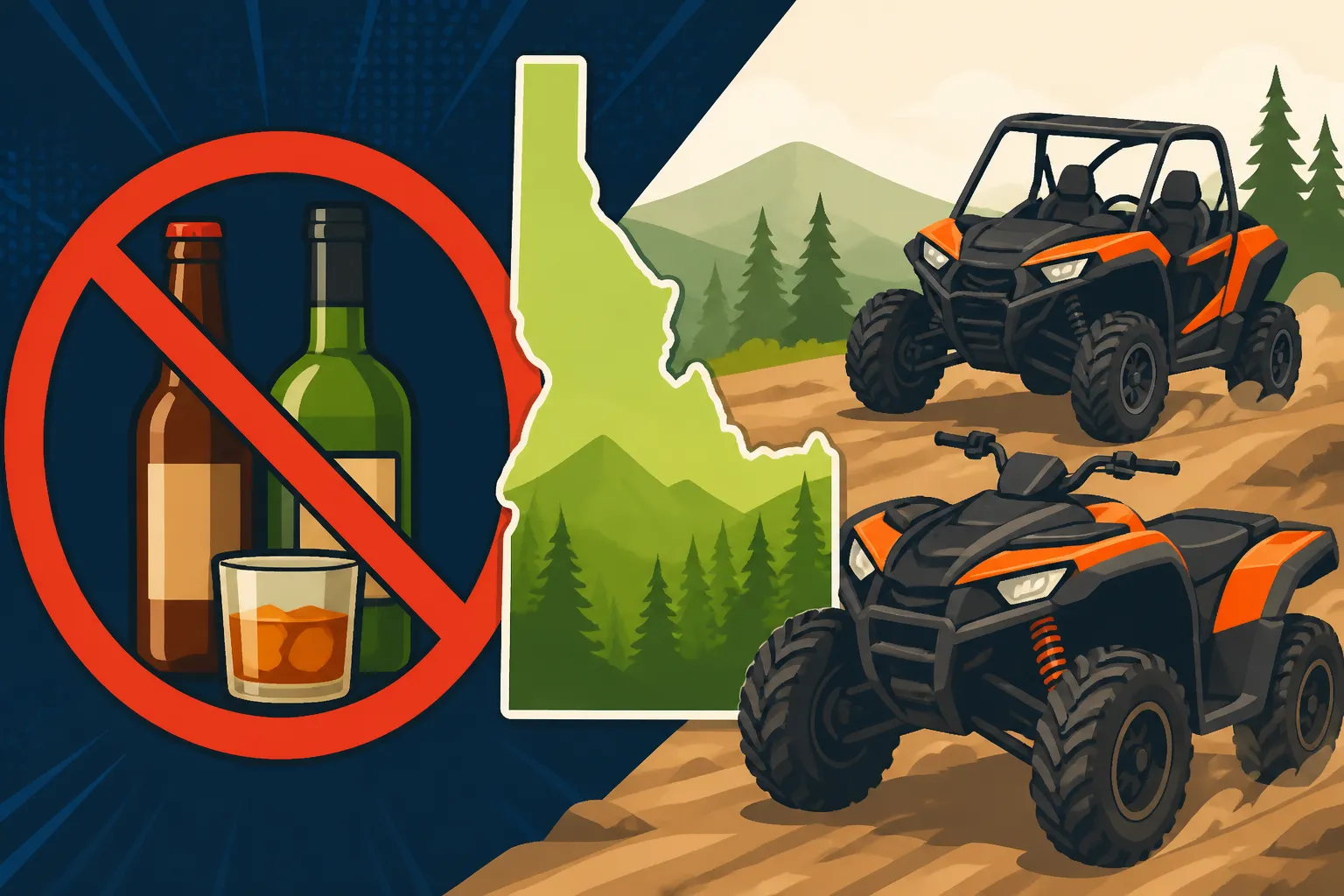
Picture this: you've just conquered a challenging section of trail near Idaho City, the sun is shining, and your buddies are cheering. It's tempting to think a celebratory beer won't hurt, especially if you're "just puttering back to camp." But that line of thinking can put you on a direct collision course with Idaho law. The state of Idaho does not distinguish between operating a car, a boat, or an Off-Highway Vehicle (OHV) when it comes to alcohol impairment. Your ATV, UTV, dirt bike, or even your snowmobile is considered a motor vehicle, and operating it while under the influence carries the same serious weight as driving your pickup truck down US-95.
What "Operating Under the Influence" Means for OHVs
When we talk about "Operating Under the Influence" (OUI) or "Driving Under the Influence" (DUI) in Idaho, it generally refers to having a blood alcohol content (BAC) of 0.08% or higher if you're an adult. However, it's crucial to understand that you can still be charged with OUI if your BAC is lower than 0.08% but an officer determines you are impaired to an extent that makes you incapable of safely operating your machine. This "impaired to the slightest degree" clause is a big deal, especially on a dynamic and unpredictable trail.
Think about it: even a small amount of alcohol can dull your reflexes, mess with your perception of distance and speed, and slow down your decision-making. On a paved road, these effects are dangerous. On a rocky, dusty, or muddy trail, with sudden drops, hidden ruts, and unpredictable terrain changes, these effects become exponentially more perilous. That split second you hesitate, or that slight misjudgment of a turn, can lead to a serious crash, not just for you but potentially for anyone riding with you or nearby. You're responsible for keeping yourself, your passengers, and other trail users safe, and alcohol directly compromises that responsibility.
No Different Than Driving a Car: The Legal Parity
Many riders harbor a misconception that because they're on a dirt road or a designated trail, the rules somehow relax when it comes to alcohol. Unfortunately, this couldn't be further from the truth. Idaho law explicitly treats OHVs like any other motor vehicle when it comes to impaired operation. This means that all the statutes, penalties, and enforcement mechanisms that apply to a DUI in your car also apply to a DUI on your quad or side-by-side.
This legal parity extends whether you're cruising down a scenic forest road that allows OHVs, navigating a challenging single track, or even just moving your machine around camp. If it's a motorized vehicle and you're operating it while impaired, you're breaking the law. For example, if you're riding a county road that is open to OHVs, you're expected to abide by all the same traffic laws as a car, including the alcohol limits. This means your choices at the trailhead, or even back at your remote camping spot if you intend to operate your machine, need to reflect the seriousness of these laws. Don't let the relaxed atmosphere of the outdoors lull you into a false sense of security; the law sees no distinction between pavement and dirt when it comes to impairment.
The Visible and Invisible Dangers of Mixing Alcohol and OHVs
Beyond the legal ramifications, which are significant, there are very real physical dangers and hidden liabilities that come with operating an OHV under the influence. It's not just about avoiding a ticket; it's about avoiding life-altering injuries and financial ruin. The freedom of the trail demands your full attention, and alcohol robs you of it.
Impaired Judgment and Reaction Time on the Trail
Anyone who's spent time riding Idaho's diverse terrain knows it demands constant vigilance. One moment you're cruising a smooth gravel path, the next you're navigating a rocky ford, dodging a downed branch, or climbing a steep, off-camber hill. Your brain needs to be firing on all cylinders, processing information from your eyes, ears, and the seat of your pants, and then sending lightning-fast commands to your hands and feet.
Even a single alcoholic drink can begin to degrade these vital functions. Your depth perception might be off, making it harder to judge the height of a jump or the depth of a puddle. Your peripheral vision can narrow, meaning you might miss that deer darting out from the treeline or another rider approaching a blind corner. Most critically, your reaction time slows. On a high-speed section, a second's delay in braking or steering correction can mean the difference between a minor wobble and a violent rollover. We've all seen those challenging sections around the Danskin Mountains OHV Area or on the winding trails of the Sawtooth National Forest – they demand your absolute best, not your compromised self. SuperATV makes incredible aftermarket parts that enhance your machine's capabilities, but no upgrade can compensate for impaired human judgment.
The Ripple Effect: Injuries, Accidents, and Liability
A decision to ride impaired doesn't just put you at risk. If you have passengers, especially children, their safety is directly in your hands. An accident due to impairment can lead to catastrophic injuries for everyone involved. Broken bones, head trauma, spinal cord injuries – these are very real possibilities that can change lives forever.
But beyond the immediate physical impact, there's a huge financial and legal ripple effect. If you're involved in an accident while impaired, your insurance company might deny your claims, leaving you personally responsible for all medical bills, property damage to your machine, and damage to any other machines or property involved. Imagine totaling your brand new side-by-side, injuring a passenger, and then finding out your insurance won't cover any of it because alcohol was a factor. This can lead to staggering out-of-pocket costs. Furthermore, if your impairment causes injury or damage to another person or their property, you could face civil lawsuits that can drain your savings, force the sale of assets, and impact your financial future for decades. We've discussed [OHV Injury Claims After a Road Crash] previously, and the presence of alcohol only complicates these situations severely.
Open Container Rules on an Idaho Ride
Even if you believe you're not impaired, Idaho has specific laws regarding open containers of alcohol in vehicles, and this extends to OHVs. While the primary concern is impairment, simply having an open container within reach of the operator can lead to a citation. The goal is to prevent the consumption of alcohol while operating a vehicle.
This means you can't have an open beer can sitting in the cupholder of your side-by-side while you're cruising down a designated trail or forest road, even if you haven't taken a sip in hours. The rule is generally consistent: if it's an open alcoholic beverage container and it's accessible to the operator, it's a violation. This applies to both the driver and passengers in the operator's compartment. The best practice is to keep all alcoholic beverages sealed and stored in an inaccessible area, like a cooler in the bed of your side-by-side, until you are completely done riding for the day and the keys are out of the ignition.
Understanding the Penalties: What Happens If You Get Caught
The allure of a casual drink while riding quickly fades when you consider the severe legal and personal consequences of an OUI charge in Idaho. This isn't just a slap on the wrist; it's a serious criminal offense with far-reaching implications for your freedom, your finances, and your future.
Fines, Jail Time, and License Suspension
A first-offense OUI on an OHV in Idaho comes with a standard set of penalties that are designed to be a significant deterrent. You're looking at substantial fines, often in the hundreds or even thousands of dollars. Beyond that, there's the possibility of jail time, ranging from a few days to several months, depending on the specifics of the case and the judge's discretion. Don't forget the mandatory alcohol education classes that you'll have to pay for and attend, cutting into your time and adding to the financial burden.
Perhaps one of the most impactful consequences for many riders is the suspension of your driver's license, even if you were only operating an OHV. Idaho's legal system connects these dots, recognizing that impaired operation of any motor vehicle demonstrates a disregard for safety. This suspension can make it impossible to get to work, run errands, or even get to your favorite riding spots. Repeated offenses will lead to even harsher penalties, including longer jail sentences, higher fines, and extended license suspensions or even revocation. For more general information on fines, check out our article on [Idaho Fines for Illegal Road Riding].
Machine Impoundment and Forfeiture Risks
Imagine the dread of watching your prized ATV or UTV being loaded onto a tow truck. That's a very real scenario after an OUI arrest. Your machine will likely be impounded, and getting it back isn't cheap or easy. You'll face impound fees, daily storage fees, and towing charges, which can quickly add up to hundreds of dollars before you even pay your fines or legal fees.
In more severe cases, especially repeat offenses or those involving serious accidents, the state can initiate forfeiture proceedings. This means the government can legally seize and keep your OHV. Your investment, your recreational outlet, your means of accessing the backcountry—all gone, permanently. It's a devastating financial loss on top of everything else, highlighting why this risk is simply not worth any momentary pleasure from alcohol.
The Long-Term Impact: Insurance, Employment, and Reputation
The immediate legal penalties are just the beginning. An OUI conviction stays on your record and casts a long shadow over various aspects of your life. Your auto insurance premiums, for both your car and your OHV, will skyrocket, if your policy isn't canceled outright. Finding new insurance can be challenging and incredibly expensive for years to come.
For your employment, an OUI can have serious repercussions. Many employers conduct background checks, and a criminal conviction can lead to job loss or make it difficult to secure future employment, especially in roles requiring driving, operating heavy machinery, or positions of public trust. If you hold a commercial driver's license (CDL), an OUI conviction can jeopardize your livelihood.
Finally, there's your reputation within the tight-knit Idaho riding community. Riders value safety and responsibility. Being known as someone who operates under the influence can erode trust, ostracize you from riding groups, and tarnish your standing among your peers. The long-term costs, both tangible and intangible, far outweigh any perceived benefit of riding with alcohol in your system.
Here's a quick look at the type of penalties you might face for impaired OHV operation:
| Offense Level | Potential Penalties | Financial Impact | Driving Privileges | Machine Status |
|---|---|---|---|---|
| First Offense | Fines, Jail Time (minimums apply), Alcohol Education | Significant (hundreds to thousands) | License Suspension (months) | Impoundment |
| Second Offense | Higher Fines, Longer Jail Time, Extended Education | Very High (thousands) | Extended License Suspension/Revocation | Possible Forfeiture |
| Third+ Offense | Felony Charges, Substantial Fines, Years in Prison | Extremely High | Long-term Revocation | Likely Forfeiture |
Note: Specific amounts and terms are subject to change and depend on individual case circumstances and judicial discretion.
Enforcement on Idaho's Back Roads and Trails
You might think that far out on a remote trail in the Boise National Forest or deep in the Caribou-Targhee National Forest, you're out of sight and out of mind when it comes to law enforcement. This is a dangerous assumption. Idaho's natural landscapes are actively patrolled by various agencies, and they are well aware that OHV riders, like any other recreationalists, sometimes make poor choices.
Who's Looking: Sheriff Deputies and Forest Service Rangers
The agencies enforcing OUI laws on Idaho's OHV trails and roads are a mix of state and federal officers. County Sheriff's deputies have jurisdiction throughout their respective counties, which includes all public roads and many designated trails. They are often the first responders to accidents and are specifically trained to identify impaired operators.
In areas managed by the U.S. Forest Service or the Bureau of Land Management (BLM), you'll encounter Forest Service Law Enforcement Officers and BLM Rangers. These federal officers have the authority to enforce state laws, including OUI laws, on the lands they manage. They are frequently out on patrol, engaging with riders, and ensuring compliance with regulations, including those related to responsible alcohol consumption. Don't be surprised to see a patrol truck or even an OHV-equipped officer on a popular trail. We've previously discussed [Sheriff Enforcement on Idaho Back Roads], and this enforcement extends fully to OUI cases.
Checkpoints and Observational Stops
While traditional DUI checkpoints might be less common on remote gravel roads compared to major highways, they do happen, especially during busy holiday weekends or at popular staging areas. Officers may observe riders at trailheads, campgrounds, or along designated roads for signs of impairment before they even engage with you directly.
Beyond formal checkpoints, officers are trained to spot behavioral cues that indicate impairment: erratic driving, swerving, driving too slowly or too fast for conditions, near-misses, or simply an operator struggling to maintain control of their machine. If an officer observes any of these, they have probable cause to initiate a stop. Once stopped, they'll look for physical signs of impairment: slurred speech, bloodshot eyes, the smell of alcohol, fumbling with paperwork, or difficulty following instructions. Any of these can lead to field sobriety tests and further investigation.
Idaho Alcohol Limits for OHV Operators: The Implied Consent Law
An important aspect of Idaho's OUI laws, which applies to OHV operators, is the concept of "implied consent." What this means is that by simply operating a motor vehicle (including your OHV) on Idaho's public roads or trails, you have already implicitly given your consent to chemical testing (breath, blood, or urine) if a law enforcement officer has reasonable grounds to believe you are operating under the influence.
This isn't an option you can refuse without consequences. If you refuse to submit to a chemical test when requested by an officer who has probable cause, you face immediate and automatic penalties. These can include an automatic suspension of your driver's license for an extended period, regardless of whether you are ultimately convicted of OUI. This suspension is often longer than what you might receive for a first-time OUI conviction. The idea is to ensure that officers have the tools necessary to remove impaired operators from the roads and trails, and refusing a test is seen as obstructing that effort.
Responsible Riding: Enjoying Idaho's Backcountry Safely
The good news is that enjoying Idaho's incredible OHV opportunities and making responsible choices when it comes to alcohol are not mutually exclusive. It just takes a bit of planning and a commitment to safety. The goal is to create memorable experiences, not regrettable ones.
Designated Drivers for Your Machines? Not Really.
Unlike going out for a night in town where you can designate a sober driver for your car, the concept of a "designated driver" doesn't quite translate to a group OHV ride in the same way. You can't just hand over the keys to your side-by-side to a buddy while you continue to drink. Each operator of a machine is individually responsible for their own sobriety.
The best "designated driver" strategy for OHV riding is for everyone who plans to operate a machine to commit to staying sober. If alcohol is going to be part of your camping trip or social gathering, plan it for the evenings after all riding is completely done for the day and your machines are parked and put away. This means no "just one more quick spin" to retrieve firewood or check on a fishing spot after you've started drinking. The keys need to be out of the ignition, and ideally, stowed away until the next morning.
Hydration, Snacks, and Non-Alcoholic Alternatives
A long day of riding in the Idaho sun, especially at higher elevations, can be dehydrating and physically demanding. Many riders mistake the fatigue or thirst for a desire for an alcoholic beverage. Instead, focus on proper hydration and nutrition. Pack plenty of water, electrolyte drinks, and healthy snacks. Staying well-hydrated and fed will not only keep you sharper and safer on the trail, but it will also reduce the temptation to reach for an alcoholic drink.
There are also many excellent non-alcoholic alternatives available now, from craft non-alcoholic beers to sparkling ciders and mocktails. These can allow you to participate in the social aspect of enjoying a "cold one" with your buddies without any of the risks or legal consequences. Plan to enjoy these refreshing options during your ride, saving any alcoholic beverages for the end of the day when you're done operating your machine.
Setting a Good Example, Especially for Younger Riders
Idaho's OHV community is often a family affair. Many parents introduce their children to riding at a young age, teaching them safety, trail etiquette, and responsible outdoor recreation. Young riders look up to the adults around them, and your actions set a powerful precedent. If kids see adults operating machines after consuming alcohol, it normalizes that behavior and sends the wrong message about safety and responsibility.
Think about the impression you're making on the next generation of riders. By choosing to stay sober while operating your OHV, you're reinforcing the importance of clear judgment, focus, and respect for the law. This not only keeps them safer but also helps instill good habits that will serve them well throughout their riding lives. Teaching children about [Youth Machine Size Rules Idaho Parents Ask About] and responsible riding means nothing if the adults aren't practicing what they preach.
What to Do If You're Stopped and Suspected of DUI
Even if you've made every effort to ride responsibly, unexpected situations can arise. Knowing how to react if you are stopped by law enforcement and suspected of OUI can be critical in protecting your rights and ensuring the situation doesn't escalate.
Remaining Calm and Courteous
If a law enforcement officer signals you to stop, do so safely and promptly. Turn off your OHV, remove your helmet, and place your hands where the officer can see them. Remain calm and courteous, even if you feel you haven't done anything wrong. Arguing or being confrontational will only make the situation worse and can lead to additional charges like resisting arrest.
Provide your identification, registration, and proof of insurance as requested. While you are generally required to provide these documents, you are not obligated to answer questions that might incriminate you beyond providing your identity. A simple, "Officer, I prefer not to answer any questions without my attorney present" is a polite way to assert your rights.
Understanding Your Rights (and the Limits)
You have the right to remain silent, which means you don't have to answer questions about where you've been, where you're going, or how much you've had to drink. However, as discussed earlier, Idaho has an implied consent law for chemical testing. While you have the right to refuse field sobriety tests (which are voluntary), refusing a breath, blood, or urine test when requested by an officer with probable cause will lead to immediate administrative penalties, including an automatic license suspension, regardless of your guilt or innocence on the OUI charge itself.
It's a complex situation, and it's important to understand the distinction. Cooperate with requests for identification and documents, but politely decline to answer incriminating questions or perform voluntary field sobriety tests. However, be aware of the consequences of refusing chemical tests under implied consent.
Seeking Legal Counsel Promptly
If you are arrested for OUI on your OHV, the most important thing you can do immediately is to seek legal counsel. Do not discuss your case with anyone other than your attorney. An experienced OUI defense attorney in Idaho can review the specifics of your stop, arrest, and chemical testing procedures for any potential violations of your rights or errors in police protocol.
They can help you understand the charges against you, navigate the complexities of the legal system, and work to achieve the best possible outcome for your situation, whether that involves challenging the evidence, negotiating a plea, or representing you in court. The sooner you contact an attorney, the better equipped they will be to help you build a defense and protect your future.
Disclaimer
This article is for general informational purposes only and does not constitute professional advice. Laws, prices and regulations vary by location and change over time. Consult a qualified professional for guidance on your specific situation.