Idaho Fines for Illegal Road Riding
Finding yourself facing a citation for riding your ATV or UTV on an Idaho road can be a confusing, frustrating, and expensive experience. Many riders, new and experienced alike, often misunderstand the nuances of Idaho's OHV road use laws, leading to unexpected fines and penalties. This guide aims to clear up that confusion, detailing the common infractions that lead to tickets, the associated costs, and what you can do to avoid or address them.
The Foundation of Legal Road Riding: What Idaho Requires
Before we dive into the fines, it’s crucial to understand what Idaho expects from you and your machine when you venture onto public roads. The rules aren't always intuitive, and what might be legal on one stretch of pavement could be strictly forbidden just a few miles down the road. Ignoring these foundational requirements is the quickest way to end up with a ticket in your hand.
Necessary Paperwork and Registration
One of the most common reasons riders face penalties is simply not having the correct, up-to-date paperwork. It’s not enough to just own your machine; you have to prove it’s legal to operate on the specific terrain you're on, especially roads. Idaho has specific requirements for everything from titles to annual stickers, and deputies regularly check for compliance.
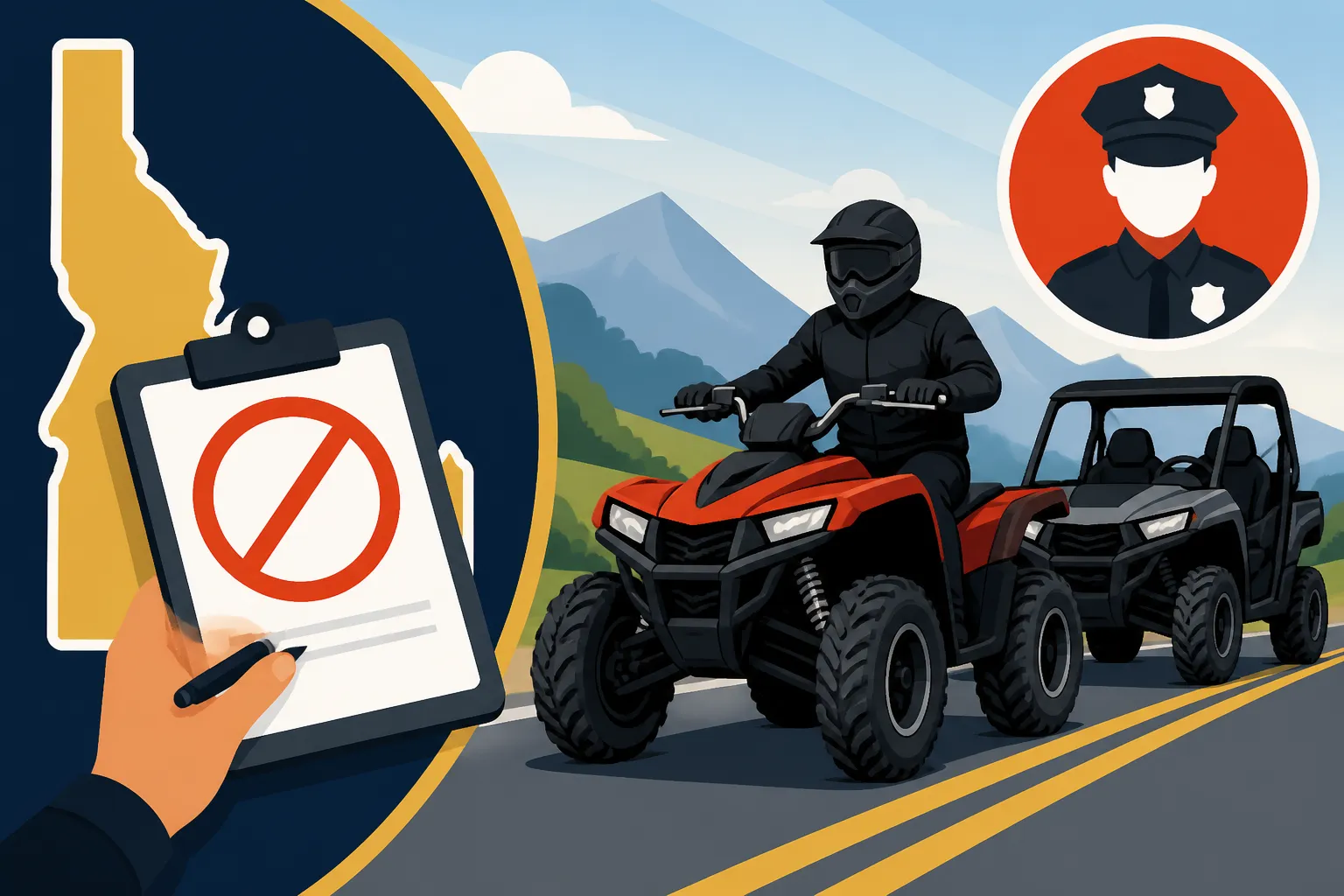
First and foremost, any ATV or UTV operating on Idaho roads must have an Idaho Restricted Vehicle Plate, often referred to as an "R Plate." This plate signifies that your machine meets certain equipment standards and allows you to ride on designated county and Forest Service roads. It’s not just a decorative item; it's a legal necessity. Tied into this is the annual OHV sticker, which must be current and properly displayed. Without both the plate and a valid sticker, you're looking at potential fines for illegal operation. Many riders are familiar with the annual sticker, but often overlook the R Plate requirement, mistakenly thinking the sticker alone is enough. Remember, [Idaho Plates That Begin With R] are distinct from a simple trail sticker.
Beyond the plate and sticker, you also need to ensure you have proof of ownership, such as a title, and crucially, proof of liability insurance. While you might think your homeowners' policy covers you, it usually doesn't extend to OHV operation on public roads. Idaho law specifically requires liability insurance when riding on public roads open to OHVs, so make sure your policy explicitly covers your ATV or UTV for this type of use. Without it, you're not just risking a fine, but potentially devastating financial liability in case of an accident. [Driver's License and Insurance on an Idaho Road Ride] is non-negotiable for road use.
Machine Equipment Standards
Idaho doesn't just care about your paperwork; your machine itself needs to be up to snuff for road use. This isn't about making your trail machine a street bike, but rather ensuring it has the basic safety equipment expected of any vehicle sharing the road. Think about visibility, the ability to signal, and basic road manners.
For your ATV or UTV to be considered road-legal on designated routes, it must be equipped with specific items. This includes at least one headlight (which must be on during operation), a taillight, and a brake light. If you're riding after dark, these become even more critical, and specific regulations regarding their brightness and visibility apply. Your machine also needs a working horn, a mirror (either on the left side or a center mirror offering a clear view to the rear), and often, turn signals. While some aftermarket parts, like those you find from a company like SuperATV, can help you meet these requirements with turn signal kits or robust mirrors, ensuring they are properly installed and functional is your responsibility.
Beyond signaling and lighting, your machine must have proper brakes, a muffler with a spark arrester (especially critical for fire prevention in our dry summers), and tires that are safe for road surfaces. While knobby tires are great for mud, they can wear quickly and handle poorly on pavement if not designed for it. Make sure your exhaust system isn't excessively loud, as noise complaints can also lead to citations, especially in residential or sensitive wilderness areas. Regularly inspecting your machine before you head out, paying close attention to these details, can save you a lot of grief.
Rider Requirements
It’s not just the machine that needs to be compliant; the operator has rules to follow too. Age, licensing, and sobriety are all factors that Idaho law enforcement considers when you’re riding an OHV on a public road. These regulations are in place for everyone's safety, including other motorists and pedestrians.
First, if you're operating an OHV on a road open to the public, you generally need a valid driver's license. This isn't a "suggested" item; it's a firm legal requirement. This means that younger riders, even if they have an OHV safety certificate, might be restricted from certain roads if they don't have a driver's license. Furthermore, riders under 18 must wear a DOT-compliant helmet. This rule is absolute, regardless of whether you're on a trail or a county road. [Idaho Helmet Rules for Riders Under 18] are strictly enforced, and you'll find deputies quick to issue a citation for non-compliance.
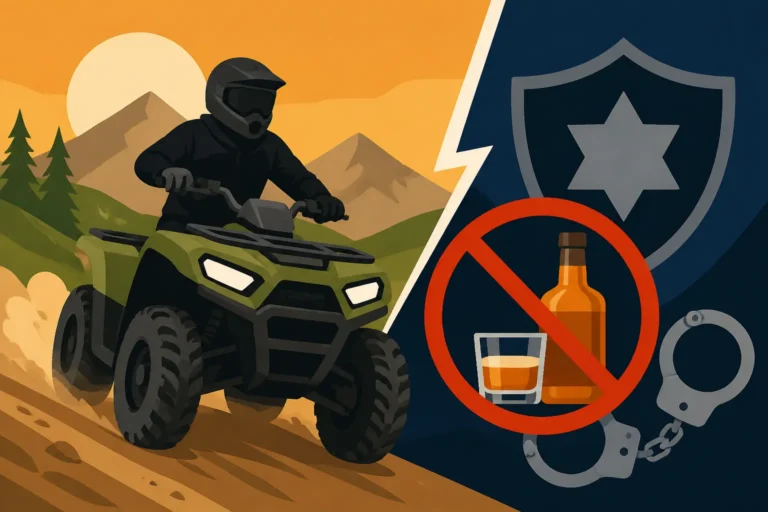
Perhaps most critically, operating an OHV on a road while under the influence of alcohol or drugs carries the same severe penalties as operating a regular vehicle. [Idaho Alcohol Limits for OHV Operators] are no different than for cars or trucks, meaning a DUI on your side-by-side will impact your standard driver's license and carry significant fines, potential jail time, and the loss of riding privileges. Beyond alcohol, reckless riding, such as excessive speed, unsafe passing, or creating excessive dust and noise in residential areas, can also lead to citations for negligent operation. Respecting speed limits and exercising caution are paramount when sharing roads with other traffic.
Common Infractions and Their Immediate Penalties
The thrill of exploring Idaho's backroads on your ATV or UTV can quickly turn into a headache if you’re caught violating the rules. While the specifics can vary, many tickets fall into a few common categories, each carrying its own set of fines and immediate consequences. Understanding these can help you stay on the right side of the law.
Missing Stickers and Plates
This is arguably the most straightforward and frequently issued citation. Many riders assume that if they’re just "crossing a road" or "going a short distance," the rules don't fully apply, but that's a dangerous assumption. Idaho law is clear: if you're on a designated county road or any public route open to OHVs, you need to be properly registered and plated.
The penalties for an unstickered OHV are not minor. You could face a citation with a fine that, depending on the county and specific circumstances, can add up quickly. This isn't just an inconvenience; it's a significant hit to your wallet that could easily have been avoided with a quick stop at an authorized vendor or an online renewal. Similarly, riding on designated roads without the proper [Idaho Restricted Vehicle Plate Explained] will result in a separate fine. These aren't just redundant; they signify different aspects of your machine's legality for road use. For instance, the sticker primarily funds trail maintenance, while the R-plate confirms your machine meets road-specific equipment standards. Enforcement officers are well-versed in these distinctions and will issue tickets for each missing component. It's not uncommon for a rider to receive multiple citations for lacking both a sticker and a plate.
Beyond the initial fine, repeated violations or operating an obviously unregistered machine can sometimes lead to more severe actions, like your machine being impounded, particularly if you're also violating other rules or have a history of non-compliance. Always ensure your annual sticker is current and properly displayed, and if you plan any road travel, ensure you've obtained and mounted your R-plate. Ignoring these basic requirements is an open invitation for a deputy to pull you over. For more on the costs, check out [Idaho OHV Ticket Costs by Violation].
Equipment Deficiencies
Even if your machine is properly stickered and plated, you can still face fines if it lacks essential safety equipment or fails to meet specific standards for road use. Idaho wants OHVs that share roads to be as safe and predictable as possible, and that means adhering to minimum equipment requirements.
Common equipment-related infractions include missing or non-functional headlights, taillights, or brake lights. Riding after dark without proper illumination is not only dangerous but a surefire way to get pulled over. Similarly, a missing or broken horn, or a rearview mirror that doesn't provide adequate visibility, can also lead to a citation. Many riders, especially those with modified machines, might not realize that their custom setup, while cool for the trails, might not meet road-legal specs. For example, some aftermarket exhaust systems, while boosting performance, might exceed Idaho's noise limits, particularly when passing through populated areas or near quiet recreation zones. It's crucial that any modifications, even those from reputable brands like SuperATV, comply with state and local regulations for road use.
Another area often overlooked is the spark arrester. While this is primarily a fire safety requirement for off-road use, it's enforced on roads that traverse public lands where fire danger is a concern. If your muffler doesn't have a functional spark arrester, you could be fined. While these fines might seem minor individually, they can quickly accumulate if multiple equipment issues are found during a single stop. Always perform a quick safety check of all lights, signals, brakes, and mirrors before you head out, especially if you plan to hit any designated road sections.
Prohibited Road Use
One of the most complex areas of Idaho OHV law revolves around where you can actually ride. Not all roads are open to ATVs and UTVs, even with an R-plate and sticker. Misunderstanding or ignoring road restrictions is a significant source of tickets, and sometimes, the fines can be steep.
The biggest mistake riders make is assuming that all county roads are fair game. While many are, Idaho law allows individual counties to restrict or close roads to OHV use. Additionally, state highways and interstates are almost universally off-limits, with very few exceptions for direct crossings. Riding on a closed road or a prohibited highway will almost certainly result in a citation. These closures are typically marked with signage, but it's the rider's responsibility to know the local ordinances. For deeper insights, refer to [Idaho City and County Ordinances That Close Roads]. This is why planning your route in advance and consulting current motor vehicle use maps (MVUMs) from the Forest Service or BLM is absolutely critical.
Beyond simply being on a closed road, specific behaviors on open roads can also lead to fines. This includes operating a machine on a road not designated for OHVs, such as riding on the shoulder of a state highway or cutting across private property from one road to another. Violations can also stem from operating an OHV in a manner inconsistent with local ordinances, such as exceeding posted speed limits for OHVs on county roads (which are often lower than for other vehicles) or riding too close to other vehicles. These actions can be seen as reckless operation and carry their own set of fines, potentially increasing the severity of other infractions. [What Idaho Requires Before You Ride a County Road] details these specific requirements.
Beyond the Fine: Deeper Consequences of Illegal Road Riding
Receiving a ticket for illegal road riding in Idaho is more than just a momentary financial sting. Depending on the severity of the infraction, and whether it’s a repeated offense, the consequences can extend far beyond the initial fine. Riders can face vehicle impoundment, loss of driving privileges, and significant issues with their insurance coverage.
Vehicle Impoundment and Recovery
One of the most frustrating and costly consequences of illegal road riding is the impoundment of your ATV or UTV. This doesn't happen for every minor infraction, but it's a very real possibility, especially if you're found operating without proper registration, insurance, or if you're involved in more serious offenses like a DUI or reckless endangerment.
When your machine is impounded, it's not simply parked on the side of the road until you can pick it up. It will be towed to an impound lot, often at significant cost to you. You'll be responsible for the towing fee, daily storage fees, and potentially administrative fees from the law enforcement agency involved. These costs can quickly escalate, sometimes reaching hundreds or even thousands of dollars, far exceeding the initial citation fine. Before you can even attempt to recover your machine, you'll typically need to provide proof of ownership (like your title), show valid registration for the machine, and often provide proof of insurance. If the reason for impoundment was a lack of these items, you'll need to get them in order before the impound lot will release your vehicle.
This process can be a huge logistical headache, potentially requiring days or weeks to resolve, especially if you're from out of state or if getting your paperwork in order is complicated. In some cases, if you can't or won't pay the impound fees, the impound lot can eventually sell your machine to recover their costs. This means losing your valuable ATV or UTV entirely. The best way to avoid this nightmare scenario is to ensure all your paperwork, equipment, and operating practices are in full compliance before you ever hit a public road.
Impact on Driving Privileges
Many riders mistakenly believe that OHV violations only affect their ability to ride off-road. However, if the violation occurs on a public road, especially one that requires a driver's license for operation, the consequences can extend to your standard driving privileges. This is particularly true for more serious offenses.
A conviction for operating an OHV under the influence of alcohol or drugs (OHV DUI) on an Idaho road will absolutely affect your standard driver's license, just as if you were driving a car. This can result in license suspension, mandatory alcohol education courses, and increased insurance premiums for all your vehicles. Even charges of reckless operation, excessive speed, or fleeing an officer on an OHV can have implications for your driving record, potentially leading to points on your license or even temporary suspension of your right to operate any motor vehicle. [Losing Riding Privileges After a Citation] is a very real threat, especially for repeat offenders or serious infractions.
For younger riders, these consequences can be even more severe, potentially delaying their ability to obtain a standard driver's license or imposing additional restrictions. The state views operation of any motorized vehicle on public roads as a serious responsibility. If you demonstrate a disregard for those rules on an OHV, the state has the authority to impact your ability to drive other vehicles too. This intertwined system underscores the importance of treating OHV road use with the same respect and responsibility you would driving a car.
Insurance Woes After a Citation
Getting a ticket for illegal road riding can have a ripple effect on your insurance, potentially leading to higher premiums, difficulty getting coverage, or even outright cancellation of your policy. Insurers view citations as an indicator of increased risk, and they adjust your rates accordingly.
A moving violation or an at-fault accident on an OHV, especially if it occurs on a public road, will likely be reported to your insurance company. This can result in a significant hike in your premiums, not just for your OHV policy but potentially for your auto insurance as well. Insurers might view you as a higher-risk client across the board. If the citation was for operating without insurance, you could face even more severe problems, including difficulty obtaining new coverage or being placed in a high-risk pool, which comes with exorbitantly expensive rates. Some companies might even drop your coverage entirely, leaving you scrambling to find a new insurer.
Furthermore, if you're involved in an accident while illegally operating your OHV—for instance, on a closed road, without proper registration, or while intoxicated—your insurance company might deny your claim entirely. This means you would be personally responsible for all damages, including medical bills for injuries to yourself or others, and repairs to your machine or any property damaged. This financial burden can be catastrophic. Always review your policy carefully to understand what is and isn't covered, especially when it comes to road use, and strive to avoid any situation that could compromise your coverage.
How to Contest or Handle an Idaho OHV Citation
Receiving an OHV citation in Idaho can be jarring, but it doesn't always mean you're automatically guilty or that you have no recourse. Understanding your options and knowing how to navigate the legal process can make a significant difference in the outcome.
Understanding Your Rights and Options
When an Idaho deputy issues an OHV citation, it's typically a notice to appear in court or pay a fine. Your first step should be to carefully read the ticket. It will outline the specific violation, the date and time of your court appearance (if applicable), and instructions on how to pay or contest the citation. Don't just stuff it in your glove box and forget about it; that only leads to bigger problems.
You generally have the right to plead guilty and pay the fine, or to plead not guilty and contest the charge in court. Pleading guilty means admitting to the offense and accepting the prescribed penalty. If you choose to contest it, you'll have the opportunity to present your case to a judge. This might involve demonstrating that the officer made a mistake, that the signage was unclear, or that you were in compliance with the law. It’s important to remember that laws vary by county, so what might be a violation in Ada County might be handled differently or even be legal in Kootenai County, for example. For instance, [Fighting an OHV Ticket in Idaho] involves understanding these nuances. Consider consulting with a legal professional who specializes in traffic or OHV law, especially if the fine is substantial, if there are multiple charges, or if your driving privileges are at risk. They can help you understand the specific legal avenues available to you and the potential outcomes.
Gathering Evidence and Preparing for Court
If you decide to contest your citation, preparation is key. Simply showing up in court and saying "I didn't know" or "it wasn't fair" is unlikely to sway a judge. You need concrete evidence to support your defense.
Start by documenting everything related to the incident. Take photos of the location where you received the ticket, paying close attention to any signage (or lack thereof), road conditions, or other relevant features. If your machine's equipment was cited, take photos of the equipment functioning correctly (e.g., lights on, mirror clearly visible). Collect any documents that prove your compliance, such as your current OHV sticker, restricted plate registration, title, driver's license, and proof of insurance. If you were riding with others, and they witnessed something relevant, ask them for a statement or if they would be willing to testify. This is also where product documentation for aftermarket parts, perhaps from SuperATV, showing they meet DOT standards, could be helpful if an equipment modification was questioned.
Familiarize yourself with the specific Idaho statutes or local ordinances cited on your ticket. You can often find these online through the Idaho Legislature's website or the relevant county's official website. Understanding the letter of the law will help you formulate a precise argument. Presenting a well-organized case, supported by evidence, demonstrates respect for the court and improves your chances of a favorable outcome, whether that's a reduced fine, a dismissal, or a finding of not guilty. Always be polite and respectful to the judge and the prosecuting attorney; a good attitude goes a long way.
What to Expect from the Legal Process
The legal process for an OHV citation typically begins with your initial appearance, where you enter your plea. If you plead not guilty, a trial date will be set. This trial might be informal, especially for minor infractions, or it could involve a more formal presentation of evidence and testimony.
During the trial, the prosecuting attorney will present the state's case, usually involving the testimony of the issuing officer. The officer will explain why they pulled you over and why they believe you were in violation. You or your attorney will then have the opportunity to cross-examine the officer and present your own defense. This is where your gathered evidence and prepared arguments come into play. You might call witnesses, submit photographs or documents, and testify on your own behalf. The judge will listen to both sides and then render a decision. They might find you guilty, not guilty, or offer a plea bargain, such as reducing the charge or fine in exchange for a guilty plea.
If you are found guilty, the judge will impose a sentence, which could be the fine originally listed on your ticket, a reduced fine, or in more severe cases, additional penalties like community service or probation. It's crucial to understand that even if you're found guilty, you typically have the right to appeal the decision to a higher court. However, appeals can be complex and expensive, so weigh this option carefully with legal counsel. The goal, always, is to navigate this process with as much information and preparation as possible to achieve the best outcome.
Riding Smart: Strategies to Avoid Fines and Stay Legal
The best way to deal with Idaho fines for illegal road riding is to avoid getting them in the first place. This means being proactive, staying informed, and adopting a responsible approach to every ride. A little preparation goes a long way in ensuring your day on the trails or roads remains enjoyable and citation-free.
Pre-Ride Checks and Route Planning
Before you even turn the key, a thorough pre-ride check of your ATV or UTV is essential. This isn’t just about making sure your machine runs well; it’s about verifying its legality for the type of riding you plan to do. If you intend to use any designated roads, confirm that all required equipment is in working order.
Check your headlights, taillights, brake lights, and turn signals. Make sure your horn honks and your mirror provides a clear view. If you've recently installed new aftermarket accessories, like a winch or a cargo box, double-check that they don't obstruct any necessary lights or plates. For example, some side-by-sides modified with a SuperATV windshield or roof may need their mirrors adjusted to ensure proper visibility. Also, verify that your OHV sticker is current and properly affixed, and that your restricted use plate is securely mounted and clearly visible. Beyond the machine itself, ensure you have your valid driver's license, proof of insurance, and any necessary youth safety certificates with you. [What an Idaho Deputy Asks a Rider For] typically includes all of these items.
Equally important is planning your route. Don't assume all roads are open to OHVs. Consult current Motor Vehicle Use Maps (MVUMs) from the Forest Service or BLM, or check with local county sheriff's offices or Parks and Recreation departments for local ordinances. These resources clearly mark which roads are open, which are closed, and any specific restrictions. Avoid riding on private land without explicit permission, even if it seems like a shortcut. Sticking to clearly marked, legal routes will prevent you from inadvertently straying into prohibited areas and incurring trespass or illegal road use fines.
Keeping Up-to-Date on Idaho Laws
OHV laws are not static. They can change, sometimes subtly, sometimes significantly, with new legislation or local ordinances. What was legal last year might not be legal this year, and relying on old information is a recipe for a citation.
Make it a habit to periodically review Idaho's OHV statutes. The Idaho Department of Parks and Recreation (IDPR) website is an excellent resource for current regulations, including details on registration, equipment, and road use. Local county websites also often publish their specific ordinances regarding OHV access. If you're planning a trip to a new area, always check the local rules for that specific county. Many counties have specific rules about [Idaho Roads Closed by Local Ordinance]. Joining local OHV clubs can also be beneficial, as these organizations often stay abreast of legislative changes and can provide valuable insights into local riding areas and regulations. They sometimes even participate in discussions that shape future laws, giving you a chance to be part of the solution.
Beyond laws, stay aware of conditions. During fire season, for instance, certain public lands or roads might be temporarily closed to all recreational traffic, including OHVs, regardless of their usual status. Ignoring these closures can lead to substantial fines and serious consequences if you inadvertently contribute to a fire. Similarly, seasonal closures for wildlife protection or mud season can also result in citations. Checking official agency websites for current conditions and closures before each ride is a simple step that can save you a lot of trouble.
The Value of Education and Awareness
Ultimately, responsible riding comes down to education and awareness. The more you know about Idaho's OHV laws and best practices, the less likely you are to incur fines or put yourself and others at risk.
For younger riders, completing an approved OHV safety course is not just a good idea; it's often a legal requirement for riding on public lands and roads. These courses teach critical safety skills and familiarize riders with the rules and ethics of OHV operation. Even for experienced adult riders, a refresher course or simply taking the time to read through the regulations can highlight areas where your understanding might be outdated or incomplete. Many of the frustrations people feel about fines stem from a lack of awareness, not intentional disregard for the law.
Being a good ambassador for the sport also helps prevent negative perceptions that can lead to tighter restrictions. Riding respectfully, keeping noise levels down in residential areas, staying on marked trails, and adhering to all road rules are crucial. When riders consistently operate illegally or recklessly, it often results in increased law enforcement presence and pressure from residents to close more roads and trails to OHV use. By taking personal responsibility for compliance, you not only protect yourself from fines but also contribute to the long-term enjoyment of OHV riding for everyone in Idaho.
Disclaimer
This article is for general informational purposes only and does not constitute professional advice. Laws, prices and regulations vary by location and change over time. Consult a qualified professional for guidance on your specific situation.