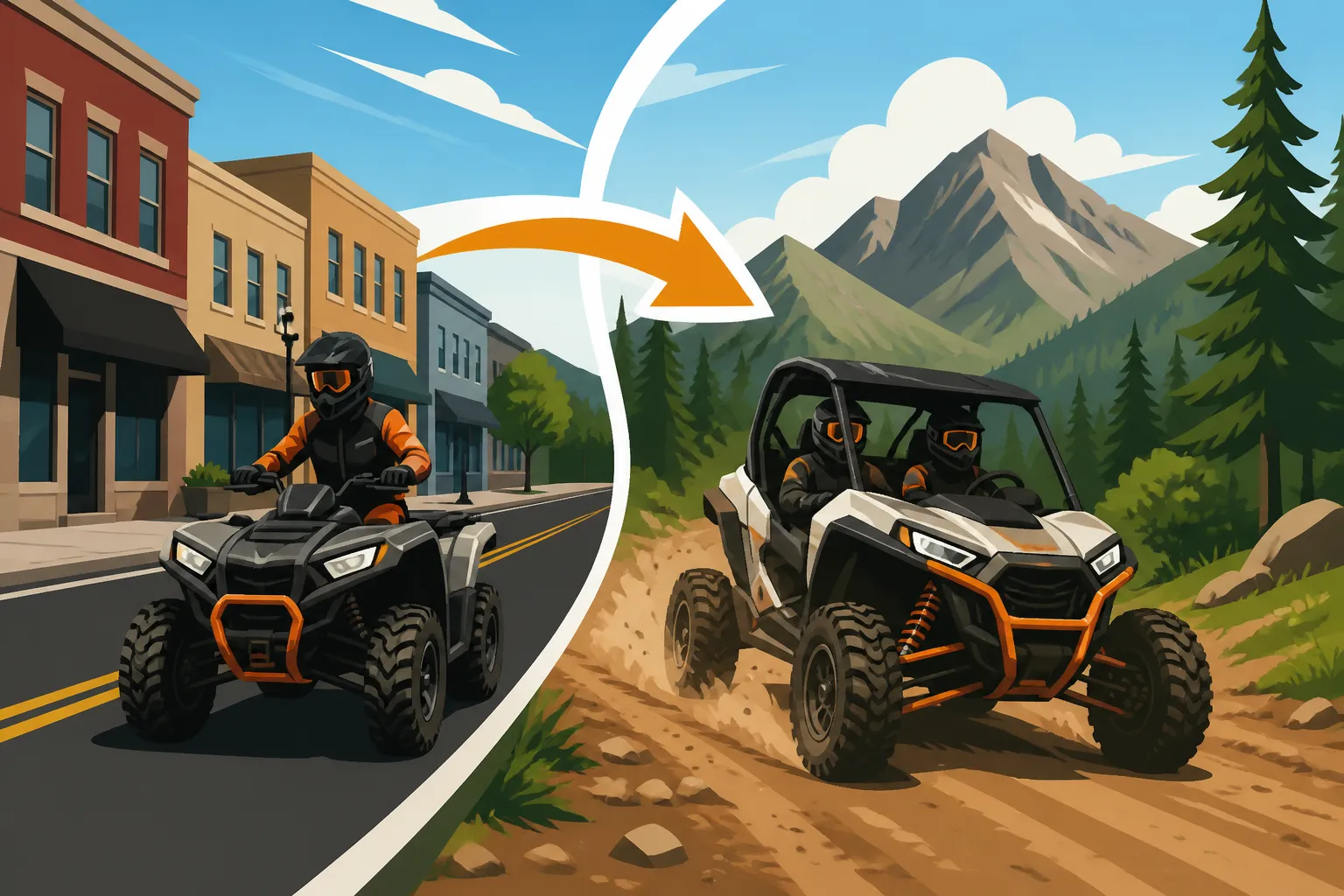
Riding Town to Trailhead in Idaho
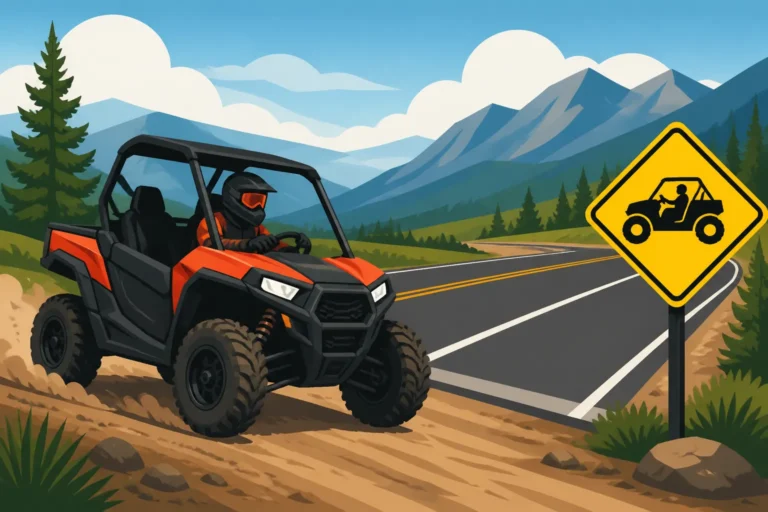
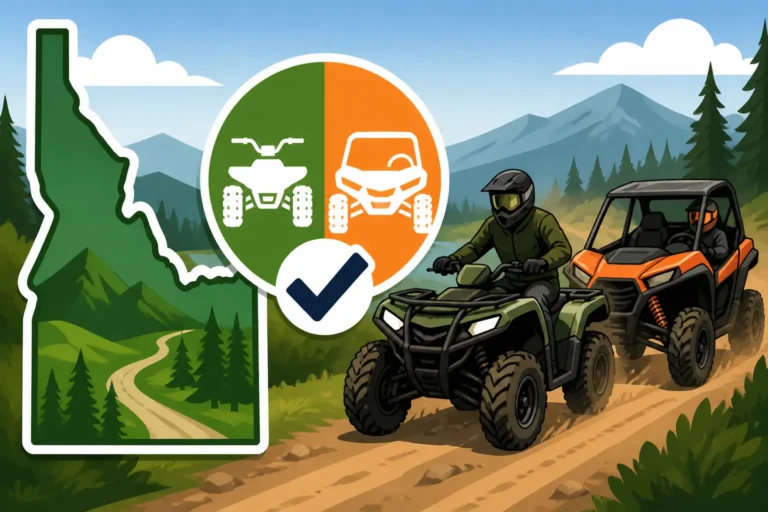
There's nothing quite like the freedom of an Idaho trail ride, but the process of getting your ATV or UTV from a cozy cabin or hotel room in town to the actual trailhead can sometimes feel like a puzzle. Hauling your machine on a trailer every single time can be a real drag, especially when you're just a few miles from the dirt. This guide is all about helping you understand Idaho's specific rules and requirements, so you can confidently and legally ride your off-highway vehicle (OHV) directly from town to the trailhead, maximizing your saddle time and minimizing the hassle of loading and unloading.
Understanding Idaho's OHV Road Rules for Town-to-Trailhead Riding
Idaho offers some incredible opportunities for OHV enthusiasts, but riding on paved or even gravel county roads to connect to those trails isn't simply a matter of hopping on and going. There's a specific set of rules designed to integrate OHVs safely into the public road system, and understanding these is your first step towards a seamless town-to-trailhead experience. It’s not just about having a cool machine; it’s about having the right paperwork and equipment to back it up when you hit the pavement.
The Core Concept: Restricted Vehicle Plates
When you think about taking your ATV or UTV on public roads in Idaho, the very first thing that should come to mind is the Restricted Vehicle Plate, often simply called an "R" plate. This isn't just a fancy designation; it's the fundamental piece of identification that tells law enforcement your OHV is equipped and authorized for limited road use. Without this plate, your machine is strictly for off-road environments, even if you’re just trying to cross a paved road to get to another section of trail. It's the state's way of saying, "Okay, this machine meets a certain standard for shared use."
Think of it like this: your street-legal car has a standard license plate because it was designed from the factory to meet all road safety standards. Your OHV wasn't. The Restricted Vehicle Plate acknowledges that while your side-by-side or quad is primarily for dirt, it has been modified or equipped to handle specific road conditions safely enough for limited travel. Getting one involves a specific application process through your county assessor's office, and it verifies that your OHV is ready for the pavement, even if just for a short stretch. You can learn more about this specific requirement in [Idaho's Restricted Vehicle Plate Explained]. This plate essentially bridges the gap between the wild trails and the civilized roads, allowing you to access one from the other without breaking the law.
What Idaho Requires to Ride a County Road
Beyond the R plate itself, Idaho has a clear checklist of requirements for any OHV operating on a county or city road. It's not enough to just have the plate; your machine needs to be properly outfitted, and you, as the operator, need to be prepared. First and foremost, you'll need an Idaho OHV registration sticker, which signifies you've paid the annual fee that helps maintain our incredible trail system. This sticker needs to be displayed correctly, typically on the R plate itself, or in a visible location on your machine. Without that sticker, even with an R plate, you’re not fully compliant.
Next, and crucially, your machine must meet basic safety equipment standards similar to what you'd find on a motorcycle. This includes working headlights, taillights, brake lights, and at least one mirror that provides a clear view to the rear (some riders opt for two for better visibility). A horn is also mandatory for warning other road users. And perhaps most critically for your peace of mind and everyone else's safety, you must carry proof of liability insurance. Idaho doesn't mess around when it comes to insurance for road use, whether you're in a car or an OHV. Finally, the operator needs a valid driver's license. These requirements are all detailed in [What Idaho Requires Before You Ride a County Road], and they're in place for a good reason: to ensure that when OHVs share the road, they do so predictably and safely for everyone involved, from the rider to the passing motorist.
Essential Equipment for Road-Legal OHVs in Idaho
Making your OHV road-legal isn't just about getting a plate and a sticker; it's about equipping your machine with the right safety components. These aren't optional add-ons; they're mandatory modifications that ensure your ATV or UTV is visible and controllable when sharing the road with cars, trucks, and even bicycles. Cutting corners here isn't just risky, it can lead to a citation and ruin your ride.
Lighting, Mirrors, and Safety Gear
When you're riding your OHV on a public road in Idaho, visibility is paramount, especially as daylight fades or conditions get dusty. Your machine needs a full complement of functional lights: at least one headlight that illuminates the road ahead, a taillight that is visible from the rear, and working brake lights that activate when you slow down or stop. Beyond that, turn signals are required to clearly communicate your intentions to other drivers, just like in a regular vehicle. Reflectors, strategically placed on the machine, also boost your visibility, particularly from the sides. All of these components are critical, not just for legal compliance but for your own safety when navigating roads shared with faster-moving vehicles.
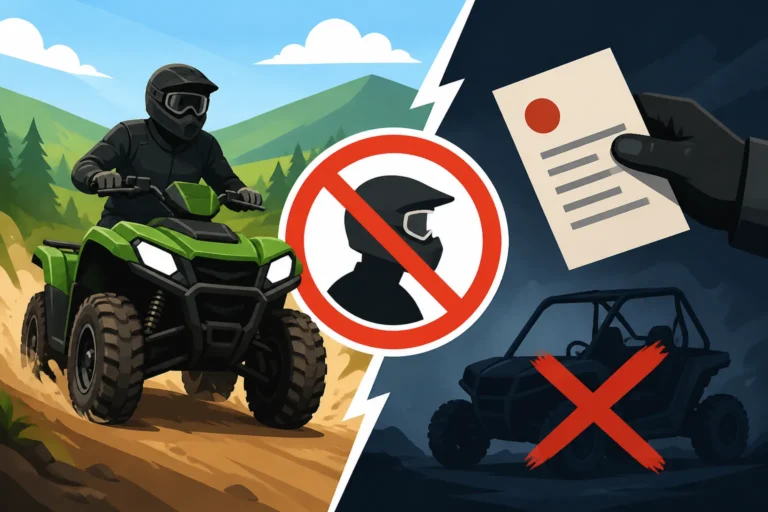
Idaho also mandates at least one mirror, affixed to the machine, that allows the operator to see 200 feet to the rear. Many riders choose to install two side mirrors for better situational awareness. A horn is also a must-have for signaling. For riders under 18, helmets are mandatory on any public road, and eye protection (goggles or a face shield) is required for all operators, regardless of age, to protect against dust, debris, and glare. These rules, including specifics like those found in [Lighting Rules for Riding After Dark in Idaho] and [Goggles or a Face Shield on the Road], are designed to enhance your safety and the safety of others. While SuperATV offers a wide range of accessories, including mirrors and lighting kits, always ensure any aftermarket additions meet Idaho's specific legal requirements before hitting the pavement.
Mufflers, Spark Arresters, and Noise Limits
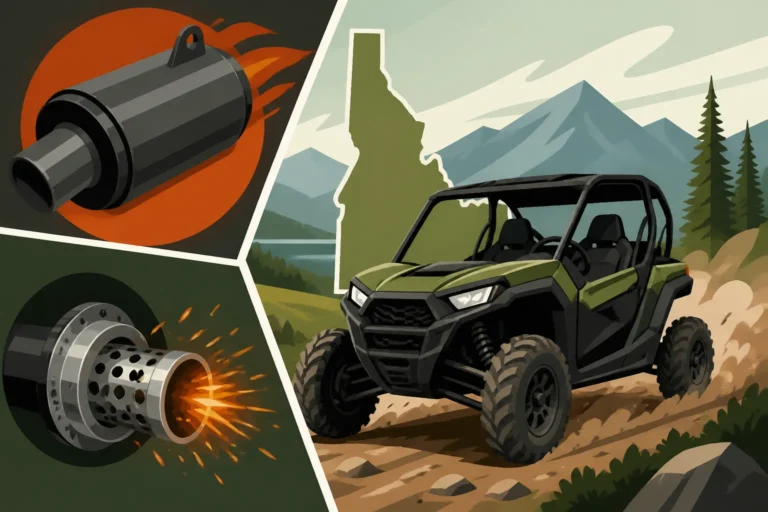
While the focus on trails is often about having enough power and traction, when you're riding on public roads, especially through towns, noise becomes a significant consideration. Idaho law requires that all OHVs operating on public land, which includes designated roads and trails, be equipped with a muffler in good working order and a spark arrester that meets U.S. Forest Service standards. The spark arrester is a critical safety device that prevents hot carbon particles from escaping your exhaust and potentially igniting wildfires, which are a serious concern in Idaho's dry summers. Without a certified spark arrester, you risk significant fines and contributing to a devastating fire.
Beyond spark arresters, Idaho also has rules regarding excessive noise. While there isn't a specific decibel limit written into the general OHV road use statute, local ordinances can and do impose noise restrictions, particularly in residential areas or quiet mountain towns. Running an aftermarket exhaust that is significantly louder than stock, even if it has a spark arrester, can quickly draw unwanted attention from residents and law enforcement. The goal is to be a good neighbor. Always make sure your exhaust system is not excessively loud and that your spark arrester is properly maintained and functional. Check out [Idaho Muffler and Exhaust Noise Limits] for more details on these regulations. Responsible riders understand that respecting noise limits helps maintain positive relationships with communities and ensures continued access to these precious town-to-trail connections.
Navigating Local Ordinances and Open Roads
Idaho is a big state with diverse landscapes and communities. What might be perfectly legal in one county or town for OHV road access could be strictly prohibited just a few miles down the road. This patchwork of rules can be confusing, but understanding how to navigate local ordinances and identify open roads is key to a stress-free ride.
Identifying Open Roads: Motor Vehicle Use Maps (MVUMs) and Local Rules
When it comes to identifying where you can legally ride your OHV on roads, you essentially have two main sources of information: Motor Vehicle Use Maps (MVUMs) for federal lands and local ordinances for county and city roads. MVUMs are issued by the U.S. Forest Service and Bureau of Land Management (BLM) and clearly designate which roads and trails are open to specific types of motorized vehicles, and during which seasons. These maps are invaluable for planning your trail sections, but they generally only cover federal land, not the roads that get you to the forest boundary from town.
For the roads leading up to or through communities, you need to consult local county and city ordinances. Many counties in Idaho have adopted specific ordinances that designate which county roads are open to OHVs. Some counties may open almost all their roads, while others might restrict OHVs to specific routes or even prohibit them entirely from certain areas. City ordinances are often even stricter, sometimes limiting OHV access to specific "connector" roads or completely barring them from city streets. This means what you do in one town, like McCall, might be very different from the rules in another, like Sandpoint. It’s absolutely critical to do your homework for the specific area you plan to ride. Checking county websites or contacting the local sheriff's office or even the city clerk's office can provide the most current information. Learn more about finding this vital information in [Finding an Idaho County's OHV Ordinance].
Crossing Highways and Riding Through Towns
One of the most common questions riders have is about major highways. Can you ride your OHV on an Idaho state highway or an interstate? The answer is a resounding no. Idaho law explicitly prohibits OHV operation on state and federal highways, including the shoulders. These are high-speed, high-traffic corridors, and OHVs simply aren't designed for that environment. However, the law does allow for crossing these highways at a 90-degree angle, typically at an intersection, where safe to do so. This means you can't cruise down US-95 for miles, but you might be able to cross it to get from one section of county road to another. These rules are crucial for safety and are strictly enforced.
As for riding through towns, this is where local ordinances really come into play. Some towns, recognizing the economic benefit of OHV tourism, have embraced riders and designated specific routes through town that connect to trail systems. For example, communities like McCall, Stanley, and Salmon have made efforts to welcome OHV traffic, allowing riders to access gas stations, restaurants, and lodging directly from their machines, provided they follow local rules like speed limits and noise ordinances. Other towns, however, may have decided against OHV access on their city streets, sometimes due to noise concerns or traffic congestion. Always look for signage or consult local town regulations before assuming you can ride your OHV on main street. Understanding [Crossing an Idaho Highway on an OHV] and knowing which [Idaho Towns That Welcome OHV Traffic] can save you a lot of headache and potential fines.
Driver and Rider Requirements for Road Use
Just as your OHV needs to be properly equipped and plated, you, as the operator, also need to meet specific requirements to legally ride on Idaho's county and city roads. These rules ensure that everyone sharing the road is qualified and responsible, contributing to a safer environment for all.
Driver's License, Age, and Supervision
To operate an OHV on any public road in Idaho, including county roads open to OHVs, you must possess a valid driver's license. This isn't just a suggestion; it's a legal requirement. This means a learner's permit typically isn't sufficient for independent road operation, though specific rules apply for young riders. For anyone under the age of 16, even if they have an OHV safety certificate, their ability to operate an OHV on a public road is extremely restricted. Generally, a rider under 16 may only operate on a public road if they are directly supervised by an adult (18 or older) who holds a valid driver's license and is within 300 feet of the young rider. This adult must also be operating an OHV.
However, the restricted vehicle plate, which makes road use possible, generally requires a licensed driver. This means that if a minor is operating a plated OHV on a county road, they would still need a driver's license, which usually means they are at least 16. The rules can be a bit nuanced for various age groups and scenarios, so it's always best to review the current statutes carefully. For a deeper dive into these specifics, including situations with a learner's permit, consult [Driver's License Requirements on Idaho Roads] and [Idaho Road Rules for Young Riders]. Safety and legal compliance are paramount, especially when involving younger riders on shared roadways.
Insurance and Proof of Compliance
One of the non-negotiable requirements for operating an OHV on a public road in Idaho is liability insurance. Just like with a car, you must carry proof of current liability insurance that meets the state's minimum coverage requirements. This insurance protects you financially in case you are at fault in an accident involving property damage or bodily injury to another party. Without it, you are not only breaking the law but also exposing yourself to significant personal financial risk if something goes wrong. An OHV incident on a public road can be just as costly, if not more so, than a car accident.
Beyond insurance, you must be ready to provide proof of compliance for all other requirements if stopped by law enforcement. This means having your valid driver's license, your OHV registration sticker (which should be visibly displayed), and your restricted vehicle plate clearly mounted. It's a good practice to keep all this paperwork, or at least copies, in a waterproof bag on your machine. An Idaho Fish and Game officer or a county deputy will typically ask for these documents during a traffic stop or at an OHV checkpoint. Being unprepared can lead to fines or even having your machine impounded. Always be ready to show your documents, as explained in [Liability Insurance Idaho Road Riding Requires] and [What an Idaho Deputy Asks a Rider For]. Being prepared is the easiest way to avoid unnecessary delays and potential penalties.
Practical Tips for a Smooth Town-to-Trailhead Experience
Riding your OHV from town to trailhead offers unmatched convenience and a deeper sense of adventure. But to truly enjoy this experience, a little preparation and thoughtful riding go a long way. It's not just about knowing the rules, but also about applying common sense and good etiquette.
Planning Your Route and Fuel Stops
The excitement of hitting the trails can sometimes make us forget the practicalities. Before you even fire up your engine, take some time to plan your route. Don't just assume a road is open; verify it. Use MVUMs for federal lands and cross-reference with county and city ordinances for paved or gravel roads. Many online mapping tools now offer OHV-specific overlays or allow you to download GPS tracks, which can be incredibly helpful for navigating the often-complex network of open and closed roads. Look for designated OHV routes that connect directly to trail systems.
Crucially, consider your fuel. OHVs, especially high-performance side-by-sides, can be thirsty machines. Riding on pavement, even at lower speeds, can sometimes consume more fuel than slow trail crawling. Plan your fuel stops in advance, especially if you're venturing into more remote areas where gas stations are few and far between. Many small Idaho trail towns are happy to serve OHV riders, so identify these communities as potential refill points. Don't rely on guesswork; know your machine's range and plan accordingly. Running out of gas miles from the nearest town is a surefire way to turn a fun ride into a frustrating hike. For more insights on fuel planning, check out [Fuel Planning for an Idaho Trail Day].
Rider Etiquette and Safety on Paved Sections
When you transition from the dirt trail to a paved county road, your riding mindset needs to shift. You are now sharing the road with cars, trucks, and potentially cyclists or pedestrians who may not be accustomed to seeing an OHV. Always adhere to posted speed limits, which are often lower on county roads and even lower through residential areas or town limits. Remember, your OHV is designed for off-road performance, not high-speed road stability, so excessive speed on pavement is both dangerous and illegal.
Maintain a safe following distance from other vehicles and be prepared for sudden stops. Use your turn signals well in advance to clearly indicate your intentions. If you're riding in a group, ride single file, especially on narrower roads, and avoid blocking traffic. Dust can be a significant issue on gravel county roads; slow down when passing homes or other vehicles to minimize dust clouds. Being courteous and respectful to residents and other road users helps maintain a positive image for the OHV community and ensures continued access to these vital connectors. Consider adding visibility flags or reflective tape, especially if your OHV is camouflaged, to make it more noticeable. Many SuperATV accessories like whip lights or reflective decals can enhance your machine's presence on the road. The safety of everyone on the road depends on responsible riding, as highlighted in [Speed on an Idaho County Road].
Specific Town Examples and Regional Considerations
Idaho's vastness means that OHV regulations and community attitudes can vary significantly from one region to another. While the state-level requirements for restricted plates and safety gear are consistent, how local communities implement and enforce OHV road access can feel like a game of chance. Knowing which towns welcome OHV traffic and understanding regional nuances is crucial for a successful trip.
Popular OHV-Friendly Towns in Idaho
Thankfully, several Idaho towns have recognized the economic benefit of OHV tourism and have actively worked to accommodate riders. These communities often have designated OHV routes, ample parking for trailers, and businesses that cater to riders. Towns like McCall, Stanley, and Salmon, nestled in prime trail country, are excellent examples. In these places, you'll often find gas stations, restaurants, and even lodging that are easily accessible by OHV directly from town streets. This "ride-in, ride-out" convenience is a huge draw, allowing you to fuel up, grab a meal, or return to your accommodations without having to load your machine back on a trailer.
Idaho City is another prime example, sitting right on the edge of the Boise National Forest with direct access to a huge network of trails. These towns often post clear signage indicating open OHV routes and local regulations, like speed limits or curfews. However, even in OHV-friendly towns, it's essential to respect local rules, particularly regarding noise and parking. You're a guest in their community, and responsible riding helps ensure these privileges continue. For more on what to expect in specific communities, check out [Riding Through McCall, Stanley and Salmon]. These towns are a testament to how local communities and OHV riders can coexist and thrive together.
Regional Differences and What to Watch For
While the basic state rules for restricted plates and equipment are uniform across Idaho, the interpretation and application of road access can differ between regions, largely due to varying county and city ordinances. For instance, counties in the heavily forested panhandle of North Idaho might have different open road designations than those in the vast, high desert landscapes of Southeast Idaho. Some regions might have a long-standing tradition of OHV use and more permissive road access, while others might be newer to the concept and have stricter rules.
It's not just about geography; population density plays a role too. Counties with more dense residential areas or pristine resort communities might have tighter restrictions on OHV road use to minimize noise and traffic impacts. Conversely, more rural counties might have a greater proportion of open roads. Always consider the specific county and municipality you'll be riding through. The best approach is to check the respective county's sheriff's department website or local tourism board. They often provide maps or lists of designated OHV routes. Don't assume that because you rode on a county road in Boise County, the same rules apply in Kootenai County. The devil, as they say, is in the details, and those details vary regionally. For example, if you're tackling challenging terrain in the backcountry, SuperATV's lift kits or upgraded suspension components could be invaluable, but ensure any modifications still allow for legal road use in that particular region.
Penalties and What to Avoid
Riding an OHV from town to trailhead is a fantastic way to experience Idaho, but straying from the rules can quickly turn a memorable ride into a costly lesson. Ignorance of the law is rarely an excuse, and Idaho takes its OHV regulations seriously to ensure safety and preserve access for everyone.
Common Violations and Their Consequences
There are several common violations that OHV riders, particularly those new to road-legal operations, often commit. The most frequent include riding on a public road without a Restricted Vehicle Plate, operating without a current OHV sticker, or lacking the mandatory liability insurance. Other infractions often involve missing safety equipment, such as no headlights after dark, no mirrors, or an excessively loud exhaust without a spark arrester. Riding on a state or federal highway, even for a short distance, is also a serious offense. Each of these carries its own set of penalties, which can range from monetary fines to more severe consequences.
Fines for OHV violations can quickly add up, and repeat offenses or more serious infractions can sometimes lead to the impoundment of your machine. Imagine your side-by-side being towed away because you didn't have a plate or insurance – that's a situation no one wants to be in! Law enforcement agencies, including county sheriffs, Idaho State Police, and Idaho Fish and Game officers, are authorized to enforce these laws. Understanding these potential pitfalls is the first step toward avoiding them. You can delve into specific penalties in [Idaho Fines for Illegal Road Riding] and [Penalties for an Unstickered OHV in Idaho]. Always err on the side of caution and ensure you're fully compliant before you leave the trailhead or your lodging.
Alcohol, Reckless Riding, and Rider Responsibility
Beyond equipment and paperwork, rider behavior is critical, especially when operating an OHV on public roads. Idaho has strict laws regarding operating an OHV under the influence of alcohol or drugs, mirroring those for automobiles. A DUI on an OHV carries the same serious consequences as a DUI in a car, including hefty fines, loss of driving privileges, and even potential jail time. An OHV is considered a motor vehicle when operated on a public road, and the same rules about open containers and blood alcohol content apply. Do not drink and ride, period.
Reckless riding is another serious concern. This includes excessive speed, performing stunts or wheelies on public roads, or operating in a manner that endangers others. Such behavior not only puts yourself and others at risk but also tarnishes the reputation of the entire OHV community, potentially leading to increased restrictions or even closures of valuable riding areas. Being a responsible rider means respecting the rules, the environment, and other people. It means knowing and adhering to [Idaho Alcohol Limits for OHV Operators] and always operating your machine safely and courteously. Our access to these incredible trails and town-to-trail connections depends on every rider acting as a good ambassador for the sport.
Required Road-Legal OHV Equipment in Idaho
| Equipment Category | Specific Requirement | Notes |
|---|---|---|
| Plates & Registration | Idaho Restricted Vehicle (R) Plate | Required for road use, obtained through county assessor. |
| Current Idaho OHV Sticker | Annual sticker, supports trail maintenance. Display on plate. | |
| Lighting | At least one Headlight | Must be functional and provide adequate illumination. |
| Taillight | Visible from the rear. | |
| Brake Lights | Activate when braking. | |
| Turn Signals | Front and rear, functional. | |
| Reflectors | Adequate reflectors for side and rear visibility. | |
| Vision & Sound | At least one Mirror | Must provide view 200 feet to the rear. Two mirrors recommended. |
| Horn | Audible warning device. | |
| Muffler | In good working order, prevents excessive noise. | |
| USFS Approved Spark Arrester | Essential for fire prevention on public lands. | |
| Operator Safety | Valid Driver's License | Required for all operators on public roads. |
| Proof of Liability Insurance | Mandatory for road use, meets state minimums. | |
| Eye Protection | Goggles or face shield for all operators. | |
| Helmet (under 18) | Required for all riders/passengers under 18 years of age on roads. |
[Titling and Registering an ATV in Idaho]
[Idaho OHV Sticker Price This Year]
[Idaho Restricted Vehicle Plate Cost]
[Idaho Title Rules for an Older Machine]
[Renewing an Idaho OHV Sticker Online]
[Insuring an ATV in Idaho]
[Idaho Helmet Rules for Riders Under 18]
[Idaho Roads Open by Default to Restricted Vehicles]
[Riding an ATV on the Road in Idaho]
[Idaho City and the Boise National Forest]
Disclaimer
This article is for general informational purposes only and does not constitute professional advice. Laws, prices and regulations vary by location and change over time. Consult a qualified professional for guidance on your specific situation.