Idaho Rules at a Paved Highway Crossing
It’s a scenario many of us Idaho ATV and UTV riders have faced: you’re out on an incredible trail, navigating through forest roads or dusty two-tracks, and suddenly, you encounter a paved highway that cuts right through your path. The frustration is real – you just want to get to the next section of trail, but you're unsure of the exact rules for crossing. This guide is here to demystify those specific Idaho regulations, helping you safely and legally navigate those necessary paved highway crossings without a hitch.
Understanding What an "Idaho Paved Highway Crossing" Actually Means
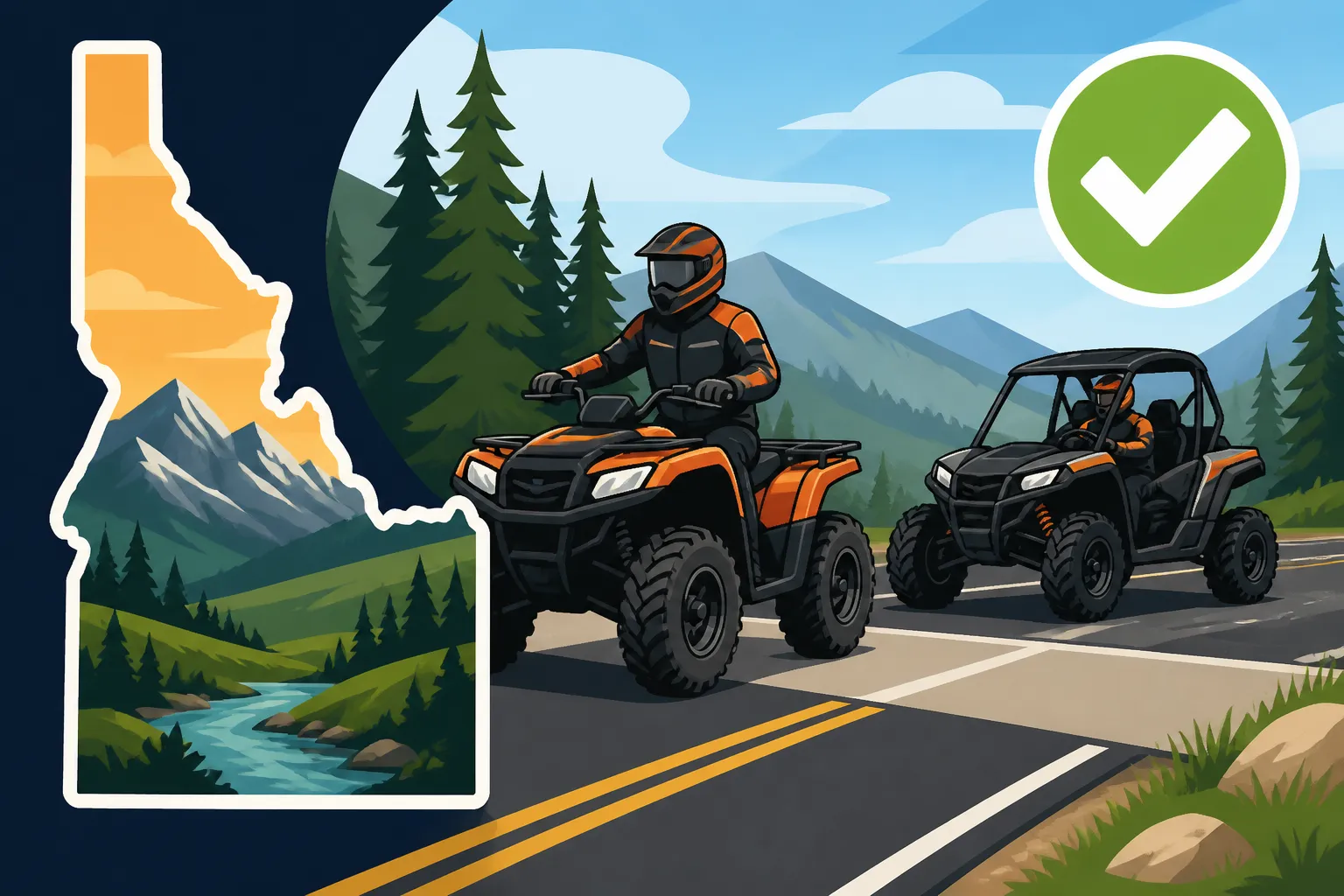
First things first, let's get clear on what we're actually talking about here. In Idaho, there's a significant difference between merely crossing a paved highway and riding on it as a street-legal vehicle. Many riders get these two concepts mixed up, leading to potential tickets or unsafe situations. A "paved highway crossing" refers to those brief, unavoidable moments where your off-highway vehicle (OHV) must traverse a paved road to get from one legal riding area to another. This is typically allowed under very strict conditions, even if your machine isn't fully street-legal for sustained road travel.
Differentiating Highway Types and Their Impact on OHV Use
Not all paved roads are created equal in the eyes of Idaho law when it comes to OHVs. You might encounter anything from a quiet, two-lane county road to a bustling state highway. The rules for crossing are generally consistent across these types of roads, but the level of risk and traffic awareness changes dramatically. For instance, crossing a lesser-traveled county road near Placerville might feel less daunting than darting across a busy stretch of US-95 or Idaho State Highway 55. However, the legal requirements for your machine and your actions remain the same. The key takeaway is that an OHV is explicitly barred from operating on state and federal highways, except for crossing, even if it has a restricted plate. [Can You Ride an OHV on an Idaho State Highway?] delves deeper into this.
Why Crossing a Paved Highway is a Specific Concern
The reason for these specific regulations is, quite simply, safety. OHVs are designed for off-road conditions, not the high speeds, heavy traffic, and specific handling dynamics of paved highways. Their braking, tire traction, and maneuverability are different from standard automobiles. When you briefly cross a highway, you're interacting with vehicles that might be traveling at much higher speeds and drivers who aren't expecting an ATV or side-by-side to suddenly appear. This is why Idaho law permits these crossings only under very controlled circumstances, prioritizing both OHV rider safety and the safety of other motorists. Ignoring these specific rules isn't just a minor infraction; it's a significant risk.
The Strict Rules You Must Follow When Crossing
Idaho law is quite particular about how you make a paved highway crossing. It's not a suggestion; these are requirements designed to minimize risk and ensure a smooth, legal transition from one trail section to the next. You can't just meander across or decide to cruise down the shoulder for a bit. There are specific maneuvers and requirements that apply.
Taking the Shortest, Most Direct Path
When you encounter a paved highway you need to cross, Idaho law requires you to do so at an angle of approximately 90 degrees to the roadway. You must also take the shortest practicable distance to do so. This means you can't ride diagonally across the highway, nor can you travel alongside the highway on the shoulder or within the lane of traffic for any distance before or after the crossing. Imagine drawing a straight line directly across the pavement – that's your permitted path. The intent is to get you off the paved surface as quickly and safely as possible. Think of it as a quick, decisive maneuver, not a leisurely drive.
Signaling, Yielding, and Observing Traffic
Just like when you're driving a car, signaling your intentions is crucial. If your machine is equipped with turn signals (and for many who are striving for more road-legal capabilities, adding [Turn Signals on an Idaho Restricted Vehicle] is a popular upgrade), use them! Even if you don't have electronic signals, clear hand signals are required to indicate your intention to cross. More importantly, you must yield to all oncoming traffic on the paved highway. This isn't a suggestion; it's a hard rule. Wait for a clear break in traffic, ensuring you have ample time to cross safely without forcing any approaching vehicles to slow down or alter their course. Before you even approach the edge of the pavement, stop, look both ways thoroughly, and make eye contact with any drivers if possible.
Who Can Cross: Age and Driver's License Considerations
Idaho law generally permits OHV operators to cross a paved highway, but there are important age and licensing stipulations, especially if you're not riding on a designated county road where additional rules apply. While you don't always need a full driver's license to operate an OHV on trails, crossing any public road brings you into closer contact with highway traffic and, therefore, stricter regulations. For any riding that involves public roads, even just crossing, it's generally best practice for the operator to possess a valid driver's license. [Driver's License Requirements on Idaho Roads] provides more detailed information on this topic. Youth riders under 16, who have taken the required safety course, can operate certain machines on designated roads but should be under direct adult supervision, especially near or when crossing paved highways.
Prepping Your Machine and Yourself for Any Road Intersecting
Even for a brief crossing, your machine needs to meet certain basic safety and legal requirements. You can't just pull any trail-ready machine onto a paved highway without some preparation. This isn't about making your machine fully "street legal" for extended road travel, but rather ensuring it meets the minimum for these critical transition points. Companies like SuperATV offer a range of accessories that can help ensure your machine meets these safety requirements, from lighting upgrades to mirrors.
Essential Machine Equipment for Public Road Interactions
At a minimum, for any interaction with public roads, even just crossing, your OHV must be equipped with several key items:
- A properly displayed Idaho OHV sticker: This shows you’re registered to ride Idaho trails and designated roads.
- Working headlights and taillights: These are crucial, especially during dawn, dusk, or in inclement weather. Even a daytime crossing benefits from enhanced visibility. [Lighting Rules for Riding After Dark in Idaho] elaborates on this.
- Brakes: Obviously, you need functioning brakes to stop safely.
- A spark arrester and muffler: To ensure your machine meets noise and emission standards.
- Rear-view mirrors: At least one mirror is critical for seeing oncoming traffic. Many SuperATV mirror kits offer excellent visibility and durability for both trail and road use. [Mirrors on a Road-Legal Side-by-Side] explains mirror requirements.
For machines that spend any time on county roads, even just connecting trails, a restricted vehicle plate is also necessary. While a restricted plate isn't strictly mandated just for crossing a paved highway that isn't itself a designated OHV route, it's a good indicator that your machine is set up for public road interaction and removes any ambiguity if law enforcement observes your crossing. [Idaho's Restricted Vehicle Plate Explained] covers this in detail.
Required Documents and Personal Protective Gear
Beyond your machine, you need to be prepared personally. Always carry your driver's license (if required and applicable), proof of OHV registration (your sticker itself often serves as this, but having the physical document is smart), and proof of insurance. While Idaho doesn't always mandate insurance for off-road use, if you're venturing onto any public roads, including crossings, liability insurance is a wise choice, and for sustained road use, it's often a requirement. [Driver's License and Insurance on an Idaho Road Ride] details these requirements.
As for personal protective gear, a helmet is highly recommended for all riders, regardless of age, and is mandatory for anyone under 18 in Idaho. [Idaho Helmet Rules for Riders Under 18] is a must-read for parents and young riders. Goggles or other eye protection are also crucial to maintain clear vision, especially when transitioning from dusty trails to paved surfaces where glare can be an issue.
Comparison of OHV Road Interaction Types in Idaho
To further clarify the distinctions, let's look at the requirements for different ways an OHV might interact with paved roads in Idaho:
| Feature/Action | Crossing a Paved Highway (Brief, Direct) | Riding on a County Road (Permitted by Ordinance) | Riding on a State/Federal Highway (Generally Forbidden) |
|---|---|---|---|
| Duration | Shortest practicable distance | Sustained travel allowed | Not allowed, except for crossing |
| Path | Approximately 90 degrees | Follows road, obeys traffic laws | N/A (crossing only) |
| Restricted Plate | Highly Recommended (reduces ambiguity) | Required | Not applicable (cannot ride on these roads) |
| OHV Sticker | Required | Required | Required |
| Driver's License | Recommended, often required if on roads | Required | N/A (crossing only) |
| Liability Insurance | Recommended | Required | N/A (crossing only) |
| Mirrors | Recommended (for awareness) | Required (at least one) | N/A (crossing only) |
| Turn Signals | Recommended (hand signals required if none) | Required (or hand signals for ATVs) | N/A (crossing only) |
| Helmet (Under 18) | Required | Required | Required |
| Yield to Traffic | Always Required | Yes, follow all traffic laws | N/A (crossing only) |
| Maximum Speed | Safe crossing speed | Often 35 mph or posted limit (whichever is less) | N/A (crossing only) |
Common Missteps and Why Idaho Takes Them Seriously
Even with the best intentions, riders can sometimes make mistakes when interacting with paved highways. Understanding these common pitfalls can help you avoid them and keep your riding experience positive and legal. The Idaho Parks and Recreation department, along with local law enforcement, takes these rules seriously because they are fundamental to public safety. [Idaho Fines for Illegal Road Riding] shows the potential consequences.
Assuming All Paved Roads Are Fair Game for OHVs
One of the biggest misconceptions is that if you have a restricted plate, you can ride your OHV on any paved road. This is absolutely not true in Idaho. Restricted plates primarily allow you to ride on county roads where an ordinance specifically allows OHV use. They do not grant you permission to ride on state or federal highways, except for direct, perpendicular crossings. [What Idaho Requires to Ride a County Road] further clarifies the nuances of riding on county roads. Trying to ride down a state highway, even for a short distance, will almost certainly result in a citation and could put you in a very dangerous situation. This is why understanding the specific wording of "crossing" versus "riding on" is so vital.
Ignoring Local Ordinances or Trailhead Signs
Idaho has a patchwork of regulations when it comes to OHV use, with local counties and cities having the authority to open or close specific roads. What might be allowed in one county (like Valley County, with its many OHV-friendly routes) might be strictly prohibited in another. Sometimes, a trail will end abruptly at a paved road, and a sign will explicitly prohibit OHV access beyond that point, or indicate that only a crossing is allowed. Riders who ignore these signs or assume they can "just make it to the next turn" risk serious penalties. Always check local ordinances and observe all signage. This is especially true when approaching areas like state parks, where rules can be even more restrictive about OHV access on paved park roads.
Lack of Proper Equipment or Visibility During a Crossing
Attempting a highway crossing without the required lights, mirrors, or proper signaling significantly increases your risk. Imagine trying to merge onto a busy highway in a car with no mirrors and no turn signals – it’s a recipe for disaster. The same goes for your OHV. Ensuring your machine has basic safety equipment, which can often be found through aftermarket providers like SuperATV, isn't just about avoiding a ticket; it's about making yourself visible and predictable to other drivers. Having good quality, bright lights, and reliable mirrors are not optional extras when you're interacting with highway traffic, even briefly. These seemingly small details are major safety factors.
By understanding and adhering to Idaho's specific rules for paved highway crossings, you can ensure your adventures remain safe, enjoyable, and well within the bounds of the law. Remember, the goal is always to protect yourself, your passengers, and other road users. Keep a close eye on your surroundings, be patient for clear traffic, and make that crossing swift and decisive. [Four Things Idaho Riders Must Carry on a Road] is a great checklist to keep handy.
Disclaimer
This article is for general informational purposes only and does not constitute professional advice. Laws, prices and regulations vary by location and change over time. Consult a qualified professional for guidance on your specific situation.