Riding the Shoulder of an Idaho Road
One of the most common questions and biggest areas of confusion for off-highway vehicle (OHV) riders in Idaho is navigating public roads, especially when it comes to riding on the shoulder. Many riders assume it's a safer or more permissible way to link trails or get into town, but the reality is more complex and often, that assumption can lead to fines or dangerous situations. This guide aims to clear up the confusion around riding the shoulder of an Idaho road, detailing what the law actually says, practical safety considerations, and legal alternatives to keep your ride enjoyable and lawful.
Understanding Idaho's OHV Road Access Basics
Before we dive into the specifics of road shoulders, it's crucial to grasp the foundational rules governing OHV use on Idaho's public roads. Idaho has made significant strides in opening up certain roads to OHVs, recognizing the importance of these machines to recreation and local economies. However, this access isn't a free-for-all; it comes with very clear requirements and limitations.
The Restricted Vehicle Plate: Your Ticket to Town
For most riders, the cornerstone of legal OHV road access in Idaho is obtaining a Restricted Vehicle Plate, often simply called an "R-plate." This special license plate, issued by the Idaho Transportation Department, signals to law enforcement that your machine is equipped and registered for limited road use. Without this plate, your ability to ride on any public road, beyond perhaps crossing a paved surface, is severely limited. It's not just about having a sticker; it's about making your machine street-legal in Idaho's eyes. This plate requires your OHV to meet certain equipment standards, such as having a headlight, taillight, brake light, at least one mirror, and a horn. Think of it as essentially giving your dirt-loving machine a "light" version of street manners. If you're wondering what this plate is all about, you can learn more by checking out [Idaho's Restricted Vehicle Plate Explained].
When you get your R-plate, it essentially acknowledges that your OHV is equipped with the basic safety features needed to interact with other traffic, even if only on designated routes. Many riders invest in aftermarket parts like mirrors, turn signals, and enhanced lighting from companies like SuperATV to ensure their machines not only meet these requirements but also maximize their visibility and safety on pavement. It's a fundamental step that demonstrates your commitment to safe and legal road sharing, making it possible to legally connect those trail sections or grab a burger in town without constantly loading and unloading your machine.
Which Roads Are Actually Open to OHVs?
This is where many riders get into trouble, assuming that if they have an R-plate, they can ride anywhere. Not so fast! Idaho's system is quite specific. The default rule is that most county roads are open to OHVs with an R-plate, unless specifically closed by a local ordinance. On the flip side, state highways (like US-95 or ID-55) and interstates are generally closed to OHVs, with very few exceptions for crossing. This means you need to be acutely aware of the type of road you're on.
The responsibility falls on the rider to know the local rules. A county road in one jurisdiction might be entirely open, while the very next county over might have specific closures in place for certain roads or within city limits. This patchwork of rules can be frustrating, especially when you're exploring new areas. Always consult local county ordinances or a Motor Vehicle Use Map (MVUM) issued by federal land management agencies like the Forest Service or BLM. These maps explicitly show which roads and trails are open to which types of vehicles. For more detail on what kind of roads are accessible, read [Idaho Roads Open by Default to Restricted Vehicles]. It's a game-changer for planning your rides.
Core Requirements for Any Road Use
Beyond the R-plate and knowing which roads are open, there are specific operational requirements for OHVs on any legal road section in Idaho. These are not optional and are critical for both your safety and avoiding a citation. You must have a valid driver's license to operate an OHV on a public road, just as you would for any other vehicle. Furthermore, your machine must be insured with at least the state's minimum liability coverage. This means your off-road machine, while fantastic for dirt, must adhere to on-road responsibilities.
Beyond the administrative requirements, there are equipment and operational rules. Your OHV needs functional headlights, taillights, brake lights, and a horn. Riders under 18 years old have specific helmet requirements, even if adults don't always need them on roads. [Driver's License and Insurance on an Idaho Road Ride] and [Idaho Helmet Rules for Riders Under 18] cover these necessities in depth. Riding at night also introduces additional [Lighting Rules for Riding After Dark in Idaho], which often means ensuring your aftermarket lights are properly aimed and not blinding other drivers. These are non-negotiable elements that ensure your machine is reasonably visible and controllable in a mixed-traffic environment.
Riding the Shoulder: Specific Idaho Regulations
Now, let's get to the heart of the matter: riding on the shoulder of an Idaho road. This is a common practice in many areas for bicycles or even farm equipment, leading OHV riders to assume it might be a safe or legal option for them too. However, the law surrounding OHVs and road shoulders in Idaho has some very specific interpretations.
Is It Legal to Ride the Shoulder in Idaho?
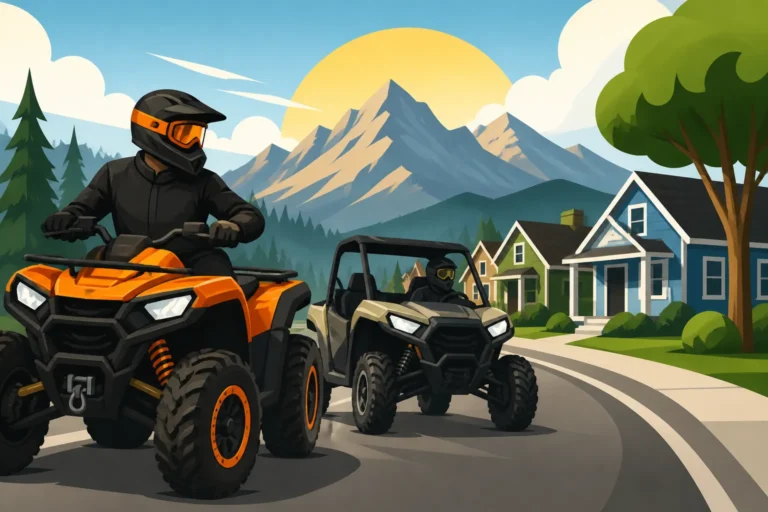
Here's the direct answer: Generally, no, it is not legal to operate an OHV on the shoulder of an Idaho road if that road is otherwise designated for OHV use. Idaho law typically defines the shoulder as part of the roadway. When a county road is open to OHVs, it means you operate the OHV on the traveled portion of the roadway, just like any other vehicle. You are considered traffic. The shoulder is not a separate designated path for OHVs.
The confusion often stems from the desire to give way to faster-moving traffic or a perceived safety benefit. However, OHVs are not granted special dispensation to ride on the shoulder simply because they are slower or smaller than cars. If the road is open to OHVs, you are expected to follow the standard rules of the road, which typically means staying in the lane of travel. An exception might arise in situations where the shoulder itself is explicitly signed as an OHV route (which is rare on county roads, more common for dedicated multi-use paths that happen to run alongside a road), or if a law enforcement officer directs you there for safety reasons. Otherwise, assume the shoulder is off-limits for continuous travel by OHVs, even on roads where OHV use is otherwise permitted.
When Riding the Shoulder Might Seem Necessary (But May Not Be Legal)
There are several scenarios where an OHV rider might be tempted to use the shoulder, believing it's the safest or most logical course of action. For instance, encountering a long line of cars behind you on a dusty gravel road might make you feel compelled to pull over to the shoulder to let them pass. Or perhaps you're approaching an intersection and want to make a wide turn, momentarily dipping onto the shoulder. While these actions might seem courteous or prudent from a safety perspective, they can still put you at odds with the law.
The problem lies in the legal definition of "operating" an OHV on the shoulder. Briefly pulling over to the side to yield to traffic, in a manner consistent with other slow-moving vehicles, is generally acceptable. However, traveling for any significant distance on the shoulder, using it as your primary lane of travel, is where you cross into illegal territory. If you're riding your side-by-side on an open county road and continually hugging the shoulder for miles, you're likely violating the statute, even if you have an R-plate. The law expects you to share the full width of the road that is designated for travel, much like a slow-moving farm tractor would. The intention of the law is for OHVs on open roads to integrate with, not separate from, other traffic in the main lane.
Sidestepping the Shoulder: Legal Alternatives for Road Sections
So, if riding the shoulder isn't generally permitted, what are the legal and safe alternatives when you need to travel on a road? The primary alternative is simple: ride in the designated lane of travel, just like a car. This means staying to the right-hand side of the lane, obeying all traffic laws, including speed limits (OHVs typically have a lower maximum speed limit on roads, often around 35 mph, but always check local regulations), and using appropriate signals for turns or stops.
If you encounter faster traffic, slow down and, when it's safe and practical, find a designated pull-out or a wider section of the road to allow vehicles to pass. This is no different than what you would do if you were driving a slow-moving farm vehicle. Avoid darting onto the shoulder impulsively; instead, anticipate traffic and be prepared to yield safely when possible. Always remember, a valid driver's license, insurance, and the proper equipment like mirrors are crucial for safe road sharing. Many riders use robust side mirrors and additional lighting, perhaps an LED light bar from SuperATV, to ensure they can see approaching traffic and be seen by others, making road sections much safer. Your goal is to be predictable and visible.
Safety and Practicalities for OHV Road Travel
Riding an OHV on any public road, even legally, introduces a different set of challenges than trail riding. The speeds are generally higher, the surfaces are harder, and you're sharing space with much larger and faster vehicles. Prioritizing safety through enhanced visibility, understanding road hazards, and proper machine maintenance is paramount.
Enhancing Visibility: Making Sure You're Seen
When you're out on the trails, blending into the natural environment is part of the fun. On the road, it's exactly the opposite. You need to stand out. OHVs are smaller and often less noticeable than cars, especially on dusty roads or at dusk. One of the most critical safety practices is to maximize your visibility. This starts with bright headlights, taillights, and brake lights, which are mandatory for road legality. Consider adding additional amber or red flashing lights on the rear, particularly if you're frequently traveling on roads. Wearing bright, reflective clothing, especially a high-visibility vest, can make a huge difference.
Furthermore, ensure your [Mirrors on a Road-Legal Side-by-Side] are properly adjusted and provide a clear view of traffic behind you. Some riders even add a rearview mirror to their helmet or a wider, panoramic mirror to their machine to get a better field of vision. Anything that helps you see and be seen significantly reduces your risk on shared roadways. Remember, you might see them, but do they see you?
Navigating Road Hazards on an OHV
Roads, even rural county roads, present different hazards than trails. Potholes can be deeper and sharper, asphalt can be slick when wet, and loose gravel on paved sections can be treacherous for OHV tires designed for off-road grip. Always maintain a safe following distance from other vehicles, as your braking distance on pavement may be different than what you're used to on dirt. Watch for road debris, construction zones, and wildlife, all of which require quick reactions.
Driving on a smooth, hard surface also affects your OHV's handling. It might feel less forgiving, and sudden steering inputs can be more jarring. Be particularly cautious in turns and on inclines or declines. Dust can be a significant issue on gravel roads, impairing visibility for both you and oncoming traffic. Slow down when dust is thick, and always drive defensively. The mindset should shift from aggressive trail riding to cautious, predictable road sharing.
Maintaining Your Machine for Road Use
Road use puts different stresses on your OHV compared to purely off-road adventures. Tires, for example, wear much faster on asphalt and concrete than on dirt. Regularly check your tire pressure and tread depth, and consider tires designed with a more robust center tread for road sections if you do a lot of pavement riding. Brake pads will also wear quicker, so inspect them frequently. Suspension components and steering linkages can also experience more wear from sustained higher speeds and vibrations on hard surfaces.
It's also crucial to ensure all your lights, turn signals (if equipped), and horn are always in perfect working order. A faulty brake light on the trail might just be an inconvenience, but on a county road, it's a safety hazard and a potential citation. Many riders upgrade their OEM components with more durable or higher-performance parts from trusted brands. For example, SuperATV offers a range of durable suspension components, lighting solutions, and other accessories that can enhance your machine's reliability and safety for those necessary road sections. Regular pre-ride checks, even for short road stints, can prevent unexpected breakdowns or legal issues.
Common Missteps and Enforcement
Despite the clear rules, riders often make mistakes regarding OHV road use, sometimes due to misunderstanding, sometimes due to convenience. These missteps can lead to citations, fines, and even serious accidents. Understanding the penalties and what to expect from law enforcement is vital for any rider.
Penalties for Improper Road or Shoulder Use
Operating an OHV illegally on a road or its shoulder in Idaho can result in significant penalties. A common violation would be "Operating an OHV on a restricted roadway" or "Operating an OHV without proper equipment." [Idaho Fines for Illegal Road Riding] can vary, but generally, you're looking at fines that can quickly add up, especially if multiple violations are stacked. For example, if you're caught riding on a closed road without an R-plate, no insurance, and without a driver's license, you could face several tickets.
Beyond monetary penalties, illegal road use can result in your OHV being impounded, particularly if you're operating it without the required registration, plate, or insurance. Repeated offenses could lead to a suspension of your driving privileges. Remember, even if you're just "slipping across" a short section of highway or riding the shoulder "just for a minute," a law enforcement officer might view it as a violation of traffic law, not just OHV statutes. The consequences are real and can put a significant damper on your riding season.
What to Expect from Law Enforcement
Idaho law enforcement, including county sheriffs, state police, and even Forest Service rangers, are generally familiar with OHV laws. If you are stopped while riding your OHV on a road, whether legally or not, officers will typically ask for your driver's license, proof of insurance, and your OHV's registration or R-plate documentation. They will also check that your machine has the required equipment (lights, mirror, horn). Being polite, cooperative, and having all your paperwork readily accessible can make a traffic stop much smoother, even if you've made a mistake.
Officers are generally looking for unsafe operation, blatant disregard for road closures, or machines that are clearly not equipped for road use. They are particularly vigilant about OHVs on state highways and interstates, where such use is almost universally prohibited. [Sheriff Enforcement on Idaho Back Roads] is common, and deputies often patrol areas known for OHV activity, so assuming you won't get caught is a risky gamble. They're there to ensure everyone's safety, including yours.
Always Check Local Ordinances
Perhaps the single most important piece of advice for navigating OHVs on Idaho roads is to always check local ordinances and maps before you ride. While state law provides a framework, counties and cities have significant authority to further restrict or open roads within their jurisdictions. A road that is open in one county could be closed the moment you cross the county line. This local variability is often the source of rider frustration and unintended violations.
Before embarking on a ride that involves road sections, even short ones, it is prudent to visit the website of the county sheriff's office or the county assessor's office for the area you plan to ride. Many counties publish maps or lists of roads that are open or closed to OHVs. For federal lands, always consult the most current Motor Vehicle Use Map (MVUM). These maps are the definitive guide for where you can legally operate your OHV. Never rely on hearsay or what "everyone else does." Take the time to do your homework, and you'll ride with confidence and peace of mind. To understand how to find this information, look up [Finding an Idaho County's OHV Ordinance].
Disclaimer
This article is for general informational purposes only and does not constitute professional advice. Laws, prices and regulations vary by location and change over time. Consult a qualified professional for guidance on your specific situation.