Riding a Road With a Learner’s Permit
It's a common question we hear from parents and young riders across Idaho: "Can I ride my ATV or side-by-side on county roads with just a learner's permit?" The dream of cruising from camp to the trailhead or even into town for a snack is a powerful one, but the reality of Idaho's OHV road rules can be confusing and frankly, a bit frustrating. This guide is here to untangle the complexities of rider licensing requirements on Idaho roads, specifically addressing what a learner's permit means for your OHV adventures.
The Core Rules for Learner's Permit Holders on Idaho Roads
Navigating the legal landscape of OHV use on Idaho's public roads can feel like a maze, especially when you throw a learner's permit into the mix. It's not as straightforward as operating a car, and often, the differences catch people off guard. Understanding the baseline requirements for road use is absolutely critical before you even think about firing up that engine and pulling onto the pavement.
Understanding Idaho's Driver's License Requirements for OHVs on Roads
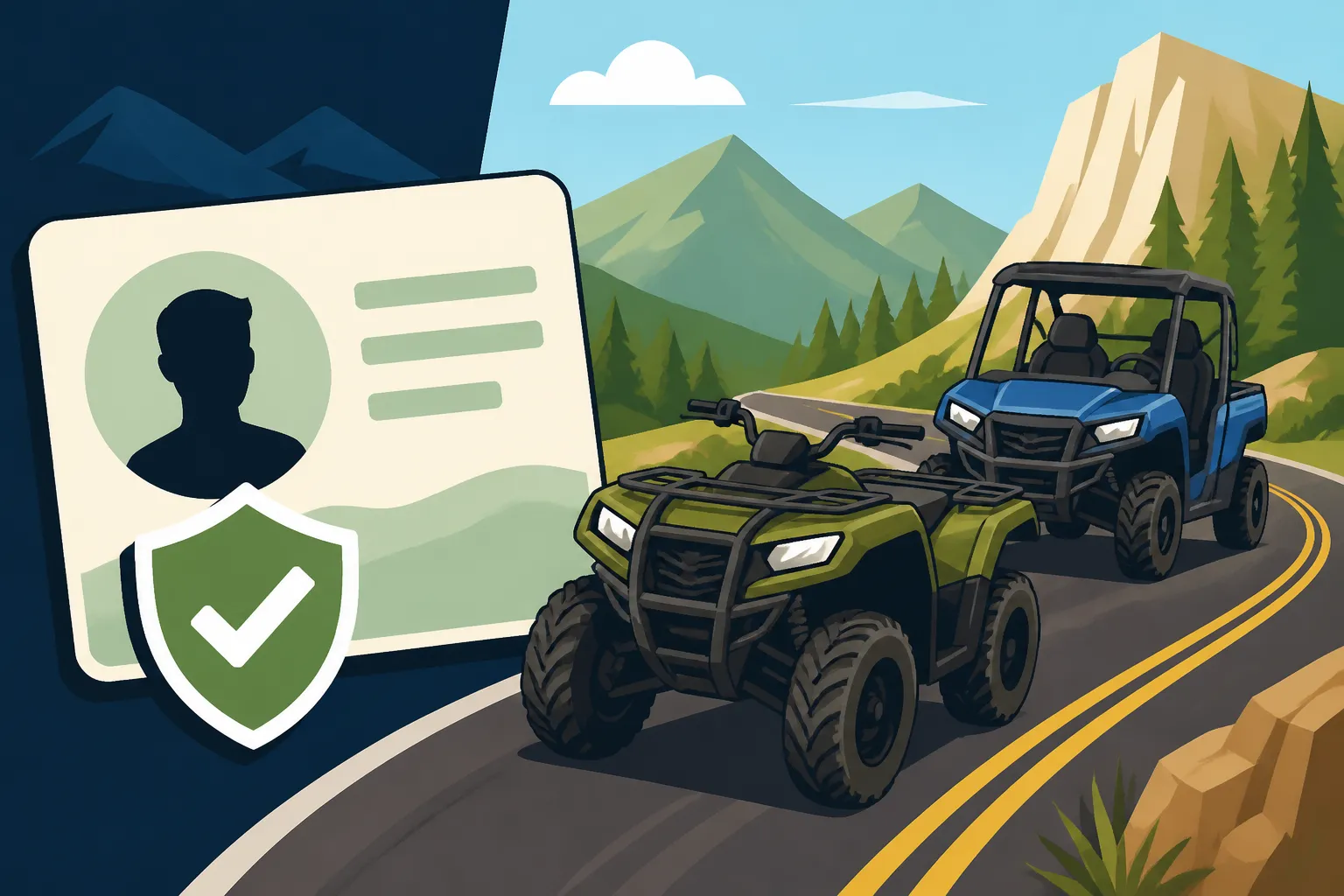
Here's the fundamental truth that often trips up aspiring young riders: when an OHV, be it an ATV or a side-by-side, transitions from a designated trail to a public road in Idaho, it suddenly falls under a different set of rules. For the most part, these rules demand that the operator possesses a valid, unencumbered driver's license. This isn't just a suggestion; it's a legal requirement. The state views the operation of these machines on public roadways with the same seriousness as it views operating a car or truck.
This is where a learner's permit often falls short of the mark. While a learner's permit grants you the ability to drive a standard vehicle under specific supervised conditions, it generally doesn't extend those privileges to operating an OHV solo on public roads. The intent of a learner's permit is to facilitate the learning process for standard vehicle operation, typically with a fully licensed adult in the passenger seat. On an ATV or a side-by-side, that direct, physical supervision isn't always possible in the same way, creating a legal gap. Therefore, for most practical purposes, simply holding an Idaho learner's permit does not, on its own, grant a young rider the authority to legally operate an OHV on county roads or other open routes. This can be a tough pill to swallow for kids eager to explore.
The nuances here are crucial. A full, unrestricted driver's license signifies a certain level of demonstrated competence and responsibility that a learner's permit, by its very nature, doesn't yet convey. The state's interest is in public safety, and placing a vehicle like an ATV or UTV, which handles very differently than a car, onto a public road requires that higher standard of licensure. It’s important to remember that OHV road riding is a privilege, not an automatic right, and it comes with stringent requirements to ensure everyone's safety. For more details on what Idaho expects, you can look into [Driver's License Requirements on Idaho Roads].
The Role of Supervision for Young Riders with Permits
Now, there is a glimmer of possibility for learner's permit holders, but it comes with strict stipulations: direct adult supervision. Idaho law does make provisions for young riders, often those under the age of 16, to operate OHVs under the watchful eye of a licensed adult. However, this is distinct from the typical supervision for a learner's permit in a car. For OHV road riding, the supervision rules are very precise, especially concerning proximity.
The most important rule to grasp is the "300-foot rule." This mandates that the supervising adult must be within 300 feet of the young rider at all times. On a designated trail or even private property, this might be manageable, with the adult riding just ahead or behind on their own machine. However, translating this to a public road environment introduces practical and legal challenges. If the supervising adult is in a separate vehicle, such as a truck or another OHV, they must still maintain that close proximity. This isn't always feasible or safe on a busy county road, and often, local ordinances can add further restrictions. It's not just about being nearby; it's about being able to intervene directly if needed.
Consider a scenario where a young rider with a permit is trying to navigate a gravel county road. The supervising adult might be on their own side-by-side a short distance behind. This kind of arrangement is often the only way a rider with a learner's permit can legally operate an OHV on an open road, and even then, it's subject to all other road-riding requirements, which we'll cover shortly. This direct supervision is intended to ensure immediate assistance and guidance, acknowledging that the permit holder is still developing their skills and judgment. For specific regulations around this, check out [Supervising a Young Rider Within 300 Feet].
Age, Machine Size, and Road Access Considerations
Beyond the permit itself, there's a whole other layer of rules concerning who can ride what, and where, when it comes to Idaho roads. It's not just a matter of having a piece of paper; it's also about the physical capabilities of the rider and the specific restrictions placed on certain machines or routes. This intricate web of regulations can be daunting, but it's all designed to keep riders and other road users safe.
Age Restrictions and Vehicle Types
Idaho has specific age limits that dictate who can operate an OHV, and these become even more critical when venturing onto public roads. Generally, riders under 16 years of age face tighter restrictions than adults. While a 12-year-old might be able to operate a smaller ATV on private land or designated trails, the rules for road use are significantly different. Even with adult supervision, there can be blanket prohibitions on younger riders operating any OHV on specific public roads, regardless of their permit status.
The type and size of the machine also play a role. Idaho law categorizes OHVs by engine size, and machines under 50cc often have different regulations, sometimes allowing younger riders more leeway in certain contexts. However, for road use, especially on routes shared with other vehicles, larger and more powerful machines are typically associated with the need for a full driver's license. Parents need to be acutely aware that just because a child might be capable of handling a larger side-by-side off-road, it doesn't automatically qualify them to operate it on a public thoroughfare, even with supervision.
It’s about matching the rider's maturity and legal standing with the inherent risks of operating a powerful machine in traffic. The state aims to prevent situations where an inexperienced or underage rider might inadvertently create a hazard on a shared road. If you're pondering what machine sizes are appropriate for different age groups, especially on trails and public access points, a good resource to review is [Engine Size Limits for Idaho Riders Under 16].
Which Roads Are Even Open to OHVs in Idaho?
Before you even worry about permits, you need to know where OHVs are permitted to ride on Idaho's vast network of roads. This is a crucial distinction that often gets overlooked. Not all roads are created equal in the eyes of Idaho OHV law, and you can't just take your machine anywhere a car can go. Understanding the difference between a county road, a state highway, and a federal highway is paramount.
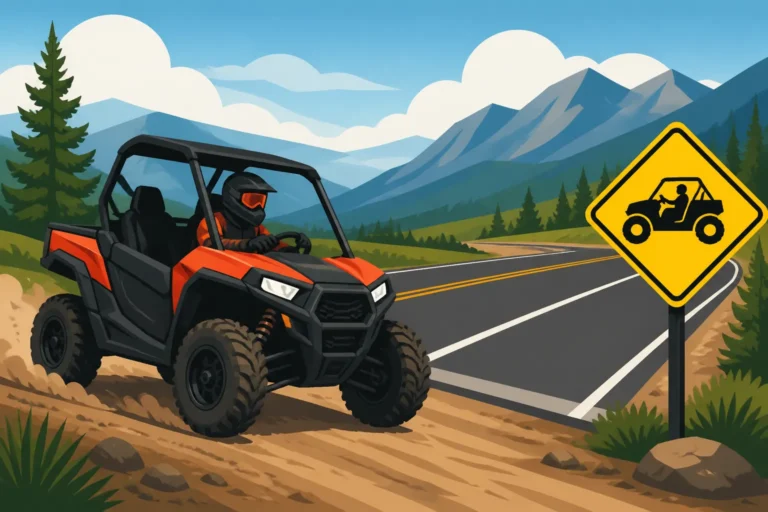
Generally speaking, OHVs are often permitted on county roads in Idaho, provided they are properly equipped and the operator is legally licensed. To legally ride on most county roads, an OHV must typically have what's known as a "restricted use plate," often referred to as an "R Plate." This plate signifies that the machine meets certain basic safety equipment requirements for road use, such as lights, mirrors, and a horn. Without this plate, even a fully licensed adult would be in violation, let alone a rider with a learner's permit. The presence of an R Plate is a game-changer for accessing many of Idaho's scenic byways and connecting trails.
However, a critical point to remember is that state and federal highways (like US-95 or I-84) are almost universally off-limits to OHVs, regardless of plates or licenses. There are very few exceptions, often limited to directly crossing at designated points. City and local ordinances can also further restrict OHV access on roads within their boundaries. So, before planning any route that involves public roads, always consult local regulations and maps. It's about due diligence to avoid fines and ensure safe passage. You can learn more about specific road types and access in Idaho by looking at [Which Idaho Roads Are Open to OHVs] and [Idaho's Restricted Vehicle Plate and Road Use].
Practical Implications and Avoiding Pitfalls
It's easy to get caught up in the excitement of hitting the trails, but when public roads are involved, ignoring the details can lead to some serious headaches. Even if you've figured out the permit and supervision aspect, there's a whole checklist of other requirements and potential problems to consider. Trust me, you don't want to explain to a sheriff why your brand-new SuperATV mirrors are on a machine that's technically not allowed on that road.
Safety Gear and Other Requirements for Road Riding
Operating an OHV on a public road isn't just about having a license or a permit; it's also about equipping the machine and the rider for the road environment. Idaho law is quite clear about the minimum safety equipment required for any OHV venturing onto a public road. This means your machine needs to have operational headlights, taillights, brake lights, and at least one rearview mirror. While a custom SuperATV mirror kit can certainly give you excellent visibility, it's crucial that it's properly installed and meets state standards.
Beyond basic lighting and mirrors, a functional horn is usually mandatory. Many modern side-by-sides come with these features, but some ATVs or older machines might require aftermarket additions. Turn signals, while not always explicitly required for all OHV road use, are a highly recommended safety feature, especially if you're going to be sharing the road with cars. All OHVs also need a spark arrester and a muffler in good working order to meet noise and fire prevention regulations on public lands and roads. As for the rider, anyone under the age of 18 is legally required to wear an approved helmet, and eye protection is generally a smart idea for everyone to shield against dust, debris, and insects. Don't forget, even an experienced rider needs to follow these rules; a learner's permit holder absolutely must. Further clarity on these items can be found in [Idaho Helmet Rules for Riders Under 18] and [Lighting Rules for Riding After Dark in Idaho].
The "What If" Scenario: Citations and Enforcement
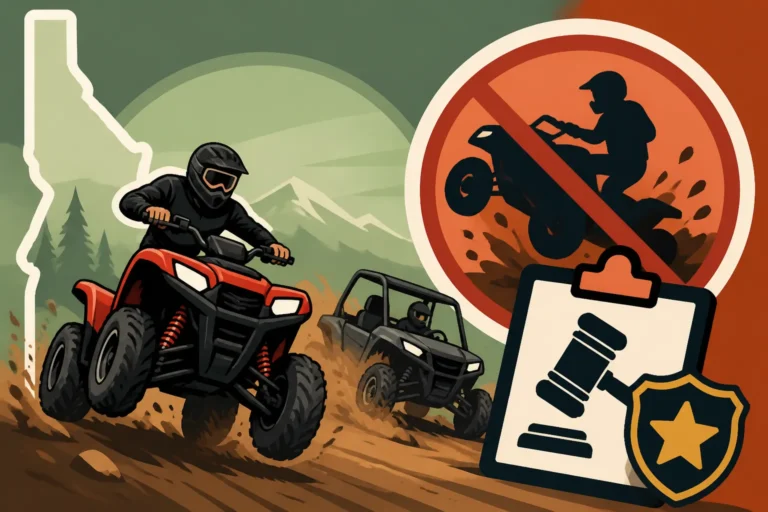
Nobody wants to get a ticket, especially when you're just trying to enjoy a day out. But the reality is that Idaho law enforcement takes OHV road rules seriously. If a young rider with only a learner's permit is caught operating an OHV on a public road without proper supervision or without meeting all other legal requirements (like a restricted plate), the consequences can be significant. It's not just a slap on the wrist.
Fines for illegal road riding can be substantial, and in some cases, the machine itself could even be impounded. For a young rider, receiving a citation could also have implications for their future driving privileges, potentially delaying their ability to obtain a full driver's license. Idaho deputies and state police patrol rural roads and popular OHV areas regularly, and they are well-versed in the state's OHV statutes. They're looking out for everyone's safety, and that includes ensuring riders are properly licensed and equipped. It's not uncommon for officers to conduct checkpoints in areas known for OHV activity, so assuming you won't be caught is a risky gamble. Avoiding these pitfalls means being fully informed and compliant. For a clear picture of potential penalties, consult [Idaho Fines for Illegal Road Riding] and [Sheriff Enforcement on Idaho Back Roads].
Alternative Solutions and Training
If road riding with a learner's permit seems too complicated or risky, don't despair! There are fantastic alternative ways for young riders to safely gain experience and enjoy their OHVs in Idaho. Designated OHV parks and extensive trail systems across the state offer countless miles of riding opportunities where the strict road-licensing requirements don't apply, or where supervision rules are more readily met. Places like the Danskin Mountains OHV Area near Boise or parts of the Caribou-Targhee National Forest provide incredible terrain for all skill levels.
Beyond just finding a place to ride, investing in proper training is invaluable. Idaho offers an OHV Safety Course that is highly recommended for all riders, and it's mandatory for anyone under 16 who wants to ride an OHV on certain public lands or roads (even if they have a restricted plate and supervision). This course teaches essential riding skills, safety protocols, and a deeper understanding of Idaho's OHV laws. It's an excellent way to build confidence and competence, preparing young riders for future challenges, including when they eventually qualify for a full driver's license. Products from companies like SuperATV, such as protective gear or instructional DVDs, can also support a comprehensive training approach. Getting the right education and experience on trails first will make road riding a much safer and more enjoyable prospect down the line. Find out more about the training options at [Idaho's OHV Safety Course for Young Riders].
Comparison: Learner's Permit vs. Full Driver's License for OHV Road Use in Idaho
| Feature | Learner's Permit Holder (OHV on Road) | Full Driver's License Holder (OHV on Road) |
|---|---|---|
| Eligibility | Generally 14+ (for permit), but specific age/machine limits apply | 15+ for permit, 16+ for full license (Idaho) |
| Road Access | Highly Restricted; only under direct supervision (within 300 feet) | Generally Permitted on open county roads (with R plate) |
| Supervision Required? | YES, a licensed adult within 300 feet (often on another machine) | NO, can operate solo |
| Machine Plate Required? | YES, restricted use (R) plate for road access | YES, restricted use (R) plate for road access |
| Safety Course Required? | YES, if under 16 for specific public lands/roads, highly recommended | Recommended for all riders |
| Independent Operation | NO, not independently on public roads | YES, independently on public roads (where permitted) |
| Potential Violations | Riding unsupervised, riding on prohibited roads, missing gear | Riding on prohibited roads, missing gear, license expired |
| Goal | Gaining supervised experience, preparing for full license | Full legal access to permitted OHV roads |
Disclaimer
This article is for general informational purposes only and does not constitute professional advice. Laws, prices and regulations vary by location and change over time. Consult a qualified professional for guidance on your specific situation.