Towing a Small Trailer Behind an OHV
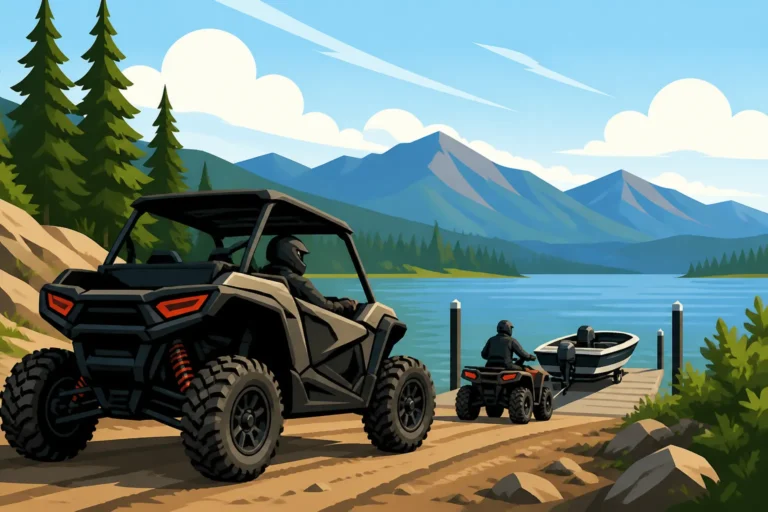
Navigating the beautiful backcountry of Idaho with your ATV or UTV is an incredible experience, but sometimes you need to bring a little more than what fits in your cargo box. Maybe it’s camping gear for the family, a chainsaw for clearing trails, or supplies for that remote cabin. The idea of hitching up a small trailer to your off-highway vehicle (OHV) makes perfect sense, but many riders worry about the legalities and practical challenges. This guide will help you understand Idaho’s rules for towing trailers with an OHV and equip you with the knowledge to do so safely and effectively.
Idaho's Legal Landscape for OHV Trailer Towing
Towing a small trailer with your OHV in Idaho isn't just about whether your machine has a hitch receiver; it's also about understanding where you're allowed to tow and what documentation your OHV needs. Idaho has specific regulations that dictate where OHVs can operate, and these rules naturally extend to situations where you're pulling a trailer. Ignoring these details can lead to fines, frustrating encounters with law enforcement, or even unsafe situations on the trail or road.
When Towing is Generally Allowed and Where It's Not
In Idaho, the primary distinction for OHV use, including towing, is between private land and public lands or roads. On your own private property, or private property where you have explicit permission, you generally have much more freedom to tow a trailer without specific state-level OHV registration concerns, though local ordinances or private land rules might still apply. This is where many riders might tow firewood, tools, or even small livestock around their ranch or hunting lease.
However, once you venture onto public lands or roads, Idaho's rules for OHVs come into play. Most designated OHV trails within national forests, BLM lands, or state parks will allow OHVs to pull small trailers, provided the trailer fits within the trail's width restrictions and the OHV is properly stickered. The real complexities arise when you want to use county roads or other paved surfaces. Idaho law defines specific conditions under which an OHV can operate on a county road, and these conditions are critical when you’re towing a trailer. Without the proper documentation, even a short hop down a county road to access a different trail system or a gas station can put you at odds with the law. Essentially, if your OHV can legally be on that public route, you can likely tow an appropriately sized trailer.
The Role of a Restricted Vehicle Plate and OHV Sticker
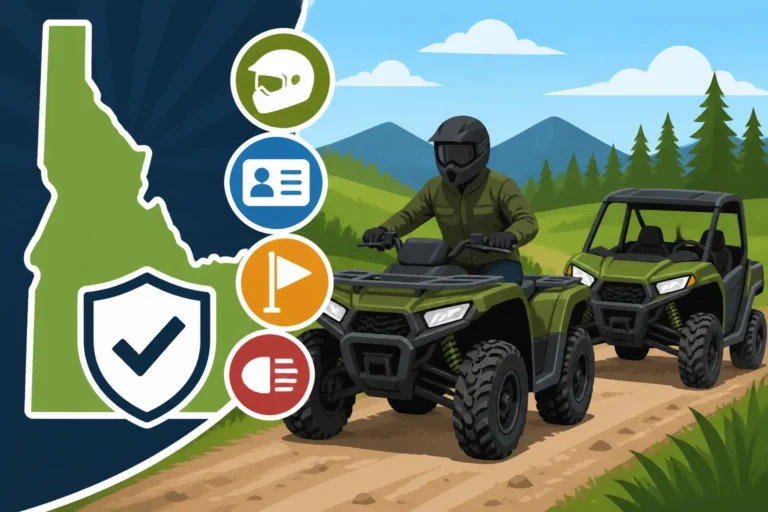
For your OHV to legally operate on designated roads and public trails in Idaho, two key pieces of identification are almost always required: an Idaho OHV Sticker and, for road use, an Idaho Restricted Vehicle Plate. The OHV sticker, which must be renewed annually, signifies that your machine is registered with the state and contributes to the trail system's maintenance. You can think of it as your passport to Idaho's vast network of trails. This sticker is essential whether you're towing or not when riding on public lands. [What an Idaho OHV Sticker Costs Each Year] outlines the fees and importance of keeping this up to date.
The Restricted Vehicle Plate, often simply called an "R" plate because it typically begins with that letter, is what allows your OHV to legally travel on county roads that are open to OHVs. Many rural county roads are open to OHVs by default, but there are important rules and exceptions. [Idaho's Restricted Vehicle Plate Explained] goes into detail about what this plate allows. If you plan to tow a trailer and need to use these open county roads, having a restricted plate displayed prominently on your machine is non-negotiable. Without it, even with a valid OHV sticker, you are limited to trails and private land, which can severely restrict your ability to move your trailer. You'll also want to make sure your machine meets other requirements for road use, such as proper lighting, mirrors, and a horn. [What Idaho Requires Before You Ride a County Road] covers these additional requirements.
Licensing and Insurance Considerations
When you’re operating an OHV, especially when towing a trailer, there are personal documentation requirements to consider as well. For any OHV operation on a public road in Idaho, even a county road, the operator must possess a valid driver's license. This isn't just a suggestion; it's a legal requirement. This rule ensures that anyone piloting a machine, particularly one that's now longer and heavier due to a trailer, has demonstrated a basic level of driving competence. Think of it this way: if you’re driving a vehicle on a road, you need to be a licensed driver, and an OHV pulling a trailer certainly qualifies.
Beyond licensing, insurance is a critical, though often overlooked, aspect. While Idaho does not mandate liability insurance for all OHV use on trails, it absolutely does for OHV operation on public roads. This means if you're taking your OHV and trailer on a county road, even briefly, you must carry adequate liability insurance. This insurance protects you and others in the event of an accident. If you're involved in a collision while towing on a county road without insurance, the financial and legal repercussions could be severe. It's always a good idea to check with your insurance provider to ensure your policy covers OHV use, especially when towing. [Insuring an ATV in Idaho] provides more context on coverage options, and [Idaho Liability Insurance Minimums for Riders] details the state's requirements for road-legal operation. It's not just about covering your machine, but covering potential damages or injuries to others if something goes wrong.
Practicalities and Safety for Towing with Your OHV
Once you’ve got the legalities sorted, the practical side of towing a trailer with your OHV comes into focus. Unlike a truck that's designed to haul heavy loads, OHVs have specific limitations in terms of power, braking, and stability. Pushing these limits, especially on uneven terrain or slick trails, can quickly turn a fun outing into a dangerous situation. Careful planning and attention to detail are crucial for a safe and successful towing experience.
Choosing the Right Trailer and Hitch for Your Machine
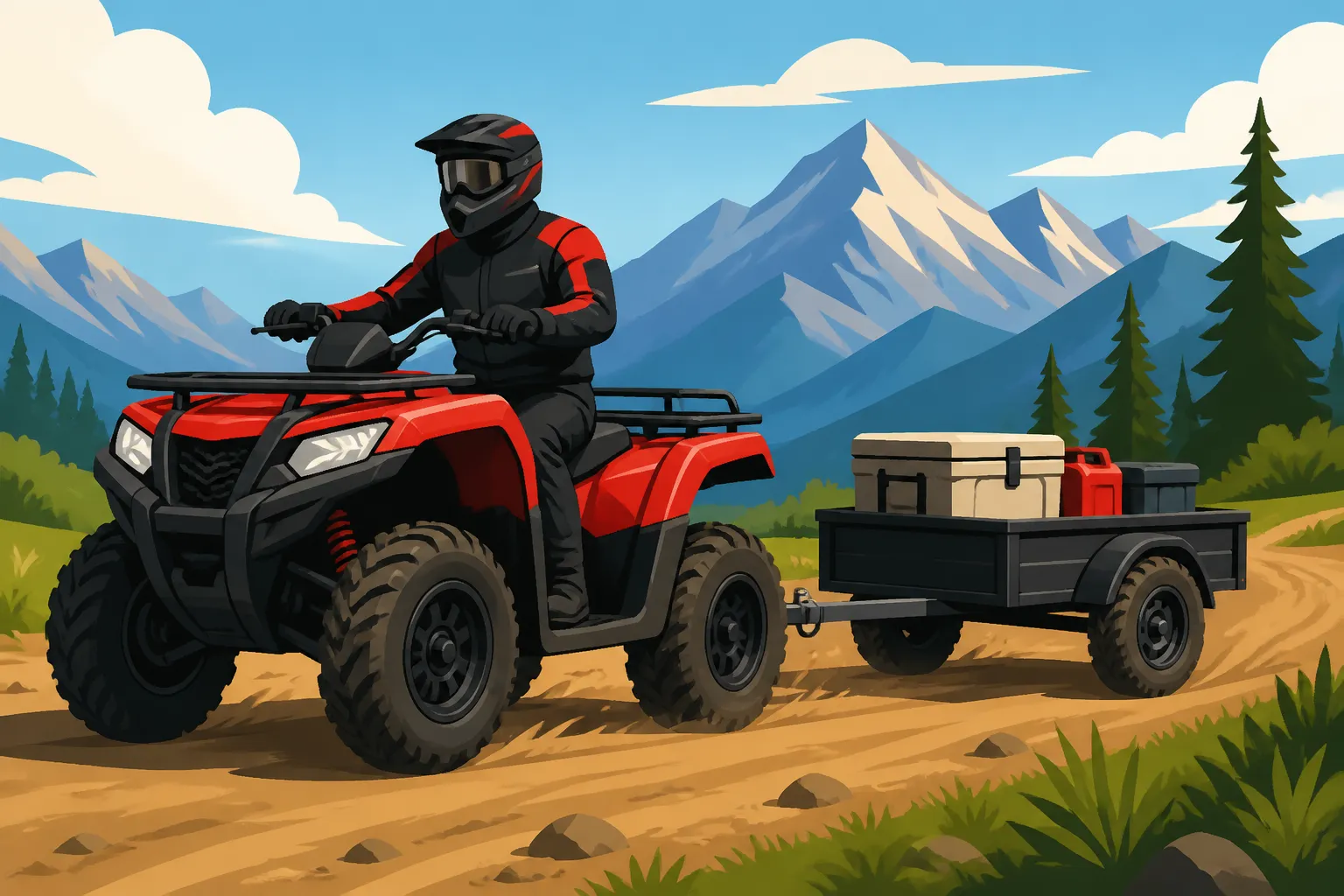
Selecting the appropriate trailer is paramount. For OHVs, we're typically talking about small utility trailers, often single-axle, designed for lightweight loads. Forget about pulling your travel trailer or even a large enclosed cargo trailer; those are simply too heavy and unwieldy for most ATVs or UTVs. Look for trailers specifically marketed for ATV/UTV use, which are often lighter, have smaller wheels, and are designed to navigate narrower paths. Brands like SuperATV offer heavy-duty hitches and accessories that can enhance your machine's towing capability, but even with upgrades, respecting your OHV's overall capacity is key. Consider what you'll primarily be hauling. Is it firewood, hunting gear, tools, or maybe even a small amount of aggregate for a project? This will help you determine the trailer's size, bed type (mesh, solid, dump feature), and tire style.
Beyond the trailer itself, the hitch connection is crucial. Most ATVs and UTVs come equipped with a standard 2-inch receiver or a ball hitch integrated into the frame. Ensure your hitch ball size matches the trailer's coupler (most commonly 1-7/8" or 2"). Always check the class rating of your OHV's hitch receiver and the maximum tongue weight it can handle. A sturdy hitch pin with a cotter pin or locking mechanism is essential to keep the trailer securely attached. Never try to improvise a hitch; a proper, purpose-built connection is a non-negotiable safety feature. You might also consider a pintle hitch for off-road use, as it allows more articulation on uneven ground compared to a ball hitch, preventing binding.
Weight Limits, Braking, and Load Distribution
This is where safety truly comes into play. Every OHV has a published towing capacity and a maximum tongue weight. These numbers are not suggestions; they are critical safety limits set by the manufacturer. Exceeding the towing capacity can strain your engine, transmission, and frame, leading to premature wear or catastrophic failure. More importantly, exceeding these limits drastically compromises your ability to stop safely, especially downhill. The added momentum of an overloaded trailer can overwhelm your OHV's brakes, leading to loss of control. [Idaho Road Rules for Young Riders] also touch on capacity for passengers, and while not directly about towing, the principle of not overloading any part of the machine applies universally.
Proper load distribution within the trailer is just as important as the total weight. Aim for about 10-15% of the total trailer weight to be on the tongue (the part resting on your OHV's hitch). Too little tongue weight can make the trailer sway dangerously, while too much can lift the front end of your OHV, compromising steering and traction. Secure your load carefully using straps or ropes to prevent shifting. A shifting load can instantly change weight distribution, leading to instability or even causing the trailer to flip. Drive slowly and deliberately, especially on turns, declines, and rough terrain. Remember that your stopping distance will be significantly longer with a trailer attached, so anticipate hazards well in advance and apply brakes smoothly.
Essential Safety Gear and Pre-Ride Checks
Before every ride where you plan to tow a trailer, a thorough pre-ride check is non-negotiable. This isn't just about kicking the tires; it's a systematic inspection to ensure everything is secure and functioning correctly. Use a checklist to ensure you don't miss anything.
| Item | Check | Why It Matters |
|---|---|---|
| Hitch Connection | Is the hitch ball securely tightened? Is the coupler latched and pinned? | Prevents accidental detachment, ensuring trailer stays with the OHV. |
| Safety Chains | Are they properly crossed and secured to the OHV frame? | Provides backup in case of hitch failure, preventing runaways. |
| Tires | Proper inflation pressure (OHV and trailer), no visible damage. | Incorrect pressure affects stability, traction, and can lead to blowouts. |
| Lights/Signals | Are all trailer lights (if equipped) functioning? | Essential for visibility and legal compliance on roads. |
| Load Security | Is the cargo evenly distributed and tightly strapped? | Prevents shifting, maintains stability, and stops items from falling out. |
| Brakes | Test OHV brakes; if trailer has brakes, ensure they work. | Critical for stopping safely, especially with added weight. |
| Suspension | Any excessive sag on the OHV or trailer? | Indicates overloading or potential damage, affecting handling. |
| Path Clearance | Clear path for trailer through turns, over obstacles? | Prevents snagging, tipping, or damage in tight spots or rough terrain. |
In addition to this checklist, carrying basic recovery gear is a smart move, especially if you're venturing into remote areas. A shovel, tow strap, and even a small come-along or winch can be invaluable if you get stuck or need to maneuver the trailer in a tricky spot. Always ride with a helmet, eye protection, and appropriate riding gear. Remember, your OHV's handling characteristics change dramatically with a trailer, so practice in a safe, open area before hitting the trails or roads.
Common Scenarios and Specialized Towing
The ability to tow a small trailer significantly expands the utility of your ATV or UTV, opening up a world of possibilities for recreation, work, and essential tasks in Idaho's diverse landscapes. Understanding how these general rules apply to specific scenarios can help you plan your adventures or workdays more effectively.
Hauling Gear to Camp or a Hunting Blind
One of the most popular reasons riders tow trailers is for recreational activities like camping or hunting. Imagine packing in all your camping gear, a cooler full of provisions, and perhaps a comfortable tent without having to strap everything precariously to your machine. With a small utility trailer, you can bring more creature comforts, or essential equipment for an extended stay in the Idaho backcountry. This is particularly useful for hunters who need to transport treestands, blinds, game carts, or even packed-out game. [Riding to a Hunting Camp in Idaho] touches on the broader context of OHV use during hunting season.
When you're packing for a hunting or camping trip, consider the weight of your gear, including any harvested game. Blood, mud, and debris are inevitable, so choose a trailer that is easy to clean. If you're going deep into the woods, ensure the trailer's width and length won't prevent you from navigating tight trails or making sharp turns. While many trails are wide enough for a side-by-side, adding a trailer means you have to be extra mindful of your total footprint. Always secure your load tightly, especially if you anticipate rough terrain, and use waterproof bags or containers for sensitive items. This scenario often plays out on public land, so ensure your OHV sticker is current.
Farm, Ranch, and Utility Use
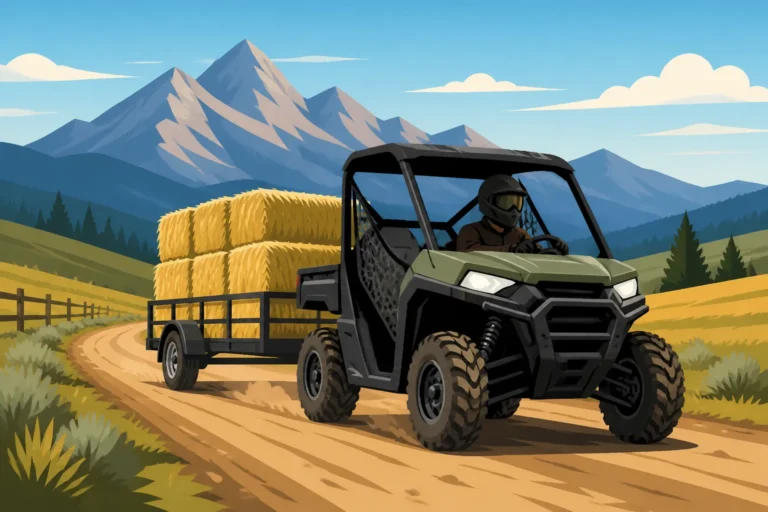
For those who live and work on Idaho's ranches or manage larger properties, an OHV pulling a trailer is often an indispensable tool. Whether it's hauling fencing materials to a remote pasture, moving feed to livestock, carrying tools for a repair project, or transporting firewood, the versatility is unmatched. On private land, the regulations are much lighter, allowing property owners to utilize their machines more freely for agricultural and utility purposes. [Idaho OHV Registration for Farm and Ranch Machines] discusses specific exemptions or considerations for such machines.
Even on private land, common sense safety rules still apply. Respect your machine's towing capacity and ensure loads are distributed properly. On a working ranch, you might be traversing uneven fields, steep grades, or muddy paths, all of which demand careful operation. Consider specialized farm trailers that might have higher sides or dumping mechanisms, designed to make chores easier. If your work takes you onto public roads that cut through your property, remember that your OHV and trailer will need to comply with state regulations, including the OHV sticker and possibly a restricted plate. This ensures a seamless transition from private work to public road travel if necessary for moving between fields or reaching specific parts of your property. [Idaho Rules for Ranch Work Machines] details how OHVs are used in these settings.
What to Consider for Road Sections
The ability to legally ride your OHV on certain county roads in Idaho is a game-changer for many, allowing you to connect trail systems, access amenities in small towns, or simply get from point A to point B without trailering your OHV on a truck. When you add a trailer to this scenario, the stakes increase, and so do the requirements. As mentioned, a restricted plate is mandatory for road use, as are proper lights, mirrors, and a horn. Your trailer should also have working taillights and brake lights, especially if it obscures your OHV's lights from the rear. [Idaho Roads Open by Default to Restricted Vehicles] provides an overview of where you can typically ride.
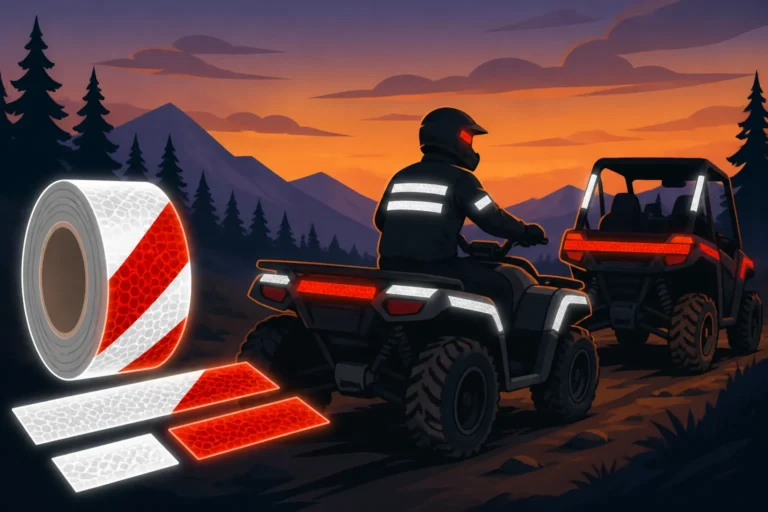
When traveling on county roads with a trailer, visibility becomes paramount. Your OHV is already smaller than most cars, and adding a trailer makes you longer and potentially less maneuverable. Consider adding reflective tape to your trailer, especially if you might be out around dusk or dawn. Use hand signals in conjunction with your OHV's turn signals if the trailer blocks the view of your machine's indicators. Maintain a safe speed, well below the posted limit if necessary, and be mindful of other vehicles. Remember that many county roads can have blind corners or dust issues, so always be prepared to react. If you're navigating through towns, be aware that [Idaho City and County Ordinances That Close Roads] might exist, restricting OHV travel on certain streets, even if the county roads leading into town are open. This is where local knowledge or a quick check with the county sheriff's office can save you a headache.
Disclaimer
This article is for general informational purposes only and does not constitute professional advice. Laws, prices and regulations vary by location and change over time. Consult a qualified professional for guidance on your specific situation.