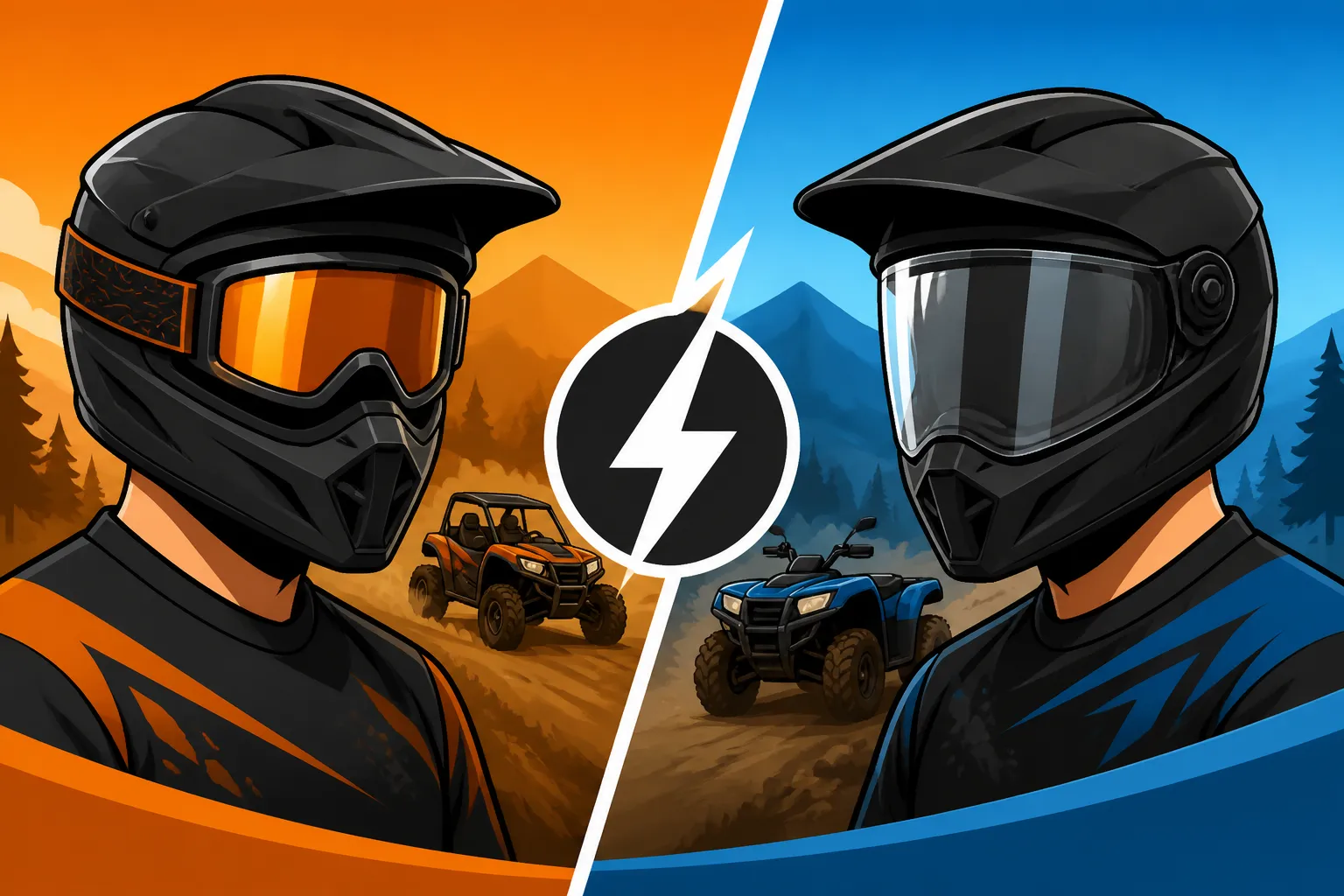
Goggles or a Face Shield on the Road
Oh, the open road in Idaho! There’s nothing quite like feeling the wind in your hair as you cruise along a gravel county road or connect trails, but let’s be real – that “wind in your hair” feeling can quickly turn into “dust, bugs, and gravel in your eyes” if you’re not properly prepared. The decision between wearing goggles or a face shield when you’re out on your ATV or UTV isn't just about personal preference; it’s deeply rooted in safety, comfort, and sometimes, even what Idaho law requires. This guide is here to cut through the confusion and help you choose the best eye protection for your adventures on Idaho's diverse roads.
Why Eye Protection Isn't Just a Suggestion on Idaho Roads
You might think that once you're out of the tight trees and rocky trails, the need for robust eye protection diminishes. After all, the road feels safer, right? Not necessarily. While the challenges shift, the necessity for protecting your eyes remains paramount, and in some cases, becomes even more critical due to higher speeds and different types of debris.
The Unpredictable Hazards of the Open Road
When you’re moving at speed on an Idaho county road, especially those long stretches of gravel that cut through farmland or forest, the environment around you becomes a projectile playground. That dust cloud kicked up by the machine in front of you isn't just a minor annoyance; it's a dense fog of fine particulate matter that can irritate, scratch, and obscure your vision in an instant. Then there’s the gravel. A loose rock flung from your own tires, or worse, from an oncoming vehicle, can hit with surprising force. And let's not forget the wildlife – a fly or bee at 30 miles an hour feels more like a small stone when it connects with your face or eye. The sun glare reflecting off a wet patch of road or coming through the trees at just the wrong angle can blind you momentarily. All these factors underscore why eye protection is non-negotiable for road riding.
The sheer variety of Idaho’s roads means you could be on pristine pavement one minute, and a pot-holed, dusty track the next. Even on paved roads, small bits of rubber, sand, or debris from construction sites can become airborne hazards. Trail riding often has slower speeds and different types of debris, typically mud, branches, and dirt. Road riding introduces a new set of variables, often with greater velocity. Investing in good eye protection means you can focus on the ride, the scenery, and staying safe, rather than squinting against the elements or rubbing your irritated eyes.
Idaho's Legal Mandate for Eye Safety
Beyond common sense and personal comfort, Idaho law has something to say about eye protection, especially when it comes to younger riders and the type of vehicle you're operating. It’s a point of frustration for many riders who just want to enjoy their day, but understanding these rules can save you a citation and, more importantly, a potential injury. For example, [Idaho Helmet Rules for Riders Under 18] clearly stipulate that riders under a certain age must wear both an approved helmet and appropriate eye protection. This isn’t just for their safety; it's the law.
For adults, the rules can be a bit more nuanced. If your OHV (Off-Highway Vehicle) does not have a windshield, you are generally required to wear eye protection when operating on roads open to OHV use. This means that even if you're an experienced adult rider, you can't just throw caution to the wind. Ignoring these mandates can result in fines and unnecessary hassle with law enforcement. It's not about stifling your fun; it's about ensuring a minimum standard of safety for everyone enjoying Idaho's incredible riding opportunities. Always be sure to check the most current regulations through Idaho Parks and Recreation or your local county sheriff's office.
The Comfort and Clarity Factor
Think about how much more enjoyable a ride is when you’re not constantly fighting against blurred vision, tearing eyes, or the distraction of something hitting your face. Eye protection isn't just a shield; it's an enhancement to your riding experience. Clear vision allows you to better read the terrain, spot potential hazards like deer or other vehicles, and simply take in the breathtaking Idaho scenery without a constant battle against the elements.
Fatigue is a real factor on longer rides, and constantly straining your eyes or having them water can accelerate that feeling. Good eye protection, whether it's goggles or a face shield, can significantly reduce eye strain, allowing you to ride longer and with greater comfort. Many modern eye protection options also come with UV protection, which is crucial for those long, sunny days in the Idaho mountains, safeguarding your eyes from long-term damage. It's about preserving your vision and making every mile count in the best possible way.
Goggles: The Trail-Tested Choice for Road Riding
Goggles have long been the staple for off-road enthusiasts, and for good reason. Their design is inherently suited to the harsh, dynamic environments found on trails, and many of those advantages translate well to riding on the road, especially the unpaved sections that wind through Idaho’s vast landscapes.
The Pros of Goggles for Mixed Terrain
One of the biggest advantages of goggles is their superior ability to seal tightly against your face, keeping out fine dust, sand, and small debris. This snug fit is paramount when you're following another machine on a dry, gravel road and thick dust clouds envelop you. Unlike a face shield that might have small gaps or lift slightly with airflow, good goggles create a reliable barrier. They also tend to offer excellent peripheral vision, which is crucial for situational awareness, whether you’re navigating a technical trail or watching for traffic at an intersection on a county road.
Goggles are also incredibly versatile, often featuring interchangeable lenses that can be swapped out for different light conditions – clear for overcast days or night riding, tinted for bright sun, or even yellow for enhanced contrast in flat light. This adaptability makes them a fantastic choice for Idaho's ever-changing weather and lighting. Many riders also find goggles more comfortable when combined with an open-face helmet, as they don't trap as much heat against the face compared to a full-face helmet with an integrated shield. This is particularly noticeable during slow, technical sections of a ride where airflow is minimal, or on those hot summer days.
Potential Downsides and Considerations
While goggles excel in many areas, they do come with a few trade-offs that are worth considering, particularly when your ride involves more road time. One common frustration is fogging. In humid conditions, or when you stop after a vigorous ride, goggles can sometimes fog up, severely impairing vision until they clear. While many modern goggles boast anti-fog coatings and excellent ventilation, it can still be an issue, especially if you wear prescription glasses underneath. Finding goggles that comfortably fit over glasses (OTG – Over The Glasses) without pinching or creating pressure points can also be a challenge for some riders.
Another potential drawback on faster road sections is limited protection from direct wind and rain. While they seal out dust, a direct headwind or heavy rain can still create significant discomfort around the edges or seep in slightly. Unlike a full face shield, goggles leave the lower half of your face exposed, meaning you’ll still feel the full force of the wind and any precipitation. If you’re planning long stretches of higher-speed road riding, this exposure can become more noticeable and might lead to more fatigue compared to the comprehensive coverage of a face shield.
Choosing the Right Goggles for Road Use
Selecting the right pair of goggles involves a bit more than just picking a cool color. For road use, especially on Idaho's varied terrain, look for features that enhance both safety and comfort. Excellent ventilation is key to minimizing fogging, so check for ample vents, often paired with foam filters to keep dust out. Anti-fog treated lenses are a must. Many brands offer high-quality lenses that resist fogging even in challenging conditions.
Consider the lens tint based on your typical riding conditions. A versatile photochromatic lens that adjusts to light levels can be a game-changer, but clear lenses are vital for riding after dark, which brings us to another important point: [Lighting Rules for Riding After Dark in Idaho]. If you wear prescription glasses, prioritize "OTG" specific goggles to ensure a comfortable and secure fit. Adjustable straps with silicone backing help keep them securely in place, even over a helmet. Finally, ensure the foam padding is comfortable against your face, as prolonged pressure points can become quite irritating. Brands like 100%, Oakley, and Scott offer a wide range of goggles with features well-suited to both trail and road riding.
Face Shields: Integrated Protection for On-Road Comfort
For many riders, especially those spending significant time on county roads or connecting trails, a helmet with an integrated face shield offers a compelling blend of protection, convenience, and comfort. It's a different approach to eye protection that brings its own set of advantages and considerations.
Advantages of an Integrated Face Shield
The most immediate benefit of an integrated face shield is its comprehensive coverage. It typically spans your entire face, from forehead to chin, providing a much larger barrier against wind, rain, dust, and all kinds of debris. When you’re cruising at speed on a paved or well-maintained gravel road, this protection significantly reduces wind buffeting and the constant bombardment of small particles, making for a much calmer and more comfortable ride. Imagine hitting a sudden rain shower on an Idaho mountain pass – a face shield offers far more protection than goggles alone, keeping your vision clearer and your face drier.
Furthermore, face shields often provide superior optical clarity compared to some goggle lenses, especially in higher quality helmets. They are designed to integrate seamlessly with the helmet, reducing distortions and providing an unobstructed field of view. This clarity is invaluable for maintaining sharp focus on the road ahead and reacting quickly to any changes in your environment. Many face shields also come with anti-scratch and UV protection coatings, adding durability and safeguarding your eyes from harmful rays during long days in the Idaho sun.
When a Face Shield Might Fall Short
Despite their advantages, face shields aren't without their downsides, especially for riders who frequently transition from road to technical off-road trails. One of the primary issues can be reduced airflow when the shield is fully down. In slow, strenuous riding conditions or on particularly hot days, a sealed face shield can quickly lead to fogging and heat buildup inside the helmet. While some modular or adventure helmets offer advanced ventilation systems and anti-fog coatings, it’s often a more pronounced issue than with well-vented goggles. Riders might find themselves needing to crack the shield open for airflow, which then exposes them to dust and debris.
Another consideration is flexibility. While you can usually lift a face shield, changing lenses for different light conditions is not as simple as swapping out goggle lenses. If you start a ride in bright sun and end it after dark, you’re either stuck with a tinted shield or have to carry a spare clear shield and swap it out, which isn’t always convenient on the trail. Also, for truly extreme dust or mud, a face shield, even when closed, might not offer the same absolute seal as a tightly fitted pair of goggles, potentially allowing some fine particles to sneak in around the edges.
Helmet Types and Face Shield Compatibility
The type of helmet you choose dictates your face shield options. Full-face helmets, designed primarily for road use, come with integrated, non-removable face shields. These offer maximum protection and aerodynamics but can feel restrictive in off-road settings due to limited airflow and a narrower field of vision for trail riding. Modular helmets, also known as flip-up helmets, combine features of full-face and open-face designs. Their face shields typically flip up, and the entire chin bar can lift, giving you the best of both worlds – full protection on the road and an open-face feel when stopped or in low-speed environments.
For ATV and UTV riders who frequent both trails and roads, "adventure" style helmets are a popular choice. These helmets often blend the goggle-friendly eye port of a dirt helmet with a full-face shield and a peak visor. This allows you to wear goggles for dusty trails and then drop the face shield for road sections. Some open-face helmets can also be fitted with snap-on or removable face shields, offering basic wind and debris protection, though usually not the same comprehensive seal or optical quality as a dedicated full-face or adventure helmet.
Windshields: An Added Layer of Protection for UTVs
While goggles and face shields are about personal protection for the rider, UTVs (Utility Task Vehicles, or side-by-sides) introduce another layer of defense: the windshield. This component can significantly alter the discussion around eye protection, especially for those long rides through Idaho’s vast and scenic backcountry.
The Role of a Windshield in Eye Protection
A full or half windshield on your UTV dramatically reduces the amount of direct wind, dust, bugs, and other airborne debris that reaches you and your passengers. It creates a much calmer cockpit environment, allowing for more relaxed conversation and less fatigue from battling the elements. For many UTV owners, a windshield feels like a necessity, especially when driving on gravel roads where dust plumes are common, or during an unexpected rain shower. With a full windshield, the need for constant, dedicated eye protection like goggles or a face shield might lessen, particularly for the driver in some situations.
However, it's crucial to understand that a windshield doesn't make you entirely impervious to airborne irritants. Depending on the design, some dust or debris can still swirl around the edges or come over the top of a half windshield. And while a full windshield stops direct impacts, it won't prevent all fine dust from entering the cabin, especially if it’s an open-sided UTV. The degree of protection also depends on the type of windshield—whether it’s a full, half, or even a tilt-out model designed for varying airflow.
Legalities and Practicalities of Windshields in Idaho
This is where things can get a little tricky and often causes confusion among riders. Idaho law generally states that if your OHV has a windshield, adults might not be required to wear additional eye protection. However, this isn't a blanket exemption and requires careful interpretation. A proper windshield should be clear, unobstructed, and provide sufficient protection from the front. If you have a half windshield, for example, debris can still come over the top, meaning you'd likely still need goggles or a face shield to comply with the spirit of the law and ensure your safety.
For many UTV owners, a high-quality windshield is a vital upgrade. Companies like SuperATV offer a wide range of durable polycarbonate and glass windshields for various UTV models, often with features like scratch resistance, tinting, or even hard-coat protection. While the windshield provides a primary barrier, it's important to consider if it truly replaces all other forms of eye protection for your specific riding style and the conditions you face. Always err on the side of caution when it comes to eye safety and compliance. When riding on designated roads, remember that [What Idaho Requires to Ride a County Road] extends beyond just eye protection to include things like proper lighting and mirrors.
Combining Windshields with Goggles or Shields
Even with a full windshield on your UTV, there are situations where combining it with goggles or a face shield is still the smartest move. If you're tackling particularly dusty trails before hitting a road, or venturing into areas known for heavy mud, goggles will provide that extra seal and clarity that a windshield alone cannot. Passengers in a UTV, especially those in the back seats, might still experience more wind and dust swirl, making individual eye protection essential for them, regardless of the windshield.
Consider the versatility of an adventure helmet with a face shield. You can keep the face shield up while on dusty trails, relying on goggles, then drop the shield when you hit a paved county road for a more comfortable, wind-free cruise. This hybrid approach offers maximum adaptability for Idaho's diverse riding environments, allowing you to quickly switch protection levels as conditions change. Don't view goggles or a face shield as redundant with a windshield; rather, see them as complementary tools in your safety arsenal, ready to deploy when conditions demand.
Idaho's Specific Eye Protection Laws
Understanding the specific legal requirements for eye protection in Idaho can feel a bit like deciphering ancient texts sometimes, but it’s crucial for every rider. These rules aren't arbitrary; they’re designed to keep you and your fellow riders safe, especially when you're mixing with regular traffic on county roads.
The Rules for Riders Under 18
Idaho law is very clear and uncompromising when it comes to youth riders. If you are under 18 years of age and operating an OHV on public lands, including roads open to OHV use, you are legally mandated to wear an approved safety helmet and eye protection. This isn’t a suggestion; it’s a firm rule that Idaho takes seriously. Parents often worry about their kids' safety, and this law is a direct reflection of the state's commitment to protecting its youngest riders from potential injury.
This means that if your child is riding a quad, a dirt bike, or even a smaller side-by-side on an open county road, they must have both a helmet and eye protection in place. A simple pair of sunglasses won't cut it – it needs to be substantial eye protection like goggles or a full face shield on their helmet. This rule is often enforced, and violating it can result in a citation. It's not just about avoiding a fine; it’s about instilling good safety habits from a young age and protecting them from the very real dangers of airborne debris or impact. You can find more specific details regarding young riders in resources like [Idaho Rules for Riders Under 16 on Roads].
Adults and the "Windshield Exemption"
For adult riders (18 years and older), Idaho's law offers a bit more flexibility, but it's important not to misinterpret it. The general rule is that you must wear eye protection when operating an OHV on a public road, unless your vehicle is equipped with a windshield. This "windshield exemption" is often a point of discussion. What constitutes a sufficient windshield? Generally, it's a piece of clear, unobstructed material that provides a substantial barrier against wind and debris.
If your UTV has a full, properly installed windshield that covers the entire front opening, you, as the driver, would typically be exempt from needing additional goggles or a face shield. However, if you have a half windshield, or no windshield at all, then you absolutely need eye protection. Even with a full windshield, many experienced riders choose to wear eye protection for added safety, especially if they anticipate hitting dusty or muddy conditions. Also, remember that this exemption usually applies to the driver; passengers, especially those in exposed rear seats, might still benefit greatly from their own eye protection. [Riding an ATV on the Road in Idaho] offers more context on these general road rules.
Consequences of Non-Compliance
Ignoring Idaho’s eye protection laws can lead to more than just a stern talking-to. The most immediate consequence is a potential citation or fine. While the exact amount can vary, it’s an unnecessary expense that could have been easily avoided by simply putting on a pair of goggles or using a face shield. Law enforcement, whether it’s a local sheriff or a Forest Service ranger, can and will enforce these rules, especially in areas with high OHV traffic. Similar to penalties for other violations, such as those detailed in [Fines for an Unstickered OHV in Idaho], a fine for lack of eye protection is a hit to your wallet and your riding fun.
Beyond the legal ramifications, the personal consequences can be far more severe. Riding without adequate eye protection puts you at a significantly higher risk of injury. A piece of gravel, a bug, or even a low-hanging branch striking your eye at speed can cause anything from temporary blindness to permanent vision damage. An obscured vision due to dust or tearing eyes can lead to an accident, potentially injuring yourself or others. It’s a small piece of equipment that provides immense protection, both legally and personally. When you’re focused on the adventure, you don’t want to be worrying about your vision or a looming fine.
Making the Best Choice for Your Ride
Deciding between goggles and a face shield, or how to best combine them with a windshield, really comes down to a few key factors about your personal riding style and the types of adventures you seek in Idaho. There’s no single “best” answer for everyone, but by considering these points, you can make an informed decision that prioritizes your safety and enjoyment.
Assessing Your Riding Environment
Your primary riding environment should be the biggest determinant of your eye protection choice. Are you mostly sticking to paved county roads and smooth gravel paths that connect small towns? If so, a full-face helmet with an integrated face shield might offer the best balance of wind protection, comfort, and optical clarity for those higher speeds. You’ll appreciate the reduced wind noise and comprehensive barrier against bugs and light road debris.
However, if your typical Idaho adventure involves a mix of pavement, long stretches of deeply corrugated gravel roads, and challenging off-road trails with plenty of dust and mud, then goggles might be a more versatile choice. They excel in dusty conditions, provide a tight seal, and are less prone to fogging during strenuous, low-speed trail riding. Many riders opt for an adventure helmet that allows them to wear goggles on the trail and then drop the integrated face shield when transitioning to faster, open roads. Consider the typical speeds, the amount of dust, and the prevalence of mud or water crossings you expect to encounter.
Personal Comfort and Prescription Lenses
Comfort is paramount, especially on longer rides. An uncomfortable helmet or ill-fitting eye protection can quickly turn a fun day into a miserable experience. If you wear prescription glasses, this becomes an even more critical factor. While some full-face helmets are designed to accommodate glasses, many riders find that wearing goggles specifically designed to fit over glasses (OTG) offers a more comfortable and less restrictive solution. This allows your glasses to sit naturally without being pressed against your face, which can be a real pain point with standard helmets and shields.
The fit of your helmet is also crucial for face shield effectiveness. A helmet that is too loose will allow more wind and dust to enter, negating some of the shield's benefits. Conversely, a helmet that is too tight can cause headaches and discomfort. Always try on various options, ideally with your riding gear, to ensure a snug yet comfortable fit. Don't underestimate the importance of how the eye protection feels; if it’s bothering you, you’re less likely to wear it, and that defeats the entire purpose.
Maintenance and Care for Longevity
No matter which option you choose, proper maintenance is key to ensuring your eye protection remains effective and lasts for many seasons of Idaho riding. Dust, dirt, and bug guts can quickly accumulate on lenses and shields, impairing your vision. Always clean your goggles and face shields with a soft cloth and a cleaning solution specifically designed for plastics, or mild soap and water. Avoid harsh chemicals or abrasive materials, which can scratch anti-fog and anti-scratch coatings.
For goggles, regularly inspect the foam for deterioration and the strap for elasticity. Worn-out foam can compromise the seal, allowing dust in, and a stretched-out strap won't keep the goggles securely in place. For face shields, check the pivot points and ensure they move smoothly without excessive play. Many face shields can be easily removed for thorough cleaning. Taking a few minutes to clean and inspect your eye protection after each ride will not only prolong its life but also ensure you always have crystal-clear vision for your next adventure on Idaho's roads and trails.
Disclaimer
This article is for general informational purposes only and does not constitute professional advice. Laws, prices and regulations vary by location and change over time. Consult a qualified professional for guidance on your specific situation.