Idaho Liability Insurance Minimums for Riders
Picture this: you've finally got your side-by-side all decked out, maybe even added some road-legal bits from a company like SuperATV, and you're ready to hit some of those amazing Idaho county roads that link up to your favorite trails. But before you swing a leg over or buckle up, there's a crucial piece of the puzzle many riders overlook or simply don't understand: liability insurance. It's not just another line item; it's a legal requirement for road use in Idaho, and frankly, it's about protecting you from potentially catastrophic financial fallout if an accident occurs. This guide is going to break down exactly what Idaho expects in terms of liability coverage for your ATV or UTV when you venture onto public roads, why it's so important, and how to make sure you're properly covered.
What is OHV Liability Insurance, Really?
When we talk about liability insurance for your ATV or UTV, we're essentially discussing the coverage that protects other people and their property if you're deemed at fault in an accident. It's not about covering damage to your machine or your own medical bills; that's where other types of coverage come into play. Think of it as your financial safety net for the consequences of a mishap you cause. This is a common point of confusion for new riders or those transitioning from purely trail riding to also navigating county roads.
Imagine you're cruising down a gravel county road connecting two trail systems, and you accidentally misjudge a turn, clipping another vehicle or perhaps even a mailbox. Without liability insurance, you would be personally responsible for all the damage to that vehicle or property, as well as any medical expenses for injuries to the other party. These costs can easily climb into the tens of thousands, or even hundreds of thousands of dollars, depending on the severity of the incident. It’s a terrifying prospect, right? That’s why the state mandates it for road use – to ensure that accident victims have a means of recovery without bankrupting the at-fault party.
This coverage typically comes in two main parts: bodily injury liability and property damage liability. Bodily injury coverage handles medical expenses, lost wages, and pain and suffering for anyone you injure. Property damage liability covers the cost to repair or replace another person's property, whether it's their car, a fence, or even a utility pole. Understanding this distinction is key to grasping the core purpose of this mandatory insurance. It’s less about your machine and more about your responsibility as a driver on public thoroughfares.
Why Idaho Demands It for Road Use
Idaho, like many states, recognizes the inherent risks involved when off-highway vehicles (OHVs) share public roads with cars, trucks, and other road users. While trail riding often has its own set of risks, the rules change significantly when you transition from dirt tracks to paved or gravel county roads. The speeds are different, the traffic patterns are different, and the potential for severe accidents increases. This is precisely why the state enacted specific laws requiring liability insurance for OHVs operating on public roads.
The primary goal is public safety and financial responsibility. Without this requirement, an at-fault OHV rider could cause significant damage or injury and have no way to pay for it, leaving victims in a devastating financial bind. The state of Idaho wants to ensure that anyone legally operating an OHV on a county road has the means to cover potential damages. If you're planning on [Riding an ATV on the Road in Idaho], you absolutely need to factor this into your preparations. This isn't just a suggestion; it's a non-negotiable part of being a legal and responsible rider.
It's a common misconception that if you're only riding a short distance on a county road to get from one trail to another, you might be exempt. Unfortunately, that's not the case. Any time your wheels touch a public road that is open to OHVs, you're expected to comply with all relevant motor vehicle laws, including insurance requirements. This holds true whether you're just crossing a highway or planning a long scenic route that utilizes county road sections. [What Idaho Requires to Ride a County Road] extends beyond just plates and stickers; insurance is a critical component.
Consider a scenario where you've just installed new LED light bars and a windshield from SuperATV on your UTV, making it perfect for night rides on open roads. While these upgrades enhance your riding experience, they don't exempt you from the fundamental requirement of liability insurance. In fact, having a highly accessorized machine might even make you think more about protecting your investment with other types of coverage, but liability remains the foundational legal necessity for road use.
Understanding Idaho's Minimum Coverage
When Idaho requires liability insurance for OHVs on public roads, it's not asking you to simply have "some" insurance. It specifies minimum coverage amounts, which are generally consistent with what's required for other motor vehicles in the state. These minimums are usually expressed in a series of three numbers, often called split limits, representing different aspects of coverage: bodily injury per person, total bodily injury per accident, and property damage per accident.
While I can't give you specific dollar figures that are current, know that these minimums are designed to provide a baseline level of protection. For instance, you might see figures that look something like this: "$25,000/$50,000/$15,000." This would typically mean:
- $25,000 for bodily injury liability for one person injured in an accident.
- $50,000 for total bodily injury liability for all people injured in an accident.
- $15,000 for property damage liability for one accident.
These numbers are illustrations to help you understand the format, and it is absolutely vital that you check with the Idaho Department of Transportation or a qualified insurance provider for the precise, up-to-date minimum requirements. They can fluctuate and vary, so relying on old information is a recipe for trouble. Your insurance policy will explicitly state these limits.
It's important to understand that these are minimums. Many riders choose to carry higher limits than the state requires, and for good reason. In today's world, $25,000 might barely cover a serious medical emergency, let alone lost wages or long-term care. If you're involved in a severe accident where the damages exceed your policy's limits, you are personally on the hook for the remaining balance. This means your personal assets – your savings, your home, your future earnings – could be at risk. This is why many financial advisors and experienced riders will strongly recommend purchasing higher limits, often referred to as "full coverage" even though that term can be misleading in itself.
The Consequences of Not Having It
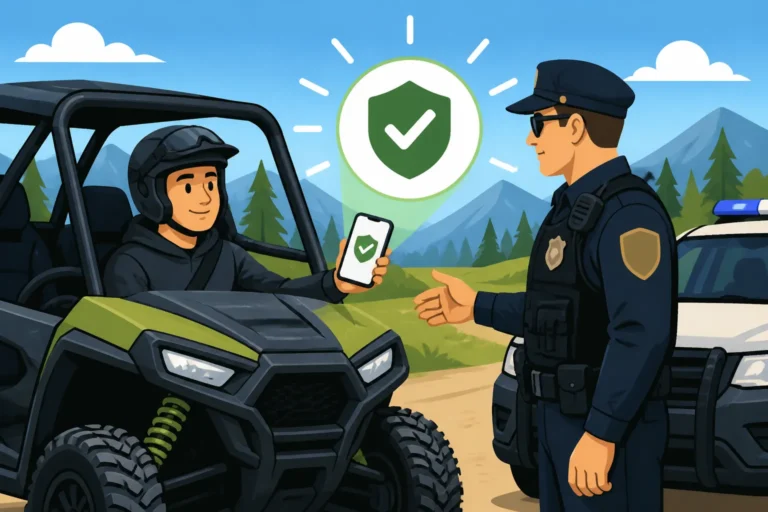
Riding your OHV on an Idaho public road without the legally required liability insurance is a risky gamble with serious consequences. If a law enforcement officer pulls you over, perhaps because you don't have the proper [Idaho Plates That Begin With R] or they're checking for [What an Idaho Deputy Asks a Rider For], and you can't provide proof of insurance, you're looking at fines, potential suspension of your driving privileges, and even impoundment of your machine. It's not a minor offense; it's a violation of Idaho state law.
But the financial penalties are just the tip of the iceberg. The real danger comes if you're involved in an accident. Without liability insurance, you'd be solely responsible for all damages and injuries you cause. Imagine causing an accident that totals another vehicle and injures its occupants. The repair costs for the vehicle, their medical bills, potential lost wages, and pain and suffering could easily amount to hundreds of thousands of dollars. Without insurance to cover this, you could face lawsuits that could wipe out your savings, force you to sell assets, and saddle you with debt for years to come. This is a very real, very scary scenario that underscores why compliance isn't just a formality.
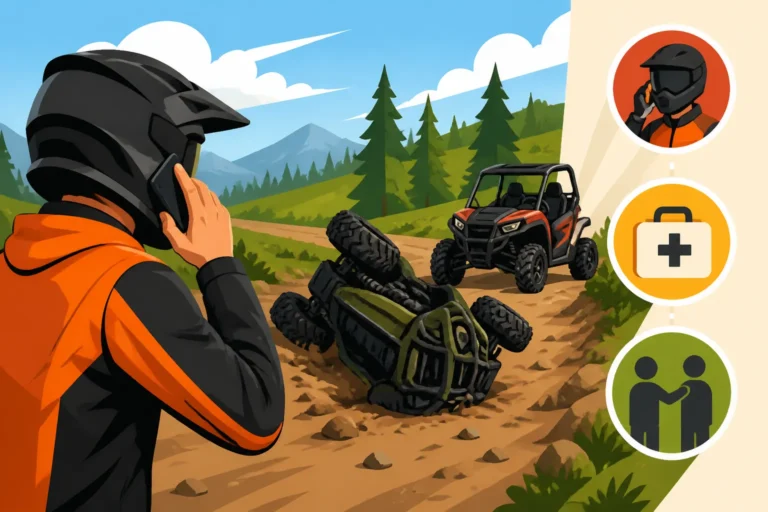
Even if you're an incredibly careful rider, accidents happen. A deer could dart out, an unseen pothole could throw you off balance, or another driver could make a mistake. Being uninsured turns a bad day into a catastrophic one. Remember, the [Idaho Penalties for Reckless Riding] can be steep, and not having insurance only compounds those issues if an accident occurs. Don't let a moment of oversight put your financial future in jeopardy.
How to Get Insured and Stay Covered
Getting the right liability insurance for your OHV in Idaho isn't usually complicated, but it does require a bit of due diligence. Most major insurance carriers that offer auto or home insurance also provide policies for ATVs and UTVs. It’s always a good idea to start by contacting your current insurance provider to see if they offer OHV coverage. Often, you can get a multi-policy discount by bundling your ATV/UTV insurance with your existing auto or home policies.
When you're shopping around for insurance, be transparent about how you plan to use your machine. Specifically, let them know you'll be riding on Idaho's county roads, which is the trigger for the liability requirement. This ensures they quote you a policy that meets the state's minimums for road use. Don't just assume a basic "trail riding" policy covers you for street legality; often, it does not. Ask direct questions about bodily injury and property damage liability limits.
Here’s a practical step-by-step approach:
- Gather Information: Have your OHV's VIN, make, model, and year readily available. Be prepared to discuss any aftermarket modifications, especially those that add significant value or are for road-legal conversion (like specific mirrors or turn signal kits you might get from SuperATV).
- Contact Providers: Reach out to several insurance companies. Get quotes from your current insurer and at least two or three others. This helps you compare rates and coverage options.
- Confirm Coverage Details: Explicitly ask if the policy meets Idaho's minimum liability requirements for OHV road use. Confirm the bodily injury and property damage limits.
- Understand Exclusions: Read the policy carefully to understand any exclusions. For example, some policies might not cover competitive racing or certain commercial uses.
- Get Proof of Insurance: Once you purchase a policy, you’ll receive an insurance card or declaration page. You must [Keeping Paperwork on the Machine] – having proof of insurance readily accessible is a requirement when riding on public roads.
Staying covered means more than just buying a policy; it means keeping it active. Pay your premiums on time, and update your insurer if you make significant modifications to your machine or change how you use it. For example, if you initially only rode trails but then decide to make your UTV street-legal for commuting to trailheads, inform your insurance company. This ensures your coverage remains appropriate and valid.
Beyond the Minimums: Protecting Your Investment and Peace of Mind
While meeting Idaho's liability minimums is essential for legal road use, it’s only one piece of the insurance puzzle. Many riders choose to add other types of coverage to protect their investment and ensure comprehensive peace of mind. These additional coverages don't impact your legal ability to ride on roads in Idaho, but they can be invaluable if something goes wrong with your machine or your well-being. [Idaho ATV Insurance Cost] can vary greatly depending on these choices.
Here's a look at common additional coverages:
Collision Coverage
This coverage pays for damages to your own ATV or UTV if it's involved in an accident, regardless of who is at fault. If you accidentally hit a tree or roll your machine on a tricky turn, collision coverage helps pay for the repairs or replaces the machine if it's totaled. Given the often high cost of OHVs, especially heavily customized side-by-sides, this is a very popular addition. If you've invested in a robust aftermarket bumper or skid plates from a company like SuperATV, collision coverage helps protect that investment too.
Comprehensive Coverage
Comprehensive coverage protects your OHV from non-collision-related damages. This includes incidents like theft, vandalism, fire, natural disasters (like floods or hail), or hitting an animal. If your side-by-side is stolen from your garage or vandalized at a trailhead, comprehensive coverage would step in. This is particularly important for those who store their machines outdoors or in less secure locations. [Insurers and a Stolen Machine Claim] are much easier to navigate with comprehensive coverage in place.
Uninsured/Underinsured Motorist Coverage
This type of coverage protects you if you're involved in an accident with another driver who either has no insurance or not enough insurance to cover your medical bills and damages. While you might have excellent liability coverage for others, this protects you and your passengers. It’s an unfortunate reality that not everyone on the road is adequately insured, so this provides a crucial layer of personal protection.
Medical Payments Coverage
Medical payments coverage helps pay for medical expenses for you and your passengers, regardless of who is at fault in an accident. It can cover things like ambulance fees, hospital visits, and doctor bills up to a certain limit. This is especially helpful for immediate medical costs and can act as a supplement to your personal health insurance.
Accessory and Custom Parts Coverage
Many standard OHV policies have limits on how much they'll pay for aftermarket parts and accessories. If you've invested heavily in upgrades, like a lift kit, new tires, custom seats, or performance modifications (think of the vast array of products available from SuperATV), you'll want to ensure your policy has adequate coverage for these additions. Otherwise, in the event of a total loss, you might only get paid for a "stock" machine, leaving you significantly out of pocket for your beloved upgrades.
When considering these additional coverages, think about the value of your machine, how frequently you ride, where you store it, and your personal financial situation. While liability insurance is a legal necessity for road use, these extra protections can offer invaluable financial security and peace of mind, ensuring that your riding adventures remain enjoyable without the constant worry of unforeseen financial setbacks.
| Coverage Type | What It Covers | Why It's Important | Is It Required in Idaho for Road Use? |
|---|---|---|---|
| Bodily Injury Liability | Injuries to other people when you are at fault | Protects you from potentially huge medical bills and lost wages for others; state mandated. | Yes |
| Property Damage Liability | Damage to other people's property when you are at fault | Covers repair/replacement of another's vehicle, fence, etc.; state mandated. | Yes |
| Collision | Damage to your OHV from an accident | Pays for repairs/replacement of your machine if you hit something or roll over. | No |
| Comprehensive | Damage to your OHV from non-collision events | Covers theft, fire, vandalism, natural disasters, hitting an animal. | No |
| Uninsured/Underinsured Motorist | Your injuries/damages if an uninsured/underinsured driver hits you | Protects you from others who don't have enough or any insurance. | No |
| Medical Payments | Medical expenses for you and your passengers | Helps cover immediate medical costs regardless of fault. | No |
| Accessory/Custom Parts | Aftermarket parts and upgrades to your OHV | Ensures your custom wheels, lift kits, or other add-ons are covered if damaged. | No |
Disclaimer
This article is for general informational purposes only and does not constitute professional advice. Laws, prices and regulations vary by location and change over time. Consult a qualified professional for guidance on your specific situation.