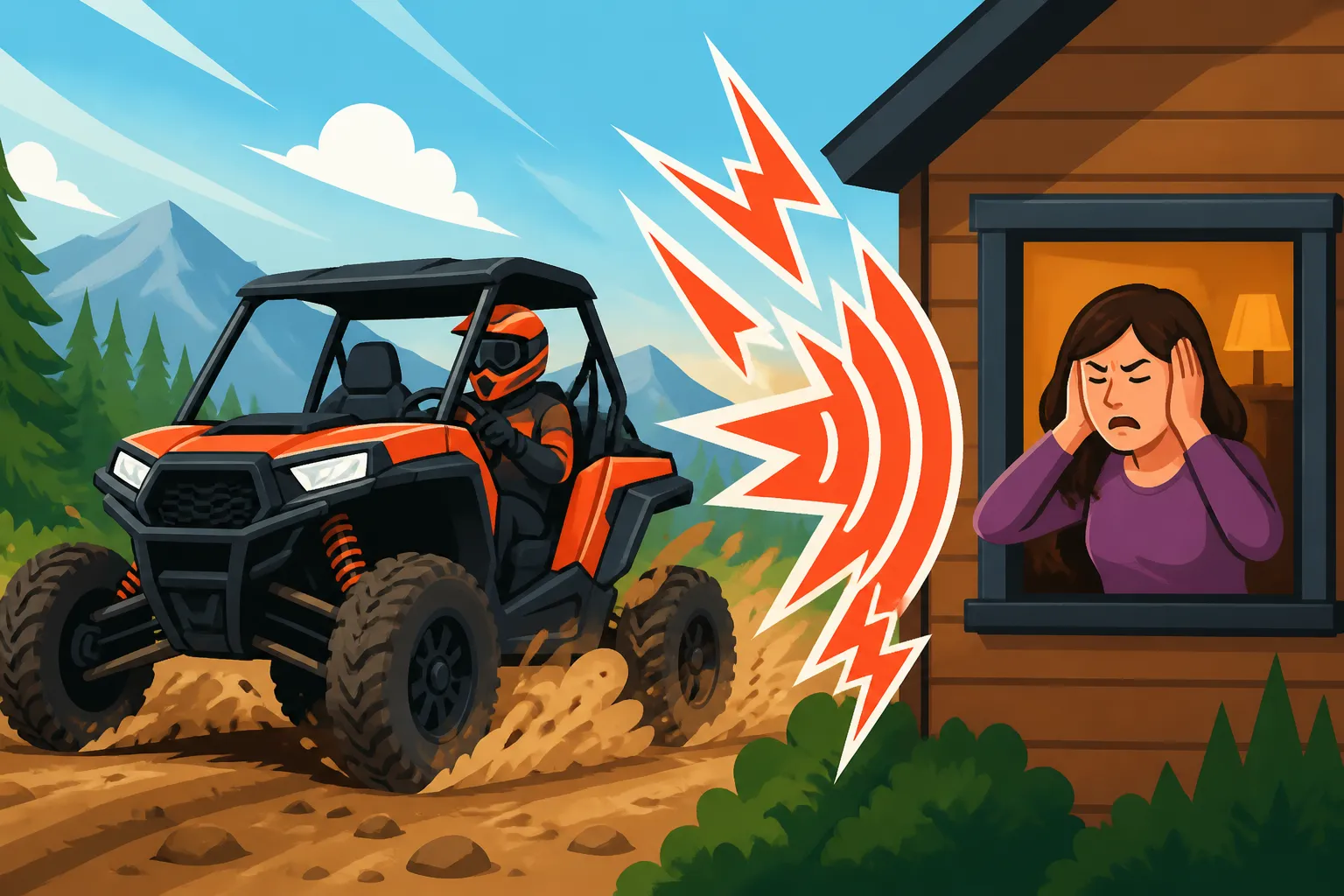
Noise Complaints From a Neighboring Cabin
There's nothing quite like the freedom of hopping on your ATV or UTV and hitting the trails or cruising a scenic backroad here in Idaho. The rumble of the engine, the wind in your face – it’s pure bliss. But let's be honest, that same rumble, when heard from a neighboring cabin or a home just down the road, can quickly turn from a thrill to a source of major friction. Dealing with noise complaints from a neighboring cabin is a frustrating reality for many riders, and it often comes down to balancing your passion with peaceful coexistence. This guide is all about understanding why these complaints happen, what Idaho law says, and most importantly, how to be a considerate rider while still enjoying your machine.
Understanding Why OHV Noise Becomes a Cabin Conflict
It’s easy to think, "My machine isn't that loud," especially when you're wearing a helmet and focused on the ride. But sound travels differently, particularly in rural or semi-rural areas where cabins are often nestled amongst trees or across open fields. What might be an acceptable sound level for a few seconds as you pass by can become a nuisance when it's continuous, repetitive, or happens at unexpected times. The unique characteristics of OHV engines often contribute to this perception of excessive noise.
The Unique Sounds of an ATV or UTV
ATVs and UTVs, by their very nature, are designed for power and performance, which often translates to a distinct exhaust note. Unlike a passenger car, which typically has extensive soundproofing and larger, more restrictive mufflers, OHVs are often more minimalist. Their engines are exposed, their exhausts are designed for efficiency and a certain "sporty" sound, and the vibrations can carry. When you factor in engine RPMs rising and falling, especially on a technical trail or when accelerating, the sound isn't just a constant hum; it's a dynamic range of revs and roars that can be particularly jarring to someone trying to enjoy a quiet afternoon on their porch.
Consider the difference between a distant car on a highway and an OHV driving up a gravel road nearby. The car might be a steady hum, but the OHV’s engine might cut out, rev high, shift gears, and spray gravel, creating a much more attention-grabbing sound profile. Even stock machines, fresh off the dealer lot, can produce significant noise, especially under load. This isn't just about decibel levels; it's about the quality and intermittency of the sound.
Factors That Amplify Noise in Rural Settings
The wide-open spaces and natural landscapes that draw us to Idaho's cabin country also act as natural sound amplifiers and carriers. Unlike a bustling suburban neighborhood where ambient noise often masks individual sounds, rural settings are generally much quieter. This lower ambient noise floor means that any distinct sound, like an OHV engine, stands out far more prominently. Sound waves can travel further without obstruction, bouncing off hillsides, echoing through valleys, and carrying over water.
Think about a serene morning where the only sounds are birds chirping and a gentle breeze. Then, suddenly, an OHV fires up. That contrast makes the noise seem even louder than it might truly be. Topography plays a huge role; a sound can carry for miles across a lake or be funneled directly into a cabin by a specific ridge or valley. The lack of dense human development, which typically absorbs and breaks up sound, means that your machine's roar can become a dominant, intrusive feature of the soundscape for your neighbors.
Idaho's Stance on OHV Noise: Regulations and Expectations
Navigating the legal landscape of OHV noise in Idaho can feel a bit like riding a rocky trail – sometimes clear, sometimes full of hidden bumps. While Idaho is generally very OHV-friendly, that doesn't mean there aren't expectations regarding noise, especially when you're near private property or communities. Understanding the rules, and sometimes the lack of explicit rules, is crucial for both riders and those concerned about noise. [Idaho Noise Rules Near Mountain Towns] are often a good indicator of where the state draws its lines.
Idaho's Specific Noise Ordinances (or Lack Thereof for OHVs)
Here's where it gets a little nuanced. Idaho, at the state level, doesn't have a universal, specific decibel limit for off-highway vehicles that applies across all trails and roads. Many of the regulations focus more on equipment requirements like mufflers and spark arresters (which we’ll get to). However, this doesn't mean you're entirely off the hook. Individual counties and cities do have the authority to establish their own local noise ordinances, which can apply to OHVs, especially when they are operating within city limits or on county roads.
This patchwork of local rules means that what's acceptable in one remote corner of the state might be a violation just a few miles down the road if you cross into a different jurisdiction or a more developed area. For example, some mountain towns that are popular OHV destinations have worked hard to balance rider access with resident quality of life, often enacting stricter noise rules or limiting riding hours within town boundaries. It's always wise to check local ordinances if you frequently ride near specific communities or properties.
Mandates for Mufflers and Spark Arresters
While specific decibel limits are rare at the state level, Idaho law is very clear about requiring proper exhaust equipment for OHVs operating on public lands. Every ATV, UTV, or dirt bike must be equipped with a muffler that is in good working order and effectively prevents excessive or unusual noise. This isn't just a suggestion; it's a legal requirement designed to keep machines from being overtly obnoxious. If you've modified your exhaust to be louder, you might be falling outside the spirit, if not the letter, of this law.
Additionally, a U.S. Forest Service-approved spark arrester is mandatory on any OHV operating on public or state-managed lands in Idaho. While the primary purpose of a spark arrester is fire prevention, these devices are integrated into the exhaust system and can indirectly contribute to noise suppression by adding another layer of baffling. Riding without a proper muffler or an approved spark arrester isn't just impolite; it can lead to citations. You can read more about these requirements in [Idaho Muffler and Exhaust Noise Limits] and [Spark Arrester Rules on Idaho Public Land].
The Difference Between Legal and Respectful Noise Levels
This is the crux of many neighbor disputes. Just because your machine meets the minimum legal requirements for a muffler and spark arrester doesn't automatically mean it's operating at a respectful noise level, especially in a quiet, rural setting. The law sets a baseline, but neighborly etiquette often demands a higher standard. Someone enjoying their cabin is seeking peace and quiet, and even legally compliant noise can be perceived as an invasion of that tranquility if it's too frequent, too long, or too loud for their environment.
Consider it this way: you might be legally allowed to mow your lawn at 8 AM, but if your neighbor works nights, doing so might be legal but far from respectful. The same applies to OHV noise. Riding past a cabin at full throttle on a Sunday morning might be perfectly legal if you're on a public road or trail, but it won't win you any points with the folks trying to have a leisurely breakfast. Understanding this distinction is key to fostering good relationships and avoiding complaints.
Proactive Steps to Be a Good Neighbor and Quiet Your Machine
Nobody wants to be that neighbor, the one whose recreation constantly disrupts others. The good news is that there are many proactive steps you can take to significantly reduce your OHV’s noise output and minimize the chances of a complaint. These strategies range from simple maintenance to thoughtful riding habits, and even exploring aftermarket solutions. Often, a combination of these approaches yields the best results.
Maintenance and Stock Exhaust Systems
A well-maintained machine is often a quieter machine. Over time, mufflers can degrade, develop small cracks, or lose their internal packing, all of which contribute to increased noise. Regularly inspecting your exhaust system for leaks, rust holes, or loose baffles is a critical first step. A simple crack in a header pipe or a loose exhaust flange can turn a moderately noisy machine into a roaring beast. Check for any signs of exhaust gas escaping before the muffler.
If you have a stock exhaust, ensure it’s in top condition. Sometimes, replacing worn gaskets or tightening bolts can make a noticeable difference. Avoid running your engine at excessively high RPMs, especially when starting up or when you’re near homes. Feathering the throttle and using lower RPMs in residential areas or near cabins will dramatically reduce noise compared to wide-open throttle acceleration. Think about your start-up routine: can you start the machine further away from the cabin, or even consider pushing it a bit before firing it up if possible?
Aftermarket Solutions for Noise Reduction
For riders who find their stock system still too loud, or who have already upgraded to a performance exhaust that’s now causing issues, aftermarket solutions can offer a quieter path. Many manufacturers recognize the need for sound reduction and offer products specifically designed to mitigate noise. These aren't always about choking power; often, they're about smarter sound engineering. Companies like SuperATV, for instance, offer exhaust systems that are designed to be quieter than typical performance exhausts while still allowing for good airflow and maintaining decent power. They also carry various sound-dampening materials and kits that can be applied to UTV cab interiors or engine compartments to absorb noise and vibrations, reducing both external sound and in-cab noise for a more comfortable ride. [Aftermarket Exhaust and Where You Can Ride] is a good resource if you're considering modifications.
When looking at aftermarket options, prioritize those specifically advertised for noise reduction or compliance, rather than just raw performance. There are silencers, muffler inserts, and even entire exhaust systems built with acoustic dampening in mind. While these might not give you the loudest "bark," they offer a much more neighbor-friendly "purr" that allows you to ride without constantly worrying about complaints.
Communication is Key: Engaging With Your Neighbors
Beyond the mechanical aspects, one of the most powerful tools for preventing noise complaints is good old-fashioned communication. Often, complaints arise not just from the noise itself, but from a feeling of disrespect or being ignored. If you’re going to be riding frequently near a neighbor's property, especially if it’s a new cabin or you’re a new rider in the area, a friendly conversation can go a long way. Let them know you enjoy riding, acknowledge that OHVs can be noisy, and ask if there are specific times that are particularly sensitive for them.
You might be surprised by how much goodwill a simple conversation can generate. Perhaps they have a sleeping baby, or they work from home and have important calls at certain times. Being aware of these sensitivities allows you to adjust your riding schedule or route to minimize impact. If you're planning a group ride, consider sharing that information too, as [Group Riding Etiquette on a Town Street] suggests. Even if you can’t completely eliminate the noise, demonstrating that you care about their peace and quiet can make a huge difference in their perception and willingness to tolerate occasional noise.
| Strategy | Description | Impact on Noise | Cost (Approx.) |
|---|---|---|---|
| Routine Maintenance | Inspect muffler for leaks, holes, loose baffles; tighten connections; replace worn gaskets. | Moderate | Low |
| Throttle Control | Avoid aggressive acceleration and high RPMs near cabins; feather throttle gently. | High | None |
| Riding Hours | Avoid early mornings, late evenings, or designated "quiet hours" near residential areas. | High | None |
| Route Planning | Plan routes to minimize passes by sensitive areas; use alternative routes if possible. | High | None |
| Aftermarket Muffler | Replace stock or loud performance muffler with a quieter, baffled aftermarket system (e.g., SuperATV options). | High | Moderate-High |
| Sound Dampening | Install sound-absorbing mats/insulation in UTV cabs or engine compartments. | Moderate | Low-Moderate |
| Spark Arrester | Ensure your machine has a USFS-approved spark arrester in good condition. | Low-Moderate | Low |
| Good Communication | Talk to neighbors about your riding habits and their sensitive times. | High (Goodwill) | None |
When a Complaint Happens: De-escalating and Resolving Issues
Despite your best efforts, sometimes a neighbor will still approach you with a complaint. How you handle that initial interaction can often determine whether the issue escalates into a larger problem involving authorities, or if it can be resolved amicably. It’s important to stay calm, listen, and be prepared to find common ground.
Handling an Initial Complaint Gracefully
The first rule of thumb when confronted with a noise complaint is to remain calm and avoid becoming defensive. It's easy to feel personally attacked or misunderstood, especially when you know you're trying to be considerate. However, reacting with hostility or dismissiveness will only harden the other person's stance. Instead, listen actively to their concerns. Let them explain what specifically bothers them – is it the time of day, the duration, or the perceived loudness?
Thank them for bringing it to your attention and validate their feelings. You could say something like, "I understand that the noise can be disruptive, and I appreciate you talking to me directly." This simple act of acknowledgment can go a long way. After listening, explain the steps you've already taken (like checking your muffler or riding at lower RPMs) and offer to explore solutions together. Perhaps adjusting your riding times, as mentioned in [Riding Home From the Trailhead at Dusk], is a possibility. The goal is to open a dialogue, not shut it down.
Understanding Potential Enforcement and Penalties
If a complaint escalates beyond a friendly conversation, authorities might get involved. This could mean a visit from a county sheriff's deputy or a local park ranger. They will likely be assessing compliance with existing laws, such as whether your machine has a proper muffler and spark arrester. They might also refer to any local noise ordinances that apply to the specific area. A deputy will often start with a warning, giving you an opportunity to correct the issue. However, repeat offenses or blatant disregard for regulations can lead to citations and fines.
Remember, local deputies and rangers are often the front line when it comes to resolving these issues. What they ask for can vary, as discussed in [What an Idaho Deputy Asks a Rider For]. If you’re cited for something like operating without a proper spark arrester or muffler, the fines can add up, and it’s certainly less enjoyable than a peaceful ride. While less common for simple noise, continuous, egregious noise violations could potentially even lead to charges of disturbing the peace or, if combined with other behaviors, [Idaho Penalties for Reckless Riding].
Finding Common Ground and Long-Term Solutions
Ultimately, the best long-term solution involves finding a way for everyone to coexist peacefully. This might mean making some adjustments to your riding habits or your machine, but it also establishes you as a responsible member of the community. Could you agree to only ride during certain hours, or avoid specific trails that run directly past their cabin? Perhaps you could explore less-traveled routes for your initial take-off, even if it adds a few minutes to your journey.
If you’ve explored all avenues of communication and adjustments, and the problem persists, documenting your efforts can be helpful. Keep records of maintenance, conversations, and any changes you’ve made. Sometimes, despite best intentions, a resolution isn’t possible with a particularly sensitive neighbor. In such cases, knowing you’ve done everything reasonable can provide peace of mind. Remember, the goal is to enjoy Idaho's incredible OHV opportunities without infringing on others' right to peace and quiet. Balancing passion with politeness is always the best route to long-term enjoyment.
Disclaimer
This article is for general informational purposes only and does not constitute professional advice. Laws, prices and regulations vary by location and change over time. Consult a qualified professional for guidance on your specific situation.