Idaho Rules for a Golf Cart on a Town Street
It can be incredibly frustrating to see neighbors zip around town in golf carts, only to realize the rules for your own cart might be totally different – or worse, that you could be breaking the law without even knowing it. This comprehensive guide will walk you through the often-confusing world of Idaho's regulations concerning golf carts on public streets, helping you understand where you can and can't drive, and what you need to do to stay on the right side of the law.
Understanding Idaho's Definition: Golf Carts vs. OHVs vs. LSVs
One of the biggest sources of confusion for many recreational vehicle owners in Idaho is the distinction between different types of machines. A golf cart isn't just a slower version of a side-by-side, and it's certainly not treated the same way as an off-highway vehicle (OHV) in many legal contexts. Understanding these differences is the crucial first step to knowing if and how you can legally operate your golf cart on town streets.
What Exactly is a Golf Cart in Idaho's Eyes?
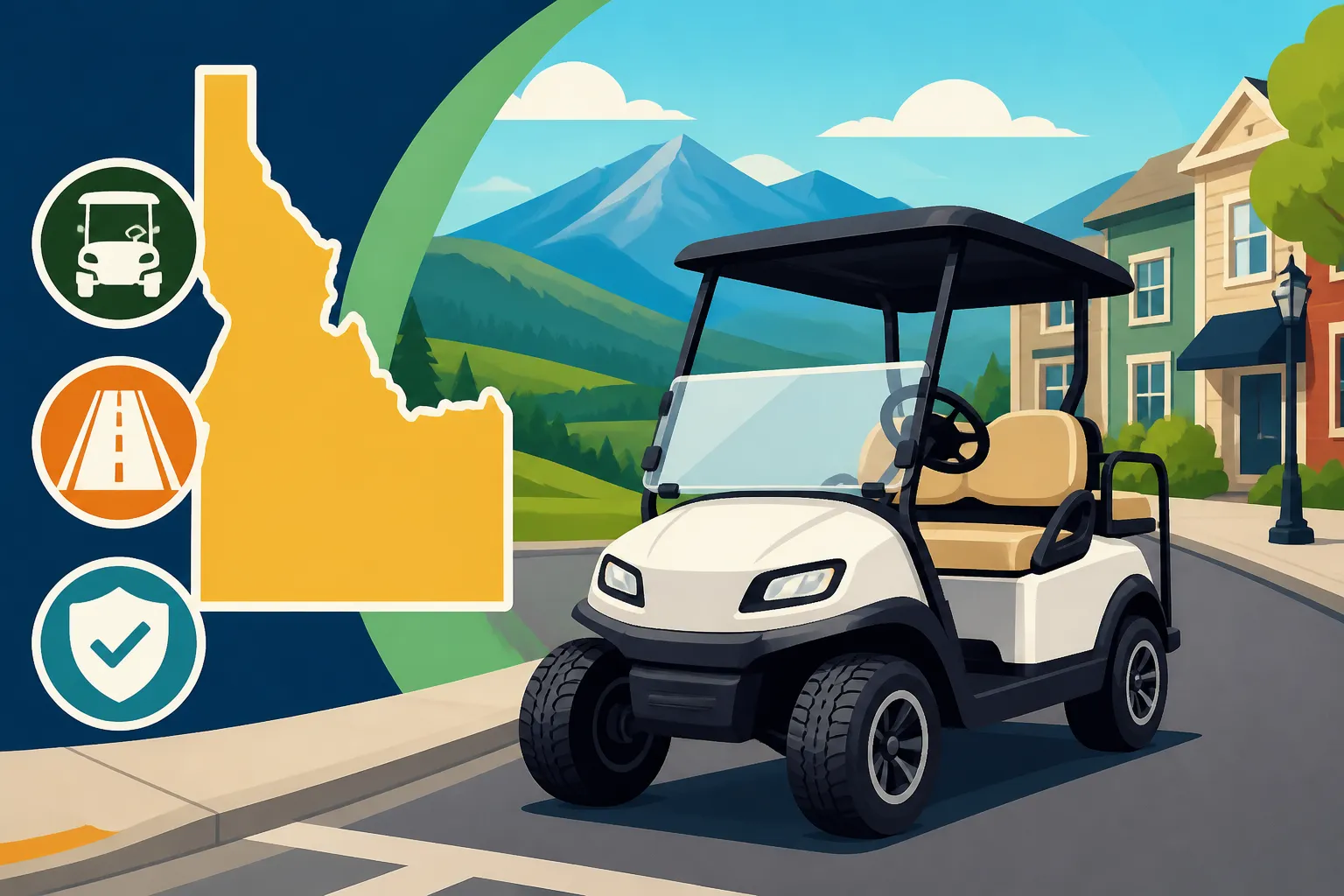
In Idaho, a "golf cart" generally refers to a motor vehicle designed and manufactured for operation on a golf course for sporting purposes. The key characteristics are usually their speed and their original intended use. Most golf carts are designed to go no faster than about 20-25 miles per hour. They typically lack many of the safety features you’d find on a standard automobile, such as advanced lighting, turn signals, or even robust braking systems, because they were never meant for sharing paved roads with cars and trucks.
Many folks purchase a golf cart thinking it's a quick, easy way to run errands around a small town or get to the local park. However, because of their design limitations, Idaho law, and more specifically local city or county ordinances, often impose strict limitations on where these machines can operate. It's not uncommon for a golf cart to be completely prohibited from public roads unless specific local rules allow for it, and even then, often only on very specific, low-speed roads. The state doesn't have a blanket "golf carts are street legal" rule, which is where much of the confusion arises for owners new to the Gem State or those moving between different towns.
The Key Differences: OHVs and Low-Speed Vehicles (LSVs)
To truly understand where your golf cart fits in, it's essential to distinguish it from other categories of vehicles that might look similar but are treated very differently under Idaho law.
Off-Highway Vehicles (OHVs): This category includes ATVs, UTVs (side-by-sides), and dirt bikes. These machines are built for off-road use, but Idaho has extensive rules allowing them on certain designated county roads and forest service routes, often requiring an OHV sticker, specific equipment, and sometimes a restricted vehicle plate. [What Idaho Requires to Ride a County Road] delves into these requirements. While some people modify their side-by-sides to resemble golf carts for specific uses, their underlying legal classification and intended use are fundamentally different. An OHV is designed for rugged terrain and speed, even if limited on roads, whereas a golf cart is designed for flat, maintained golf course paths.
Low-Speed Vehicles (LSVs): This is the category where many modified golf carts wish they could fit, but there's a significant difference. An LSV is defined as a four-wheeled vehicle with a gross vehicle weight rating of less than 3,000 pounds and a top speed greater than 20 miles per hour but not greater than 25 miles per hour. Crucially, LSVs must comply with federal safety standards for low-speed vehicles. This means they are manufactured with specific safety equipment like headlamps, tail lamps, stop lamps, turn signals, reflectors, seat belts, and rearview mirrors. They also have vehicle identification numbers (VINs) that classify them as motor vehicles, allowing them to be titled and registered. [Registering a Low-Speed Vehicle in Idaho] goes into more detail on this specific process. If your golf cart doesn't meet these federal safety standards and cannot achieve a speed between 20-25 mph, it's not an LSV, and you cannot simply register it as one. This is a critical distinction that many owners overlook.
Here's a quick table to help clarify the main differences:
| Feature | Golf Cart | Low-Speed Vehicle (LSV) | Off-Highway Vehicle (OHV) |
|---|---|---|---|
| Primary Use | Golf courses | Street legal on specific roads | Off-road recreation |
| Top Speed | Typically < 20 mph | 20-25 mph (by definition) | Varies widely, often much higher than 25 mph |
| Street Legal? | Varies by local ordinance; rarely statewide | Yes, with proper equipment and registration | Yes, on designated roads with specific permits |
| Equipment | Minimal (basic lights, horn sometimes) | Federal safety standards (lights, mirrors, seatbelts, etc.) | Varies for road use (lights, mirrors, license plate mount) |
| Registration | Not typically state-registered | Yes, titled and registered as motor vehicle | OHV sticker, sometimes restricted plate |
| Driver's Lic. | Not typically required on golf course | Yes, required for road use | Yes, required for road use on county roads |
Where Golf Carts Can and Cannot Be Driven on Idaho Streets
The rules for golf carts on Idaho streets are largely a patchwork, varying significantly depending on where you live. This isn't just an inconvenience; it's a real legal hurdle that can lead to fines or worse if you don't do your homework for your specific area.
Town Ordinances: The Local Power
Idaho state law generally doesn't permit golf carts on public roads, but it grants local municipalities (cities and counties) the authority to create their own ordinances regarding their use. This is why you might see golf carts freely cruising around one small town, while in another, they're strictly confined to private property. [Idaho City and County Ordinances That Close Roads] illustrates how local control plays a major role in vehicle access.
Before you even think about taking your golf cart onto a public street, your absolute first step must be to contact your city clerk's office or the county sheriff's department (if you're in an unincorporated area) to inquire about specific local ordinances. They can tell you if golf cart operation is permitted at all, and if so, under what conditions. These conditions might include:
- Designated Streets: Some towns will only allow golf carts on specific streets, often those with lower speed limits or within certain residential zones.
- Hours of Operation: Restrictions might be in place for nighttime use, or even specific days of the week.
- Driver Requirements: Even if allowed, a valid driver's license might be mandatory, and age restrictions often apply.
- Proof of Insurance: Like any vehicle operating on public roads, the town may require you to carry liability insurance. [Idaho Liability Insurance Minimums for Riders] discusses what's generally required for other OHVs, and similar requirements could apply to golf carts if allowed on roads.
Failing to check these local rules is a common mistake that can land you a citation from the local sheriff or police department. Don't assume that just because your neighbor's cousin in another town does it, you can too. Idaho is vast, and local control means rules can change literally just by crossing a city limit sign.
Speed Limits and Restricted Roadways
Even in towns where golf carts are permitted, there are almost always strict limitations on the types of roads they can use. Generally, golf carts are only allowed on roads with a speed limit of 25 mph or less. This immediately excludes most major arterial roads, state highways, and certainly any federal highways. [Crossing an Idaho Highway on an OHV] explains why these routes are off-limits even for some OHVs, let alone golf carts.
The rationale is clear: golf carts are slow, lack robust safety features, and cannot keep up with the flow of traffic on faster roads. Mixing these vehicles with cars traveling at 35, 45, or 55 mph creates a significant safety hazard for everyone involved. You'll rarely, if ever, find an ordinance that allows golf carts on roads with higher speed limits. If a local ordinance permits golf carts, it will specify the maximum speed limit of the roads they can use. It's not just about what the cart can do, but what it's legally allowed to do for public safety.
This means your dreams of taking your golf cart on a scenic drive along a major state route are almost certainly out of the question. You'll be restricted to neighborhood streets, certain residential areas, and perhaps pathways specifically designated for golf cart or similar low-speed vehicle traffic. Always carry a copy of the local ordinance if you plan to ride, or at least be prepared to explain the rules to a law enforcement officer, should you be stopped. The sheriff patrols on these back roads and is aware of local ordinances. [Sheriff Enforcement on Idaho Back Roads] is a good read for understanding how law enforcement operates in these areas.
Making Your Golf Cart Street-Legal (If Permitted Locally)
If you've done your homework and found that your local Idaho municipality does allow golf carts on certain town streets, that's fantastic! However, the journey to street legality isn't just about permission; it's also about equipping your cart properly. Most towns will require specific safety features to ensure your golf cart is as visible and safe as possible when sharing the road with other vehicles.
Essential Equipment for Road Use
Even if your town gives the green light, it's almost guaranteed to come with a list of required modifications. These generally mirror the safety equipment found on Low-Speed Vehicles (LSVs) or even standard automobiles, scaled for the golf cart's limited speed. Here's a rundown of common requirements:
- Headlights and Taillights: These are non-negotiable for visibility, especially if you plan to operate near dusk or dawn. Many golf carts come with basic lights, but for road use, they often need to be brighter and more robust, meeting specific illumination standards. [Lighting Rules for Riding After Dark in Idaho] provides context for other OHVs, and similar principles apply.
- Brake Lights: Essential for signaling when you're slowing down or stopping. Your golf cart's standard brake pedal might need an upgrade to activate a visible brake light.
- Turn Signals: You need a clear way to indicate your intentions to other drivers. This means front and rear turn signals. Many aftermarket kits, including those from brands like SuperATV, offer universal turn signal kits designed for various utility vehicles, which could be adapted for a golf cart.
- Reflectors: Additional reflectors on the sides and rear enhance visibility, especially at night or in low-light conditions.
- Windshield: A DOT-approved windshield is usually required to protect the driver and passengers from debris. It needs to be made of safety glass or a similar shatter-resistant material.
- Rearview Mirror: At least one rearview mirror (and often a side mirror on the driver's side) is critical for seeing traffic behind you. Again, SuperATV offers various mirror options that could be installed. [Mirrors on a Road-Legal Side-by-Side] offers more insight into mirror requirements for similar machines.
- Seat Belts: If your golf cart has seats, seat belts will likely be required for all occupants to enhance safety in case of a sudden stop or collision.
- Horn: A working horn is necessary to alert pedestrians or other drivers to your presence. [Horn Requirements for Road Use] applies to other vehicles and would be relevant here.
- Parking Brake: A functional parking brake to keep the cart stationary when parked.
- Vehicle Identification Number (VIN): If your golf cart was not manufactured with a VIN, you may need to apply for one, especially if the local ordinance requires it to be treated more like a motor vehicle for identification purposes.
It's crucial that any modifications are done correctly and safely. Many shops specialize in converting golf carts for street use and can ensure compliance with local regulations. Don't try to cut corners, as an improperly equipped golf cart is a safety hazard and an enforcement magnet.
Licensing, Insurance, and Registration Requirements
Beyond the physical equipment, you'll also need to consider the legal paperwork necessary to operate your golf cart on town streets, assuming local ordinances permit it.
- Driver's License: In almost all cases where a golf cart is allowed on public roads, the operator will need a valid driver's license. This means a learner's permit won't cut it, and young drivers who don't yet have a license will be prohibited from operating it on public streets. [Driver's License and Insurance on an Idaho Road Ride] is a good reference for similar requirements for other off-highway vehicles.
- Insurance: Liability insurance is typically a requirement. Just like with any other vehicle on the road, if you're involved in an accident, you need to be able to cover damages or injuries you might cause. Your homeowner's insurance policy will almost certainly not cover your golf cart when it's operating on public roads, so you'll need a specific policy for it. Contact your insurance provider to discuss options for low-speed vehicles or modified golf carts.
- Registration/Permit: While golf carts generally aren't registered with the state as motor vehicles like cars or LSVs, if your local municipality permits their use, they may require a specific local permit or registration. This often involves an annual fee and helps the city track how many such vehicles are operating on their streets. This local permit would be distinct from an [Idaho OHV Sticker] which is for off-highway vehicles. You may need to display this permit prominently on your cart.
Always keep copies of your driver's license, insurance, and any local permits with you when operating your golf cart on public roads. A local law enforcement officer will almost certainly ask for them during a stop. Being prepared helps demonstrate you're a responsible rider adhering to the rules.
Common Pitfalls and Misconceptions for Golf Cart Owners
Navigating the rules for golf carts on town streets can feel like a minefield, and it's easy to fall into common traps or misunderstand key distinctions. Many owners, with the best intentions, find themselves on the wrong side of the law simply because they didn't fully grasp the nuances of Idaho's regulations or local ordinances.
Assuming "It's Just a Golf Cart"
Perhaps the most pervasive and dangerous misconception is the idea that "it's just a golf cart," implying it's a harmless, unregulated vehicle that can be driven anywhere. This mindset often leads to serious legal trouble and, more importantly, safety risks. Law enforcement does not view a golf cart on a public road as a toy. They view it as a motor vehicle operating potentially illegally.
Consider a scenario: you decide to take your golf cart from your house to the local grocery store, a trip of only a mile or two. You assume because it's a quiet residential street, it's fine. Suddenly, a city police officer pulls you over. You don't have a driver's license (because you thought it wasn't required for a golf cart), no insurance (because it's "just a golf cart"), and your cart lacks proper lighting or turn signals. In this situation, you could face multiple citations, your cart could be impounded, and you might even be found liable if you're involved in an accident. The penalties can be significant, just as they would be for an illegally operated ATV or UTV. [Fines for an Unstickered OHV in Idaho] gives an idea of how seriously Idaho takes unregistered or improperly operated vehicles.
The "it's just a golf cart" mentality often stems from observations in golf course communities in other states, or from small, very specific towns that have explicitly passed broad ordinances. Idaho doesn't operate under that assumption statewide. Each city and county has the right to determine its own rules, and many have opted to restrict golf carts heavily from public roads for safety reasons. Always prioritize verifying local rules over making assumptions.
The Consequences of Ignoring Local Rules
Ignoring local ordinances and state statutes regarding golf carts can lead to a cascade of negative consequences, ranging from minor inconveniences to significant legal and financial burdens.
- Fines and Citations: This is the most immediate consequence. If you're caught operating a golf cart illegally on a public street, you can expect to receive a ticket. These fines can add up quickly, especially if you're cited for multiple violations (e.g., no license, no insurance, improper equipment). A citation for operating an unregistered vehicle or one without required safety equipment can be costly.
- Vehicle Impoundment: In more serious cases, especially if you're operating the golf cart recklessly, under the influence, or without a valid license or insurance, law enforcement may impound your vehicle. Getting your golf cart out of impound can be an expensive and time-consuming process, involving impound fees, storage fees, and proof of proper registration and insurance before release.
- Liability in Accidents: This is arguably the most serious risk. If you're involved in an accident while illegally operating your golf cart on a public road, your liability could be enormous. Without proper insurance, you could be personally responsible for property damage, medical bills, and lost wages for anyone injured. Your standard auto insurance will not cover a golf cart, and if you haven't secured a specific policy, you'll be on the hook. This scenario can financially devastate individuals and families.
- Loss of Driving Privileges: Depending on the severity of the offense, especially if alcohol is involved or if you're cited for reckless operation, you could face penalties that affect your regular driver's license. [Idaho Alcohol Limits for OHV Operators] applies to other vehicles operating on public roads, and the same principles would be applied to a golf cart if the local ordinance considers it a motor vehicle for enforcement purposes.
- Neighborhood Disputes: Beyond the legal ramifications, operating a golf cart where it's not permitted can lead to friction with neighbors and community members. Noise, perceived safety hazards, and general disregard for local rules can erode community trust and lead to increased complaints to law enforcement, making it even harder for legitimate users to operate their machines.
Ultimately, the best approach is to be proactive and informed. Check with your local authorities, ensure your golf cart meets all necessary equipment standards (perhaps with help from accessories from companies like SuperATV if needed!), carry the correct documentation, and always prioritize safety and compliance. It's far better to spend a little time upfront understanding the rules than to face the expensive and stressful consequences of breaking them.
Disclaimer
This article is for general informational purposes only and does not constitute professional advice. Laws, prices and regulations vary by location and change over time. Consult a qualified professional for guidance on your specific situation.