Registering a Low-Speed Vehicle in Idaho
Trying to make sense of Idaho's rules for low-speed vehicles (LSVs) can feel like trying to solve a riddle without all the clues. Many folks assume their souped-up golf cart or even a small side-by-side should be able to hop on the paved back roads, only to find the state has very specific definitions and requirements. This guide is here to untangle that confusion, walking you through what an LSV truly is in Idaho and how you can get one properly registered for legal road use, so you can stop guessing and start riding.
Understanding Idaho's Definition of a Low-Speed Vehicle
Before you even think about hitting the pavement, it's crucial to understand exactly what Idaho considers a "low-speed vehicle." This isn't just a fancy term for any slow-moving ride; it's a specific classification with distinct characteristics and legal implications. The biggest frustration I hear from people is the assumption that if it's got four wheels and goes slow, it must be an LSV. But that's where the misunderstanding often begins, especially when comparing it to a typical golf cart or even an ATV.
Differentiating LSVs from Golf Carts and OHVs
Let's clear up the biggest misconception right away: a low-speed vehicle is not a golf cart. While both are often electric and can be used for local errands, their design, safety features, and legal definitions are worlds apart. A golf cart is generally manufactured for use on golf courses, private communities, or very low-speed, contained environments. They often lack basic safety equipment that would allow them on public roads, and Idaho law treats them very differently. You can usually only operate a golf cart on public roads if a specific city or county ordinance allows it, and even then, it's often limited to crossing streets or within very short distances at low speeds.
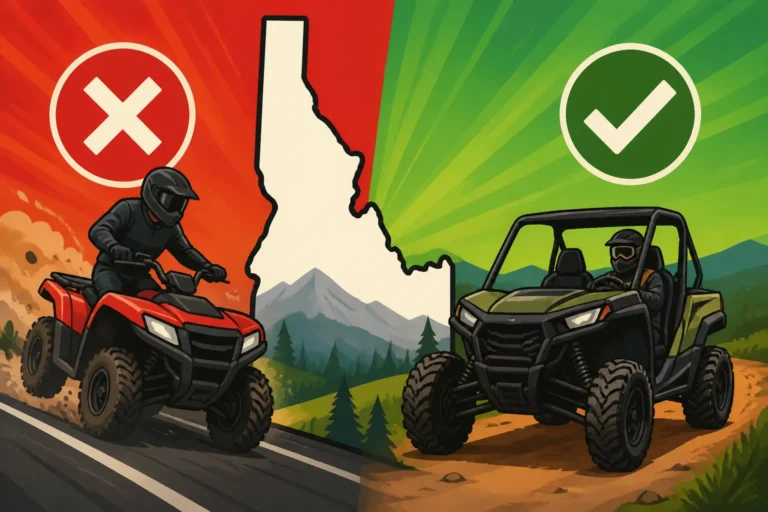
On the other hand, off-highway vehicles (OHVs) like ATVs and UTVs (side-by-sides) are designed primarily for off-road trails and rugged terrain. While many UTVs are now built with a lot of creature comforts and can feel similar to small cars, their primary classification is still off-road. To ride an OHV on certain paved roads in Idaho, it often requires a [Idaho's Restricted Vehicle Plate Explained] and adhering to a whole other set of rules about equipment, speed, and where you can actually go. LSVs are in a unique middle ground: they are purpose-built for road use, albeit at lower speeds, and come with a standard set of safety features that golf carts typically don't.
Idaho's Specific LSV Criteria
So, what exactly does qualify as an LSV in Idaho? The law specifies a few key characteristics that define these vehicles. First and foremost, an LSV is a four-wheeled motor vehicle with a top speed greater than 20 miles per hour but not exceeding 25 miles per hour. This speed range is critical; if your vehicle can't hit 20 mph, or if it can exceed 25 mph, it generally won't fit the LSV classification.
Beyond speed, an LSV must be manufactured to comply with specific federal safety standards set by the National Highway Traffic Safety Administration (NHTSA) for low-speed vehicles. This means it has certain built-in features right from the factory. These aren't just add-ons you bolt on later; they are integral to the vehicle's design. This distinction is vital because simply adding turn signals to your golf cart won't magically make it an LSV in the eyes of the law. You can see how this differs from trying to modify a standard side-by-side to be road-legal, where aftermarket parts from companies like SuperATV are often used to meet specific requirements. An LSV is designed from the ground up with these street-legal elements.
Essential Equipment for an Idaho LSV
If your vehicle meets the basic definition of an LSV, the next step is ensuring it has all the necessary safety equipment mandated by Idaho law. This is where the rubber truly meets the road, so to speak, in terms of getting your vehicle ready for registration and safe operation on public thoroughfares. It's not enough to just look like it could be roadworthy; it must actually be roadworthy according to state standards.
Required Safety Features
To be registered as an LSV and legally driven on Idaho roads, your vehicle must be equipped with a specific list of features that ensure visibility and safety for both the driver and others on the road. This list is non-negotiable and mirrors many of the requirements for full-size automobiles, albeit adapted for the lower speed range.
Here's what Idaho expects your LSV to have:
- Headlamps: At least two headlamps, providing adequate illumination during darkness. These aren't just little auxiliary lights; they need to be proper headlights.
- Taillamps: Two red taillamps, visible from at least 500 feet to the rear. Again, these need to be prominent.
- Stop Lamps (Brake Lights): Two red stop lamps, which illuminate when the brake is applied. These are crucial for signaling your intentions to traffic behind you.
- Turn Signal Lamps: Front and rear turn signals are a must, clearly indicating your turns or lane changes.
- Reflex Reflectors: Reflectors on the rear of the vehicle to enhance visibility, especially at night.
- Exterior Mirrors: At least one mirror mounted on the left side of the vehicle, and one rearview mirror or a mirror on the right side. Visibility to the rear is paramount.
- Parking Brake: A functioning parking brake to secure the vehicle when stopped.
- Windshield: A safety glass windshield, similar to what you'd find on a car, providing protection and clear vision.
- Seat Belts: Seat belts for all designated seating positions. This is a fundamental safety feature.
- Vehicle Identification Number (VIN): A permanent, unique VIN is required for titling and registration.
Without each of these items, your vehicle will not meet the criteria for LSV registration in Idaho. It’s worth noting that if you have a non-compliant vehicle that you're trying to make street legal, companies like SuperATV offer a range of universal mirrors, turn signal kits, and even windshields that might help you meet some of these requirements, but always double-check the specifics of LSV manufacturing compliance rather than just adding accessories. It’s often easier to start with a vehicle already designated as an LSV by the manufacturer.
Insurance and Driver's License Requirements
Beyond the vehicle itself, the operator and the vehicle must meet other legal requirements. Just like driving any other motor vehicle on Idaho roads, operating an LSV requires proof of financial responsibility. This means you must carry valid liability insurance. The minimum coverage requirements are the same as for a standard car. You'll need to provide proof of this insurance when you register your LSV and carry it with you whenever you're operating the vehicle. An officer can ask for it, just like they would for any other driver. [Driver's License and Insurance on an Idaho Road Ride] covers more on these general requirements.
Furthermore, to legally operate an LSV on public roads in Idaho, you must possess a valid driver's license. This is not a "learner's permit" situation for younger riders; it's a full, unrestricted driver's license. The state views an LSV as a legitimate road vehicle, and the operator must be qualified to drive it. This means that if you're under 16 and don't have a license, an LSV isn't your ticket to highway freedom. [Do You Need a Driver's License to Ride an Idaho Road?] delves into these specifics for various vehicle types.
The Registration Process for an LSV in Idaho
Once you're confident your vehicle meets Idaho's definition of an LSV and is equipped with all the necessary safety features, it's time to tackle the registration process. This involves a few key steps at your local county assessor's office, similar to how you would register a car or even a traditional OHV. Don't go in unprepared; having all your ducks in a row will make the process much smoother.
Where to Register and What to Bring
The primary place to register your low-speed vehicle in Idaho is your local county assessor's office. This is the same department responsible for vehicle titles and registrations for cars, trucks, and even off-highway vehicles. It's not like going to a local vendor to buy an OHV sticker; this is a full vehicle registration process.
When you head to the assessor's office, be prepared with the following documentation:
- Certificate of Origin (MCO) or Previous Title: If you're buying a new LSV, the manufacturer's certificate of origin is your proof of ownership. For a used LSV, you'll need the properly signed-over title from the previous owner. If you're bringing in an LSV from another state, you'll need its out-of-state title. Sometimes getting a machine titled without the previous owner can be a hassle, so make sure all paperwork is complete before you leave the seller.
- Bill of Sale: While not always strictly required if you have a complete title, a bill of sale can clarify the purchase price for sales tax calculations and confirm the transaction details.
- Proof of Idaho Insurance: As mentioned earlier, you'll need to show proof that your LSV is insured with the state's minimum liability coverage.
- Identification: A valid government-issued photo ID (like your driver's license) is necessary.
- Payment for Fees: Be ready to pay the applicable titling fees, registration fees, and any sales tax due. [Idaho Title Fee at the County Assessor] will give you an idea of standard title costs, and [Idaho Sales Tax on an ATV Purchase] explains the sales tax side, which would apply similarly to an LSV.
It's always a good idea to call your specific county assessor's office beforehand to confirm their exact requirements and hours. Some counties might have slightly different procedures or forms, and nobody wants to make a second trip!
Titling and Plate Issuance
Part of the registration process involves titling your LSV in Idaho. The county assessor's office will review your ownership documents and issue an Idaho title in your name. This title is proof of legal ownership and is a crucial document, much like the title for your car. [Titling and Registering an ATV in Idaho] details a similar process for OHVs, giving you an idea of the steps involved.
Once the titling is complete and all fees are paid, you'll be issued a standard Idaho license plate for your LSV. This isn't a restricted-use plate like some OHVs get; it's a regular passenger vehicle plate, just like what you'd see on a car. You must display this plate prominently on the rear of your LSV, as required by law. The registration will typically be for a one-year period, and you'll need to renew it annually. There are specific guidelines for [Idaho OHV Registration Runs January to December] that are different from LSV plates.
Where Low-Speed Vehicles Can Legally Be Driven in Idaho
Getting your LSV registered and plated is a huge step, but it's not a free pass to drive anywhere and everywhere. Idaho has very specific restrictions on where these vehicles can be operated, primarily due to their slower speeds and unique classification. The biggest frustration here is usually the expectation that a street-legal LSV can go wherever a car can, but that's simply not the case.
Road and Highway Restrictions
The primary restriction for LSVs in Idaho concerns speed limits. Low-speed vehicles are generally prohibited from operating on any road with a posted speed limit greater than 35 miles per hour. This immediately rules out most state highways, interstates, and many busier arterial roads within cities and counties. These vehicles are designed for neighborhood streets, slow-speed zones, and connecting short distances, not for high-speed traffic. [Which Idaho Roads Are Open to OHVs] often includes allowances for OHVs on certain county roads, but LSVs operate under a separate legal framework focusing on paved, low-speed environments.
This means you'll typically find LSVs being used on residential streets, within planned communities, or in small towns where speed limits are naturally lower. If you're planning a trip, you need to carefully consider your route and ensure it adheres to the 35 mph speed limit restriction. You can't just cross a major highway; you often can't even drive on one.
Local Ordinances and Designated Routes
While state law sets the overarching framework, local city and county ordinances play a significant role in defining where an LSV can be operated. Many communities that are popular for LSV use, such as resort towns or areas with extensive recreational trails, may have specific ordinances that designate certain roads or areas for LSV access. Conversely, some towns might have ordinances that restrict LSV use more heavily than state law, perhaps due to traffic concerns or road infrastructure.
It's absolutely critical to check with the local city or county clerk's office for any specific ordinances in the area you plan to ride. Just because your LSV is registered and plated doesn't mean every street is fair game. [Idaho City and County Ordinances That Close Roads] delves into how local rules can impact motorized vehicle use, and LSVs are certainly subject to these local decisions. Some areas might have specific routes, or even entire communities, where LSVs are welcomed, while others might be more restrictive. Never assume; always verify. For instance, some of the companies that make LSVs, including those that SuperATV might supply parts for, often highlight their suitability for "planned communities" or "golf cart-friendly towns" precisely because of these local ordinances.
Understanding these boundaries will prevent potential fines and ensure your LSV adventure is a smooth and legal one.
Disclaimer
This article is for general informational purposes only and does not constitute professional advice. Laws, prices and regulations vary by location and change over time. Consult a qualified professional for guidance on your specific situation.