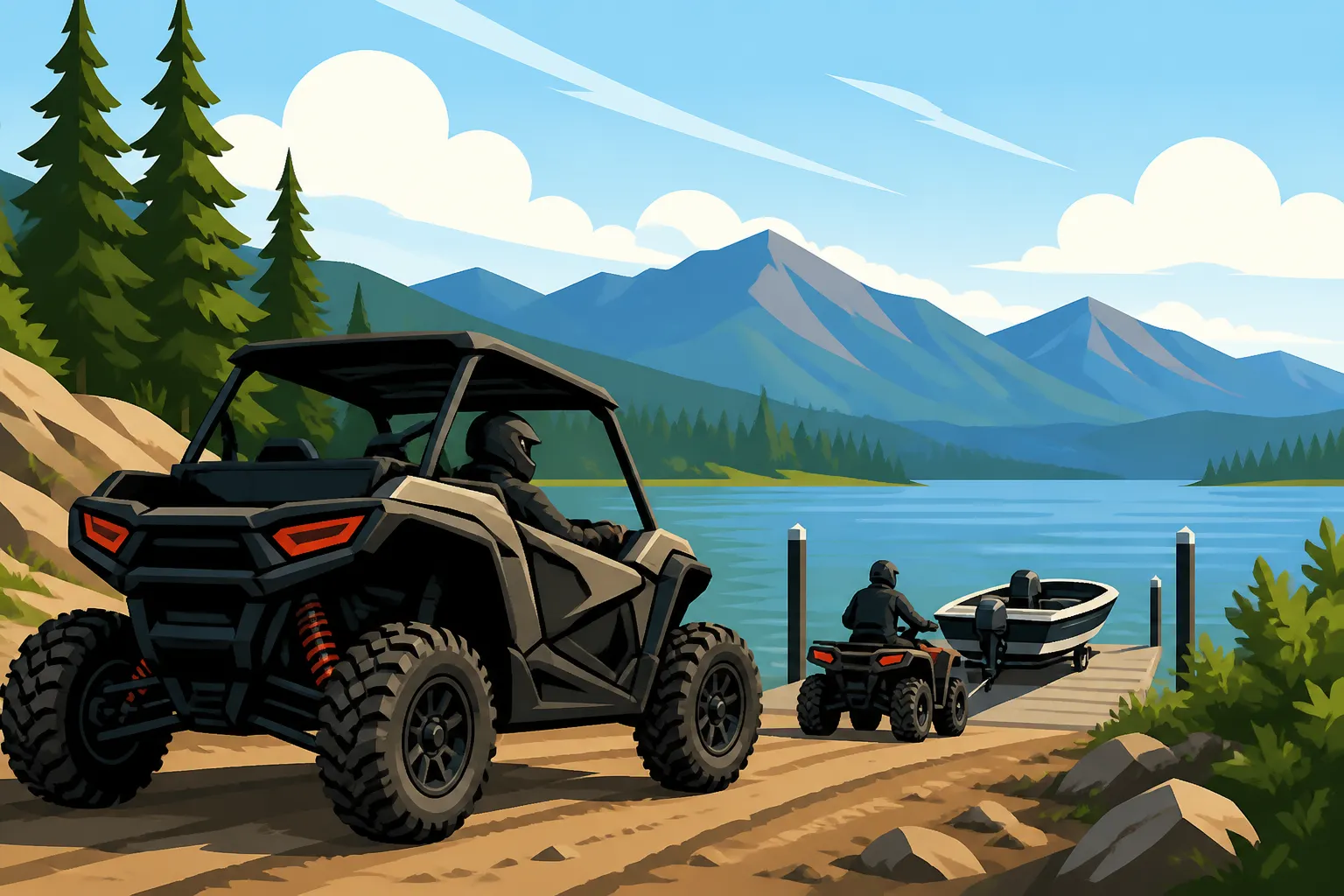
Idaho Access to a Boat Ramp by OHV
There's nothing quite like the freedom of an ATV or UTV ride through Idaho's incredible landscapes, often leading you to some hidden gem of a fishing spot or a picturesque lake. But if you've ever found yourself with your fishing gear or paddleboard loaded, wondering if you can legally drive your machine directly to the boat ramp, you're not alone. This guide is all about untangling the rules and practicalities of using your off-highway vehicle (OHV) to access boat ramps across the Gem State, saving you the headache of unexpected fines or logistical nightmares.
Understanding Idaho's OHV Road Access and Boat Ramps
Idaho offers a fantastic network of trails and roads for off-highway vehicles, but the lines between legal trail riding and legal road driving can sometimes feel blurry, especially when you have a specific destination in mind like a boat ramp. Many riders naturally assume that if they can ride on certain county roads, they can surely get to a public boat ramp. However, it's not always that straightforward, and understanding the nuances is key to a hassle-free day on the water.
The Interplay of State Law and Local Rules
Idaho state law provides the framework for OHV use on public roads, but it also grants significant authority to individual counties and cities to enact their own ordinances. This means that what's perfectly legal for your side-by-side in one county might be prohibited just across the line. Imagine planning a weekend trip to a new lake – you've checked the state rules, but arrive only to find a "No OHV Access to Ramp" sign put up by the local parks department. It's incredibly frustrating, and it happens more often than you'd think. This patchwork of regulations is one of the biggest challenges riders face when trying to figure out if their OHV can truly be their all-in-one recreational vehicle. You need to be aware that while the state may allow [What Idaho Requires Before You Ride a County Road], a specific boat ramp area might have tighter restrictions.
Boat ramps are often situated within state parks, county parks, or city-managed recreational areas, each with its own set of rules. While a county road might lead right up to the entrance of one of these facilities, the rules within the park or at the ramp itself can be entirely different. You might be allowed to ride the county road to the park entrance, but then be required to park your OHV and walk, or even be completely denied entry if your vehicle isn't classified for general street use. It's like navigating a maze where the walls keep shifting.
Why Accessing Ramps by OHV Matters to Riders
For many OHV owners, their machine isn't just for trail riding; it's an integral part of their outdoor lifestyle. Being able to drive your ATV or UTV directly to a boat ramp offers unparalleled convenience. Think about it: you can load up your fishing rods, cooler, and inflatable kayak right onto your side-by-side, drive a few miles down a dirt road, and back right down the ramp to launch. This eliminates the need for a separate truck and trailer, saving on fuel, parking space, and the general hassle of juggling multiple vehicles.
This direct access is particularly valuable for those who live near smaller lakes or rivers, or who are exploring remote areas where traditional vehicle access might be difficult or impossible. For a farmer who wants to spend an hour fishing on their lunch break, or a backcountry enthusiast looking to launch a raft into a remote river, the OHV becomes the perfect tool. It simplifies the entire process, making those spontaneous outdoor adventures much more accessible. [Riding a UTV for Ranch Work on an Idaho Road] often comes with similar considerations for access and road legality.
Making Your OHV Street Legal for Boat Ramp Access
To even consider driving your OHV on any public road to reach a boat ramp, your machine must meet Idaho's requirements for street legality. This isn't just about having a sticker; it's a comprehensive set of equipment, plates, and personal documentation that transforms your trail machine into something that can legally share the asphalt with cars and trucks. Skipping any of these steps can lead to hefty fines, or worse, an accident where you're not properly covered.
The Idaho Restricted Vehicle Plate and OHV Sticker
The first, and arguably most important, step to gaining any kind of public road access with your OHV in Idaho is obtaining an Idaho Restricted Vehicle Plate, often referred to as an "R Plate." This plate signifies that your machine is allowed on certain county and city roads where OHV use is permitted. It's not just a formality; it's how law enforcement distinguishes a trail machine from one that meets minimum road-going standards. You'll also need a valid [What an Idaho OHV Sticker Costs Each Year] displayed on your machine, usually mounted conspicuously on the R plate itself, or on the front left fender for quads. While the sticker primarily allows trail access, both the plate and the sticker work in tandem for legal road use in designated areas.
Applying for an R plate typically involves going to your county assessor's office and providing proof of ownership, such as a title or bill of sale, and verifying that your machine meets specific equipment requirements. This isn't just a paper exercise; they're checking that your OHV is equipped for safe road travel. Don't confuse this with standard vehicle registration; the R plate is specific to OHVs and their limited road access. [Idaho's Restricted Vehicle Plate Explained] covers this in much more detail.
Essential Equipment for Road Use
Simply having an R plate isn't enough; your OHV must also be equipped with certain safety features to be considered road-legal in Idaho. This isn't about looking cool on the trails; it's about making sure your machine is visible and controllable in a mixed-traffic environment. These requirements generally include:
- Headlights and Taillights: These must be operational and properly aimed for visibility, especially during dawn, dusk, or adverse weather conditions.
- Brake Lights: Essential for signaling your stops to traffic behind you.
- Horn: A working horn is crucial for alerting other drivers or pedestrians to your presence.
- Mirrors: You need at least one rearview mirror, typically mounted on the left side, to give you a clear view of traffic approaching from behind. Many riders choose a wider, UTV-specific mirror from brands like SuperATV for better visibility.
- Turn Signals: While not always explicitly required for all road use scenarios, having functional turn signals is highly recommended and often a prerequisite for a restricted plate, making your intentions clear to other drivers. Aftermarket kits, like those offered by SuperATV, can make adding these to your machine much easier.
- Muffler and Spark Arrester: Your exhaust system must meet noise regulations and prevent sparks, crucial for both safety and respecting local communities. [Idaho Muffler and Exhaust Noise Limits] are something you definitely want to understand.
- Seat Belts (for UTVs): If your machine came with seat belts, they must be worn by all occupants while on public roads.
Ensure all this equipment is in good working order before you even think about hitting a paved road. An officer isn't just looking for your plate; they're doing a quick check of your machine's compliance.
Driver's License and Insurance Necessities
Just like driving any other vehicle on public roads, operating an OHV with an R plate requires you to hold a valid driver's license. This isn't a special OHV license; a standard Class D driver's license is typically sufficient. This rule applies to everyone, regardless of age, when operating on designated public roads. So, if you're riding with a younger driver who normally operates their OHV on trails, they would need a valid driver's license to drive on the road section to the boat ramp. You can read more about [Driver's License Requirements on Idaho Roads].
Beyond licensing, liability insurance is also a non-negotiable requirement for road-legal OHV operation in Idaho. This insurance protects you financially in case you're involved in an accident that causes injury or property damage to others. Imagine backing down a boat ramp and accidentally bumping another parked vehicle or causing damage to the ramp itself. Without insurance, you could be facing significant out-of-pocket expenses. Most OHV insurance policies specifically offer coverage for road use, provided your machine meets the street-legal requirements. Make sure your policy reflects this intended use. [Idaho Liability Insurance Minimums for Riders] are something you'll want to review carefully with your insurance provider to ensure you have adequate coverage. You'll need to be able to [Proving Insurance at a Traffic Stop] if asked by an officer.
Navigating Boat Ramps and Waterways with an OHV
Once your OHV is legally equipped and you're properly licensed and insured, the next step is actually navigating to and using the boat ramp. This involves understanding any specific regulations that might apply to the ramp itself, as well as practicing good etiquette and safe operating procedures. It’s not just about getting there; it’s about using the facility responsibly.
Specific Rules at State Parks and Managed Ramps
Many of Idaho's most popular boat ramps are located within state parks, national forest recreation sites, or areas managed by local city or county parks departments. These entities often have their own specific rules regarding vehicle access and use, which can supersede general state or county road rules. For example, while the county road leading to a state park might allow OHVs with R plates, the park itself might have a policy that restricts OHVs to designated parking areas only, prohibiting them from driving down to the water's edge at the ramp.
It's crucial to check the regulations for the specific boat ramp you intend to use before you head out. A quick search on the Idaho Department of Parks and Recreation (IDPR) website, the local county park website, or even a call to the specific ranger district for forest service ramps can save you a lot of trouble. Look for signs posted at the park entrance or near the ramp itself. Some popular ramps might have dedicated OHV parking, while others might prohibit them entirely. Don't assume that just because you're street legal, you have carte blanche access everywhere. [Idaho OHV Rules at a State Park] often have their own unique twists.
Practical Tips for a Smooth Launch and Retrieve
Using your OHV to launch or retrieve a boat or personal watercraft (PWC) can be incredibly efficient, but it requires careful execution. Here are a few practical tips to make the process smooth and safe:
- Scout the Ramp: If it's your first time at a particular ramp, take a moment to observe others or walk down to assess the conditions. Look for steepness, slick spots, depth, and any obstacles underwater. Some ramps are simply not designed for the weight or traction of certain OHVs, especially with a trailer attached.
- Use Proper Towing Gear: Ensure your OHV has a robust hitch and appropriate tow capacity for your boat and trailer. Consider a heavy-duty hitch receiver, perhaps an aftermarket one from SuperATV, if you plan to tow regularly. Make sure your trailer is well-maintained, with working lights if you're on public roads.
- Go Slow and Steady: When backing down the ramp, take it extremely slow. Use your mirrors and, if possible, have a spotter outside the vehicle. Sudden movements can cause a loss of traction or control, especially on wet, algae-covered ramps.
- Manage Traction: OHVs, especially those with aggressive off-road tires, can be prone to spinning on slick concrete or asphalt ramps. Engage four-wheel drive if your machine has it, and avoid excessive throttle.
- Secure Your Load: Whether it's a boat or just gear, make sure everything is securely strapped down both on the trailer and within your OHV. Loose items can become hazards.
- Be Mindful of Others: Boat ramps are often busy places. Be courteous, efficient, and avoid hogging the ramp. Prepare your boat or PWC for launch before you back down the ramp, and move out of the way quickly once you've launched or retrieved.
Respecting Other Users and the Environment
When you're using an OHV to access a boat ramp, you're not just representing yourself; you're representing the entire OHV community. Demonstrating respect for other boaters, anglers, and park users is paramount. This means:
- Controlling Noise: While your OHV might meet legal noise limits, try to keep engine revs down and avoid unnecessary noise, especially in quiet recreation areas or early in the morning.
- Avoiding Dust: If the access road to the ramp is dusty, drive at a speed that minimizes kicking up huge clouds of dust, which can annoy or even obscure the vision of other users.
- No Off-Roading at the Ramp: Stick to paved or designated gravel areas. Do not drive your OHV onto fragile vegetation, beaches, or unauthorized areas around the ramp. These are often protected environments.
- Leave No Trace: Pack out everything you pack in. Dispose of trash properly, and avoid leaving any fluids or debris from your machine.
- Follow Posted Rules: Adhere to all speed limits, parking restrictions, and specific ramp usage guidelines.
By being a responsible and considerate user, you help ensure continued access for OHVs at these valuable recreational sites.
Common Challenges and Local Variations
Even with a street-legal OHV, the journey to a boat ramp in Idaho isn't always a straight shot. You'll encounter variations in local ordinances, seasonal access changes, and unique conditions that require adaptability and prior research. The rules are rarely uniform across the state.
County and City Ordinances Near Water Bodies
As mentioned earlier, while Idaho state law sets the baseline for OHV road access, counties and cities have the power to enact more restrictive ordinances. This is especially true in areas surrounding popular lakes, rivers, and recreation zones. A small town nestled on the shore of a lake, for instance, might have an ordinance prohibiting OHVs on all city streets, even if the county road leading into town allows them. This can create a frustrating barrier if the only public boat ramp is within those city limits. You could find yourself having to trailer your OHV for the last mile or two, defeating the purpose of having it street legal.
It's not uncommon for townships to have specific rules for [Riding Through McCall, Stanley and Salmon] or similar popular destinations. These areas often experience high traffic, and local governments implement restrictions to manage congestion, noise, and safety for residents and visitors. Before you embark on your trip, always check the local city or county government websites for any specific OHV ordinances in the area where your chosen boat ramp is located. If you can't find clear information online, a phone call to the local sheriff's office or city hall can provide definitive answers.
Seasonal Access and Ramp Conditions
Idaho's diverse climate means that access to boat ramps, especially those in higher elevations or more remote areas, can be highly seasonal. Many ramps are inaccessible during the winter due due to snow and ice, and even in spring, access roads can be muddy, washed out, or closed entirely until conditions improve. [Winter Road Riding in Idaho] with an OHV generally requires tracks, which significantly changes the vehicle's classification and permitted use.
Beyond seasonal closures, the physical condition of the boat ramp itself can change. Water levels fluctuate, sometimes leaving ramps partially submerged or exposing hazardous debris. Erosion can create ruts or slippery surfaces. Always use caution, and if a ramp looks unsafe, trust your instincts and find an alternative. Some ramps might also have specific hours of operation or even require a small fee for launch, which may not be immediately obvious. Look for signage, and when in doubt, observe how others are using the ramp. A quick check of local conditions or ranger alerts can prevent a wasted trip. For example, [Spring Runoff on Idaho Back Roads] can make certain routes impassable, impacting your ability to reach a ramp.
Remember, the goal is always a safe and enjoyable outing. Being prepared and informed about all these variables will make your OHV boat ramp access much smoother.
| Requirement/Consideration | Description | Why It Matters for Boat Ramps |
|---|---|---|
| Idaho Restricted Plate | Special license plate for OHVs allowing limited road use. | Essential for legal travel on roads leading to ramps. |
| OHV Sticker | Annual sticker for trail access, often displayed with the R plate. | Required for all public land OHV use, including road access to ramps. |
| Headlights/Taillights | Operational and visible lighting. | Safety and visibility on public roads, especially if traveling at dawn/dusk. |
| Brake Lights | Functional lights indicating braking. | Critical for signaling stops to other vehicles. |
| Horn | Audible warning device. | Alerting others to your presence on roads or at busy ramps. |
| Rearview Mirror | At least one mirror (left side). | Safe navigation, especially when backing a trailer down a ramp. |
| Turn Signals | Highly recommended for clear communication on roads. | Clear indication of intentions to other drivers. |
| Driver's License | Valid standard driver's license. | Legal requirement for operating any vehicle on public roads. |
| Liability Insurance | OHV-specific liability coverage. | Financial protection in case of an accident on roads or at the ramp. |
| Local Ordinances | County, city, or park-specific rules. | Can restrict or prohibit OHV access even if state-legal. |
| Ramp Conditions | Steepness, surface, water levels, debris. | Affects safety and feasibility of launching/retrieving with an OHV. |
| Seasonal Access | Closures due to snow, mud, or other conditions. | Can render remote ramps inaccessible at certain times of the year. |
| Respect/Etiquette | Being courteous to other users, minimizing noise/dust. | Helps maintain positive perception of OHV users and preserve access. |
Disclaimer
This article is for general informational purposes only and does not constitute professional advice. Laws, prices and regulations vary by location and change over time. Consult a qualified professional for guidance on your specific situation.