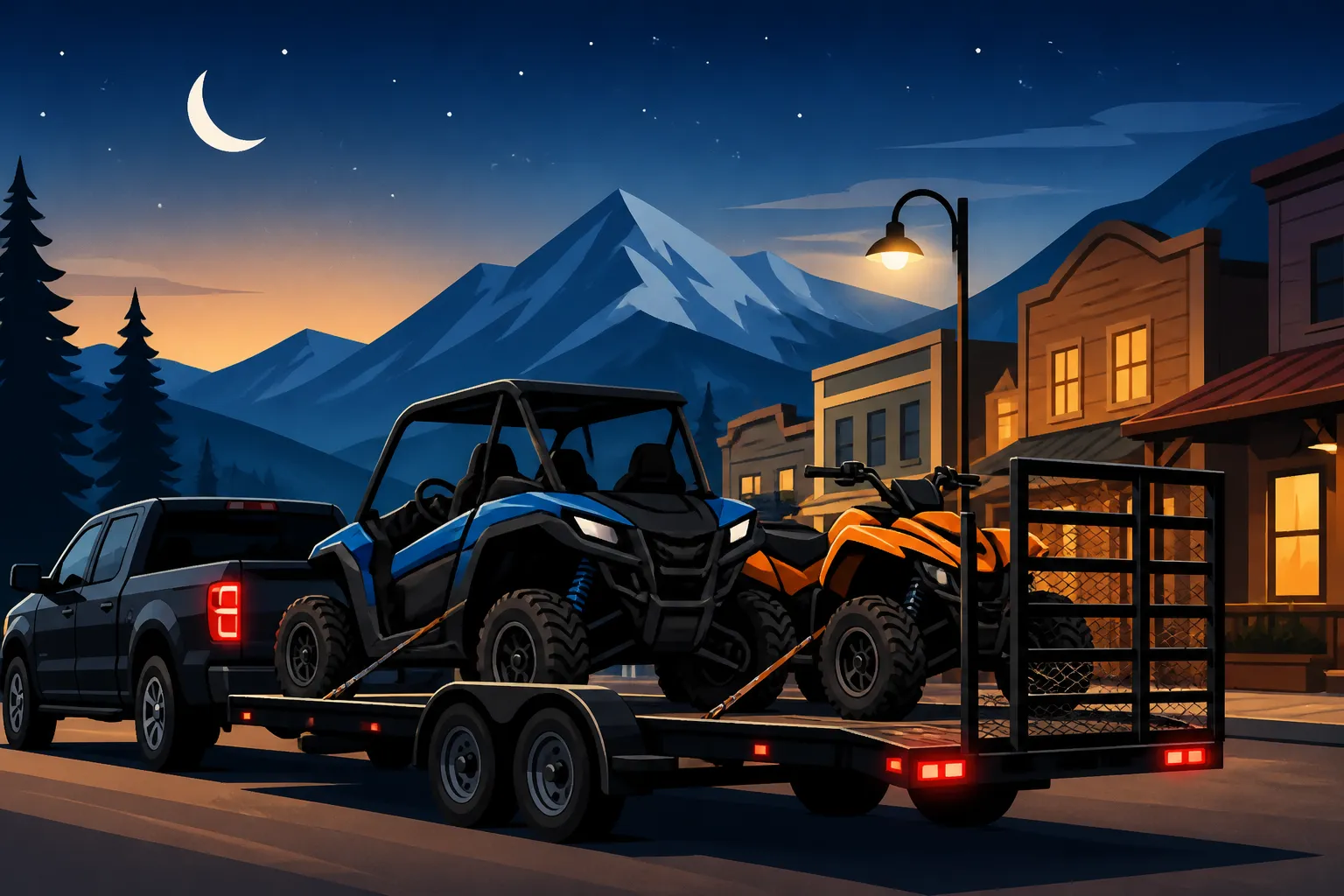
Overnight Trailer Parking in an Idaho Trail Town
Arriving in an Idaho trail town with a truck, trailer, and ATV or UTV can make one question feel urgent: where can you leave the rig overnight without blocking traffic or risking a tow? The safest plan is to arrange parking before you arrive, confirm the property’s rules directly, and make sure the space fits your full setup—not just your truck.
Plan overnight trailer parking before you reach town
Ask what “parking” includes
A place that welcomes visitors’ vehicles may not have room for a long trailer, and permission to park during the day does not automatically mean permission to leave it overnight. When you call a motel, campground, RV park, storage yard, or other property, describe the whole setup: truck length, trailer length, whether the trailer is loaded, and how many nights you need.
Ask whether you can leave the trailer connected to the truck or whether you need to unhitch. That detail changes how much space you need and whether the parking area is practical for your group. A narrow lot might fit a truck and trailer only if you take up several spaces or make a difficult backing maneuver. A larger gravel area could be easier to use, but you still need permission to leave the rig there overnight.
It also helps to ask where the trailer should go, whether the parking surface is level, and whether you can access the rig early in the morning. If you plan to unload machines at the property, ask before doing so; a business may allow parking but prohibit unloading, repairs, or riding from its lot. Keep the answer clear by asking for the specific dates and number of vehicles in your party.
Match the parking option to your trip
There is no single parking arrangement that works for every Idaho town or every trailer. A motel may be convenient for a quick overnight stop, while a campground can make more sense if you also need a place to stay and have confirmed it can accommodate your rig. A dedicated storage lot might suit a longer stay, but it could be less convenient if you need to reach the trailer early or often.
| Parking option | What it may work well for | What to confirm before you rely on it |
|---|---|---|
| Motel or lodge lot | A short stop when the property approves the full rig | Trailer length, overnight permission, number of spaces, and maneuvering room |
| Campground or RV park | A trip where you also need a campsite or RV space | Whether non-registered trailers are allowed, site dimensions, and access hours |
| Designated long-vehicle area | A brief stop where the town or property explicitly permits it | Overnight rules, posted restrictions, and whether a trailer may be left unattended |
| Storage facility | Leaving a trailer for a longer period | Access hours, security arrangements, vehicle requirements, and pickup logistics |
| Trailhead or staging area | Preparing for a ride when overnight parking is specifically permitted | Local restrictions, posted signs, and whether overnight stays are allowed |
Treat the table as a planning checklist, not a guarantee that every option exists in every community. Before choosing a place, check its rules directly and look for posted restrictions when you arrive. Trailhead Parking That Fits a Toy Hauler offers another useful angle when you are deciding whether a parking area can handle a larger rig.
Make the reservation work for the trailer
When you book lodging, include the trailer in the conversation—not as an afterthought at check-in. Share approximate total length and ask whether the property has a specific area for trailers. If the staff member is unsure, ask whether they can check with a manager or send you a written confirmation. A vague “there should be room” can turn into a stressful arrival when the lot is full or the available space is too tight to turn around.
Bring a simple backup plan. Identify another property or a legal place to stay with the trailer, and save its contact details before your trip. In popular outdoor towns, available space can be limited during busy weekends, events, or peak riding periods. That does not mean every lot will be full, but arriving late with no alternative makes it harder to sort out an unexpected refusal.
If you are staying in a lodging property, explain whether you will leave the trailer attached overnight and whether you need to move it before checkout. If you are staying elsewhere and only need to store the trailer, ask whether the property accepts that arrangement independently of an overnight room or campsite. For trip planning around a base town, Idaho Trail Towns Worth a Base Camp and Planning an Idaho Riding Trip can help you think through where parking fits into the larger route.
Choose a trail town with your setup in mind
McCall and the surrounding area
McCall can be a practical base for a ride in the region, but a visitor should not assume that a central lodging lot can accommodate a truck and loaded trailer. Before you book, ask about the exact parking location, turning room, and whether you can leave the trailer for the full length of your stay. If you are staying outside town, ask the lodging provider whether there is a suitable place for the entire rig rather than planning to occupy several ordinary spaces.
Think about where you intend to ride and how you will reach the staging area. A parking arrangement that works for an overnight stay may not be convenient for daily loading and unloading. If you will tow to a trailhead each morning, consider whether you can safely maneuver out of the lodging property, whether the route has restrictions that affect your setup, and whether the trailer will be allowed at the destination. Check the route and riding-area information before you leave rather than relying on a general impression that a road is open or suitable.
When comparing places to stay, ask if the property has a designated overflow area, whether that space is on a firm surface, and whether the trailer must be moved if other guests arrive. If you are still weighing lodging choices, Lodging in McCall for Riders can help you frame the accommodation side of the decision. Your parking confirmation should still come from the property you plan to use.
Stanley, Idaho City, and smaller gateway communities
In smaller towns such as Stanley or Idaho City, available parking may be more limited than a traveler expects, especially when a business has a compact lot or the road layout leaves little room to maneuver. Do not assume that a quiet-looking street or a wide shoulder is an acceptable overnight location. Signs, local rules, private-property boundaries, and seasonal conditions can all affect whether a particular space is suitable.
Call ahead and ask for practical directions. “Park behind the building” may not be enough if there are low branches, a narrow entrance, a steep grade, or a turnaround that cannot accommodate your trailer. If the property suggests a separate area, ask whether you can inspect it before committing to a booking. A quick conversation can prevent a late-night attempt to reverse a loaded trailer through a crowded lot.
A stay in Stanley may put you closer to certain riding areas, but it is still worth confirming lodging and parking as separate details. Lodging in Stanley for OHV Trips can support the lodging search, while Idaho Trailhead Parking and Staging is relevant when you are planning where to unload and start the ride. Do not treat a trailhead as a substitute for overnight trailer parking unless the managing authority or posted rules clearly allow it.
Coeur d’Alene and North Idaho
Around Coeur d’Alene, a visitor may be balancing town access, lodging, and a drive to a riding area elsewhere in the Panhandle. Work out whether your trailer will remain at your accommodation or travel with you each day. Leaving it behind can be convenient, but only if the property has agreed to the arrangement and you can secure the trailer and machines appropriately.
If you are heading toward a trail system outside the city, check the full route and the destination’s parking arrangements. A route that is comfortable for a passenger vehicle may feel different with a long trailer, and a trailhead lot may not have the space you need. Staying in Coeur d’Alene for Panhandle Trails is a useful starting point for thinking about a regional base, but confirm trailer-specific details with the places you contact.
For unfamiliar roads and trail approaches, use a reliable map and check the route before towing. onX Offroad can help you review routes and identify trail-area context as part of your planning, but map information does not grant permission to park on private property or override posted restrictions. When the route or parking status is unclear, contact the relevant property or land manager rather than guessing.
Check access, safety, and local restrictions
Do not assume public parking permits an overnight stay
A public lot, roadside pullout, or trailhead can look like an easy solution after a long drive. But permission to stop briefly, unload, or stage for a ride is different from permission to leave a trailer overnight. Rules may vary by the site, managing agency, and local restrictions. Read the signs at the entrance and within the lot, and seek confirmation from the responsible authority if the overnight rules are not clear.
Be especially careful about blocking access. A trailer can obstruct a turnaround, emergency access, a gate, a loading area, or space needed by other visitors even when the lot seems quiet. Avoid parking where you restrict visibility or make it difficult for other drivers to pass. If a space does not look designed for a long vehicle, do not assume that a quick overnight stay will be overlooked.
The same caution applies to public land outside developed sites. A dirt pullout or roadside area is not automatically an approved place to leave a trailer unattended. Keep your plan grounded in explicit permission and posted information. Idaho Rules on Forest Service Roads and Idaho Rules on BLM Roads can help you understand why land manager rules matter when your route or staging plan involves public land.
Think through security without overestimating it
An unattended trailer and the machines inside it can attract unwanted attention. Choose an authorized, well-lit area where possible, lock the trailer, secure the hitch, and remove loose equipment that is easy to take. Keep registration and ownership documents accessible to you, but avoid leaving sensitive papers visible inside the vehicle. If the property has staff or a gate, ask what those measures do and do not mean; do not assume that parking approval includes active monitoring or insurance protection.
Take a few minutes to record the trailer’s condition before leaving it. Note any existing damage, check that doors and ramps are latched, and make sure straps and loose items are not likely to shift. If you will be away from the trailer for more than one night, ask the property whether you may return to inspect it and whether it needs to be moved. A clear arrangement reduces the chance of misunderstandings with staff or other guests.
Security planning also includes the road journey. Before towing into a small town or mountain area, confirm that your vehicle, trailer, and load are prepared for the route. Strapping a Machine Down for a Mountain Highway is a helpful companion topic for checking your tie-down setup before heading out.
Keep maps and trip details current
Parking is only one piece of the plan. A road, staging area, or trail may be affected by closures, seasonal access, weather, or local restrictions. Check conditions close to departure and again before you head out from town. If you use onX Offroad to review routes, compare what you see with official signs and current information from the land manager. Do not rely on a saved route alone when a closure or access restriction could change your plan.
Keep the parking address, contact name, arrival instructions, and confirmation details somewhere you can reach without cell service. A screenshot or written note can be useful if you arrive in a dead zone or your phone battery is low. Share the plan with someone in your group, including where the trailer will be left and when you expect to return.
If your group changes plans, let the property know. Arriving with an extra vehicle, staying another night, or leaving the trailer after checkout may affect the permission you received. Clear communication is especially helpful in a small trail town where parking areas serve several kinds of visitors and available space can change quickly.
Use a practical arrival and departure checklist
Before you leave home
Start by measuring or confirming the approximate combined length of your truck and trailer, including any accessories that extend beyond the trailer frame. Check whether the trailer will be loaded, whether you need room to unload, and whether you plan to keep it attached. Those details help a lodging provider or storage facility give you an answer that applies to your actual setup.
Then contact your chosen property directly. Confirm the dates, overnight permission, parking location, access hours, and any requirement to move the rig. Ask whether the parking is first-come, first-served or reserved, and whether there is a separate charge or condition attached to the arrangement. For named businesses and properties, check their own information for current terms rather than relying on old posts or informal recommendations.
Finally, plan the route from the highway to the parking spot. Look for tight turns, steep approaches, low clearance, and limited backing room. Use onX Offroad or another suitable mapping tool to understand the general area, then verify local access and restrictions with the relevant authority or property. Confirm that your trailer paperwork and vehicle equipment are in order; Idaho Trailer Plate Cost for an ATV Trailer is a related topic to review if you have questions about trailer requirements.
When you arrive and when you leave
Before pulling into a lot, compare the entrance and turn with what you discussed by phone. If the space is occupied, blocked, or materially different from what you were told, pause and contact the property instead of forcing a maneuver or taking another guest’s space. Follow staff directions and posted signs, and do not leave a trailer in an unapproved overflow area.
Park so the trailer does not obstruct traffic or access, and secure it before walking away. Keep the confirmation details and the property’s contact information handy. If you are leaving the trailer for multiple nights, check whether the agreed parking area or rules have changed before you depart for the trail.
On departure day, allow time to reconnect, inspect the hitch and lights, and check the load before towing. Look around the parking space for forgotten gear, straps, tools, or trash. If you have been using an unfamiliar access road or trailhead, check the latest status before driving back out; Checking Idaho Trail Status Before You Drive is a useful reminder to make that check part of the routine.
Disclaimer
This article is for general informational purposes only and does not constitute professional advice. Laws, prices and regulations vary by location and change over time. Consult a qualified professional for guidance on your specific situation.