Dispersed Camping Rules on Idaho Forest Land
Finding a quiet campsite in an Idaho national forest can feel simple until you’re unsure whether you can drive there, park overnight, or build a fire. Dispersed camping rules depend on the land manager, road, season, and local closures. This guide explains how to plan an ATV or UTV camping trip while protecting the land and avoiding preventable problems.
What dispersed camping means on Idaho forest land
Dispersed camping is not the same as a developed campground
Dispersed camping generally means staying overnight outside a developed campground, often at a basic site without services such as toilets, water, trash collection, or a designated fire ring. In Idaho, you may find these sites along forest roads in places such as the Boise, Payette, Sawtooth, Nez Perce-Clearwater, and Idaho Panhandle national forests. The fact that a spot looks suitable, however, does not automatically mean camping is allowed there.
Forest land can have different rules depending on who manages it and whether a road, trail, or area is closed. A national forest may post restrictions for a specific drainage, recreation area, road, or season. State, county, and Bureau of Land Management land can have different rules nearby, even when the landscape looks continuous. Before setting up camp, identify the land manager and check the applicable local orders.
A useful planning resource is Dispersed Camping Near Idaho Trailheads, especially when you want to combine an overnight stay with a ride. If you prefer a developed site with facilities or a clearer arrival process, compare your options with Idaho Campgrounds With Trail Access. A campground may be the less stressful choice when you’re traveling with children, need reliable toilets, or are arriving late.
Camping permission does not mean unrestricted vehicle access
A campsite can be open while the route to it is not open to your machine. Motorized travel on national forest land is generally limited to routes designated for that use. Stay on roads and trails open to your vehicle type, and do not create a new route by driving around a gate, across vegetation, or through a meadow to reach a more convenient spot.
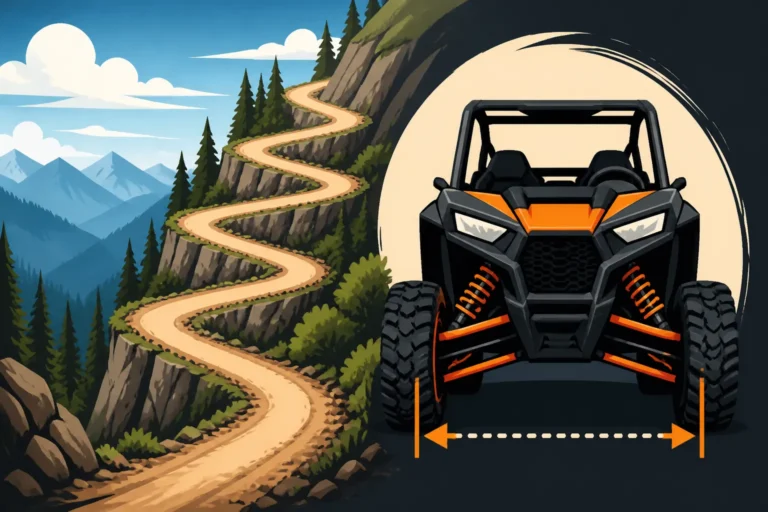
This distinction matters for ATV and UTV trips. A road may allow full-size vehicles, while a nearby trail is limited by width or vehicle type. A route may also be closed seasonally or restricted to nonmotorized use. Check Reading an Idaho Motor Vehicle Use Map before leaving home, and read the signs at the trailhead or road entrance. If the map and sign seem to conflict, stop and confirm the current rule with the relevant forest office before riding farther.
Local restrictions can override a general plan
There is no single statewide “dispersed camping site” rule that answers every question for every Idaho forest. Restrictions may limit where you can camp, how long you can stay, whether a fire is allowed, or whether vehicles can enter an area. Temporary closures can also follow a wildfire, storm damage, resource concerns, or road work.
Do not rely only on an old campsite listing, a downloaded route, or another rider’s memory. For example, a spot that was accessible last summer might now sit behind a seasonal closure or within a restoration area. Before you go, check Checking Idaho Trail Status Before You Drive and Idaho Trail Closures in Fire Season. If you are uncertain whether an area is open to overnight camping, contact the local ranger district.
How to choose a legal, low-impact campsite
Look for a place that is already suitable
When dispersed camping is allowed, choose a durable site rather than making a new one. Previously used clearings and established sites are usually preferable to undisturbed ground, but only if camping there is permitted and the site is not closed. Avoid fragile vegetation, wetlands, streambanks, and areas where tires could leave deep ruts. A campsite that looks dry in the afternoon can become muddy or waterlogged after rain, making vehicle damage more likely.
For a mixed riding and camping trip, think about the whole setup before unloading. Is there room to park without blocking the road? Can you turn around without backing into brush? Will your tent, trailer, or cooking area sit on a surface that can handle use? A narrow pullout may be fine for one vehicle but create a hazard when a group arrives with several machines and a tow vehicle.
Keep the campsite compact. Park in an existing pullout or established parking area where permitted, and avoid expanding the clearing to fit extra vehicles. If you are camping beside an OHV trail, make sure your vehicles and gear do not obstruct travel or encourage other riders to bypass the trail. Camping Beside Idaho OHV Trails offers useful context for planning a camp that does not interfere with the route.
Keep a sensible distance from water and sensitive areas
Streams, lakes, springs, and wetlands are easy places to gravitate toward on a hot day, but camping too close can damage banks and contaminate water. Use a durable site set back from the water, and follow any distance stated on signs or in local rules. There is not one distance that applies to every forest location, so do not treat a general recommendation as permission to camp wherever you like.
Keep washing, food scraps, soap, and waste away from water. Even biodegradable soap can affect a stream or lake. If you need water for cooking, carry it from an appropriate source and follow any posted restrictions on water access. In dry country, including parts of the Boise National Forest and Owyhee region, protect springs and small water sources that wildlife and other visitors depend on.
Make sure the site is not in a closed or special-use area
A closed gate, “no camping” sign, restoration notice, or barrier is a clear reason to stop and find another place. Do not assume that a road closure applies only to cars and not to your ATV or UTV. Likewise, do not park outside a gate and continue on foot to camp in a restricted area unless the land manager confirms that is allowed.
Special designations can affect vehicle use and camping. Wilderness areas, for example, are closed to motor vehicles, and routes near a wilderness boundary can be easy to misread. Other areas may have seasonal restrictions intended to protect wildlife, prevent resource damage, or reduce fire risk. Use a current map, watch for boundary signs, and avoid guessing when a route passes near a protected area.
Rules for riding, parking, fires, and campsite care
Follow designated routes and park without blocking access
Use only roads and trails open to your machine. A GPS track or map line is a planning aid, not proof that a route is open. Check the land manager’s information and posted signs, and stay on the designated route even when a nearby shortcut looks tempting. This is especially important in areas with narrow trails, seasonal closures, or private inholdings.
When you arrive, park so other users and emergency vehicles can pass. Do not block gates, bridges, trailheads, turnouts, or access to roads and campsites. If you are bringing a trailer, check that the pullout can accommodate the tow vehicle and trailer without spilling into the travel lane. For more on planning a safe staging area, see Idaho Trailhead Parking and Staging.
A map app such as onX Offroad can help you review routes and orient yourself before a ride, but it should not replace official forest maps, signs, or closure notices. Download maps before leaving service, compare the route with the current Motor Vehicle Use Map, and be ready to turn around if the route is posted closed.
Treat fire restrictions as a separate check
A campsite that is open may still have fire restrictions. Fire rules can change with weather, drought, and local conditions, and they may prohibit campfires even when camping itself is allowed. Check current restrictions before lighting anything, and follow posted requirements for fire rings, stoves, and extinguishing fires. If you cannot confirm that a fire is allowed, skip it and use a permitted stove only if the rules allow that as well.
When fires are allowed, keep them small and contained in an existing fire ring where available. Never leave a fire unattended, and make sure it is fully out before you leave or go to sleep. A fire that feels cool on the surface can still contain hot coals underneath. Wind can also carry embers into dry grass or pine litter, so pay attention to conditions rather than relying on yesterday’s forecast.
During fire season, verify closures and restrictions shortly before departure, not just when you first plan the trip. Conditions can shift quickly in Idaho’s dry forests and backcountry. If a fire closure affects your route, do not ride around a barricade or use an unsigned detour. Choose a different area and check Idaho Rules on Forest Service Roads for broader guidance on traveling through forest road networks.
Pack out waste and leave the site ready for the next visitor
Dispersed sites usually lack trash service, so plan to carry out everything you bring in. That includes food packaging, cans, broken gear, and hygiene products. Do not leave trash in a fire ring or hide it under rocks; animals can find it, and the next visitor is left with the mess.
For human waste, follow local guidance and use a restroom when one is available. Where burial is allowed, choose a site well away from water, campsites, and trails, and use the method and depth recommended by the land manager or Leave No Trace guidance. Pack out toilet paper and hygiene products rather than leaving them behind. For larger groups or longer stays, a portable toilet or waste bag system can make responsible cleanup much easier.
Keep food secured and avoid feeding wildlife. Store scraps and scented items so animals cannot get to them, and clean cooking equipment before turning in. Before leaving, walk the site and check around the fire area, parking spot, and tent area for small items that are easy to miss. A quick final sweep can prevent a wrapper, zip tie, or piece of gear from becoming litter.
Plan an overnight ride before you leave home
Check access, camping rules, and closures in one planning pass
A good plan answers four separate questions: Is the land open to camping? Is the road or trail open to my machine? Can I reach the site without leaving a designated route? Are there temporary restrictions, such as a fire ban or road closure? Checking only one of those questions can leave you with a campsite you cannot legally reach, or a route that is open but unsuitable for an overnight stop.
Use official forest information and current maps first. Then use mapping tools, including onX Offroad, to understand the general layout, identify route connections, and save information for offline use. Before departure, compare your planned route with the applicable map and confirm any uncertain closures with the ranger district. Keep a second campsite or a developed campground in mind in case your first choice is closed or already occupied.
| Planning question | What to check | Why it matters |
|---|---|---|
| Is camping allowed here? | Forest notices, signs, and local orders | Some areas restrict overnight stays or close specific sites |
| Can my machine use the route? | Current Motor Vehicle Use Map and road signs | Routes may be limited by vehicle type or season |
| Are there temporary restrictions? | Fire, road, and area closure notices | Conditions can change after storms, wildfire, or resource damage |
| Can I park safely? | Pullout size, gates, turnarounds, and road clearance | Prevents blocked access and unsafe roadside parking |
| Can I manage without services? | Water, waste, food storage, and communications | Dispersed sites may have no facilities or cell signal |
Build a backup plan for remote conditions
Cell service can disappear quickly in Idaho’s forests, especially in mountain valleys and remote areas of central Idaho. Save maps and route details offline, tell someone where you expect to go, and agree on when you will check in. For remote trips, consider carrying a satellite messenger or another communication device suitable for the area. Cell Service in the Idaho Backcountry and What to Carry on a Remote Ride can help you think through those preparations.
Bring enough water, food, warm layers, first-aid supplies, and recovery equipment for the route and group. A short-looking ride can take longer than expected when the road is rough, a machine needs attention, or weather moves in. Be realistic about fuel range, especially when the ride crosses long stretches without services. If your plan depends on reaching a particular gas station or campground late in the day, confirm that it is accessible before setting out.
Keep the group together and agree on what to do if someone becomes separated or a machine breaks down. A simple plan can prevent a manageable delay from turning into a stressful search. Share your intended route, campsite area, and expected return time with someone who is not riding with you.
Choose a developed campground when dispersed camping is a poor fit
Dispersed camping is not always the best option. A developed campground may be a better fit if you need water, toilets, a reliable place to park a trailer, or a predictable site for a large group. It can also make sense when fire restrictions are confusing, you arrive after dark, or you do not have time to confirm local rules.
If the first suitable site is occupied, avoid creating a new campsite in a meadow or widening a pullout. Move to another established site or use a campground. That choice may be less scenic than the spot you had in mind, but it protects the land and avoids turning a relaxing trip into a dispute over access or camping rules.
The most reliable approach is to treat every dispersed campsite as conditional: confirm the land manager’s rules, stay on designated routes, obey closures and fire restrictions, and leave the area as clean as you found it. That preparation gives you more flexibility when plans change and helps keep Idaho’s forest roads and riding areas welcoming for the next visitor.
Disclaimer
This article is for general informational purposes only and does not constitute professional advice. Laws, prices and regulations vary by location and change over time. Consult a qualified professional for guidance on your specific situation.