Cabins Near Idaho OHV Trails
A cabin near an Idaho OHV trail can make a riding trip feel wonderfully simple—until you discover the route is closed, the trailhead is farther away than the listing suggested, or your trailer has nowhere safe to park. This guide explains how to choose a practical cabin base, verify riding access, plan for machine transport, and avoid common lodging surprises.
Choose a cabin base around the riding you plan to do
“Near the trails” can mean a short ride from the cabin, a drive to a staging area, or simply being in the same general region. Before booking, decide which experience you want. If you’re happy to trailer your machine each morning, a cabin in a nearby town may work well. If you expect to ride directly from the property, you’ll need to confirm that the route is legal, open, and suitable for your machine.
Start with a trail region, not a cabin listing
Idaho’s riding areas are spread across a large state, and one attractive cabin can be a poor fit if it sits on the wrong side of a mountain range or far from the routes you want to explore. Start by picking a general riding region, then narrow your search to towns, trailheads, and access roads within that region.
For example, McCall can be a useful base for exploring central Idaho, while Stanley puts riders closer to the Sawtooth area. Coeur d’Alene and other North Idaho communities may suit trips focused on the Idaho Panhandle. These are starting points, not guarantees that a particular trail is close by or open to your machine. For more ideas on choosing a base, see Idaho Trail Towns Worth a Base Camp, Lodging in McCall for Riders, Lodging in Stanley for OHV Trips, and Staying in Coeur d’Alene for Panhandle Trails.
Make a shortlist of the routes you actually hope to ride. Then compare the cabin’s drive time to the trailhead—not just the distance shown on a map. Mountain roads, unpaved approaches, seasonal conditions, and slow-moving trailers can make a short-looking trip take longer than expected.
A practical plan might look like this: choose two or three likely trail areas, identify a staging location for each, then search for cabins that make those locations manageable. That way, you aren’t choosing lodging based on a broad phrase like “close to trails” and only later discovering the riding you want is a long haul away.
Decide whether you need direct access or a staging-area drive
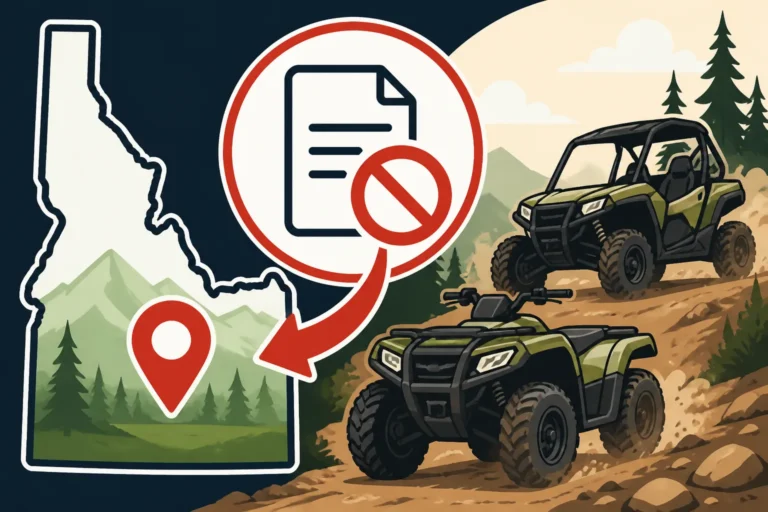
A cabin may be near public land without having a legal OHV route from its driveway. The property could be surrounded by private land, separated from a trail by a highway, or connected only by roads that don’t allow the kind of machine you’re bringing. Never treat a map line, trail photo, or host description as proof that you can ride from the property.
Ask the owner or manager specific questions before booking:
- Can guests ride an ATV or UTV from the property to a public route?
- Which route or road provides that access?
- Is that route open to the type and width of machine you’ll bring?
- Is the route public, private, or subject to a local restriction?
- Are there seasonal closures or gates to consider?
- If riding from the property is not allowed, where is the nearest suitable place to trailer and unload?
If the answer is simply “the trails are nearby,” ask for the trailhead name or a nearby road intersection and check the route yourself. The distinction matters: a cabin can be an excellent base even if you need to trailer to every ride, but you’ll want to know that before you arrive with a loaded trailer and a group ready to go.
Verify access before you reserve
A listing can show a cabin beside a green patch on a map, but that doesn’t tell you whether the land is open to motorized travel or whether a particular route is legal for your vehicle. Access can depend on the land manager, posted restrictions, route designation, machine width, and seasonal conditions.
Check maps, route designations, and closures
Use a map that helps you distinguish roads and trails from property boundaries and general terrain. For National Forest routes, a Motor Vehicle Use Map can help show where motorized travel is allowed and identify restrictions such as vehicle class or seasonal dates. Learn Reading an Idaho Motor Vehicle Use Map before relying on a route for your cabin commute or day ride.
Apps such as onX Offroad can be useful for planning and understanding how a property, road, or trail appears in relation to nearby public land. Treat any digital map as one planning tool, not final permission to ride. Confirm the route with the responsible land manager or the relevant local authority, especially where a route crosses private property, a county road, or an area with seasonal restrictions.
Trail status can change because of weather, maintenance, fire activity, or land-management decisions. Check Checking Idaho Trail Status Before You Drive close to your trip, not just when you make the reservation. A cabin that made sense for a summer route may be inconvenient if that route is closed or access conditions have changed by the time you arrive.
A helpful pre-booking habit is to save the name of the trailhead, the likely approach road, and a backup ride. If a gate is closed or the road is unsuitable for your trailer, you’ll have a second option rather than spending the first morning searching for one.
Match your machine to the route and the cabin approach
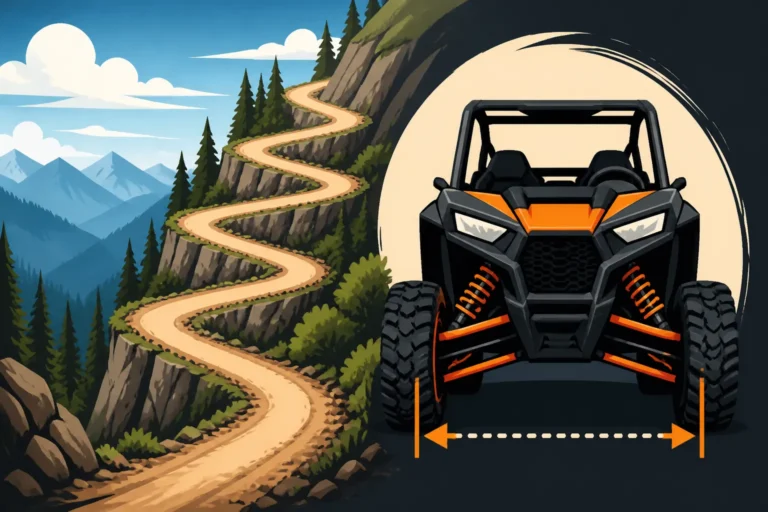
A narrow trail, steep gravel approach, or tight forest road can make a route unsuitable for a wide side-by-side, even if it appears close to your cabin. Check the machine-width requirements for your intended trails and compare them with the width of your vehicle. A route that works for a smaller ATV may not work for a full-size UTV.
Also consider the road to the cabin. Is it paved, gravel, or a rough private approach? Can your truck and trailer turn around near the property? Are there low branches, narrow bridges, steep grades, or limited parking? A host may know whether ordinary cars reach the cabin, but that doesn’t necessarily mean a long truck-and-trailer combination can do so comfortably.
Use a route-planning app, including onX Offroad where helpful, to examine the broader approach and identify possible pinch points. Then confirm details with the property owner. A simple question such as “Can a pickup towing a trailer of this length reach and turn around at the cabin?” is more useful than asking whether the property is “easy to get to.”
| Trip detail | What to confirm before booking | Why it matters |
|---|---|---|
| Trail access | Exact route, land status, and whether OHVs may use it | Nearby land does not automatically mean legal access |
| Machine fit | Route width and any vehicle-class restrictions | A wide UTV may not fit every trail |
| Cabin approach | Road surface, grade, clearance, and seasonal condition | The access road may be harder than the ride |
| Trailer parking | Space to park, unload, and turn around | Tight properties can create a stressful arrival |
| Route status | Closures, seasonal dates, or current restrictions | A planned ride may not be available on arrival |
| Basic supplies | Fuel, food, and repair options within reach | Remote lodging can mean longer resupply trips |
Make the cabin work for your group and equipment
A scenic cabin is only a good riding base if it can handle the unglamorous parts of the trip: loading machines, muddy gear, meals, rest, and the occasional change of plan. Those needs can matter more than a view or a hot tub when you’re traveling with a trailer and several riders.
Ask about parking, unloading, and property rules
Look closely at the space available for your tow vehicle, trailer, and machines. Ask whether the parking area is level, whether the trailer can remain attached, and whether you’ll have room to unload without blocking a shared driveway. If several groups are staying on the property, clarify whether parking is assigned or shared.
Don’t assume that a garage, barn, or outdoor pad is available for storing an OHV. Confirm where machines may be parked overnight and whether the owner has rules about fueling, washing, repairs, or charging batteries. If the cabin is in a neighborhood or near other homes, ask about quiet hours and whether arriving late with a trailer could disturb nearby residents.
For a remote cabin, think through your arrival in daylight if possible. A narrow driveway that looks manageable on a phone screen can be difficult to back into after dark, especially with a trailer. Ask for clear directions, the best approach road, and any landmarks that help distinguish the property from nearby driveways.
Plan for supplies, fuel, and weak cell service
A cabin’s distance from town affects more than the drive to the trail. It also affects how easily you can buy groceries, refuel your tow vehicle, find a tire repair, or replace forgotten gear. Before booking, identify the nearest places for fuel and food, and don’t assume every small community has the services you need at the time you need them.
Fuel planning is especially important when your ride starts far from town. Work out whether you’ll need to fill up before reaching the trailhead, whether there is a suitable fuel stop along the route, and how much range your machine has under the conditions you expect. Fuel Planning for an Idaho Trail Day can help you build that into the daily plan rather than making it an afterthought.
Cell coverage can be unreliable in remote parts of Idaho. Download maps and directions before leaving town, share your itinerary with someone, and carry a backup communication plan appropriate to your route. Read Cell Service in the Idaho Backcountry and consider how you’ll get help if a machine breaks down or someone gets separated from the group.
If the cabin is very remote, bring the essentials you don’t want to hunt for after arrival: drinking water if the property requires it, food for the first meal, basic first-aid supplies, and the tools or spare parts you routinely need. Also check the property’s water, heating, and waste arrangements rather than assuming they match a conventional home.
Build a flexible trip plan around your cabin
Even a carefully chosen base can be affected by rain, smoke, snow, repairs, closures, or a change in the group’s energy. A good itinerary leaves room for those realities rather than requiring one exact route to work every day.
Keep a backup ride and a practical arrival plan
Choose at least one alternative route or activity within a reasonable drive of your lodging. It could be a different trail system, a shorter loop, or a day spent exploring a nearby town. A backup plan is particularly useful when the main route is high in the mountains or depends on a road that may be affected by seasonal conditions.
On arrival day, avoid planning an ambitious ride before you’ve checked the cabin access, unloaded, and confirmed local conditions. Use the first evening to review maps, organize gear, and check the next day’s route. If you’re staying at a cabin close to public land, that extra verification can prevent a frustrating morning spent discovering a gate, restriction, or unsuitable trail.
For riders who want a more developed place to stay, compare cabins with other lodging types and nearby campgrounds. Idaho Campgrounds With Trail Access can help you consider a different setup if the available cabins don’t offer the parking, access, or location you need. The best choice is not always the accommodation closest to a trail; it’s the one that makes the whole trip workable.
Confirm the details with the host before you pay
Before booking, send a short message with the facts that matter to your group. Include the number and size of your machines, the truck and trailer you’ll bring, whether you need outdoor parking, and whether you hope to ride directly from the property. Ask for a clear answer about access and any property restrictions.
Review the reservation details for cancellation terms, check-in instructions, occupancy limits, and rules about trailers or recreational vehicles. If the host says a trail is nearby, ask them to identify it and explain whether guests can legally ride there from the property. Then verify that information using maps and the responsible land manager rather than relying on an informal description alone.
A little homework can save a lot of aggravation. When you know where you’ll park, how you’ll reach the trail, what the route allows, and where you’ll get supplies, the cabin becomes a genuine home base—not just a pretty place that happens to be somewhere in Idaho.
Disclaimer
This article is for general informational purposes only and does not constitute professional advice. Laws, prices and regulations vary by location and change over time. Consult a qualified professional for guidance on your specific situation.