Wildlife You Meet on a Forest Trail
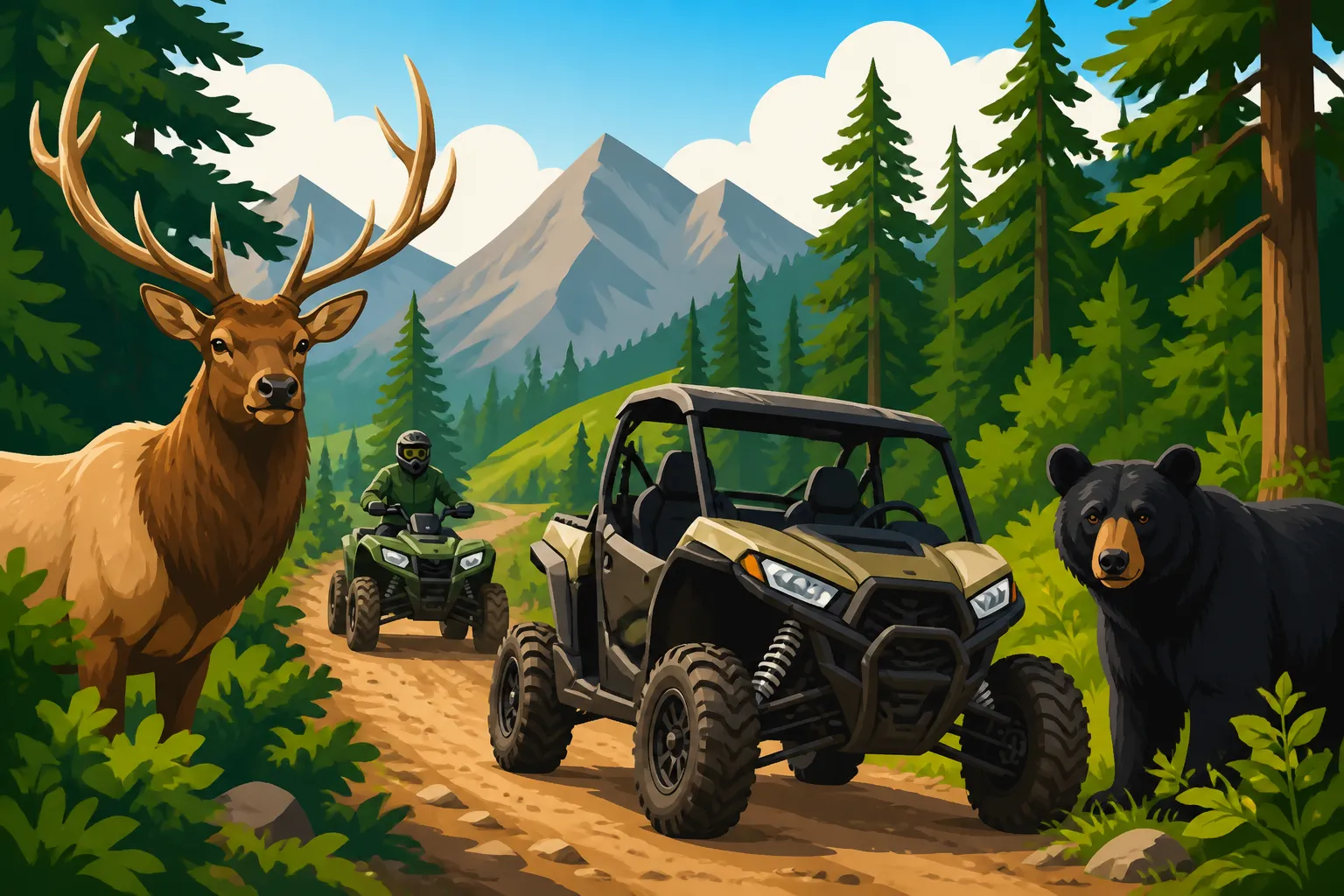
An elk stepping onto an Idaho forest trail or a bear appearing around a bend can turn a relaxing ride into a tense moment quickly. Knowing which animals you might encounter, how to give them room, and what to do when one blocks your route helps you protect both wildlife and your group. This guide covers common encounters and practical trail habits for Idaho ATV and UTV riders.
Wildlife You May Encounter on Idaho Trails
Idaho’s forests, foothills, and high country support a wide range of wildlife. Which animals you see depends on the area, season, weather, and time of day. A quiet morning ride may bring you past deer or elk, while a dusk trip could put you in the same corridor as animals moving between feeding and resting areas.
Large mammals on forest roads and trails
Elk and mule deer are among the animals riders are most likely to see. They may be feeding beside a road, crossing a trail, or standing in the trees before you notice them. Elk can look calm even when they are alert, and a deer may bolt without warning. Give either animal plenty of space and never assume it will move in the direction you expect.
Moose are less predictable and deserve especially wide clearance. They may appear in wet areas, willow thickets, or near streams, and their size can make a close encounter feel intimidating. Don’t ride toward a moose to get a better view, and don’t try to squeeze past if it is on or beside the trail. Stop well back, keep your group together, and wait for a clear route or turn around.
Black bears may be seen in many parts of Idaho, while grizzly bears occur in some areas of the state. A bear may leave when it hears you, but don’t count on engine noise to make every animal move away. If you see a bear, give it space, avoid surrounding it with machines, and leave it an open escape route. For trip planning, review local conditions and guidance alongside resources such as Idaho Panhandle National Forest Trails and Idaho’s Sawtooth National Forest Trails.
Smaller animals, birds, and reptiles
Not every wildlife encounter involves a large animal. Foxes, coyotes, porcupines, marmots, squirrels, and a variety of birds may cross a trail or forage near the edge. They can be easy to overlook when you’re focused on ruts, dust, or the rider ahead. Slow down near brushy corners, creek crossings, and open meadows where animals may be feeding.
Snakes are another reason to watch the ground, especially in warmer weather and rocky or sunny areas. If you see one, don’t try to move it with a stick, kick it out of the way, or drive over it. Pause at a safe distance and give it time to leave. If it remains in the travel path, choose another route rather than putting a rider or animal at risk.
Birds and smaller mammals may also be more vulnerable during nesting or when caring for young. A nest beside the trail or a cluster of young animals is a cue to keep moving calmly and avoid stopping close by. Don’t handle wildlife, collect feathers or antlers where prohibited, or let children run toward animals for a closer look.
What to Do When an Animal Is on the Trail
The hardest part of a wildlife encounter is often resisting the urge to do something quickly. A sudden turn, loud rev, or attempt to pass at close range can startle an animal and create a dangerous situation. A simple routine—stop, create space, assess, and wait or retreat—gives everyone time to respond.
Stop at a safe distance and stay predictable
As soon as you spot an animal, slow down and stop well before reaching it. Leave enough space that it does not appear cornered, and avoid surrounding it with machines or riders. If you’re in a group, signal the riders behind you to stop too. Keep the trail clear for the animal to move away, and don’t crowd the edge of its escape route.
Once stopped, stay with your machine and keep children close. Avoid sudden movements, shouting, honking, or revving the engine to make the animal leave. Don’t get off to take a closer photo, and never follow an animal into the brush. If the animal looks agitated, approaches, or blocks your way, increase the distance if you can do so calmly and safely.
A useful rule is to let the animal choose where it goes. If it walks away, wait until it has moved well clear before continuing at a slow pace. If it stays put, you may need to wait longer or turn around. The extra time can feel frustrating when you have a destination planned, but a delayed ride is far better than a collision or an animal being pushed into a more dangerous situation.
Decide whether to wait, turn around, or take another route
Use the animal’s behavior and your surroundings to make the call. If it is moving away and the trail is open, remain stopped until it has enough distance, then proceed slowly. If it is feeding near the trail, guarding young, or showing signs of distress, don’t try to pass close by. Back away along your route if that is safe, or wait in a place where you aren’t blocking the trail.
Don’t create an unofficial detour through vegetation to get around wildlife. Riding off the established route can damage plants and soil, disturb animals, and put you in unfamiliar terrain. If a route is blocked, check your map and choose an established alternative. Tools such as onX Offroad can help you review mapped routes before setting out, but a map can’t show where an animal is right now or confirm that a trail is currently passable. For broader preparation, see Finding the Right Motor Vehicle Use Map and Checking Idaho Trail Status Before You Drive.
If you need to backtrack, let the group know before anyone starts moving. Keep riders together, go slowly, and make sure each person has enough room to maneuver. On narrow routes, especially those with steep edges or loose surfaces, don’t attempt a rushed three-point turn beside an animal. Find a safe, broad spot farther back and regroup there.
| Encounter | Safer response | Avoid |
|---|---|---|
| Deer or elk near the trail | Stop, leave space, and wait for a clear route | Chasing or riding toward them |
| Moose on or beside the trail | Stay well back and give it an open escape path | Passing close or trying to frighten it away |
| Bear sighting | Keep the group together and calmly create distance | Approaching, surrounding, or following it |
| Snake in the travel path | Pause at a distance and let it move away | Touching, kicking, or driving over it |
| Animal that will not leave | Wait, retreat, or use an established alternative | Cutting a new path through vegetation |
Reduce the Chance of a Close Encounter
You can’t guarantee that you’ll avoid wildlife on a forest ride. You can, however, make it easier to spot animals and give them room before you are close. That starts with a sensible pace, attention to the trail ahead, and a willingness to adjust your plans.
Ride at a pace that gives you time to react
A speed that feels comfortable on an open straightaway may be too fast around a blind corner or through dense vegetation. Reduce speed where sightlines are short, where the trail crosses water, and where animals might be feeding or drinking. Dust can also make it harder to see what is ahead, so leave enough space between machines to keep visibility.
Stay on designated routes and follow posted closures. A mapped line is not permission to ride through an area that is closed or restricted. Check route information before leaving, and remember that conditions can change because of weather, fire activity, maintenance, or seasonal closures. Articles such as Reading an Idaho Motor Vehicle Use Map and Idaho Trail Conditions After Runoff can help you think through route planning, while Idaho Rules on Forest Service Roads covers another part of responsible public-land riding.
If you use onX Offroad or another navigation tool, download or prepare the information you need before reaching areas with poor service. Use it to understand your route and identify established alternatives—not as a substitute for signs, closures, or sound judgment. Cell coverage can be limited in remote areas, so planning for that reality matters; Cell Service in the Idaho Backcountry and What to Carry on a Remote Ride offer related preparation ideas.
Keep children and new riders close
Young riders may be excited to stop for photos or get a closer look at an animal. Set expectations before you start: stay with the group, don’t approach wildlife, and follow the lead of the adult in charge. If an animal appears, have everyone stop and wait for clear instructions instead of letting riders scatter along the trail.
For family outings, talk about wildlife before you unload. Explain that a large animal can react quickly even if it seems relaxed, and that feeding or touching wild animals is not safe. Carry binoculars if you want a closer view without moving toward an animal. You can also practice a simple hand signal for “stop” so the group can pause without confusion. For more family-focused riding considerations, see Riding Idaho Trails With Kids and Idaho Trails Suited to Beginners.
If your group includes riders who are new to ATVs or UTVs, choose a route that matches their experience and leaves room for unhurried decisions. A shorter ride with easy places to stop can be a better fit than a remote, narrow route with few safe turnarounds. Trail confidence comes from being able to manage the machine and the situation—not from pushing through every obstacle.
Wildlife Safety Across Seasons and Changing Conditions
Wildlife activity and trail conditions shift through the year. Seasonal changes don’t make every encounter predictable, but they can help you plan more thoughtfully. Check local land-manager information before your trip, and be ready to change plans if signs, closures, or conditions suggest a route is not suitable.
Pay attention to young animals and seasonal movement
In spring and early summer, young animals may be present even when you can’t see them. A calf or fawn hidden in vegetation may appear abandoned, but its parent may be nearby. Don’t approach, touch, or move a young animal. Leave the area quietly and give it space.
During warmer months, animals may use water and shaded areas. Slow down near streams, ponds, and damp meadows, and avoid lingering where wildlife may be trying to feed or drink. In fall, animals may be moving more actively, and hunters may also be using public lands. Wear visible clothing where appropriate, know the rules for the area, and don’t assume a quiet trail is empty simply because you haven’t seen another person.
Fire, heavy rain, snowmelt, and other conditions can affect both people and wildlife. A burned area may have changed visibility or unstable ground, while runoff can wash out a route or make a crossing hazardous. Follow closures and don’t ride around barriers. If a ride feels unsafe or a route has changed, turn back rather than trying to force your way through.
Make the encounter safer for the next rider
Your choices affect more than the moment in front of you. Feeding wildlife can teach animals to approach people and machines, creating risks for future visitors. Leaving food scraps, stopping repeatedly beside a den or nest, or letting pets chase animals can also add pressure. Pack out litter and keep your group’s behavior calm and predictable.
If you see other riders approaching while an animal is near the trail, let them know what is happening when it is safe to do so. A clear warning can prevent someone from coming around a corner too quickly. Don’t block the route longer than needed, and avoid sharing sensitive location details publicly if doing so could draw a crowd to a vulnerable animal.
If an encounter results in an injury, a collision, or an animal that appears seriously distressed, prioritize human safety and contact the appropriate local authorities when practical. Don’t approach an injured wild animal yourself. Keep a safe distance, note your location as accurately as possible, and share what you observed with the relevant land manager or wildlife agency.
A memorable wildlife sighting doesn’t require a close approach. The best encounter is often the one where you stop, give the animal room, and watch quietly from a safe distance. That small pause protects the animal, your riders, and the chance for someone else to enjoy the same trail responsibly.
Disclaimer
This article is for general informational purposes only and does not constitute professional advice. Laws, prices and regulations vary by location and change over time. Consult a qualified professional for guidance on your specific situation.