Idaho Trail Towns Worth a Base Camp
An Idaho ATV or UTV trip can go sideways before the first ride if your base camp is too far from legal routes, staging areas, or fuel. The right town makes it easier to plan full riding days without constantly moving the trailer. This guide compares Idaho trail towns, explains what each suits best, and helps you choose a practical place to stay.
How to Choose an Idaho Trail Town
Start with the kind of riding you want
A town can be a convenient place to sleep without being a direct gateway to every trail you have in mind. Before booking, decide whether your group wants forest roads, mountain scenery, technical routes, family-friendly outings, or access to several days of varied riding. A full-size side-by-side may also need wider routes than a smaller ATV, so check the route’s machine-width limits rather than assuming a trail shown on a map will fit.
Think about the ride as a whole day, not just a line on a map. How far will you need to tow from town to a legal staging area? Is there room to park a truck and trailer? Will the route bring you back near fuel, food, or lodging, or are you planning to carry everything you need? If the group includes new riders or children, shorter loops and easy places to stop may matter more than the most remote scenery.
A little research can prevent a familiar vacation headache: arriving in the evening, discovering that the closest route is closed or unsuitable for your machine, and spending the next morning searching for alternatives. Start with Planning an Idaho Riding Trip and compare your intended routes with official information before you reserve a place to stay.
Treat maps as planning tools, not permission slips
Online maps can make a route look straightforward, but map lines do not always tell the full story. A road may be closed to motorized use, limited to certain vehicle widths, affected by seasonal restrictions, or subject to a local rule. Forest and public-land routes can also change with fire activity, maintenance, weather, and other closures.
Use an app such as onX Offroad to explore route options and organize waypoints, but cross-check the roads and trails you plan to ride against the applicable official motor vehicle use map and land manager notices. Download maps or save route information before leaving town; cell service can become unreliable in remote areas. For a deeper check, see Finding the Right Motor Vehicle Use Map, Checking Idaho Trail Status Before You Drive, and Cell Service in the Idaho Backcountry.
A useful rule is to plan two versions of each ride: your preferred route and a shorter or lower-elevation backup. If the preferred route is closed, muddy, snowed in, or beyond the group’s comfort level, you can adjust without turning the day into an improvised search for a new trailhead.
Idaho Towns That Make Practical Base Camps
McCall for a mountain-town stay
McCall is a natural choice for riders who want a mountain-town base with places to eat, stay, and regroup between rides. It can work especially well for a mixed trip where some people want riding days and others want time in town or nearby recreation. For a family or group, that flexibility can be just as important as being close to a trail on the map.
The main planning question is how your chosen route connects to a legal access point. Do not assume you can ride from a lodging property through town and onto public land. Confirm where you can unload, whether the route is open to your machine, and what local road rules apply. If you are towing, ask your lodging host about trailer parking before booking; a standard parking space may not be enough for a truck and trailer.
McCall is a good fit when you want a comfortable base and are willing to drive to the right staging area for the day’s ride. Check Lodging in McCall for Riders while comparing accommodation options, and build your route plan around verified access rather than the town name alone. onX Offroad can help you visualize distances between lodging, trail access, and alternate routes, but confirm closures and regulations through official sources.
Stanley for high-country scenery and careful route planning
Stanley is appealing to riders who want to spend time around the Sawtooth region and enjoy a quieter, scenic base. The surrounding landscape can make for memorable riding, but high-country plans need extra attention to season, elevation, weather, and route suitability. A sunny forecast in town does not guarantee that a higher route is clear or comfortable.
Before settling on Stanley, identify routes that are open to your specific machine and check the trail’s character. Narrow, steep, or rocky terrain can be a poor match for a wide side-by-side or a group with limited experience. Also think about how much fuel, water, food, and recovery equipment you will need if the ride takes longer than expected. Remote routes are not the place to discover that a machine’s fuel range or a rider’s comfort level was overestimated.
Stanley suits riders who value scenery and are prepared to plan thoughtfully rather than simply follow a suggested line. Review Riding Near Stanley on an OHV and check current land-manager information before you travel. If conditions change, keep a lower-risk alternative in mind rather than committing to a route because it was the original reason for booking.
Coeur d’Alene and the Silver Valley for North Idaho access
Coeur d’Alene can serve as a convenient urban base for visitors who want lodging, restaurants, and services alongside a North Idaho riding trip. It is not a shortcut to every trail: the region is spread out, and you may need to tow to a suitable trailhead. If your priority is riding time, compare the drive from your accommodation to the specific access point, not just the distance to a town center.
Some riders may prefer to base closer to the Silver Valley, depending on the routes they want to explore. The Cataldo area and surrounding communities can make sense for trips focused on riding in that part of North Idaho. Smaller communities may offer fewer services than a larger town, so plan fuel, groceries, meals, and trailer parking accordingly. See Staying in Coeur d’Alene for Panhandle Trails and Riding the Trails Around Cataldo as starting points for comparing the two approaches.
This area works best when you have a clear route plan and are comfortable making a drive to the day’s riding. Use onX Offroad to compare route options and organize saved locations, then check the official map and notices for access, closures, and machine restrictions. A map app can help you plan the logistics; it cannot replace confirming that a route is legally open.
Idaho City for a Boise-area getaway
Idaho City can be a useful option for riders coming from the Boise area who want to spend time near the Boise National Forest. It offers a different feel from a larger city base and can reduce the need to make every ride a long day trip from Boise. Still, lodging and services may be more limited than in the metro area, so confirm the practical details before you arrive.
The key is to choose your riding area first, then decide whether Idaho City is the most convenient place to stay. Forest roads and trails can vary in width, surface, elevation, and accessibility. A route that looks manageable on a screen may feel very different when it is steep, loose, or exposed. Match the plan to the least experienced rider and the machine with the biggest limitations.
For a first visit, make the route plan conservative and leave room for delays. Review Idaho City and the Boise National Forest and check Idaho Trailhead Parking and Staging before towing out. Confirm where trailers can be left, whether parking is suitable for your setup, and whether a backup staging area is available if the first one is full.
Comparing Base Camp Options
The best town depends on your route priorities, travel style, and tolerance for driving between lodging and the trail. Use this comparison as a starting point, then check the exact route and access details for your dates.
| Base camp | Often suits | Planning strengths | Check before booking |
|---|---|---|---|
| McCall | Groups combining riding with a mountain-town stay | A convenient place to regroup, eat, and plan multiple days | Trailer parking, route access, and the drive to staging |
| Stanley | Riders prioritizing high-country scenery | A scenic base for carefully planned rides | Seasonal access, elevation, machine width, and services |
| Coeur d’Alene | Visitors wanting a larger town and North Idaho options | More town amenities and a flexible regional base | Distance to the chosen trailhead and traffic or towing logistics |
| Silver Valley area | Trips centered on riding near Cataldo and nearby routes | Potentially closer to specific riding areas | Availability of fuel, lodging, meals, and trailer space |
| Idaho City | Boise-area riders seeking a forest-country stay | A practical alternative to returning to Boise each evening | Route suitability, staging access, and limited services |
Match the town to the group
For a family with young riders, a comfortable place to stay and an easy fallback plan may matter more than maximizing trail mileage. Choose routes with manageable terrain, clear access information, and places to stop. If riders have very different experience levels, consider splitting the day: one group can take a more challenging route while another chooses a shorter outing, provided both plans are legal and safely supported.
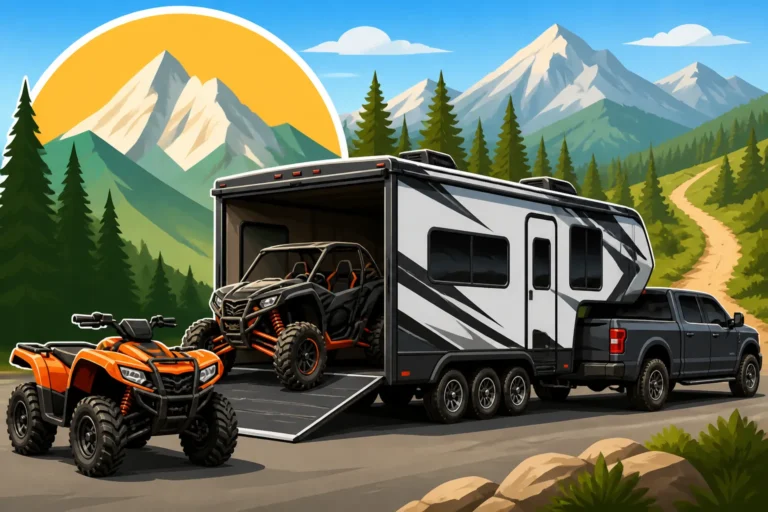
For a group of adults towing larger machines, check parking and turning space early. A tight driveway or limited lot can turn arrival into a stressful puzzle, especially after a long drive. Ask the property directly whether a truck and trailer can remain on-site and whether there are restrictions on unloading or storing machines. Also confirm whether the trailer will be secure and whether overnight parking is allowed.
For a first-time Idaho visitor, select a base camp with enough services to make small problems manageable. A minor repair, a missing meal, or a weather change is easier to handle when you have planned where to get supplies and how to adjust the day. Use What to Carry on a Remote Ride to build a practical checklist before leaving the town’s service area.
Build an itinerary around access, not just lodging
A good itinerary starts with the route and works backward to the overnight stay. Choose a legal riding area, verify that it is open and suitable for your vehicle, identify a staging location, and estimate the drive from the lodging. Then consider how much daylight and fuel you have for the ride itself. That order is more reliable than choosing a hotel first and hoping a convenient trail appears nearby.
Leave room for real-world delays. A group may take longer than expected to unload, a road may be rougher than the map suggests, or a rider may need more breaks. Avoid packing the day so tightly that a small setback forces the group to ride in poor light or skip basic safety checks. Set a turnaround time and make sure everyone knows the plan if the group gets separated.
For each day, write down the trailhead or staging area, intended route, expected return window, fuel plan, and backup option. Keep a copy that does not depend on cell service. An app like onX Offroad can help you save routes and points of interest in advance, while an offline map or paper map provides an additional reference if a phone battery dies or reception disappears.
Before You Book and Before You Ride
Confirm the details that can change your trip
Trail access and local conditions can change, so check the official information again shortly before departure. Look for closures, seasonal restrictions, fire-related notices, road damage, and land-use rules. Verify that the route permits your machine’s dimensions and that the planned access road is open to motorized travel. If you are crossing different land jurisdictions, check the rules for each section rather than assuming one set of rules applies throughout.
Confirm lodging details directly, especially trailer parking, late arrival arrangements, and where machines can be kept overnight. Ask whether the property has a designated area for trailers and whether there are limits on washing or working on machines. These questions are easier to resolve before you arrive than after dark with a loaded trailer.
Also confirm the ride’s paperwork and equipment requirements. Idaho sticker, registration, safety, road-use, and youth-rider rules can depend on the machine, rider, and location. Review What Idaho Riders Need Before They Ride and Idaho Permit Rules on Public Land rather than relying on assumptions from another state or a previous trip.
Pack for the distance between services
A trail town may have supplies, but remote routes can put those services well behind you. Carry enough water, food, basic tools, first-aid supplies, communication equipment, and recovery gear for the ride you actually plan. Bring clothing layers suited to changing mountain weather, even when the town feels warm at departure. Dust, wind, shade, and elevation can make conditions feel different once you are moving.
Tell someone who is not riding with you where you plan to go and when you expect to return. Set a simple check-in plan, especially if the route has weak cell coverage. Keep your group together or agree on safe regrouping points before the ride begins. If a machine breaks down, the entire group should know whether to stay together, who has navigation, and how to contact help.
The most reliable Idaho base camp is not necessarily the one closest to a famous route. It is the one that fits your machine, your riders, your access plan, and the kind of trip you want. Choose the town after checking the ride, confirm the practical details before booking, and keep a realistic backup plan for conditions that do not cooperate.
Disclaimer
This article is for general informational purposes only and does not constitute professional advice. Laws, prices and regulations vary by location and change over time. Consult a qualified professional for guidance on your specific situation.