Riding Through a Cattle Drive
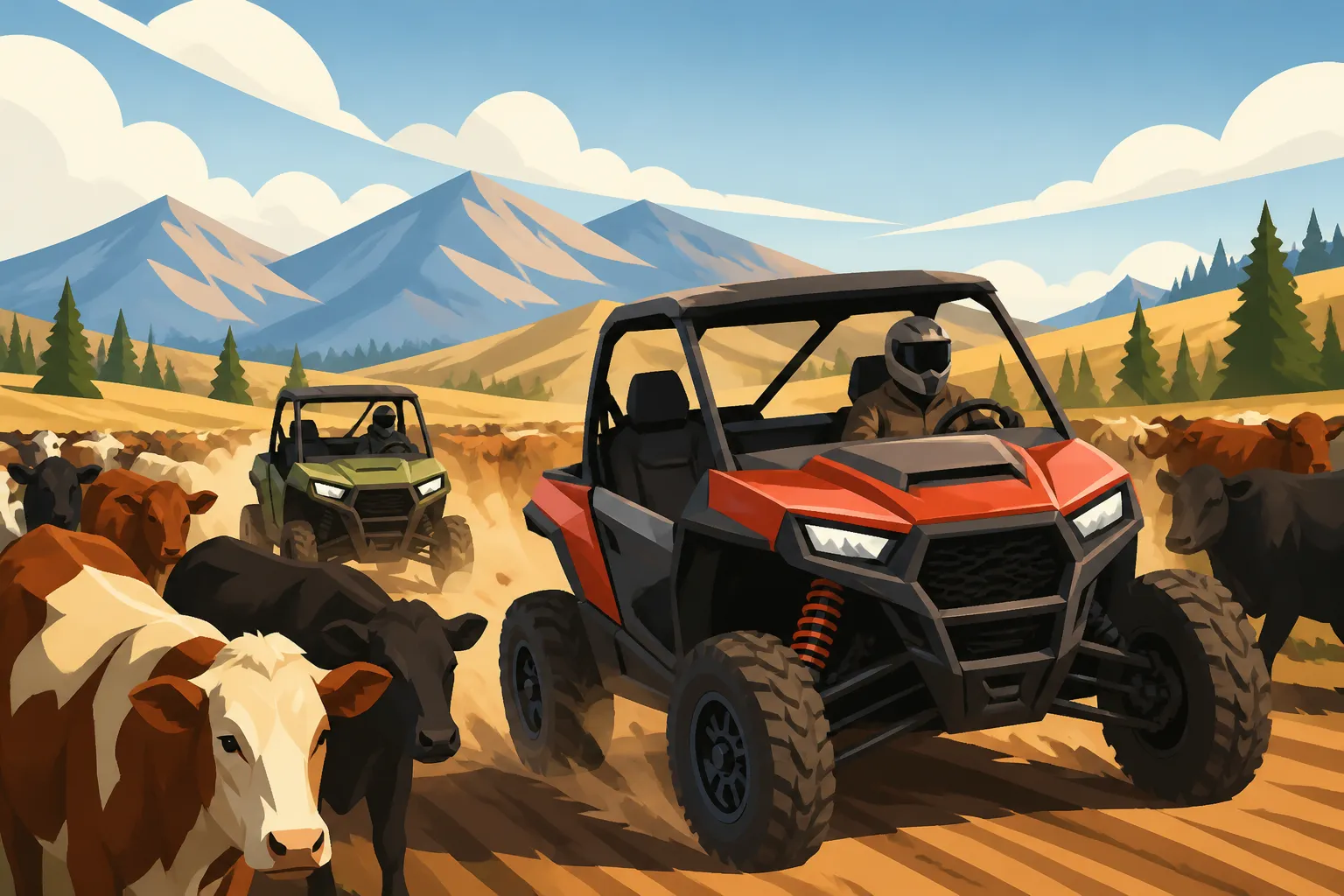
A cattle drive can turn an ordinary Idaho trail ride into a tense few minutes: livestock fill the road, dust cuts visibility, and there may be no safe place to squeeze past. The safest response is usually to slow down, stop well back, and wait for the people moving the herd to tell you what to do. This guide explains how to handle that encounter without spooking cattle or putting anyone at risk.
What to Do When You Meet a Cattle Drive
Stop early and leave plenty of space
As soon as you see cattle, a rider, or dust rising ahead, ease off the throttle and stop somewhere the herd can see you without being crowded. If you can do so safely, move off the travel route and switch off your engine. Keep enough distance that the animals have room to move and the ranchers can still direct the herd.
An ATV or UTV can seem small from the driver’s seat, but its engine noise, lights, and movement may unsettle cattle. A sudden approach can scatter the herd, separate calves from cows, or send animals toward a fence, ditch, or steep shoulder. The same cautious approach applies if the animals are being moved along a forest road, a ranch access road, or a route that crosses public land.
Do not creep toward the herd while waiting for a gap. Cattle may shift direction without warning, and a narrow opening can close quickly. If you are on a blind corner or a steep section, make yourself visible from a safe distance and wait rather than advancing into the middle of the drive.
Follow the handler’s directions
The person managing the cattle has the best view of how the herd is moving and where it can safely go. They may ask you to wait, move to a particular side, or follow behind at a controlled distance. Listen and make eye contact if practical, but don’t assume a wave means you should drive straight through the herd. If you’re unsure, ask what they want you to do.
Stay calm and make your movements predictable. Avoid revving the engine, honking, shouting, or shining bright lights directly at the animals. Keep children and passengers seated, and don’t let anyone walk toward the cattle to take a closer look. A curious animal can move suddenly, even when the herd appears relaxed.
| Situation | Safer response | Avoid |
|---|---|---|
| Cattle are approaching on a narrow road | Stop well back and wait for the handler | Driving into the herd to find a gap |
| The herd blocks the route | Turn off the engine if safe and remain in place | Honking, revving, or shouting |
| A rancher gives directions | Follow them, or ask for clarification | Guessing where the herd will go |
| Cattle are crossing in small groups | Wait until the whole drive has passed | Following close behind the last animal |
| You cannot see what is ahead | Keep stopped until visibility improves | Moving forward through dust |
How to Pass Without Spooking Livestock
Wait for the whole herd to clear
A cattle drive rarely moves as one neat cluster. Animals may trail behind, turn back, or pause at a gate or crossing. A few cattle passing your machine does not necessarily mean the drive is over. Keep watching for the handler, riders, dogs, and stragglers before you move.
When the handler signals that it is safe, proceed slowly and smoothly. Leave as much room as the road allows, and don’t accelerate hard as you pass. Keep a steady line instead of weaving between animals. If cattle are still crossing or milling nearby, wait for another clear instruction rather than trying to judge the opening yourself.
In dusty conditions, be especially patient. Dust can hide cattle, riders, and the shape of the road. If you can’t see far enough to know that the route ahead is clear, stay stopped until visibility improves. This matters on narrow roads around places such as the Boise National Forest, the Sawtooth area, and the Salmon-Challis country, where a bend, slope, or stand of trees can limit your view.
Never split, chase, or crowd the herd
Don’t drive between cattle to get to the other side. Splitting a herd can disrupt the drive and make animals turn, scatter, or bunch up against a fence. It can also put your machine close to hooves and unpredictable movement. Even in a UTV, where riders may feel protected, a collision or sudden turn can create a serious problem.
Do not follow close behind the herd, either. Cattle may stop, double back, or move toward the edge of the road. Give the group time to move well ahead before you continue, and keep your speed low until the animals are no longer near your route.
If you reach a gate, don’t assume you should open it or pass through. Wait for directions from the person handling the cattle. A gate may be part of the herd’s route or may need to remain closed to keep livestock contained. If you’re unsure whether you’re on a public route or private ranch access, review Idaho Trespass Law for Riders and Idaho Rules on Private Timber Roads before planning your trip.
Plan Ahead for Livestock on Idaho Routes
Choose routes carefully and check access
Cattle may be moved along roads that also serve trail users, ranches, and public-land access. Before leaving, check the route and its access status, especially if your planned ride passes working ranches, open range, or mixed public and private land. A route shown on a map is not automatically permission to cross private property, and access can change with signs, gates, or local restrictions.
Use an official map or land-manager information to help confirm where motorized travel is allowed. A tool such as onX Offroad can help you review routes and land boundaries as part of your planning, but don’t rely on a map alone to decide whether a road is open or whether you have permission to use it. Look for posted signs and closures when you arrive, and respect local directions.
For public routes, consult Reading an Idaho Motor Vehicle Use Map and Idaho Rules on Forest Service Roads. If you’re riding near a county road or a town, local rules may also affect where an OHV can travel. Finding an Idaho County’s OHV Ordinance is a useful starting point for checking local road access.
Expect changing conditions during the ride
A road that was clear when you started may be occupied by a cattle drive later in the day. This is one reason to avoid planning a route so tightly that even a short wait puts you in a rush. Allow time for unexpected stops, and tell your group that a cattle encounter means pausing—not pushing ahead to keep a schedule.
Dust, mud, steep grades, and poor sightlines can make an encounter more difficult. After runoff, road edges may be soft or rutted, leaving fewer safe places to pull aside. In dry weather, dust can make it hard to see a rider or a straggling animal. Check Idaho Trail Conditions After Runoff and Idaho Trail Closures in Fire Season when those conditions could affect your route.
Bring water and basic supplies, particularly if you’re riding somewhere remote and waiting could take longer than expected. What to Carry on a Remote Ride can help you prepare for a delay away from services. It’s also wise to leave room in your fuel and daylight plans rather than counting on every road section being passable without a stop.
Common Mistakes and Safer Group-Riding Habits
Don’t treat a cattle drive like a traffic jam
It can be tempting to look for a way around the herd, especially when the road is narrow and your group has been waiting. But driving off the road may damage vegetation, cross private ground, or put your machine on an unsafe shoulder. A short delay is safer than forcing a pass. If there is no safe place to wait, remain where you are and let the handler decide how to move the herd.
Avoid splitting your group, too. If the lead machine reaches cattle and the rest of the group continues forward, riders behind may arrive before they understand what is happening. Stop the group together at a safe distance. Use a radio or a clear hand signal to tell following riders to hold back. Keep the trail clear for the cattle and their handlers.
A cattle drive is different from a slow vehicle you can pass when the opposite lane is open. The herd’s movement is less predictable, and the people guiding it may need the full width of the road. The same basic courtesy—slowing down and giving others space—also matters when Sharing a Road With Log Trucks or passing homes on a rural route. See Riding Slowly Past Roadside Homes for more on keeping speed and noise down around people who live beside the road.
Keep children and passengers involved safely
Before the ride, tell passengers what to expect if you meet livestock: stay seated, keep hands inside the machine, and wait for the driver’s instructions. Children may be excited to see cattle up close, but walking toward the herd or calling out can startle animals and create risk for both the child and the handler.
If you’re riding with several machines, agree on a simple plan before the trip. The lead rider should stop as soon as cattle are spotted and signal the group to wait. The last rider can make sure no one comes around a bend too quickly. Keep enough space between machines that a sudden stop does not cause a rear-end collision, while still keeping the group together.
Once the drive has passed, resume at a cautious pace. Check the road for animals that may still be crossing, and watch for riders or handlers who remain behind. If the road is blocked again farther ahead, stop and repeat the same process. A little patience protects the cattle, the people moving them, and everyone in your riding group.
Disclaimer
This article is for general informational purposes only and does not constitute professional advice. Laws, prices and regulations vary by location and change over time. Consult a qualified professional for guidance on your specific situation.