Sharing a Road With Log Trucks
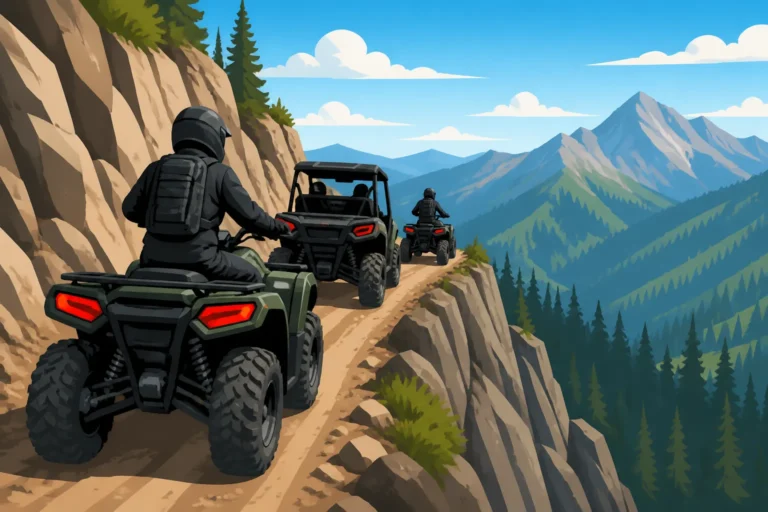
Picture this: you're cruising along a beautiful, remote Idaho backroad, sun on your face, the scent of pine in the air. Suddenly, a low rumble grows into a deafening roar, and a behemoth of steel, timber, and dust fills your rearview mirror. Or worse, it rounds a blind corner heading straight for you. Sharing these often-narrow, winding routes with fully loaded log trucks isn't just an inconvenience; it's a serious safety challenge that every ATV and UTV rider needs to understand and respect. This guide is here to walk you through the realities of riding on active logging roads, how to prepare, and critical strategies to ensure you and your machine make it home safely.
Understanding the Logging Industry's Presence on Idaho Roads
Idaho is a state rich in natural resources, and timber has long been a cornerstone of its economy. This means that many of the very same picturesque gravel and dirt roads we love to explore on our ATVs and UTVs are also the vital arteries of the logging industry. It's not uncommon to encounter these massive vehicles, often traveling at surprising speeds for their size, on what might seem like a quiet, out-of-the-way trail.
Why Log Trucks Dominate Certain Backroads
Idaho's vast forests, especially in areas like the Panhandle, central mountains, and parts of the southwest, require extensive logging operations. To get those harvested trees from the cutting sites to the mills, log trucks must use a network of roads that often weave through public lands and connect to county road systems. These aren't just scenic byways for them; they are their workplace, their transportation corridors, and their livelihood. It means these trucks are operating on a schedule, under pressure, and often pushing the limits of what a forest road can handle.
Imagine you're enjoying a beautiful, easygoing ride near McCall, perhaps exploring some of the quieter routes. The air is still, the birds are singing, and then suddenly, you hear a deep, guttural rumble that seems to shake the ground before you even see the vehicle. That's often your first warning – the sound of a large diesel engine working hard, either climbing a grade or using its engine brake on a descent. These are not recreational drivers; they are professionals making a living, and these roads are their office. Many of these roads are not paved, can be narrow, and may even have limited sightlines, making any encounter a high-stakes situation.
The Sheer Size and Weight Difference
Let's be brutally honest: your ATV or UTV, no matter how robust, is tiny compared to a fully loaded log truck. We're talking about a difference in mass that's almost incomprehensible. A typical side-by-side might weigh 1,500 to 2,500 pounds. A fully loaded log truck, on the other hand, can weigh upwards of 80,000 pounds, or 40 tons! That's like pitting a house cat against a grizzly bear – there's simply no contest in terms of raw power and inertia.
This massive weight translates to incredible kinetic energy, meaning these trucks take a long, long time to stop, even with powerful air brakes. They have huge blind spots, especially directly in front, behind, and along the passenger side. What you see as a clear road might be completely obscured to a truck driver in their high cab, particularly on tight turns or over crests.
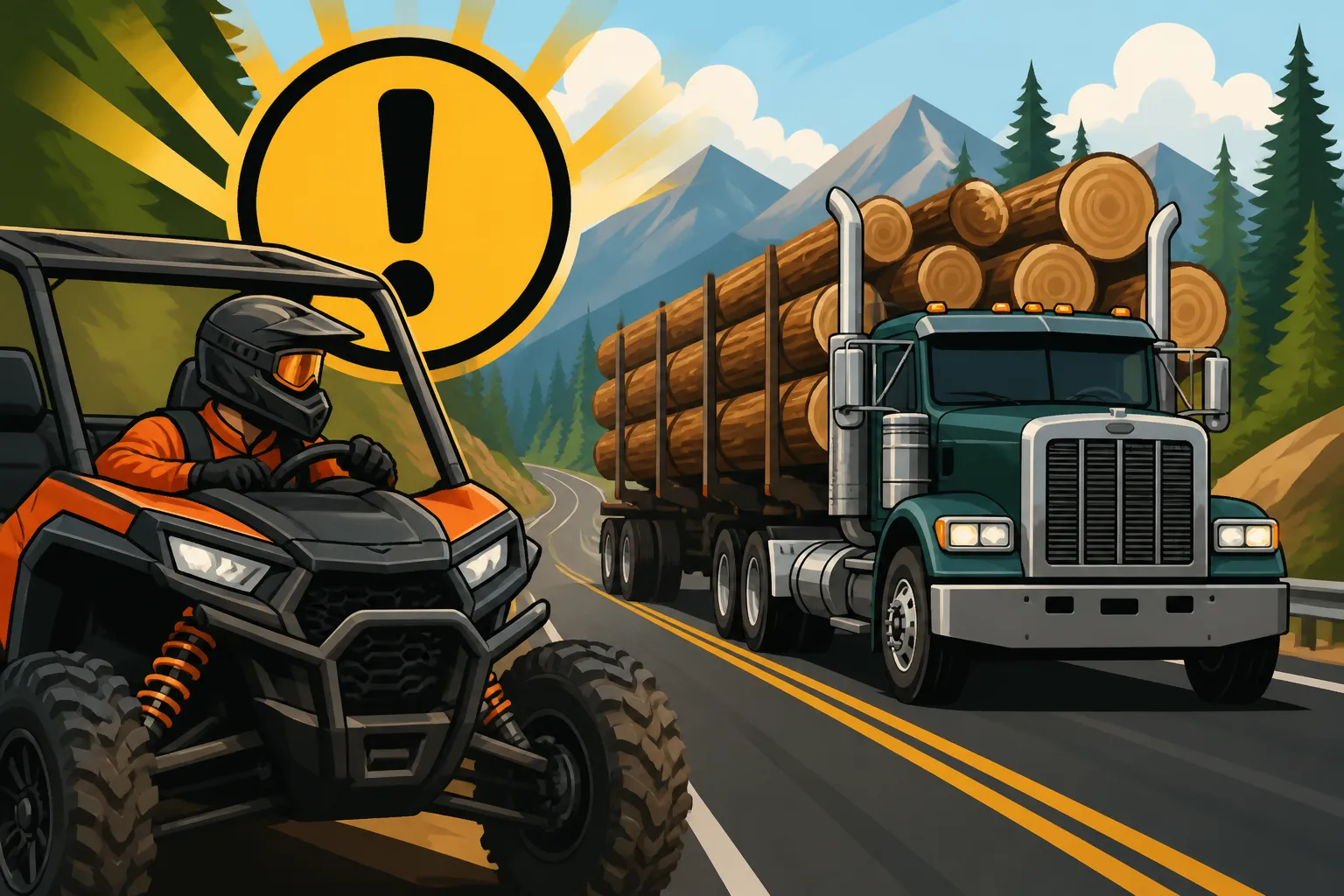
Consider this scenario: you're confidently navigating a winding, dusty gravel road. You're riding your UTV, feeling in control, maybe listening to music. You approach a blind curve, expecting to see nothing but trees. Suddenly, the entire curve is filled with the grill of a log truck, bearing down on you. Your machine can stop in a matter of feet, but that truck needs hundreds of feet, and often more if the road is wet or dusty. The physics are entirely against you in a collision, so your strategy must always be avoidance and yielding the right-of-way, even if you technically have it.
Here's a quick comparison to put things in perspective:
| Characteristic | ATV/UTV (Typical) | Loaded Log Truck (Typical) |
|---|---|---|
| Weight | 1,000 – 2,500 lbs | 80,000 lbs (40 tons) |
| Length | 7 – 12 feet | 60 – 75 feet |
| Width | 4 – 6 feet | 8.5 feet |
| Stopping Distance | 10 – 30 feet (from 30 mph) | 300 – 500+ feet (from 30 mph) |
| Driver's Eye Level | Low, near ground | High, 8-10 feet up |
| Blind Spots | Minimal | Extensive (front, sides, rear) |
Knowing these differences isn't meant to scare you, but to instill a healthy respect for the power and presence of these working vehicles.
Essential Safety Strategies for Encountering Log Trucks
Navigating roads shared with log trucks isn't about hoping for the best; it's about proactive safety and defensive riding. Your goal is always to be seen, to anticipate, and to yield.
Maximizing Your Visibility to Truck Drivers
In the world of logging roads, "out of sight" absolutely means "out of mind" for a truck driver, until it's too late. Your small profile on an ATV or UTV can easily be swallowed by the landscape, especially if you blend in with the dusty, muted colors of the forest. This is where you need to be intentional about making yourself as conspicuous as possible.
Think bright, contrasting colors for your machine, helmet, and riding gear. Fluorescent greens, oranges, and yellows stand out much better than camouflage or dark tones. Reflective tape on your machine and helmet also helps, especially in low light conditions or when dust is thick. Your headlights and taillights should be on at all times, not just at dusk or dawn. Some riders even add a tall, brightly colored whip flag, which can be seen over crests and through brush long before your machine comes into view. Companies like SuperATV offer robust lighting kits and mirrors that can significantly improve your visibility and awareness. For more on proper lighting, you might want to read [Lighting Rules for Riding After Dark in Idaho]. If your machine has a [Displaying a Sticker on an Idaho R Plate], ensure it's clean and unobstructed, as this often includes reflective elements.
Imagine riding along a dusty road that's been churned up by previous traffic. The air is hazy, and visibility is low. How do you ensure that a truck driver, who might be focused on avoiding potholes or navigating a difficult turn, notices you? Your bright gear and always-on lights become your first line of defense. The goal is to be seen from a distance, giving the truck driver ample time to react to your presence.
Defensive Riding Techniques and Situational Awareness
Defensive riding is your best friend on logging roads. This means constantly anticipating what might be around the next bend or over the next hill. It's about being prepared to react instantly.
First, slow down. Speed is your enemy when visibility is limited. On blind curves and crests, always assume there's a truck coming. Look for clues: fresh tire tracks that aren't yours, disturbed dust clouds in the distance, or the tell-tale sound of an engine brake or a powerful diesel engine. If you hear a truck before you see it, immediately start looking for a safe pull-off point. When you do encounter a truck, move as far to the right side of the road as safely possible, and consider coming to a complete stop, especially on narrow sections. Give them a wide berth. Remember that log trucks often swing wide on turns, so don't assume they will stay perfectly in their lane. It's often safer to pull completely off the travel portion of the road, if possible. For more on navigating tricky road features, check out [Blind Curves on a Canyon Road].
Consider this scenario: you're climbing a long, dusty hill. You hear the unmistakable roar of an engine brake growing louder, meaning a truck is descending toward you, likely faster than you'd prefer. Your immediate reaction should be to scan for a wide spot, a ditch, or any safe area to pull your machine completely off the road. Don't wait until the truck is upon you. Pull over, turn off your engine if the dust is bad, and let it pass. The few seconds you lose are far less valuable than your safety. When riding in a group, it’s best practice to travel in a [Riding Single File on a Narrow Road] formation, allowing more room for other vehicles.
Communication and Road Etiquette
While direct communication with a truck driver is often impossible on a remote road, your actions communicate volumes. Using your horn (if equipped, and strong enough to be heard over a diesel engine—good quality aftermarket horns are sometimes worth the investment, for example from SuperATV) for a quick, brief warning before a blind curve can sometimes alert oncoming traffic. A quick flash of your headlights to acknowledge a truck or signal your presence can also be useful.
The most important aspect of etiquette, however, is simply yielding. These drivers are on a tight schedule, hauling vital resources. Your recreational ride, while important to you, is secondary to their work. Show respect by pulling over, waiting patiently, and giving them clear passage. Don't try to race them, cut them off, or challenge them for space. A wave of thanks as they pass is a small gesture that can build good rapport between different road users. Remember, even on official county roads where OHVs are permitted, mutual respect is key. If you're riding in a group, understanding [Group Riding Etiquette on a Town Street] can apply equally to rural roads, where clear communication and predictable movements are crucial. A functional [Horn Requirements for Road Use] can be a lifesaver in these scenarios.
Preparing Your Machine and Yourself for Log Truck Routes
Being prepared isn't just about what you do when you see a truck; it's about setting yourself up for success long before you even leave your driveway. This includes both your machine's readiness and your own route planning.
Equipping Your OHV for High-Traffic Industrial Roads
The demands of logging roads are different from smooth trails. You need a machine that's in top condition and equipped for the unexpected.
- Tires: Ensure your tires are in good shape, properly inflated, and suited for gravel and possibly sharp debris. A flat tire on a logging road, far from help, can be a serious issue, especially if you're trying to quickly move out of a truck's path.
- Brakes: Absolutely critical. Check your brake pads and fluid regularly. You need reliable stopping power, instantly. Imagine hitting a patch of loose gravel or encountering a truck on a downhill slope; your brakes are your lifeline.
- Lights: As mentioned, keep them clean and always on. Consider upgrading to brighter LED lights if your stock ones are dim.
- Mirrors: While not always legally required on trails, [Mirrors on a Road-Legal Side-by-Side] are essential on roads shared with larger vehicles. They allow you to monitor traffic behind you and make safe decisions about pulling over. SuperATV, for instance, offers robust side mirrors designed for off-road use that can withstand the vibrations and bumps of these roads.
- Horn: A loud, functional horn is vital for warning others of your presence, especially around blind corners.
- General Maintenance: Always perform a thorough pre-ride check. Loose bolts, worn belts, or low fluids can lead to breakdowns in the worst possible places. Having essential tools and a basic repair kit can save you from being stranded. If you’re unsure about maintenance, consulting a professional at [Mechanics Near Idaho Trailheads] is always a good idea.
Consider this nightmare scenario: you're descending a steep, gravelly section of road, and you hear the familiar rumble of a log truck gaining on you from behind. Just as you try to pull over, your brakes feel spongy, or your machine starts to lose power. This is precisely why your machine's reliability and proper equipment are non-negotiable on these routes.
Planning Your Route and Timing
Forewarned is forearmed. Don't just pick a road and go; do a little homework.
- Research Active Logging Areas: Local Forest Service or BLM offices can often provide information on active logging operations or road closures. Sometimes, signage will be posted at major intersections.
- Check Road Closures: Forest Service and BLM websites are usually the best source for current [Idaho Road Closures During Fire Season] or for logging operations.
- Timing is Everything: Log trucks generally operate during daylight hours, often starting very early in the morning and continuing until late afternoon. If you can, try to avoid these peak hauling times. Riding on weekends might see fewer trucks, but always verify, as some operations run seven days a week. Early morning or late afternoon can also present challenges with sun glare for both you and the truck drivers.
- Motor Vehicle Use Maps (MVUMs): These maps show which roads are open to what types of vehicles and during what seasons. While they don't explicitly list logging schedules, they indicate the primary forest roads where you're most likely to encounter heavy traffic. Always check [Checking Idaho Trail Status Before You Drive] before heading out.
Imagine you planned a multi-day trip deep into the forest, only to discover that the main arterial road connecting your campsites is an active logging route during shift change. Your peaceful ride just turned into a high-stress gauntlet. A little research beforehand can help you adjust your plans, perhaps finding alternative routes or simply planning to be off that particular road during peak hours.
What to Do in Specific Encounter Scenarios
Knowing the general rules is one thing, but how do you react when you're actually face-to-face with a massive log truck on a narrow road? Here are some specific strategies for common situations.
When a Truck Approaches from the Front
This is often the most anxiety-inducing scenario. You're cruising along, perhaps enjoying the scenery, and suddenly, a fully loaded truck appears, seemingly out of nowhere, heading straight for you.
- React Immediately: As soon as you spot or hear a truck approaching from the front, start slowing down. Don't wait.
- Move Right, Far Right: Get as far over to the right side of the road as safely possible. If there's a ditch or a wide shoulder, use it. Your goal is to maximize the space between your machine and the truck.
- Stop if Necessary: On particularly narrow sections or blind curves, it might be safest to come to a complete stop. This gives the truck driver a predictable target to navigate around.
- Maintain Control: Even when stopping or moving off the road, do so smoothly and predictably. Sudden swerves can be dangerous on loose gravel.
- Wait for Dust to Settle: After the truck passes, especially on a dry road, there will be a significant cloud of dust. Wait for it to settle before proceeding to ensure good visibility.
Consider this: you're cresting a small hill, and a loaded truck is just coming up the other side, right in front of you. Your instant reaction should be to hit the brakes gently, ease to the very edge of the road, and stop. Make yourself as small and stationary as possible. This clear, predictable action is the safest course for both you and the driver.
When a Truck Overtakes You
Sometimes, a log truck will come up behind you, especially if you're on a long, relatively straight section of road. This scenario, while still requiring caution, can feel less immediately threatening than a head-on encounter.
- Stay Predictable: Do not speed up or make sudden movements. Maintain your current speed and line.
- Signal if Safe to Pass: If the road is wide enough and clear ahead, you can briefly signal the driver behind you that it's safe to pass by using a hand signal or flashing your left turn signal (if equipped).
- Move to the Right: As the truck begins to pass, drift slightly to the right to give them maximum room.
- Be Aware of Wind and Dust: As a large truck passes, it creates a significant air disturbance. Be prepared for a push of air and a cloud of dust. Hold your handlebars firmly.
- Acknowledge and Thank: A simple wave in your rearview mirror after they pass is a good practice.
Imagine you're on a long, straight section, and you see a log truck rapidly approaching in your mirrors. You maintain your steady pace, ease slightly to the right, and hold your line. The truck passes with a whoosh, and you continue on your way, perhaps a bit dusty, but safe.
Navigating Dust, Gravel, and Road Conditions
Log trucks, by their very nature, churn up a lot of dust and often leave behind loose gravel, especially on turns. These conditions pose their own set of challenges for ATV and UTV riders.
- Dust: On dry days, dust can severely limit visibility for both you and oncoming traffic. When following another OHV or a truck, leave plenty of space – far more than you think you need – to allow the dust to settle. This also helps prevent you from riding blind into a hazard. Wearing [Goggles or a Face Shield on the Road] is absolutely essential to protect your eyes and maintain visibility.
- Loose Gravel: Truck tires can kick up and move a lot of gravel, creating unstable surfaces, particularly on the edges of the road and in corners. Be extra cautious on these sections, reduce your speed, and avoid sudden braking or steering inputs. Loose gravel greatly increases your stopping distance and the risk of sliding. You'll find yourself navigating a lot of [Dust on a Dry Gravel Road].
- Potholes and Ruts: The sheer weight of log trucks can create significant potholes, washboard effects, and deep ruts, especially after rain or during freeze-thaw cycles. Stay alert for these hazards, as they can cause you to lose control, even at moderate speeds.
- Road Degradation: Active logging roads are often not maintained to the same standards as public county roads. Expect rougher surfaces, steeper grades, and potentially more debris.
Picture this: a log truck passes you on a particularly dry day, leaving behind a dense, suffocating cloud of dust. If you're not wearing proper eye protection, your vision is instantly compromised. If you were too close, you could easily hit a deep pothole or swerve into the path of another vehicle you couldn't see. Giving ample space and being prepared for these conditions is key to navigating them safely.
Disclaimer
This article is for general informational purposes only and does not constitute professional advice. Laws, prices and regulations vary by location and change over time. Consult a qualified professional for guidance on your specific situation.