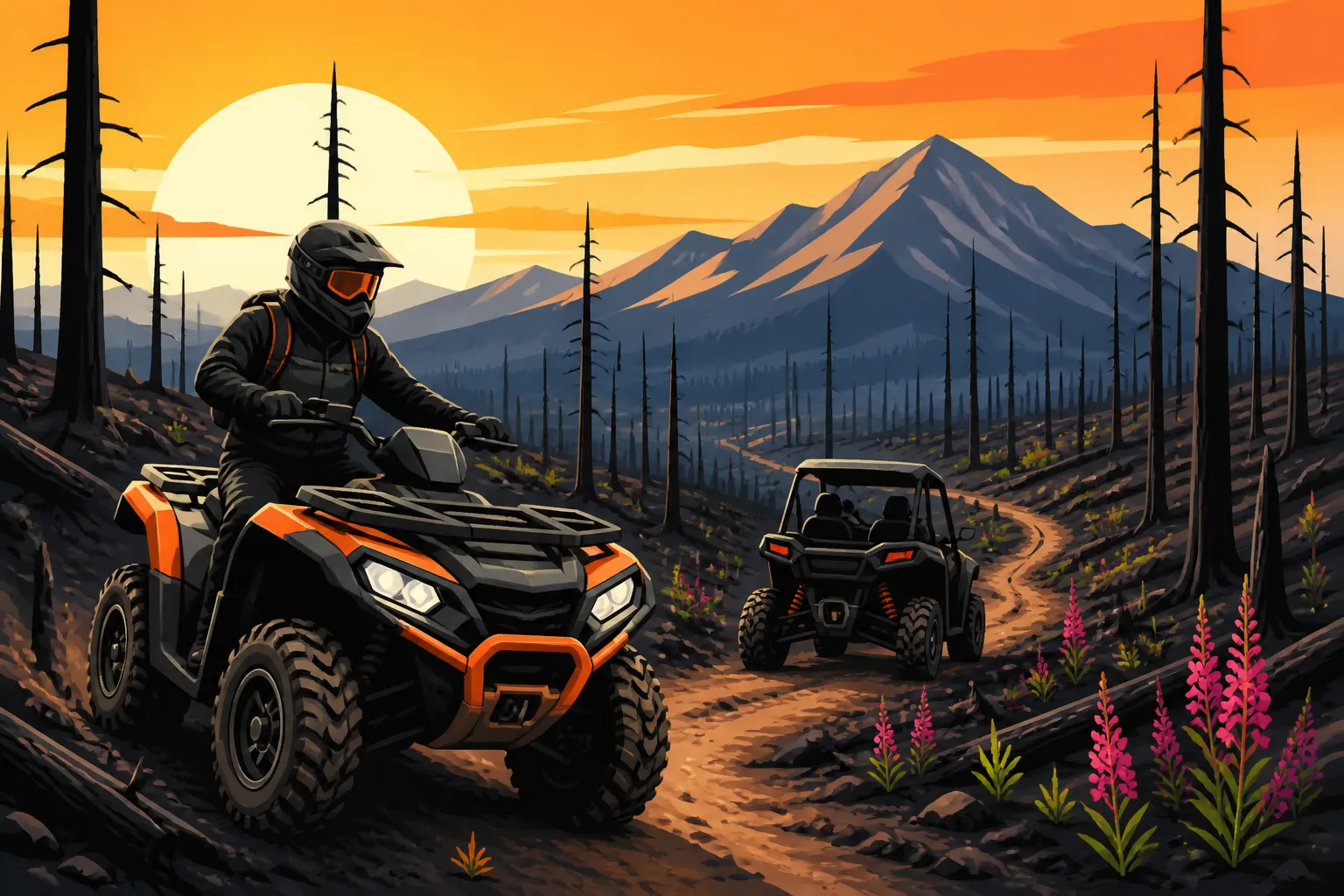
Riding a Trail Through a Burn Scar
A trail through an Idaho burn scar can look open and rideable while hiding loose soil, unstable trees, sudden washouts, or a closure just around the bend. This guide explains how to check whether a route is open, assess conditions before and during your ride, and travel through fire-affected terrain without making a risky situation worse.
Understand what changes after a wildfire
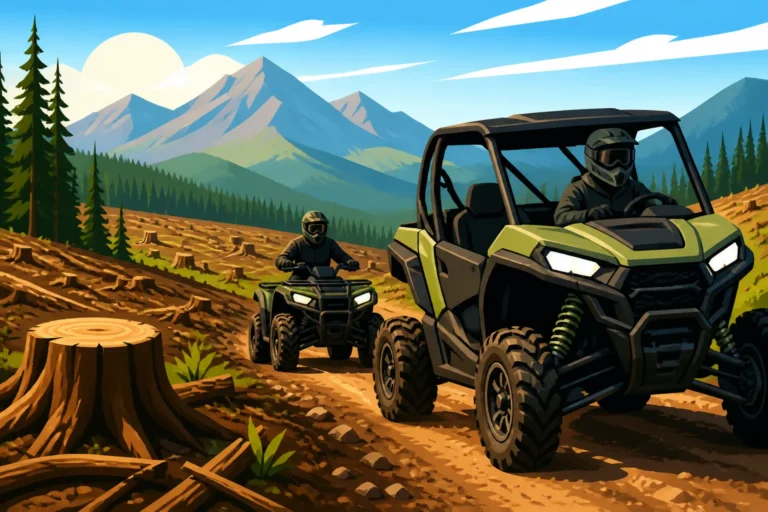
A burn scar is not automatically unsafe, and a trail through burned forest is not necessarily closed. But fire can change the ground, vegetation, and visibility in ways that matter to ATV and UTV riders. The level of risk varies: a low-intensity burn on gentle terrain may leave a clear route, while steep slopes or heavily burned ground can be vulnerable to falling trees and erosion.
That uncertainty is frustrating when you have driven a long way to ride. A route may appear on your map, and the trailhead may be accessible, but conditions farther in can be different. Treat recent fire activity as a reason to check current access and conditions—not as proof that the route is either safe or closed.
Expect loose soil and changing trail surfaces
Fire can remove vegetation that holds soil in place. Rain and snowmelt may then carry soil downhill, loosen trail edges, or cut channels across a route. Even a trail that seemed firm during a dry visit may change after a storm. On steep ground, runoff can also bring rocks, branches, or debris onto the trail.
Ash and fine sediment may cover ruts or small holes, making the surface look smoother than it is. Slow down when the ground changes color or texture, especially where the trail dips, crosses a drainage, or follows a slope. Keep enough room between machines to see the terrain ahead and avoid riding so close that another vehicle’s dust or kicked-up debris blocks your view.
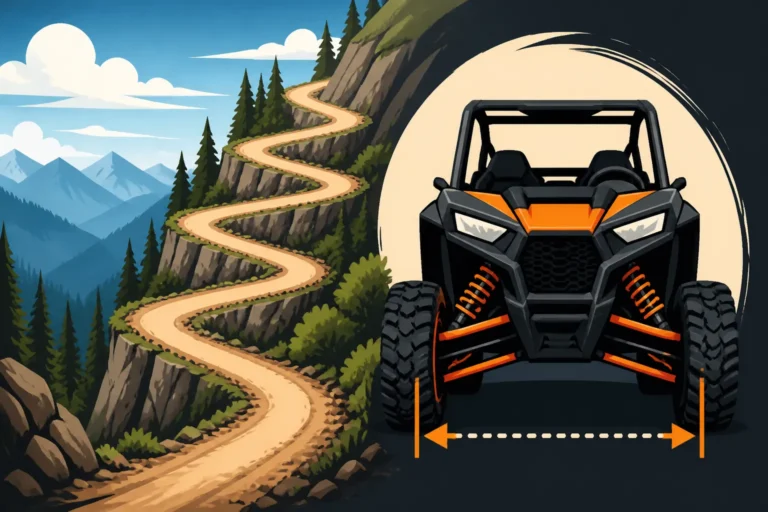
It’s also worth thinking about what happens when the route narrows. A weakened edge that would be manageable for one machine could be difficult for a wider side-by-side or a group trying to pass. If the trail is too narrow to turn around safely, don’t push farther in just to see what lies around the next corner. Choose a stopping place where everyone can regroup without damaging the trail or blocking access.
Watch for fire-weakened trees and falling debris
A tree can look standing and intact while its roots or trunk have been weakened by fire. Dead and damaged trees may fall without much warning, especially when wind, rain, or snow puts stress on them. Branches can also come down, and a fallen tree may block a route that was passable earlier in the day.
Pay attention to the condition of trees near the trail, particularly where a route passes through a heavily burned stand or runs below a slope. Don’t stop or camp beneath visibly damaged trees. If you see a tree leaning toward the route, hanging limbs overhead, or fresh debris that suggests the area is unstable, move away from the hazard if you can do so safely. Avoid lingering to inspect it from underneath.
A trail blockage isn’t always a simple inconvenience. Turning around may be difficult on a narrow hillside, and trying to drive around a fallen tree can put you onto fragile ground or a steep drop-off. If the obstacle doesn’t leave a clearly safe, authorized passage, stop and reassess rather than creating a new track around it.
Check access and conditions before you leave
A route’s appearance on a map doesn’t guarantee that it is currently open. Fire response, rehabilitation work, storm damage, seasonal restrictions, or land-manager decisions can affect access. Check the latest information available from the agency responsible for the land and the route before setting out. For more on temporary restrictions, see Idaho Trail Closures in Fire Season and Checking Idaho Trail Status Before You Drive.
Confirm that your route is legal and open
Plan around the route that is actually open—not simply the trailhead or road that gets you close. Read the applicable motor vehicle use map and look for route designations, seasonal dates, and vehicle-width restrictions. Reading an Idaho Motor Vehicle Use Map can help you understand how to use that map when planning a ride.
A mapping app can be useful for seeing your location, following a planned track, and spotting nearby route options. For example, onX Offroad can help with route planning, but don’t treat an app’s display as confirmation that a trail is open today. Compare what you see with current information from the relevant land manager, and follow posted signs and gates on the ground.
Have a backup plan in case the intended trail is closed or blocked. Pick an alternative route that is open to your machine and gives you a safe way to turn around. This matters most when traveling in a remote area, where a detour may be much longer than it looks on a screen. If an official closure notice is unclear, don’t assume that a vehicle track or another rider’s recent post overrides it.
Match the ride to the group and the terrain
Before you go, consider everyone’s experience, the size of the machines, and how difficult it would be to reverse course. A route that is comfortable in an open, familiar area may feel much more demanding when burned vegetation reduces shade, landmarks, and visual cues. If the group includes newer riders or children, choose a route with conservative turnaround options and avoid making the burn scar the part of the trip that requires the most improvisation.
Check the forecast and recent conditions as well as the map. Rain can make loose ground and drainage crossings more difficult; dry weather can mean dust and poor visibility behind other machines. In spring, snowmelt and wet ground may affect trail surfaces. A guide to Spring Mud and Idaho Trail Damage offers related context on why a trail can be vulnerable even when it looks passable.
| What to check | Why it matters | Practical response |
|---|---|---|
| Current closure notices | A route or nearby area may be closed even if the trail appears on a map | Confirm access with the land manager and obey posted signs |
| Route designation and width | A trail may not be open to every machine | Check the motor vehicle use map and match the route to your vehicle |
| Recent rain or snowmelt | Runoff can loosen soil, deepen ruts, or damage crossings | Reconsider steep or narrow sections if conditions have changed |
| Tree and slope conditions | Fire-damaged trees and unstable ground can create hazards | Avoid stopping under damaged trees or riding along a failing edge |
| Turnaround options | A blockage may leave little room to reverse direction | Identify safe places to turn around before entering remote terrain |
| Communication and supplies | Help may be far away if a machine breaks down or someone is injured | Bring essentials and tell someone your route and return plan |
Ride cautiously through the burn scar
Once you’re on the trail, let conditions—not your planned pace—set the speed. A burn scar can change quickly across a short distance. A broad, stable section may give way to a narrow track with loose soil, damaged trees, or a drainage crossing that needs a closer look.
Slow down and leave room to react
Reduce speed when visibility is limited, the trail surface changes, or you’re approaching a slope, bend, or washout. On a group ride, leave enough space that each rider can see the trail instead of following too closely through dust. The first rider should communicate hazards clearly, and everyone should be prepared to stop without crowding the machine ahead.
When you reach a questionable section, pause in a safe spot and assess it on foot only if the area itself appears stable and you can do so without walking under damaged trees or onto a crumbling edge. Look for signs that water has changed the route: fresh channels, exposed roots, newly deposited sediment, or a section where the trail has narrowed. If you can’t judge whether the crossing or slope is safe, turning back is a sound decision.
Avoid abrupt steering, spinning the tires, or braking hard on loose ground. Those actions can make a vulnerable surface worse and may reduce your control. Stay on the authorized route rather than widening it to bypass a rut, debris, or muddy patch. Going around an obstacle may feel like the easiest choice in the moment, but a new track can damage recovering ground and put you into terrain you haven’t assessed.
Treat water crossings and washouts as separate hazards
A burn scar can affect how water moves over the land. A crossing that looks shallow may hide a soft bottom, a sudden drop, or a damaged approach. Before entering, stop and evaluate the route, the current, the surface, and the exit. Don’t ride into water if you can’t see a safe line through and out. If the crossing seems beyond your ability or your machine’s capability, find another route or turn around. See Water Crossings on Idaho Trails for more on evaluating crossings.
Washouts also deserve caution. A rut or channel may be deeper than it appears, and the soil beside it may not support a vehicle’s weight. Keep away from undercut edges. Don’t try to jump, climb, or straddle an obstacle when you can’t see where your tires will land. If the trail has lost enough width that passing would require driving off-route, don’t force it.
There’s no shame in changing the plan. Riders often feel pressure to continue because the group has already traveled a distance or because the destination seems close. But distance already covered is not a reason to take a new risk. A safe turnaround can be the difference between a memorable ride and a recovery problem in a remote place.
Protect the terrain and be ready to turn back
Burned areas can be especially vulnerable to damage while vegetation and soil recover. A responsible ride means leaving the route as you found it—or, if conditions have changed, avoiding actions that make the damage worse. Stay on designated routes, respect closures, and don’t treat an unofficial tire track as an invitation to explore.
Avoid making new tracks or disturbing recovery work
If debris blocks the trail, don’t create a bypass around it. If a muddy section looks tempting to power through, consider whether doing so will deepen ruts or widen the trail. Avoid disturbing rehabilitation work, barriers, or areas marked off by land managers. A closure or barrier may protect riders from hazards, but it can also give damaged ground time to stabilize.
Don’t remove signs, move gates, or assume a short off-trail detour is harmless. On a burn scar, vegetation may be sparse, and the ground can be more exposed to erosion. Keep your tires on the designated route, even when it means giving up on a planned loop. If you come across a blocked or damaged route, Reporting Trail Damage in Idaho provides a useful next step to consider.
Carry a simple backcountry plan
Even a short ride can take longer when a trail is blocked or damaged. Bring the essentials for your route, including water, appropriate clothing, basic first aid supplies, and a way to contact help that suits the area. Don’t count on reliable cell service in remote terrain. Share your intended route and expected return with someone who isn’t riding with you, and agree on what they should do if you don’t check in.
A map and a charged phone can help, but neither replaces good judgment or a backup plan. If you use onX Offroad to keep track of your route, make sure you understand how to use the map offline where available and still check access information from the responsible land manager before leaving. For more preparation ideas, see What to Carry on a Remote Ride and Riding Alone in the Idaho Backcountry.
If conditions turn out to be worse than expected, stop and decide what is safest for the whole group. That may mean returning the way you came, choosing a confirmed open alternative, or waiting in a safe location for help. Don’t split up casually to scout ahead, and don’t send someone into unstable terrain simply because they’re on foot. A flexible plan is more useful than a promise to finish a specific loop.
Disclaimer
This article is for general informational purposes only and does not constitute professional advice. Laws, prices and regulations vary by location and change over time. Consult a qualified professional for guidance on your specific situation.