Ordering an Idaho Restricted Plate
The Idaho Restricted Plate enables off-highway vehicle owners to legally access designated county and secondary public roads.
Start here, or nothing else is legal.
Resident registration, titling and renewal, and public-use versus private-land fees — plus the age and safety-course rules that decide who may ride.

The Idaho Restricted Plate enables off-highway vehicle owners to legally access designated county and secondary public roads.
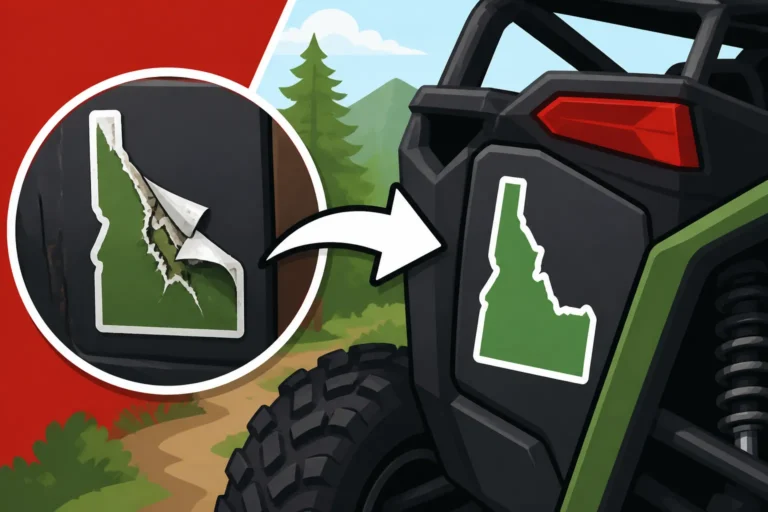
Replacing a peeled Idaho OHV sticker prevents fines and details how environmental factors and poor application cause damage.
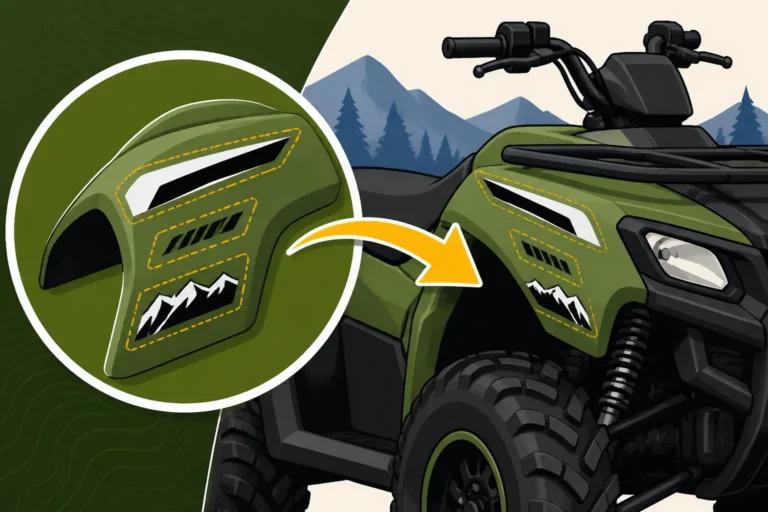
Idaho Parks and Recreation rules require placing your OHV sticker visibly on a quad fender to prevent fines and ensure proper trail enforcement.
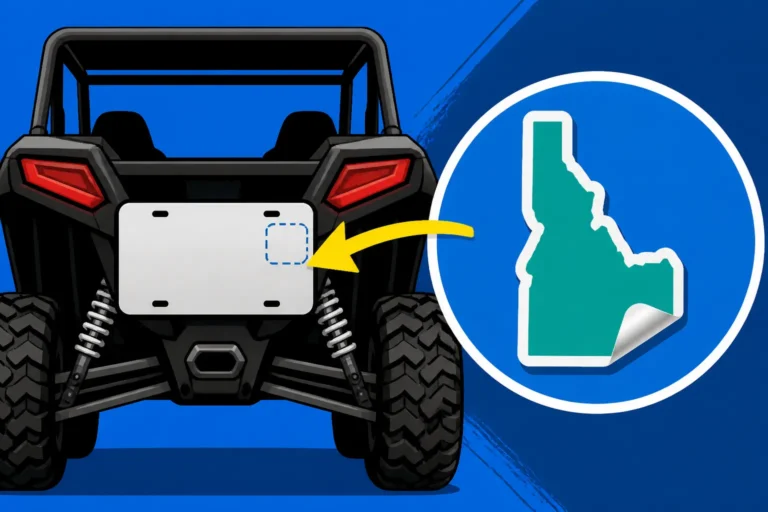
Precise Idaho OHV sticker placement instructions explain the exact spot on a restricted vehicle plate for ATV and UTV riders to avoid tickets.

Renewing an Idaho off-highway vehicle registration without the old sticker or card using permanent vehicle identification records.

Idaho OHV sticker rules for July purchases mean paying full annual fees without proration or expiration date extensions.

Idaho OHV stickers expire on December thirty-first regardless of purchase date, leaving late-season buyers with very brief validity.
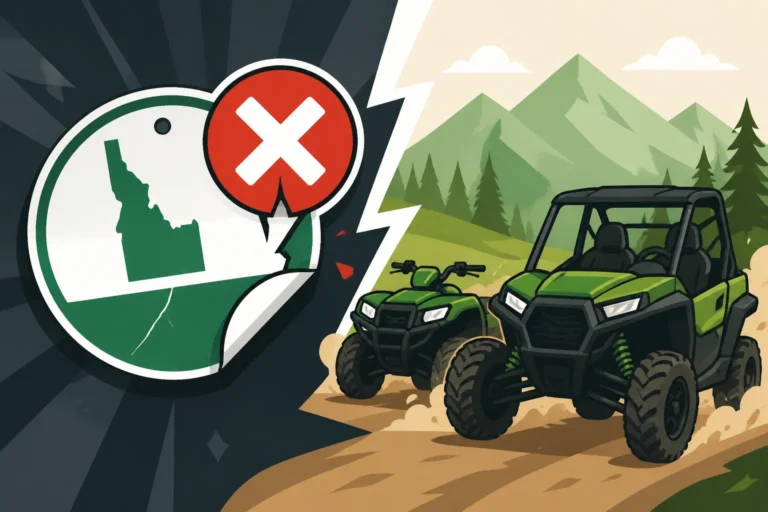
Every Idaho off-highway vehicle sticker expires on December 31 each year, regardless of the original purchase date.

Idaho Restricted Vehicle Plate costs and financial maintenance requirements for off-highway vehicles explained for riders.

Idaho OHV sticker costs, required fees, and machine types determine legal access on public lands managed by the IDPR, BLM, and Forest Service.