What Lenders Want Before a UTV Loan
So, you've been dreaming of that new (or new-to-you) side-by-side or ATV, picturing yourself tearing up Idaho's incredible trails, but the sticker shock of a cash purchase has you thinking about financing. It's a common hurdle, and many riders find themselves wondering exactly what lenders are looking for before they'll hand over the funds. This guide is all about peeling back the curtain on the UTV loan process, helping you understand the key factors that financial institutions consider so you can be fully prepared to make that dream a reality.
The Lender's Mindset: Why They Ask So Many Questions
It can feel a bit like an interrogation sometimes, can't it? You just want to get out on the trails, and the bank wants to know every detail of your financial life. But from their perspective, it's not personal; it's just good business. Lenders are in the business of assessing risk, and lending money for an off-road vehicle carries its own unique set of considerations compared to, say, a home or a car loan. They need to be confident that you'll pay them back, and that if for some reason you can't, they can recover their investment. Understanding this fundamental truth will help you approach the application process with the right mindset.
It's All About Risk Assessment
Think about it from the bank's side: they're essentially betting on your ability and willingness to repay a debt. Every question they ask, every document they request, is designed to build a complete picture of that risk. They're looking at your past financial behavior, your current financial stability, and the value of the asset you're trying to purchase. If the risk seems too high, they'll either deny the loan, offer a higher interest rate to compensate for the increased risk, or ask for a larger down payment. It’s a sliding scale, and your goal as an applicant is to present yourself as a low-risk borrower. This means having a solid credit history, stable income, and demonstrating responsibility with your existing debts. They want to see consistency and a track record of fulfilling your financial obligations, which is why they dig deep into your past.
The UTV as Collateral
Unlike an unsecured personal loan, a UTV loan is typically a secured loan. This means the side-by-side or ATV itself acts as collateral. If you default on the loan, the lender has the right to repossess the machine to recoup their losses. Because of this, the UTV's value and condition are almost as important as your own financial standing. They won't lend you more money than the machine is actually worth, and they'll want to ensure it's a valuable asset that can be easily resold if necessary. This is especially true for used machines, where market value can fluctuate significantly. A new machine often comes with a more predictable value, making it an easier calculation for the lender. For used machines, they might ask for an appraisal or check against industry guides to determine its fair market value. They also need to be certain that they can establish a clear lien on the title, ensuring their interest is protected. This is a crucial step in [Titling and Registering an ATV in Idaho].
Your Financial Snapshot: What Lenders Scrutinize
When you walk into a bank or dealership to apply for a UTV loan, expect them to take a deep dive into your personal finances. This isn't just about how much money you make; it's about how you manage that money, how much debt you already carry, and your overall financial reliability. Being prepared with accurate information about your financial situation can make the process much smoother and increase your chances of approval for favorable terms.
Credit Score: Your Financial Report Card
Your credit score is arguably the single most important factor lenders consider. It's a three-digit number that summarizes your creditworthiness based on your payment history, amounts owed, length of credit history, new credit, and credit mix. A higher score generally means you're a lower risk. For example, someone with a score in the high 700s or 800s will likely qualify for the best interest rates and terms, while someone in the low 600s might struggle to get approved, or face much higher rates and stricter conditions. It’s essentially your financial report card, telling lenders how well you've managed debt in the past. This includes everything from credit card payments and mortgage installments to past car loans. If you've had late payments, collections, or bankruptcies, those will significantly impact your score and, consequently, the lender's willingness to extend credit for an off-road toy. Before you even apply, it's a good idea to check your credit score and report for any errors. If you find discrepancies, address them well in advance.
Income Stability and Debt-to-Income Ratio
Beyond your credit score, lenders want to see that you have a steady and sufficient income to comfortably make your monthly UTV loan payments. This isn't just about the dollar amount; it's about the consistency of that income. Are you employed full-time? Self-employed? How long have you been in your current job? Lenders prefer applicants with stable employment histories, typically looking for at least two years in the same job or industry.
They'll also calculate your debt-to-income (DTI) ratio. This is a percentage that compares your total monthly debt payments to your gross monthly income. For instance, if your total monthly debt payments (including mortgage/rent, car loans, student loans, credit card minimums, and the proposed UTV payment) add up to $2,000, and your gross monthly income is $5,000, your DTI is 40% ($2,000 / $5,000). Lenders generally prefer a DTI ratio below 36% to 43%, though this can vary. A high DTI suggests you're already stretched thin, making it riskier to take on another monthly payment, especially for a discretionary purchase like a UTV. They want to ensure you won't be living paycheck to paycheck just to keep your new machine.
Down Payments and Trade-Ins
While not always strictly required, making a significant down payment can dramatically improve your chances of loan approval and often lead to better interest rates. A down payment shows the lender that you have "skin in the game" and are financially committed to the purchase. It also immediately reduces the loan amount, lowering the risk for the lender. If you're looking at a $20,000 side-by-side, putting down $4,000 (20%) makes the loan more appealing than financing the entire amount.
Similarly, if you have an existing ATV or UTV, trading it in can serve a similar purpose to a down payment. The trade-in value reduces the amount you need to borrow. This is a common strategy, especially when upgrading to a newer, more powerful machine. Just make sure you understand the actual value of your trade-in and how it impacts the overall deal. When selling a machine yourself, remember to use a solid [ATV Bill of Sale Wording Buyers Should Insist On] to protect both parties, and resources like LawDepot can provide excellent templates for this.
The UTV Itself: What Makes a Machine Loan-Worthy
It's not just about you; the machine you want to buy plays a huge role in the loan approval process. Lenders are looking at the specific characteristics of the ATV or UTV to determine its collateral value and how easily they could resell it if things go south. This is especially critical for used machines, which come with more variables.
Age, Condition, and Appraised Value
Lenders are typically more willing to finance newer machines because they hold their value better and are less prone to mechanical issues. While every lender has its own guidelines, it's generally harder to get a loan for a machine that's, say, 10 or more years old, or one that has a high number of hours or miles. Newer machines are often seen as less of a risk.
For a used UTV, the actual condition is paramount. A machine that looks like it's been through a war zone, with bent suspension, cracked plastics, and a smoking engine, will have a much lower appraised value than a well-maintained one. Lenders might require an inspection or use valuation guides (similar to how car dealerships use Kelley Blue Book) to determine the machine's fair market value. They won't approve a loan for more than the machine is worth. They'll also be wary of machines with [What a Rebuilt Title Tells a Buyer] or extensive damage history, as these can drastically reduce resale value. This due diligence on the machine's value ensures that their collateral is sound. Before signing any purchase agreements, it's wise to ensure the machine’s ownership history is clear and there are no existing liens on it.
Titling and Registration Requirements
For a lender to secure their interest, they need a clear title to place a lien against. In Idaho, all ATVs and UTVs over 50cc are generally required to have a title. [Idaho Titles Every ATV Over 50cc] is a fundamental rule here. If the machine you're looking at doesn't have a clean title, or if there are complications with its [Proof of Ownership for an Idaho OHV Title], a lender might be hesitant or refuse the loan altogether. They want to know they can legally claim the machine if you default. This is why when you [Buying a Used Side-by-Side in Idaho: The Paperwork] is so critical; ensuring the seller has a signed-off title is paramount.
They'll also want to confirm that the machine can be legally registered and operated in Idaho, even if you plan to keep it on private land mostly. This ensures its marketability. If you're [Registering an Out-of-State Machine in Idaho], the lender will want assurances that the titling process will be smooth in your new home state. Having all your ducks in a row for the titling and registration process shows responsibility and makes the lender's job easier.
Insurance as a Loan Safeguard
Most lenders will require you to carry comprehensive and collision insurance on your UTV for the duration of the loan. This isn't just about protecting you; it's about protecting their investment. If the machine is stolen, damaged, or totaled in an accident, the insurance payout ensures that the loan can be satisfied, or the machine can be repaired. They don't want to be left with a worthless piece of metal and an unpaid loan balance. This is a standard requirement for almost any vehicle loan, including ATVs and UTVs. Be prepared to show proof of insurance before the loan funds are disbursed. It’s smart to get [Insuring an ATV in Idaho] quotes before finalizing your loan, as the cost of insurance can significantly impact your overall monthly budget. Some loan agreements, particularly from institutions like credit unions, may even include the option to purchase extended warranties or gap insurance directly through them, which can offer additional peace of mind for both you and the lender.
Navigating the Application: Tips for a Smooth Process
The loan application process can sometimes feel like a maze, especially if you're new to financing off-road vehicles. However, being organized, transparent, and proactive can make a world of difference. Your goal is to present a clear, compelling case for why you are a responsible borrower.
Gathering Your Documents
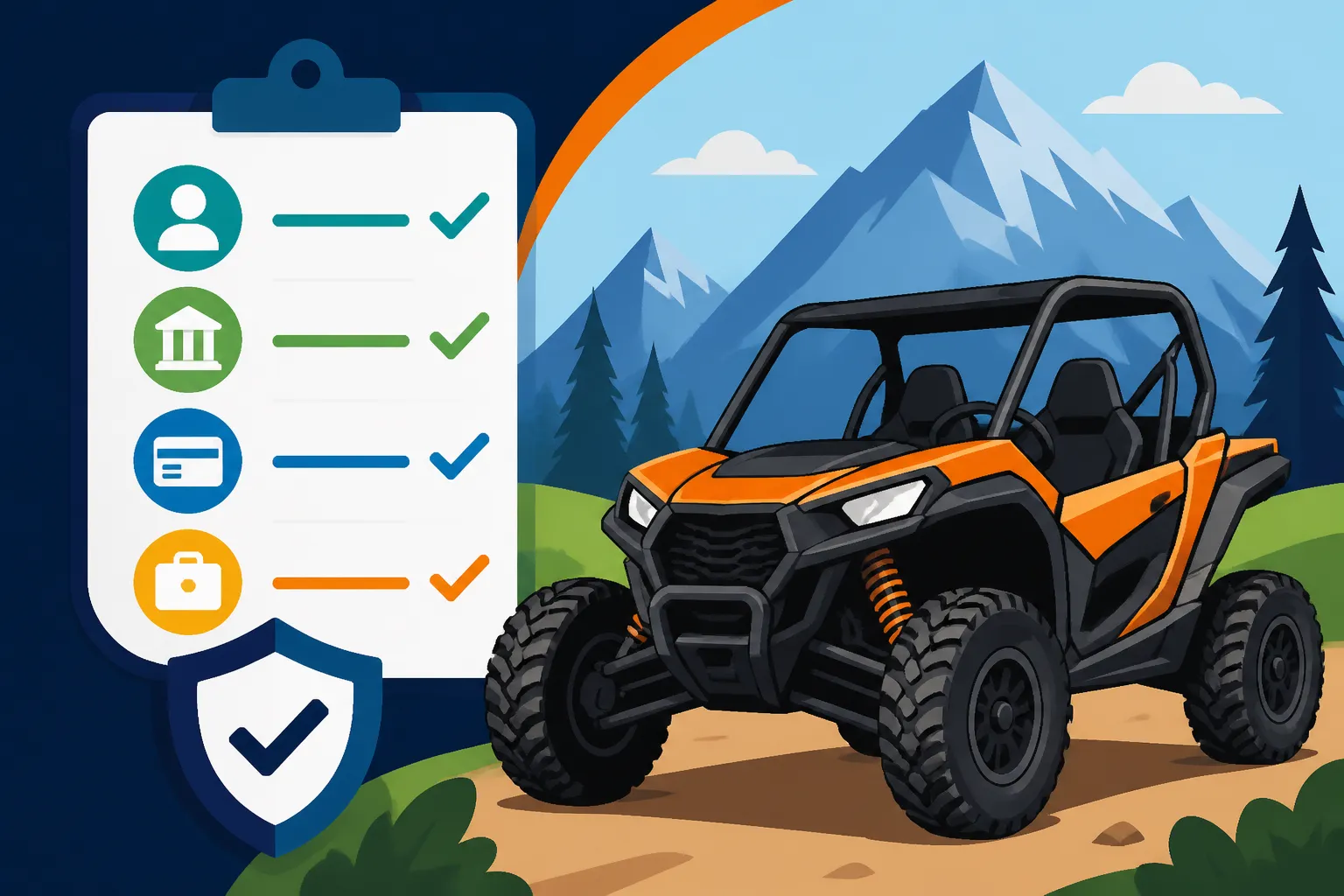
Preparation is key. Before you even sit down with a loan officer, have all your essential documents in order. This often includes:
- Identification: Driver's license or other government-issued ID.
- Proof of Income: Recent pay stubs (typically 2-3 months), W-2s, or if self-employed, tax returns from the last two years and bank statements.
- Proof of Residence: Utility bill, lease agreement, or mortgage statement.
- Bank Statements: To show assets and financial stability.
- Existing Debt Information: Statements for other loans (car, student, mortgage) and credit cards.
- Vehicle Information: For a used UTV, this includes the make, model, year, VIN, mileage/hours, and photos. For a new one, the purchase agreement or buyer's order from the dealer.
- Trade-in Information (if applicable): Title, registration, and details of the machine you're trading in.
Having these documents readily available will speed up the application process and prevent delays. A well-prepared applicant signals responsibility to the lender. If you're concerned about [Liens on an OHV Title], having any prior lien release paperwork is also a good idea. For private sales, you might even consider a detailed purchase agreement from a service like LawDepot that outlines all terms, which can be reassuring to a lender.
Understanding Loan Terms and Fine Print
Don't rush through the loan agreement. Take the time to understand all the terms, including:
- Interest Rate (APR): This is the cost of borrowing money, expressed as a yearly percentage. A lower APR means lower total costs over the life of the loan.
- Loan Term: The length of time you have to repay the loan, usually expressed in months (e.g., 36, 48, 60 months). Longer terms mean lower monthly payments but often result in paying more interest overall.
- Monthly Payment: The exact amount you'll owe each month.
- Fees: Watch out for any origination fees, document fees, or prepayment penalties.
- Late Payment Penalties: Understand the consequences if you miss a payment.
Ask questions until you fully understand everything. It's your money and your commitment. Don't be afraid to compare offers from multiple lenders, including credit unions and banks, not just the dealership's financing options. Sometimes, the best rates for [Financing a Side-by-Side Through a Dealer] might be at your local credit union.
What to Do if You're Denied
Getting denied for a loan can be disheartening, but it's not the end of the world. First, ask the lender why you were denied. They are legally required to tell you. Common reasons include:
- Low credit score
- High debt-to-income ratio
- Insufficient income
- Lack of credit history
- Issues with the collateral (the UTV itself)
Once you know the reason, you can work to address it. This might involve:
- Improving your credit score by paying bills on time, reducing credit card balances, and disputing errors on your credit report.
- Reducing existing debt to lower your DTI.
- Saving up for a larger down payment.
- Looking for a less expensive or newer machine.
- Applying with a co-signer who has stronger credit.
- Exploring alternative lenders, like a local credit union that might be more flexible.
Remember, the goal is to make yourself a more attractive borrower. It might take some time and effort, but it's often achievable. If you're exploring options, even something as simple as using LawDepot for a personal loan agreement template can give you an idea of the structure involved, even if you don't use it for your UTV.
Here’s a quick overview of what lenders prioritize:
| Factor | What Lenders Look For | Why It Matters |
|---|---|---|
| Credit Score | High scores (700+) preferred, indicating responsible credit management. | Predicts likelihood of repayment; lower score = higher risk = higher interest rate or denial. |
| Income Stability | Steady employment (2+ years), verifiable income, sufficient funds to cover payments. | Ensures consistent ability to make monthly payments. |
| Debt-to-Income | Low ratio (below 36-43% is ideal), demonstrating ability to handle additional debt. | Reveals if borrower is overextended; high DTI suggests difficulty with new payments. |
| Down Payment | Larger down payments (10-20%+) are favorable. | Reduces loan amount, lowers lender's risk, shows borrower's commitment. |
| UTV Value/Condition | Newer models, good mechanical and cosmetic condition, clear title, marketable value. | The UTV serves as collateral; ensures lender can recover losses if repossession is necessary; ease of resale. |
| Insurance | Comprehensive and collision coverage. | Protects the collateral (UTV) against damage, theft, or total loss, ensuring loan repayment even in unforeseen circumstances. |
Ultimately, securing a UTV loan in Idaho is about proving your financial reliability and ensuring the machine itself is a sound investment. By understanding what lenders prioritize—your creditworthiness, your income stability, and the value of the vehicle—you can approach the process with confidence and increase your chances of getting the financing you need to hit those trails!
Disclaimer
This article is for general informational purposes only and does not constitute professional advice. Laws, prices and regulations vary by location and change over time. Consult a qualified professional for guidance on your specific situation.