Idaho OHV Registration Runs January to December
One of the most common head-scratchers for new and even seasoned OHV riders in Idaho isn't about which trail to ride, but a simple question: when exactly does my OHV sticker expire? Many folks assume it's like their car tabs, good for a full 12 months from the purchase date. This misunderstanding often leads to riders unknowingly sporting an expired sticker, risking fines, and missing out on precious trail time. This guide is here to clear up that confusion once and for all, confirming that Idaho OHV registration runs on a strict calendar year, from January 1st to December 31st, no matter when you buy it.
Understanding the Idaho OHV Registration Cycle
The way Idaho manages its OHV registrations can feel a bit counter-intuitive if you're used to other vehicle registration systems. It's not a rolling 12-month period from your purchase date, which is what many of us are accustomed to with our cars or trucks. Instead, it's a fixed, statewide annual cycle. This system has its roots in administrative efficiency and ensures that all vehicles are renewed on a consistent schedule, which ultimately helps fund and maintain the trails we all love to ride.
The January to December Standard
When you purchase an Idaho OHV sticker, whether it's for your quad, dirt bike, or side-by-side, that sticker is valid from January 1st through December 31st of the year it's issued. Period. There's no pro-rating if you buy it mid-year, and it doesn't extend into the next year. This can be a real point of frustration for riders, especially if they pick up a new-to-them machine in, say, August or September. You might feel like you're paying for a full year's sticker but only getting a few months of use out of it before it's time to renew again. We get it, it feels like you're losing money!
But understanding this upfront helps you plan. It means that come December, everyone in Idaho with an OHV sticker needs to start thinking about renewing for the upcoming year, regardless of when they slapped the current sticker on their machine. It’s a clean slate every January 1st, designed to simplify the overall management of the state's vast OHV program and trail system.
Why a Fixed Annual Cycle?
You might wonder why Idaho opts for this calendar-year system rather than a personalized 12-month cycle. The primary reason is administrative efficiency for the Idaho Department of Parks and Recreation (IDPR), which manages the OHV program. By having a universal expiration date, IDPR can streamline its renewal processes, manage its budget more predictably, and simplify enforcement for local law enforcement agencies, like county sheriffs and Forest Service rangers. Imagine the chaos if every single rider had a unique expiration date; it would be a nightmare to track and enforce.
This consistent renewal period also plays a crucial role in how funds are collected and disbursed for trail maintenance and development. When everyone renews around the same time, it provides a clear picture of the annual revenue available to support Idaho's incredible trail system. The money from your OHV sticker goes directly into programs that groom trails, install signage, maintain staging areas, and promote rider safety. It's all part of ensuring that the trails remain accessible and enjoyable for everyone. This system helps keep money flowing to critical areas such as [The Idaho Trail Fund and Sticker Revenue].
Impact of Mid-Year Purchases
Let's dive into that common scenario we mentioned: buying an OHV sticker partway through the year. If you purchase your sticker in July, for example, that sticker is still only valid until December 31st of that same year. You will need to renew it again for the following year, typically starting in December. There’s no discount for a partial year’s use, nor does the sticker magically extend its validity. This can definitely feel like a sting, especially if you’re a savvy shopper looking for the most bang for your buck.
This reality makes it especially important to be aware when you purchase a used machine or simply get around to registering a new one later in the year. While it might seem like you’re paying full price for less than a full year, the alternative is riding unregistered, which carries its own set of risks and potential fines. It’s a trade-off, but knowing the rules helps you manage expectations and ensures you’re always riding legally. For more on this specific situation, check out [Idaho OHV Sticker for a Machine Bought in July].
Renewing Your Idaho OHV Sticker: The Annual Ritual
As December approaches, it’s time for the annual ritual of renewing your OHV sticker. This is a critical step to ensure your machine is legal for the trails come the new year. Idaho Parks and Recreation makes this process fairly straightforward, offering several convenient options to get your new sticker in hand before the snow melts (or before the first ride of the new year, whichever comes first!).
The Renewal Window and Reminders
The renewal period for Idaho OHV stickers typically opens in December for the upcoming year. This means you can get a jump start and purchase your sticker for the next calendar year before the current one even expires. Many riders appreciate this flexibility, allowing them to take care of it during the slower winter months rather than rushing when spring riding season hits. Think of it as preparing your machine for its next season of adventure.
IDPR does a pretty good job of sending out reminders to registered OHV owners. These [Renewal Reminders From Idaho Parks and Recreation] are a helpful nudge, usually arriving in your mailbox or inbox as the end of the year approaches. However, it's always a good idea to set your own personal reminder, perhaps on your phone or calendar, just in case a reminder gets lost in the mail or filtered into your spam folder. Taking proactive steps ensures you won't be caught off guard when December 31st rolls around.
How to Renew Your Sticker
Idaho offers several ways to renew your OHV sticker, catering to different preferences and busy schedules. The most popular method for many is online renewal, which offers convenience from the comfort of your home. To renew online, you'll typically need your current OHV registration number, your vehicle identification number (VIN), and payment information. The process is usually quick and efficient, and your sticker is then mailed to you. For a detailed guide on this, see [Renewing an Idaho OHV Sticker Online].
If you prefer a more personal touch or need your sticker immediately, you can visit a local vendor or your county assessor's office. Many powersports dealerships, sporting goods stores, and even some hardware stores are authorized to sell and renew OHV stickers. This is especially handy if you're out running errands and realize you need to get that renewal taken care of. Just bring your machine's information and payment. For specific locations and what to expect when you visit, you can look into [Buying an Idaho Sticker at a County DMV] or [Where Idaho Sells OHV Stickers]. These in-person options are great for those last-minute renewals or if you have questions you want to ask directly.
Consequences of Expired Registration
Riding an OHV in Idaho with an expired registration sticker is simply not worth the risk. It's not just a minor oversight; it's a violation of state law, and law enforcement officers do conduct patrols on public lands. If you're stopped and found to have an expired sticker, you could face fines and penalties. These citations can quickly add up, costing significantly more than the annual sticker fee itself. Beyond the monetary penalties, it can also lead to an uncomfortable interaction with law enforcement and potentially cut your riding day short.
An expired sticker also means you're not contributing to the very fund that maintains the trails you're riding on. While it might seem like a small amount, every sticker fee helps keep Idaho's vast trail network open and enjoyable. Ensuring your registration is current is not just about avoiding trouble; it's about being a responsible rider and doing your part for the OHV community. To understand the potential repercussions, you can explore [Penalties for an Unstickered OHV in Idaho]. Don't let a lapse in renewal turn an epic ride into an expensive hassle.
Displaying Your OHV Sticker and Plate
Once you've secured your shiny new Idaho OHV sticker, the next crucial step is to display it correctly on your machine. Proper placement isn't just about aesthetics; it's a legal requirement that ensures your registration is easily visible to law enforcement and trail officials. Incorrect placement can lead to questions, delays, or even citations, even if your registration is current. Understanding these guidelines will save you a lot of hassle out on the trails.
Sticker Placement on Quads and Dirt Bikes
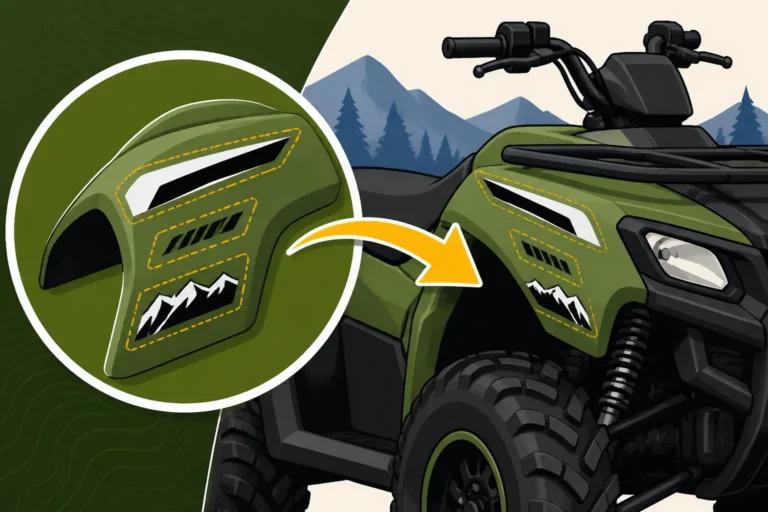
For ATVs (quads) and dirt bikes, the sticker placement is fairly straightforward. Idaho law requires the OHV sticker to be prominently displayed on the left side of the machine, usually on the fender or fork. The key is visibility – it needs to be easily seen by someone standing next to your machine or by an officer making a quick check. Avoid placing it in an area that gets frequently covered in mud, obscured by luggage, or where it might easily peel off due. A clean, flat surface is ideal.
Many riders choose the left front fender for quads, ensuring it's not obstructed by handlebars or other accessories. For dirt bikes, the left fork guard or a flat section of the left side panel works well. Make sure the surface is clean and dry before applying to ensure good adhesion. Peeling or lost stickers can be a problem, so taking a moment to apply it correctly can save you a headache later. For more specific guidance, you can refer to [Sticker Placement on a Quad's Fender].
Restricted Use Plates and Sticker Display
For larger OHVs, such as side-by-sides (UTVs) and sometimes even larger ATVs, Idaho often requires a Restricted Use Plate, often referred to as an "R Plate." This plate is a physical metal or plastic plate, similar to a license plate, but specifically for off-highway vehicles that might also be ridden on approved county roads. If your machine requires one of these plates, your annual OHV sticker is affixed directly to this plate, not to the machine itself.
The Restricted Use Plate typically needs to be mounted on the rear of your OHV, in a location that is clearly visible. This often means on the back bumper, tailgate, or a dedicated bracket. Once the plate is properly mounted, then you apply your annual OHV sticker to the designated area on the plate. This two-part system ensures that both your machine's unique identifier (the plate number) and its current registration (the sticker) are visible. Understanding [Idaho's Restricted Vehicle Plate Explained] is key, as is knowing the correct way of [Displaying a Sticker on an Idaho R Plate]. Always ensure your plate is clean and free of excessive mud or debris, especially after a dusty ride, so the sticker and plate number are legible.
Replacing a Lost, Damaged, or Stolen Sticker
Life on the trails can be tough on equipment, and sometimes, even the most carefully applied sticker can get lost, damaged, or peel off. It’s also not unheard of for a sticker to be stolen, though less common. If you find yourself with a missing or unreadable sticker, you need to address it promptly. Riding with a sticker that isn't clearly visible or is no longer attached is essentially the same as riding unregistered, and could lead to the same fines.
To replace a lost, damaged, or stolen sticker, you'll typically need to contact Idaho Parks and Recreation or visit an authorized vendor. There will likely be a small fee for the replacement, and you'll need to provide your machine's information and possibly proof of original registration. Don't just slap on a new sticker from a friend's machine or try to create your own – that's not only illegal but also pretty easily spotted. The proper channels ensure you get a valid replacement that keeps you in compliance. For detailed steps on this, refer to [Replacing a Peeled Idaho OHV Sticker]. It's a minor inconvenience, but far better than facing a citation out in the backcountry.
Costs and Fees Associated with Idaho OHV Registration
Understanding the financial side of Idaho OHV registration goes beyond just knowing the sticker is good from January to December. It involves grasping what you're paying for, how much it costs, and where that money ultimately goes. These fees are not just arbitrary charges; they are the lifeblood of Idaho's OHV program, directly funding the very trails and resources that make riding in the Gem State so incredible.
Breaking Down the Annual Sticker Fee
The annual OHV sticker fee is the most fundamental cost associated with legally riding your ATV, UTV, or dirt bike on Idaho's public lands. This fee is a fixed amount each year, regardless of when you purchase it within that calendar cycle. It typically covers the base cost of your annual registration. However, it's important to be aware that in addition to the base sticker price, many vendors, such as county assessors' offices or private businesses, may charge a small administrative or vendor fee on top of the state fee. This additional charge helps cover their processing costs.
These fees are established by Idaho statute and are critical for the sustained operation of the state's OHV program. They fund everything from trail mapping and maintenance to safety education initiatives and law enforcement patrols that keep our trails safe. Knowing [Idaho OHV Sticker Cost This Year] and understanding [Idaho OHV Sticker Fee and the Vendor Charge] can help you budget appropriately for your riding adventures each year. Don't be surprised by a few extra dollars at the counter; it's a standard part of the process.
Restricted Use Plate Costs
If your machine qualifies for and requires a Restricted Use Plate, there's an initial cost for the plate itself, separate from the annual sticker fee. This is a one-time purchase for the physical plate, which then needs to be mounted on your machine. Once you have the physical plate, you will still need to purchase and affix the annual OHV sticker to it each year. So, think of it as two components: a foundational plate, and the annual registration sticker that attaches to it.
The cost for the Restricted Use Plate is generally a bit higher than a standard sticker fee because it covers the manufacturing and administrative costs of issuing a durable, permanent plate. After the initial plate purchase, your ongoing annual expense will primarily be the sticker renewal fee. It’s important to factor in both these costs if you’re planning to ride a machine that requires an R Plate, especially if you intend to use it on designated county roads. For more on the specifics, including current figures, look into [Idaho Restricted Vehicle Plate Cost].
Where Your Money Goes
It's easy to just pay the fee and not think twice about it, but understanding where your OHV registration money goes can foster a greater appreciation for the system. A significant portion of these fees is deposited directly into the Idaho Park and Recreation's OHV Fund. This dedicated fund is specifically allocated to the development, maintenance, and management of OHV trails and riding areas across the state. This means your dollars are literally helping to keep those breathtaking backcountry trails open and in good condition.
Beyond trail work, these funds also support crucial safety programs, educational initiatives for new riders, and efforts to monitor and protect Idaho's natural resources. It also helps local agencies, such as county sheriff departments and Forest Service districts, with enforcement efforts and managing public lands. So, when you renew your sticker, you're not just buying a piece of paper; you're investing in the future of OHV recreation in Idaho and helping to preserve the unique riding opportunities that draw so many to the state. Delving into [The Idaho Trail Fund and Sticker Revenue] can give you a deeper insight into the impact of your annual contribution.
Special Circumstances and Common Questions
The world of OHV registration isn't always a one-size-fits-all scenario. Many riders encounter unique situations or have specific questions that go beyond the standard annual renewal process. Whether you're new to Idaho, using your machine for work, or simply trying to understand the different pieces of paperwork, it's helpful to have clarity on these special circumstances.
New Residents and Out-of-State Machines
Moving to Idaho is exciting, especially if you're bringing your OHV with you, ready to explore new terrain. However, just because your machine was registered or titled in another state doesn't mean it's immediately legal for Idaho's public trails. New residents are generally required to get an Idaho OHV sticker for their machine. This typically involves proving ownership, getting an Idaho title if required, and then purchasing the annual sticker. The good news is that the process is fairly streamlined for those transitioning to Idaho residency.
You'll need to visit your county assessor's office with your out-of-state title or proof of ownership, and potentially a bill of sale. They will help you through the steps to secure an Idaho title for your machine, which is a prerequisite for getting your Idaho sticker. Once titled in Idaho, you can then purchase the sticker, adhering to the January to December cycle. Don't delay this process, as riding with just an out-of-state registration isn't valid for long once you're an Idaho resident. For detailed guidance, you'll want to review [Registering an Out-of-State Machine in Idaho] and [Moving to Idaho With an Out-of-State Machine].
Farm and Ranch Exemptions
Idaho, being an agricultural state, does have some specific exemptions for OHVs used primarily for farm or ranch work. It's a common question among rural landowners: "Do I need a sticker if I'm just using my UTV to haul feed on my property or move equipment across a short stretch of county road?" The answer often depends on the primary use and location. Generally, if your OHV is exclusively used for agricultural operations on private land or for crossing public roads incidental to agricultural operations between parcels of land, it may be exempt from the OHV sticker requirement.
However, the key here is "primarily for agricultural operations." If you're using that same machine for recreational riding on designated trails or public lands, even occasionally, it will likely need a sticker. There's a fine line, and it's essential not to assume blanket exemption. These exemptions are usually for utility and work, not play. It’s always best to check the exact wording of the statutes or consult with your local county assessor's office if you believe your machine qualifies. Understanding [Farm Exemptions From Idaho OHV Rules] is crucial to avoid any misunderstandings.
OHV Titles vs. Registration Stickers
One of the most frequent sources of confusion for OHV owners is the distinction between a machine's title and its registration sticker. Many mistakenly believe they are the same thing, or that having one automatically means you have the other. In Idaho, they are distinctly separate but equally important pieces of documentation. A title proves ownership of your OHV. It's a legal document issued by the state that shows who the legal owner is, much like a title for a car. Most OHVs over a certain engine size (typically 50cc) are required to be titled in Idaho. If you're selling or buying a machine, the title is what changes hands to transfer ownership. You can learn more about this by checking out [Idaho Titles Every ATV Over 50cc].
The registration sticker, on the other hand, grants you the privilege to operate your OHV on Idaho's public lands and designated trails. It's proof that you've paid the annual fee that contributes to trail maintenance and the OHV program. You can own a titled machine, but if you don't have a current sticker, you cannot legally ride it on public land. Conversely, you can purchase an annual sticker, but it doesn't prove you own the machine – you still need the title for that. So, think of the title as proof of who owns it, and the sticker as proof of permission to ride it. This is why [Why an Idaho Plate Is Not a Registration on Its Own] is such an important concept to grasp. Both are necessary for full compliance and peace of mind.
Planning Your Idaho Riding Adventures with Current Registration
Idaho offers some of the most spectacular OHV riding in the country, with thousands of miles of trails winding through diverse landscapes, from high desert to dense forests and soaring mountain peaks. To fully enjoy these adventures without a hitch, a current and correctly displayed OHV registration sticker is non-negotiable. It's the key that unlocks access to these incredible lands and ensures you're a responsible participant in the OHV community.
Avoiding Fines and Trailside Hassles
The last thing anyone wants when they're geared up for a day of riding is to be stopped by a ranger or deputy because of an expired sticker. It can turn an eagerly anticipated adventure into a frustrating ordeal, complete with fines and potentially even having to load up your machine and end your ride prematurely. The fines for an unregistered OHV in Idaho are certainly no joke and will easily outweigh the cost of an annual sticker.
Beyond the legal and financial repercussions, an expired sticker can simply be a hassle. Imagine being out in a remote area, perhaps miles from the nearest town, and running into an enforcement officer who informs you that your machine isn't legal to be there. This isn't just about money; it’s about lost time, wasted gas, and the sheer disappointment of a ruined day. Always double-check your sticker's expiration date before you even load your machine onto the trailer. Knowing [What an Idaho Deputy Asks a Rider For] can prepare you for common questions during a trailside stop.
Riding Legally on Idaho's Diverse Trails
With a current Idaho OHV sticker, you gain legal access to a vast network of public lands managed by agencies like the U.S. Forest Service, Bureau of Land Management (BLM), and Idaho Parks and Recreation. This includes hundreds of designated trails and routes across the state, from the rugged terrain of the Owyhee Desert to the scenic beauty of the Sawtooth National Forest. Your sticker signifies your compliance and your contribution to maintaining these valuable resources.
However, it's crucial to remember that even with a valid sticker, you must always adhere to local rules and regulations. Some counties or specific areas might have unique ordinances regarding OHV use on certain roads or times of operation. Always consult local Motor Vehicle Use Maps (MVUMs) and posted signage to ensure you're riding only on approved routes. Your sticker is your general pass, but local rules are your specific guide. Exploring resources like [Where to Ride an ATV in Idaho] is a great way to discover new trails, but always verify current conditions and rules.
Preparing for the Next Year's Riding Season
The fixed January to December registration cycle means that planning ahead for the next year is a simple, annual task. As soon as December rolls around, make it a habit to renew your OHV sticker for the coming year. You can do it online, quickly and efficiently, or swing by a local vendor. Getting it done early ensures there’s no last-minute scramble or risk of forgetting.
Think of it as part of your winter prep or spring tune-up routine. Just like checking your oil, tire pressure, and making sure your machine is trail-ready, checking your registration status and renewing for the new year should be an automatic part of your checklist. This simple habit ensures that when the call of the Idaho wilderness beckons, you’re always ready to answer it, legally and without a second thought.
Idaho OHV Registration at a Glance
To summarize the key points about Idaho's OHV registration, here's a quick reference table:
| Feature | Details | Implications for Riders |
|---|---|---|
| Validity Period | January 1st to December 31st | All stickers expire Dec 31st, regardless of purchase date. No pro-rating. |
| Renewal Window | Typically opens in December for the upcoming year | Can renew early for the next year. Avoids last-minute rush in spring. |
| Renewal Methods | Online, in-person at vendors/assessors | Choose convenience (online) or immediate sticker (in-person). |
| Required For | All OHVs (ATVs, UTVs, dirt bikes, etc.) on public lands | Essential for legal riding on state, federal, and many county lands. |
| Display | Left side of machine (quads/dirt bikes); on Restricted Use Plate (side-by-sides) | Must be clearly visible. Incorrect display can lead to citations. |
| Cost | Annual fee + potential vendor charges | Budget for annual renewal. Restricted Use Plates have an additional one-time initial cost. |
| Purpose of Fees | Funds trail maintenance, safety, education, enforcement | Your contribution directly supports the OHV program and trail system in Idaho. |
| Common Confusion | Title vs. Sticker; Mid-year purchase validity; Farm exemptions | Title = ownership; Sticker = riding privilege. Mid-year purchase still expires Dec 31st. Farm use exemptions are specific, not broad. |
Disclaimer
This article is for general informational purposes only and does not constitute professional advice. Laws, prices and regulations vary by location and change over time. Consult a qualified professional for guidance on your specific situation.