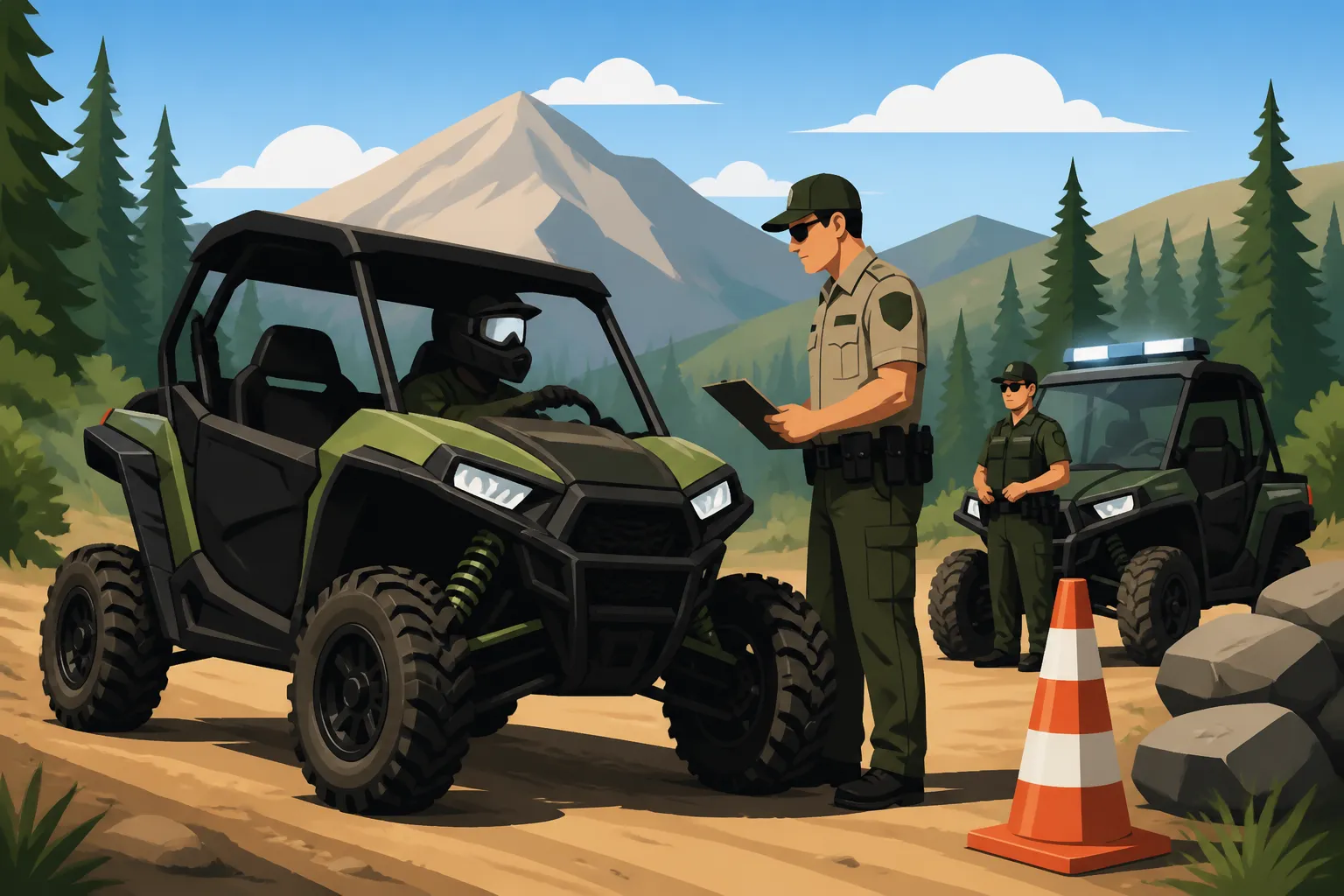
Idaho Ranger and Deputy Checkpoints
Idaho Ranger and Deputy Checkpoints
A checkpoint can interrupt an otherwise simple ride, especially if your group is unsure which permits or documents apply. In Idaho, the requirements depend on where you are riding, whether your machine is registered or stickered, and whether you are using a road open to OHVs. Knowing what may be checked—and how to respond—helps you handle a stop calmly and avoid preventable problems.
Why Rangers and Deputies May Stop OHV Riders
Idaho riders may encounter law enforcement on public riding areas, forest roads, county roads and near trailheads. A stop may be part of a compliance check, a response to a specific concern, or an ordinary traffic enforcement contact. The officer’s agency and the location both matter: a ranger, deputy or other officer may be checking different aspects of a ride.
Common reasons for a check include confirming that a machine has the required OHV sticker or registration, checking whether a route is open to motorized use, and looking at equipment or rider requirements. On roads open to OHVs, officers may also check that the machine and operator meet road-use requirements. A sticker does not, by itself, make every road legal to ride.
The rules can differ between public land and a public road. Riders should confirm the applicable requirements before setting out, rather than assuming a permit covers every location. Idaho Permit Rules on Public Land explains the public-land side, while What Idaho Requires to Ride a County Road covers the separate question of county-road use.
A checkpoint does not necessarily mean the officer suspects a particular rider of wrongdoing. It is still wise to treat the stop as a real enforcement contact: slow down, follow directions, and have the items you may need accessible. If several machines are traveling together, each operator should be ready to show the documents or proof relevant to that machine and ride.
| What may be checked | Why it matters | What to prepare |
|---|---|---|
| OHV sticker or registration | Requirements depend on the machine, rider status and where it is used | Make sure the sticker or registration is current and displayed as required |
| Route access | Roads and trails can have different restrictions or closures | Check maps, signs and local restrictions before riding |
| Road-use equipment | A road open to OHVs may have additional requirements | Confirm the machine’s equipment meets the rules for that road |
| Rider qualifications | Age, supervision and training rules may apply | Know which requirements apply to each young rider |
| Identification and documents | An officer may ask for information relevant to the stop | Keep needed documents accessible, but do not carry the machine’s title as a substitute for required permits |
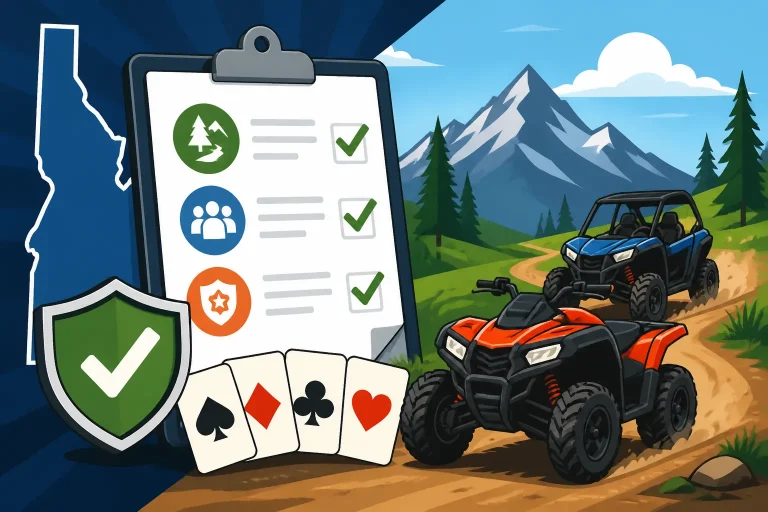
The table is a preparation aid, not a complete checklist for every route. A forest trail, county road and town street can have different rules, and temporary closures can change where riding is allowed.
What to Have Ready Before You Ride
The most useful preparation is to confirm that the machine and ride meet the rules before leaving the staging area. A checkpoint is a poor time to discover that a sticker is missing, a route is closed, or a road section has requirements you did not plan for.
Check the sticker or registration
Idaho’s OHV requirements depend in part on whether the machine is an Idaho machine or belongs to a visitor from another state. Nonresidents may need an Idaho nonresident OHV sticker to ride in Idaho, even if their home state has its own registration system. Do not assume that a home-state permit automatically satisfies Idaho’s requirements. See Idaho’s Non-Resident OHV Sticker for the visitor rules and Why Idaho Ended OHV Reciprocity for the background on reciprocity.
For an Idaho-owned machine, check that its registration or sticker is current and displayed as required for the machine and intended use. If you are uncertain which applies, sort that out before riding. What Idaho Riders Need Before They Ride is a useful starting point for putting the main requirements together.
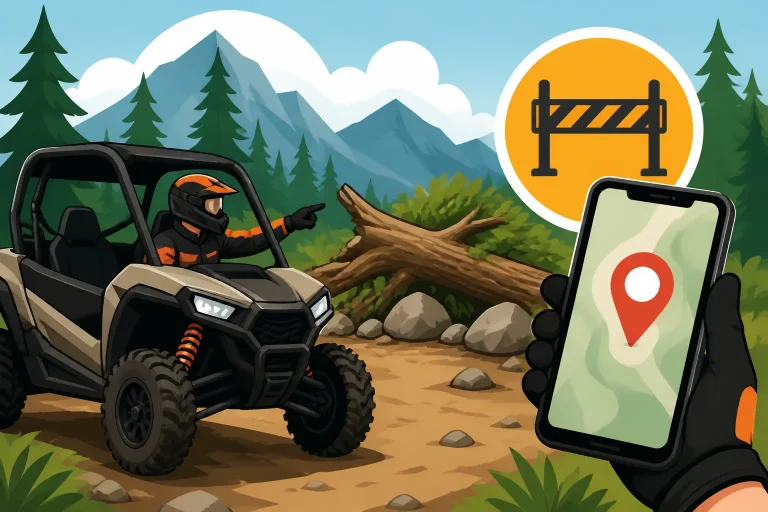
A sticker is not the same thing as permission to ride anywhere. Public land may have route restrictions, seasonal closures, or other conditions. A route shown on an older map might no longer be open, and a route that is open to one type or width of machine may not suit another. Check current signs and land-manager information for your route.
Know the road-use requirements
A machine that is permitted on a trail is not automatically legal on a county road. Some roads may be open to restricted vehicles under applicable rules, while others are closed to OHVs or subject to local restrictions. If your route includes a road, check that road separately and confirm what equipment and operator qualifications are required.
A restricted plate and an OHV sticker serve different functions. Neither should be treated as a blanket authorization for all roads. Idaho’s Restricted Vehicle Plate and Road Use explains the distinction, and Four Things Idaho Riders Must Carry on a Road can help you prepare for a road section.
Before the trip, consider whether your planned route crosses a county boundary or enters a town. Local rules can change along the way, so a route that is legal on one stretch may not remain legal after a turn. Signs and current local information matter more than assumptions based on a previous ride.
Prepare for youth-rider requirements
If a young person is riding, check the applicable age, supervision, helmet and safety-course requirements before departure. These rules can depend on the rider’s age and where the machine is being operated. A parent or supervising adult should know the requirements for the specific route, rather than relying on what was allowed on private property or another trail.
For more detail, see Idaho Supervision Rules and the 300-Foot Rule and Idaho’s OHV Safety Course for Young Riders. If an officer asks about a young rider’s supervision or qualification, a clear explanation of the plan is more useful than trying to work it out during the stop.
Keep documents accessible, not buried
Make it easy to show the items that apply to your ride. Depending on the situation, that may include proof of required registration or sticker, a safety certificate when applicable, a driver’s license for road use when required, and insurance information where road rules call for it. Requirements vary by machine and location, so confirm what you need in advance.
The title is proof of ownership, not a substitute for a sticker, registration or road-use permission. In ordinary riding, it is usually more practical to keep ownership records safely stored rather than carry the title on the machine. For a breakdown of documents to have available during a stop, read What an Officer Asks For at a Stop.
How to Handle a Checkpoint
A calm, predictable approach makes a stop easier for you, your group and the officer. Do not rush through a checkpoint or try to turn around to avoid it. Keep a safe distance from other riders, stop where directed, and wait for instructions before moving again.
- Slow down and stop safely. Follow signs, hand signals and verbal instructions. Keep the machine under control and avoid blocking the route if you can safely pull aside where directed.
- Make the machine easy to inspect. Stay seated or dismount only as instructed. Do not reach abruptly into a bag or storage compartment. Tell the officer what you are reaching for before retrieving a document.
- Listen to the request. If you do not understand what is being requested, ask politely for clarification. Answer questions truthfully and keep your responses focused on the stop.
- Show relevant documents. Provide the documents or proof requested when required. Keep the papers for different machines organized so you can identify which sticker, registration or certificate belongs to which rider.
- Follow directions while the stop is underway. If you disagree with a decision, avoid arguing in a way that distracts from safe handling of the machine. You can note the details and ask about the appropriate way to contest a citation afterward.
- Before leaving, make sure the group is ready. Wait until the officer indicates that you may proceed. Rejoin the route carefully and do not accelerate past other riders or traffic.
A checkpoint may involve a brief question or a more detailed inspection, depending on the reason for the contact and the location. Be courteous without guessing at answers. If you do not know whether a particular road is open, say so rather than confidently giving an answer you cannot verify.
If an officer issues a citation, read it before leaving and keep a copy. Note the date, time, location, route, and what the officer said, while details are fresh. If you plan to challenge the citation, follow the instructions and deadlines printed on it and seek qualified legal advice if needed. Idaho OHV Ticket Costs by Violation provides context on violations, but the citation itself and the relevant official instructions control your next steps.
Common Problems and How to Avoid Them
Assuming a sticker makes every route legal
A current sticker is important, but it does not open closed roads or override local restrictions. Before riding, check the route, land manager information, posted signs and any relevant county rules. Pay attention to temporary closures as well as permanent ones. If a route is unclear, choose a known legal route instead of relying on another rider’s guess.
This is especially important when a trip changes from trail to road or passes through a town. Road access can depend on local rules and machine requirements. If you are planning that kind of trip, Idaho’s Restricted Vehicle Plate and Road Use and Crossing an Idaho County Line Where the Rules Change can help identify the questions to settle first.
Having a permit but displaying it incorrectly
A valid sticker may still be difficult to verify if it is not attached or displayed as required. Check the instructions for its placement on your type of machine or plate before leaving. Keep the receipt or other proof available if you have just purchased a sticker, but do not assume a receipt replaces the display requirement.
For machine-specific placement information, see Where the Idaho Sticker Goes on the Plate or Sticker Placement on a Quad’s Fender. If you have recently purchased a machine or are riding a borrowed one, confirm that the permit is valid for that machine and that you understand who is responsible for the required sticker. Stickers for a Borrowed Machine addresses that situation.
Relying on a previous trip or another state’s rules
Rules that applied on a past ride may not apply to a different route, season or machine. A neighbor’s home-state registration is not necessarily enough for Idaho riding, and last year’s route information may not reflect current closures. Recheck before the trip, particularly when traveling from another state or crossing public lands managed by different agencies.
Visitors can review Washington Riders Coming to Idaho, Oregon Riders Coming to Idaho or Do Montana Riders Need an Idaho Sticker? for state-specific questions. The main point is to verify Idaho’s current requirements rather than infer them from the rules at home.
Treating a checkpoint as a roadside debate
If you believe a stop is mistaken, a calm question is more likely to clarify the issue than a confrontation. Ask what rule or requirement the officer is concerned about, and make a note of the answer. Do not obstruct the stop or leave before you are told you may go. If you think the officer’s action was improper, preserve the details and use the appropriate complaint or legal process later.
Preparation is the best way to reduce uncertainty: know the route, carry the documents that apply, keep the sticker visible, and make sure each rider understands the rules. Those steps will not guarantee that you will never be stopped, but they make a checkpoint easier to manage and help prevent straightforward paperwork or route mistakes.
Disclaimer
This article is for general informational purposes only and does not constitute professional advice. Laws, prices and regulations vary by location and change over time. Consult a qualified professional for guidance on your specific situation.