Do Montana Riders Need an Idaho Sticker?
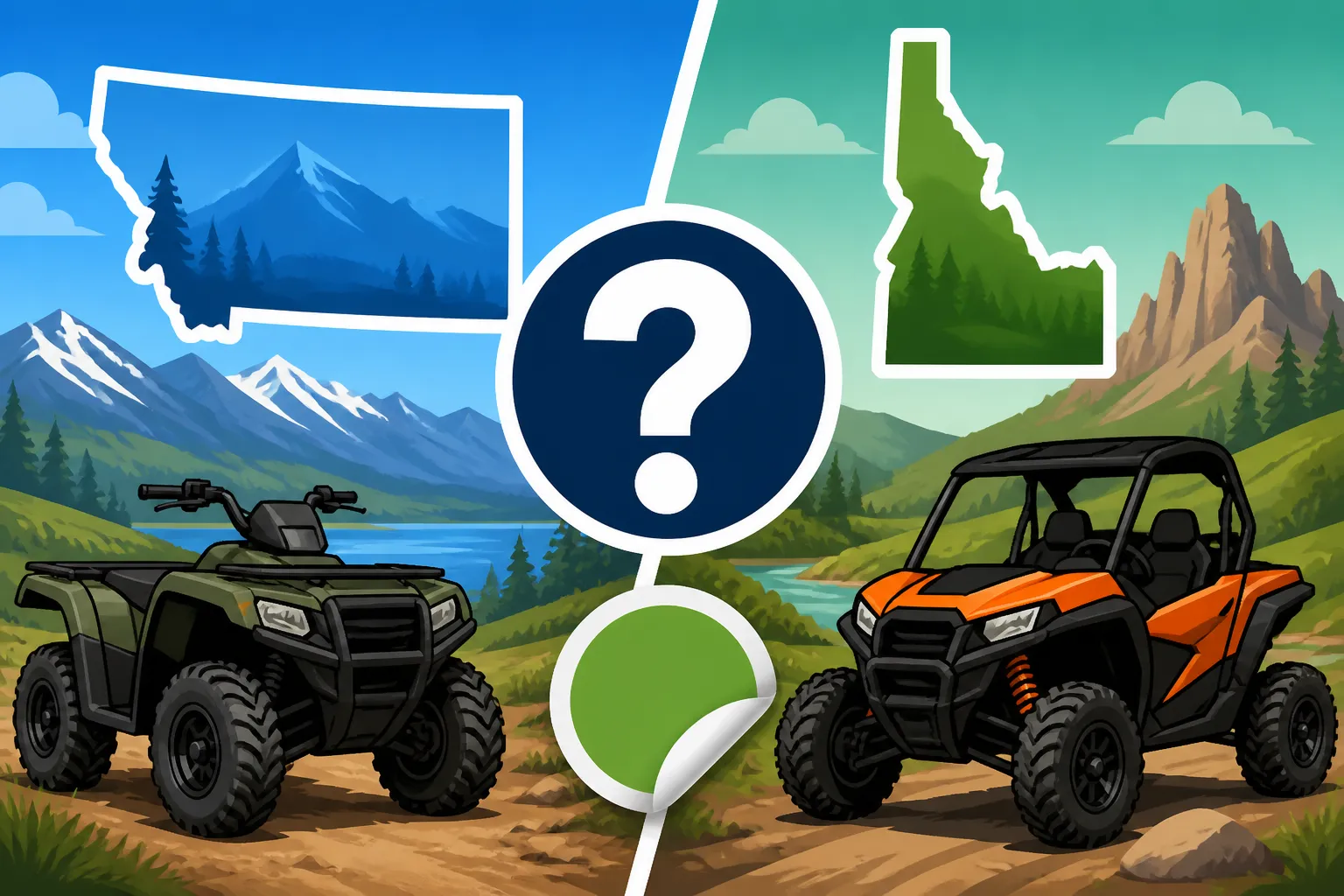
Montana riders heading to Idaho often assume their home-state registration or trail sticker will cover the trip. It may not. Idaho generally requires a separate Idaho OHV sticker for nonresident machines used on public trails and other covered areas, so check the machine and route before unloading.
The short answer: Montana riders usually need an Idaho sticker
Idaho does not generally treat a Montana OHV registration or sticker as a substitute for its nonresident OHV sticker. If you bring an ATV, UTV, or other off-highway vehicle into Idaho for public-land riding, plan on getting the Idaho sticker unless you have confirmed that a specific exemption applies.
The sticker is tied to the machine, not simply to the person operating it. If your group brings several machines, check the requirement for each one rather than assuming a single sticker covers the whole group. A passenger does not need a separate machine sticker, but the vehicle they ride in still needs to meet the applicable requirements.
This is a common point of confusion because neighboring states have not always used the same registration systems or recognized one another’s credentials. Idaho ended OHV reciprocity with other states, so a Montana document that was accepted in the past, or that covers riding at home, should not be treated as valid Idaho permission.
| What the Montana paperwork covers | Does it replace Idaho’s nonresident sticker? | Practical approach |
|---|---|---|
| Montana registration or OHV decal | Generally, no | Get the Idaho sticker before riding in areas where it is required |
| Montana license plate | Not by itself | Check both Idaho sticker rules and the route’s road-access rules |
| Permission to ride private property in Montana | No | Check the Idaho property and land-use rules separately |
| Idaho nonresident OHV sticker | Yes, for the sticker requirement it covers | Follow the current purchase and display instructions |
| A sticker on another machine in your trailer | No | Check each vehicle individually |
A sticker is not a blanket permit to ride anywhere in Idaho. It does not open a closed road, authorize off-trail travel, or make a vehicle legal for every public road. The route, land manager, machine, and local restrictions still matter.
If you’re new to the state’s permit system, Idaho’s Non-Resident OHV Sticker explains the broader requirement, while Why Idaho Ended OHV Reciprocity covers why a Montana credential does not automatically carry over.
Which Montana machines and trips call for a sticker?
Start with where you plan to ride, not just with the vehicle’s paperwork. Idaho’s nonresident sticker requirement is aimed at out-of-state OHVs used in Idaho where the state requires OHV registration or a permit. Public trails and other public riding areas are the situations visitors most often need to plan for.
A machine’s Montana registration, plate, or equipment does not settle the Idaho sticker question on its own. Nor does the fact that you are only in Idaho for a weekend. Short visits can still involve a sticker requirement.
Before the trip, identify the riding area and check the current Idaho rule for the exact machine. A dirt bike, ATV, and side-by-side may all be treated as off-highway vehicles for this purpose, but machine-specific or use-specific exceptions can affect the result. If you are unsure, ask the relevant Idaho Parks and Recreation office or the land manager rather than relying on what another rider was told.
Public land, private land, and mixed routes
Private property is not the same as an Idaho public trail. If you will ride exclusively on private land with the owner’s permission, the public-land sticker requirement may not apply in the same way. But a trip can quickly cross into a different category if it uses a public trail, road, or access route along the way.
Permission from a rancher or landowner does not grant permission to use nearby public land. Likewise, starting from private property does not exempt a rider once the route enters a public riding area. Check the entire planned route, including the way in and out.
For trips involving a ranch, cabin, or mixed private and public land, Do You Need a Sticker on Private Land in Idaho? and Riding a Friend’s Property by Permission help distinguish the property-access question from the sticker question.
A Montana plate does not answer every road question
Some owners bring a machine that is registered or plated for road use in Montana. That paperwork may be relevant to whether the machine can be operated on a particular road, but it does not automatically prove that Idaho’s OHV sticker requirement is satisfied.
The reverse is also important: having an Idaho OHV sticker does not make a road open to your machine. A county road may be open, closed, or subject to local restrictions, and state or federal highways have separate rules. Before planning a road connection, check the local route designation and the equipment and operator requirements that apply. Montana Registrations and Idaho Trails and Which Idaho Roads Are Open to OHVs address those separate issues.
How to get the sticker before a Montana-to-Idaho ride
The most reliable approach is to handle the sticker before reaching the trailhead. Idaho offers purchase options through official and authorized channels, but availability and processing details can vary. Verify the current options and instructions with Idaho Parks and Recreation before relying on a vendor near your destination.
A practical sequence looks like this:
- List every machine you are taking. Record the vehicle type and its identifying details. Do not assume that paperwork for one machine applies to another.
- Choose the riding area and route. Note whether you expect to use public trails, public roads, or private property, and check for closures or local restrictions.
- Confirm the sticker requirement for each machine. If a machine has a Montana plate or registration, ask specifically whether that affects Idaho’s separate OHV sticker rule. Do not assume it does.
- Buy through an approved source. Check Idaho’s current purchase methods and any documentation or information the seller requires.
- Follow the sticker’s display instructions. Keep the purchase confirmation or other paperwork available if the provider supplies it, and install the sticker as directed.
- Check the rest of the trip requirements. Confirm that the route is open and that riders, equipment, and road sections meet the rules that apply.
The purchase channel can matter for timing. Buying online may be convenient, but do not assume a sticker will arrive instantly or that an order receipt is accepted in place of the sticker. If you plan to buy in person, confirm that the location sells the type you need and will be open when you arrive. Buying an Idaho Sticker Online Before a Trip and Idaho Registration Vendors Near the Trails cover those options.
If you are headed to a specific town or area, local vendors may be helpful, but a store’s ability to sell a sticker does not confirm that a nearby route is open to OHVs. Check access separately. For broader details on the permit itself, see Where to Buy an Idaho Non-Resident Sticker.
Common mistakes and a pre-ride check
The most avoidable problem is treating different kinds of documents as if they were interchangeable. Registration, a plate, a public-land permit, a safety certificate, and permission from a landowner each address different questions. One document rarely answers all of them.
These are the mistakes Montana visitors should watch for:
- Assuming Montana registration provides reciprocity. Idaho’s nonresident requirement is separate; verify it even if the machine is fully registered at home.
- Buying one sticker for multiple machines. Check each ATV or UTV individually.
- Confusing a sticker with road access. A sticker does not override a road closure or local ordinance.
- Assuming a plate makes the machine exempt. A plate can matter for road use, but it does not automatically settle the OHV sticker question.
- Relying on old information. Rules and purchase procedures can change. Confirm current requirements with Idaho Parks and Recreation or the relevant land manager.
- Checking only the destination. A route can pass through areas with different rules, closures, or land managers.
- Waiting until arrival to sort it out. A vendor may be closed, out of stock, or unable to answer questions about a particular route.
Before leaving Montana, use this short checklist:
- Confirm whether each machine needs an Idaho nonresident sticker.
- Check the sticker’s current cost, term, purchase process, and display instructions with the official provider. These details can change.
- Verify that the exact trails and road sections you plan to use are open to your machine.
- Check any local restrictions for towns or county roads along the route.
- Review the requirements for young riders, passengers, safety equipment, and operator qualifications if they apply to your group.
- Keep relevant documents accessible, but do not carry a vehicle title on the trail unless there is a specific reason you need it.
If a trip crosses a state line or mixes trail and road riding, planning the sticker is only one part of the preparation. Idaho Permit Rules on Public Land can help with the land-use side, and What Idaho Requires to Ride a County Road covers a different set of questions from the OHV sticker.
The practical takeaway is straightforward: Montana paperwork should not be assumed to satisfy Idaho’s OHV sticker requirement. For a ride on Idaho public trails or other covered areas, check the rule for each machine, obtain the Idaho sticker when required, and verify that the route itself is open.
Disclaimer
This article is for general informational purposes only and does not constitute professional advice. Laws, prices and regulations vary by location and change over time. Consult a qualified professional for guidance on your specific situation.