Lolo Motorway High Clearance Requirements
A vehicle can look capable in town and still struggle on the Lolo Motorway, where rocks, ruts, narrow stretches, and changing road conditions make ground clearance matter. This guide explains what “high clearance” means for the route, how to think about an ATV or UTV versus a full-size vehicle, and what to check before setting out from the Kooskia or Lolo Pass area.
What high clearance means on the Lolo Motorway
There is no single clearance number for every trip
“High clearance” is a practical description, not a universal measurement that guarantees a vehicle can travel the whole route. The Motorway is a remote, rough Forest Service road, and its surface can vary with weather, maintenance, traffic, and seasonal damage. A vehicle that clears one rocky section may still have trouble with a rut, washout, or uneven ledge farther along.
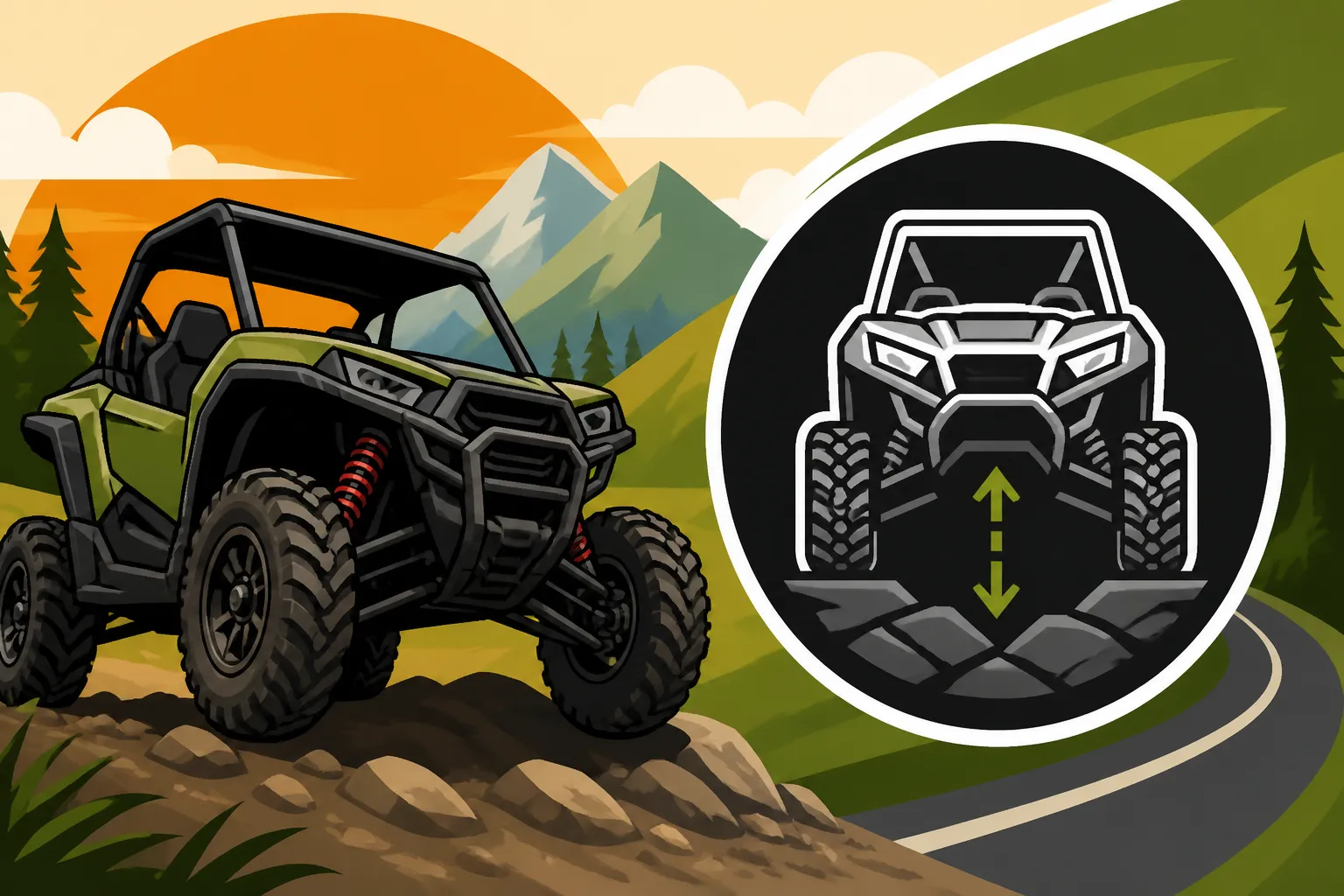
For a full-size vehicle, high clearance generally means enough space beneath the lowest vulnerable parts—such as the differential, frame, or exhaust—to pass over uneven ground without routinely striking rocks or scraping the road. Four-wheel drive can help with traction, but it does not raise a vehicle or protect its underside. A capable-looking SUV with low-hanging parts may be a worse fit than a simpler vehicle with better clearance and suitable tires.
That’s why it’s unwise to rely on a claimed clearance figure alone. The route’s condition and the vehicle’s shape matter just as much. Check the current route information before leaving, and treat reports of rough sections as a reason to reassess rather than as a promise that your vehicle will make it through.
Clearance is different from width and traction
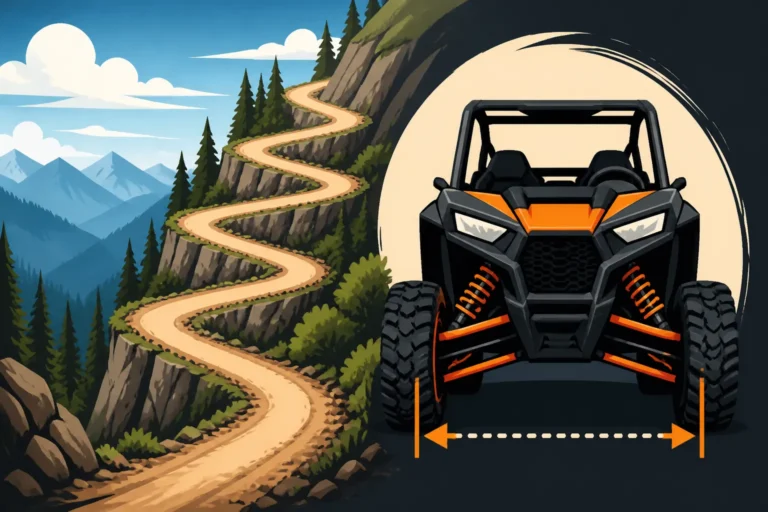
High clearance is only one part of choosing a vehicle. Width matters on narrow sections, where passing room can be limited and the road may have an exposed edge. A wide machine can be awkward even if it has excellent clearance; a small ATV can fit more easily but may have different limits for comfort, fuel range, and carrying gear.
Traction is another separate question. Loose rock, steep grades, mud, or damp soil can challenge tires even when the vehicle has enough room beneath it. Four-wheel drive may help a full-size vehicle maintain traction, but it won’t solve poor visibility, a tight turn, or a section that is too narrow for the vehicle to maneuver safely.
A useful way to plan is to assess clearance, width, traction, tires, and turning room as separate needs. The guide to [Idaho Trails Rated for Full-Size Rigs] can help put vehicle size into context, while [Idaho Trails That Suit a 50-Inch Machine] is relevant if you’re comparing a narrower UTV with larger machines. The route itself still deserves its own check: a vehicle’s suitability on one Idaho trail doesn’t automatically establish that it’s a good choice for the Lolo Motorway.
Choosing an ATV, UTV, or full-size vehicle
How different vehicles compare
The best fit depends on the machine, the condition of the road, and the exact section you plan to travel. Use this table as a planning aid, not as a guarantee of access or passability.
| Vehicle type | Potential advantages | Important limitations | What to check before going |
|---|---|---|---|
| ATV | Narrower than most full-size vehicles and often easier to maneuver on tight tracks | Limited room for passengers, supplies, and weather protection; vulnerable to poor planning on a remote trip | Route access, machine condition, fuel range, required registration, and rider readiness |
| UTV | More room for passengers and cargo than an ATV; often well suited to rough off-road travel | Width can be an issue on narrow sections; a roof or roll cage does not prevent every rollover or impact | Machine width, route designation, road condition, tires, and required OHV documents |
| High-clearance four-wheel-drive vehicle | More capacity for people and supplies; can be useful when the route is suitable for its size | May be too wide or long for a tight stretch; four-wheel drive does not compensate for low clearance | Ground clearance, underbody vulnerability, tires, turning room, and the latest road information |
| Low-clearance passenger car or crossover | Comfortable on ordinary paved roads | More likely to scrape or become stuck on rough, uneven sections; often a poor choice for a remote rough road | Whether the road is suitable for the vehicle at all; do not assume a road shown on a map is easy to drive |
For an ATV or UTV, don’t interpret “high clearance” as permission to leave the road to get around an obstacle. Stay on routes open to your machine, and don’t widen the track by driving onto vegetation or unstable shoulders. An OHV sticker and other required documents also don’t guarantee that a particular road is open to your vehicle type. For background on route planning, see [Riding the Lolo Motorway in August] and [Idaho Rules on Forest Service Roads].
For a full-size vehicle, the central question is not simply whether it has four-wheel drive. Ask whether it has enough clearance for the roughest conditions you reasonably expect, whether the tires are appropriate, and whether the vehicle can negotiate narrow areas without unsafe backing or edge exposure. A large truck can have ample clearance yet still be difficult to place on a tight road.
Match your plan to the weakest part of the trip
A common planning mistake is to judge a route by its easiest section. You might leave a smoother access road near Kooskia and assume the rest will be similar, only to meet rougher terrain later. Another rider may hear that a friend drove the route in a particular vehicle and assume the same setup will work months later. Those comparisons can be misleading because road conditions and vehicle configurations differ.
Think about the least capable part of your setup: the lowest underbody point, the most vulnerable tire, the person with the least experience, or the shortest fuel range. If one weak point could turn a minor scrape into a disabled vehicle or a long walk for help, adjust the plan before departing. That may mean choosing a different vehicle, travelling a shorter section, or postponing the trip until you have better information.
It also helps to separate “can physically fit” from “is a sensible choice.” A narrow machine may fit between obstacles but still be poorly prepared for a long remote ride if it lacks enough fuel capacity, repair supplies, or room for water and warm layers. A full-size rig may carry more gear but be too broad to pass comfortably. Planning for the entire outing—not just the roughest obstacle you can see in a photo—makes for a safer day.
Planning the route and checking conditions
Confirm access, closures, and route details
Before travelling, confirm that the section you intend to use is open and appropriate for your vehicle. Forest roads can have seasonal restrictions, maintenance work, damage, or local rules that change where and how motorized travel is allowed. A route line on a navigation app should not be treated as the final word on legal access.
Use official land-management information and the relevant Motor Vehicle Use Map, or MVUM, to check designated routes and vehicle allowances. An app such as onX Offroad can be useful for viewing route lines and preparing offline navigation, but it should complement—not replace—official access information. Save maps before entering areas with limited or absent cell service. For more help, see [Reading an Idaho Motor Vehicle Use Map] and [Checking Idaho Trail Status Before You Drive].
Check the start and end points of your planned trip, not just the road name. The Lolo Motorway crosses remote country, and a partial trip can have different access, turnaround, and support considerations from a longer route. Make sure everyone in the group knows where you intend to travel and where you plan to stop or turn around.
Prepare for slow travel and limited help
Even a mechanically sound vehicle can have a difficult day if the group assumes the drive will be quick. Rough surfaces can lower travel speed, while stops to inspect an obstacle, let another vehicle pass, or regroup can add time. Plan with enough daylight to handle delays rather than treating the route as a simple point-to-point commute.
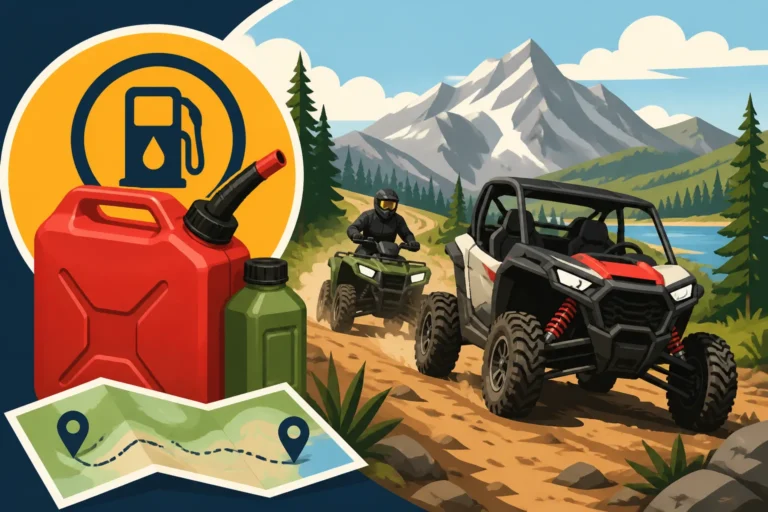
Carry water, food, warm layers, basic first-aid supplies, and tools suited to your vehicle. Bring a spare tire or a repair plan appropriate to the machine, and make sure you know how to use the equipment before you need it. For remote routes, consider a satellite messenger or another way to call for help outside cell coverage. [Cell Service in Central Idaho] and [What to Carry on a Remote Ride] cover two practical parts of that preparation.
Agree on a turnaround rule before the group reaches a difficult section. For example, decide that the driver or rider with the least confidence can call for a stop without pressure to continue. If a rock step, washout, or narrow passage looks beyond your setup, turning around can be the sensible outcome—not a failure. Avoid attempting an obstacle simply because you have already driven a long way to reach it.
Driving and riding carefully on rough sections
Use a slow, deliberate approach
On uneven ground, reduce speed enough to choose a clean line and respond to changes in the surface. Look ahead for loose rock, deep ruts, water bars, exposed roots, or a sharp change in grade. For a full-size vehicle, avoid striking vulnerable underbody parts; for an ATV or UTV, maintain a controlled pace and avoid abrupt steering or throttle inputs that can upset the machine.
If you are unsure about an obstacle, stop where you have room and inspect it from a safe position. A spotter can help a driver judge tire placement, but the spotter should stay clear of the vehicle’s path and any exposed edge. Don’t let passengers stand below a vehicle on a slope or in a place where it could slide or roll.
Passing also calls for patience. On a narrow stretch, choose a stable, visible place where both vehicles have enough room before moving through. Don’t assume the shoulder is firm or safe simply because it looks wide from the driver’s seat. If you cannot make a pass without putting a tire on an unstable edge, pause and agree on a safer option.
Know when to stop or turn around
A route may become more difficult than expected because of rain, fresh damage, loose rock, or a problem with the vehicle. Stop if you hear repeated underbody impacts, notice a tire or steering issue, or find that the group is struggling to navigate safely. Continuing can turn a manageable issue into a breakdown far from assistance.
For ATV and UTV riders, remember that a machine’s ability to climb or squeeze through a gap doesn’t mean the maneuver is safe. Keep passengers within the machine’s seating and restraint setup, and avoid riding beyond the marked route to bypass a difficult section. If the route designation or current access is unclear, pause and verify rather than guessing.
If you’re still deciding whether the Motorway fits your experience and equipment, start with a shorter, familiar route or a less remote ride. Review [The Lolo Motorway's 92 Miles] for route-planning context, then check local conditions and official access information before choosing your vehicle and distance. A high-clearance setup helps, but sound judgment, preparation, and willingness to turn back matter just as much.
Disclaimer
This article is for general informational purposes only and does not constitute professional advice. Laws, prices and regulations vary by location and change over time. Consult a qualified professional for guidance on your specific situation.