Riding an Idaho Quad in Oregon
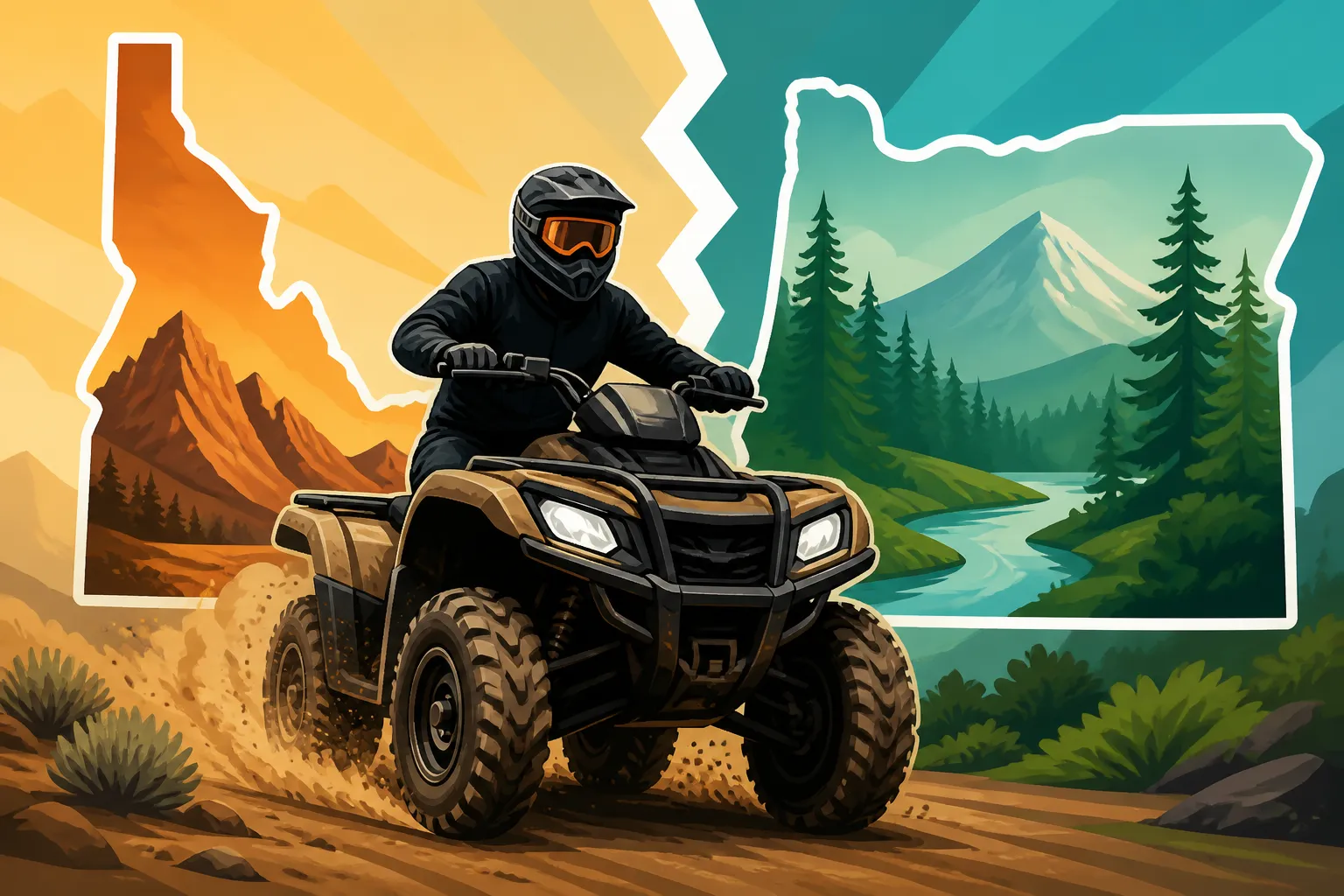
Riding an Idaho quad in Oregon can involve different permit rules from riding at home. An Idaho sticker or registration does not automatically give you permission to use every Oregon trail or road. The safest plan is to confirm whether Oregon recognizes your specific Idaho credential, then check the rules for the land and route you intend to ride.
Does an Idaho sticker let you ride in Oregon?
Not automatically. An Idaho OHV sticker is evidence of Idaho registration or permit compliance; it is not a blanket pass for public riding in another state. Oregon has its own ATV permit program, and whether an Idaho credential is accepted can depend on Oregon’s current reciprocity rules and the type of machine.
A useful rule of thumb: plan to obtain the Oregon permit unless Oregon’s official ATV program confirms that your current Idaho credential qualifies for the routes you plan to ride. Don’t rely only on what a seller, friend, old forum post or trailhead sign says. Reciprocity policies can change, and a machine’s registration plate is not always the same thing as an ATV operating permit.
Idaho’s reciprocity policy has changed before, which is one reason older advice can be misleading. Why Reciprocity Ended for Idaho Riders explains the Idaho side of that issue, while Does Any State Still Honor an Idaho Sticker? is relevant when checking whether another state recognizes an Idaho permit. Neither substitutes for Oregon’s current rules.
Before leaving Idaho, check Oregon’s official ATV program for:
- Whether Oregon recognizes your current Idaho permit or sticker.
- Whether the recognition applies to your machine type.
- Whether the permit covers the specific public land you plan to use.
- Whether Oregon requires a separate safety credential or other documentation for anyone in your riding group.
- How the permit must be displayed or carried.
If the answer is unclear, contact the Oregon agency responsible for the area or an authorized permit vendor before the trip. A short confirmation can prevent a long drive ending with a machine that cannot legally ride the planned route.
It also helps to keep these terms separate:
| Credential or rule | What it generally addresses | What it does not automatically provide |
|---|---|---|
| Idaho OHV sticker or registration | Compliance with applicable Idaho OHV requirements | Permission to ride every route in Oregon |
| Oregon ATV permit | Oregon’s permit requirements for applicable OHV use | Access to land or routes that are closed to your machine |
| Title or ownership paperwork | Ownership and vehicle identification | A permit to operate on public land |
| Road-use authorization | Whether a particular road is open to your machine | General trail access or permission to ride off-route |
An Idaho plate, title or proof of ownership may be useful documents, but don’t treat any one of them as a replacement for the operating permit or route permission Oregon requires. For the Idaho side of the distinction, Idaho Permit Rules on Public Land and Idaho’s Non-Resident OHV Sticker explain why a registration or permit question is different from simply owning a machine.
Check the route, not just the state line
A permit answers only one part of the question: whether the machine meets a registration or operating requirement. It does not determine whether a particular road, trail, forest route or recreation area is open to your quad.
Oregon riding areas may be managed by different agencies, and each route can have its own restrictions. A route may be open to some machine types but not others, limited by width, closed seasonally, or subject to a local restriction. A road that looks suitable on a general map may not be open to OHVs. Private roads and land also require permission from the owner.
Before you choose a route, identify who manages it and check the current information from that manager. Confirm:
- The route is open to motorized use. A public road or trail is not necessarily open to an ATV.
- Your machine is allowed. Check restrictions on vehicle type, width or other route-specific limits.
- The route is open on your travel dates. Seasonal closures, weather, fire activity and maintenance can affect access.
- You know where the legal route ends. Don’t assume adjoining tracks or unsigned spurs are open.
- Any local road rules are covered. A county or town can have additional requirements where OHVs use public roads.
Use current maps and notices for the area rather than relying on an old downloaded track. If the route crosses land managed by more than one agency, check each section. A closure or permit requirement may change at a boundary, even when the trail appears continuous.
The same approach is useful at home: Idaho Rules on Forest Service Roads and Idaho Rules on BLM Roads explain why the land manager and route designation matter alongside a state sticker. For an Oregon trip, use the equivalent information from the Oregon land manager, county or recreation area—not an Idaho route guide as proof of Oregon access.
When you have a specific trailhead in mind, look for the official map or route notice and compare it with the machine’s dimensions and type. If the map or sign is unclear, ask the local office before riding. It is better to change plans at home than to find out on the trail that a route is closed or unsuitable for your quad.
Prepare the quad and paperwork before you go
Once you have confirmed the permit and route, make a simple document and equipment check. Carry whatever Oregon requires for your machine, and keep ownership documents accessible in case an officer, land manager or permit vendor needs to verify details. Don’t carry the title loose on the trail if a secure copy or other accepted proof is sufficient; confirm what documentation is appropriate for your situation.
A practical pre-trip checklist:
- Confirm your Idaho sticker or registration is current.
- Confirm whether Oregon requires its own permit or accepts your Idaho credential.
- Make sure the permit applies to your machine’s type and intended use.
- Save or print current route information and closure notices.
- Carry identification and any required safety or ownership documentation.
- Check that the machine is in suitable condition for the route.
- Review local requirements for helmets, lights, sound equipment and road use.
- Tell someone where you plan to ride and when you expect to return.
Do not assume that equipment that is acceptable for an Idaho trail is automatically sufficient for an Oregon road section. Rules can vary by route and by whether you are riding on a trail, public road or private land. If a route includes road travel, verify that the road is open to your machine and that you meet the applicable road-use requirements. A sticker alone does not make a quad street legal.
If you plan to ride with a group, check each machine separately. One rider may have a different registration status, machine class or permit situation than another. The same applies to borrowed quads and rented machines: ask who is responsible for the operating permit, and get confirmation that the permit covers the intended Oregon use. Keep the answer in writing when possible.
Finally, check conditions close to departure. Snow, fire restrictions, flooding, maintenance and temporary closures can change which routes are usable. A permit may remain valid while a trail becomes unavailable. Build an alternate route into the plan, and don’t ride around a closure sign or leave a designated route to get past an obstacle.
The core takeaway is simple: an Idaho quad can be ridden in Oregon only when the machine meets Oregon’s applicable permit rules and the route is open to it. Treat reciprocity as something to verify, not something to assume, and check land-manager rules separately from the sticker question.
Disclaimer
This article is for general informational purposes only and does not constitute professional advice. Laws, prices and regulations vary by location and change over time. Consult a qualified professional for guidance on your specific situation.