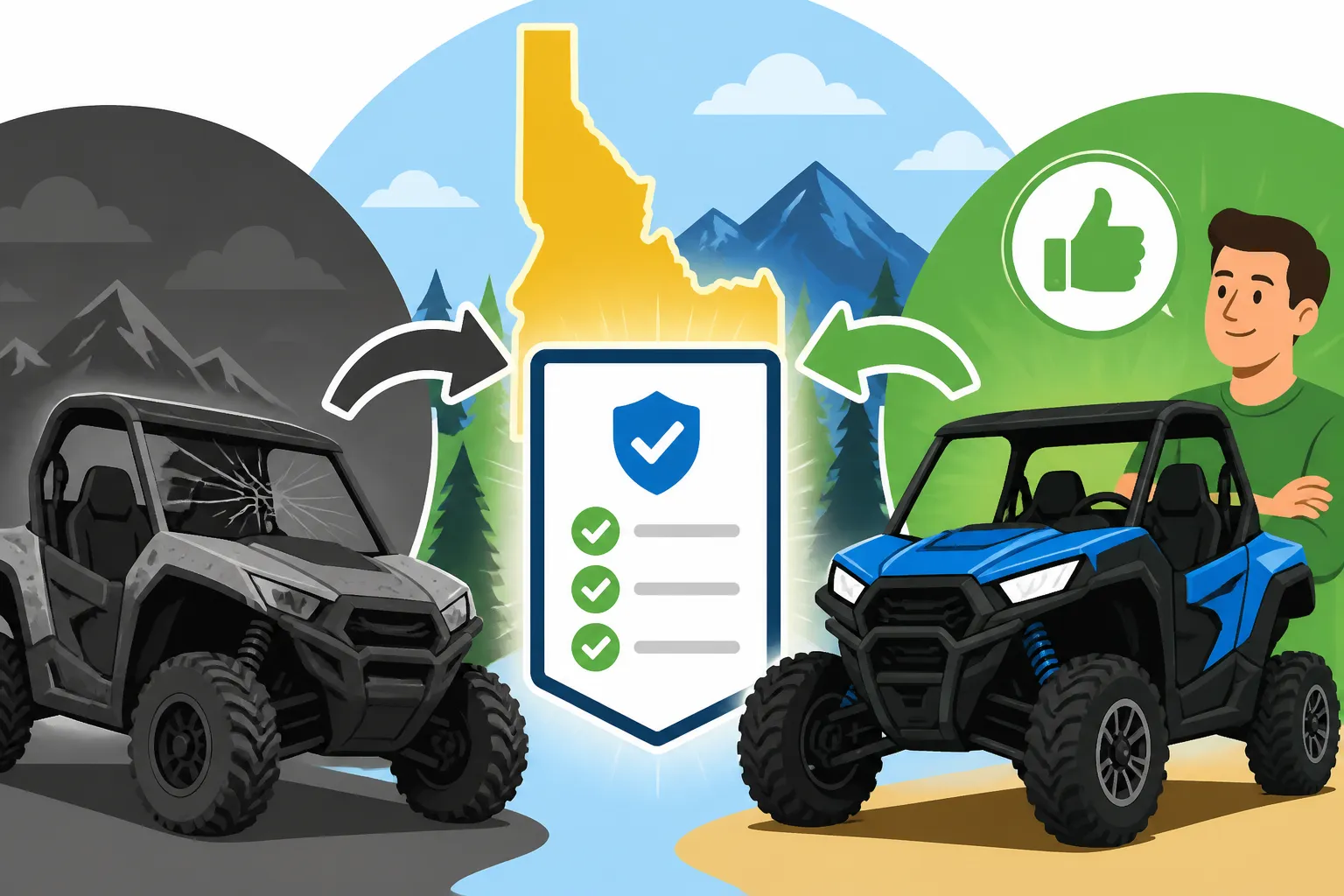
What a Rebuilt Title Tells a Buyer
Buying a used ATV or UTV in Idaho can be an incredibly exciting prospect, opening up endless possibilities for exploring our incredible trails and backcountry. However, that excitement can quickly turn to confusion and even anxiety when you come across a listing for a machine with a "rebuilt title." It's a phrase that immediately raises red flags for many, and for good reason—it suggests a past fraught with significant damage. This guide is designed to cut through that confusion, giving you a clear, empathetic understanding of what a rebuilt title in Idaho truly signifies for you, the potential buyer, so you can confidently navigate your options and avoid any unwelcome surprises down the road.
What Exactly is a Rebuilt Title in Idaho?
When you encounter an ATV or UTV with a rebuilt title in Idaho, it tells a very specific story about that machine's past. It’s not just a minor fender bender we’re talking about here; it’s a history of serious damage, deemed significant enough to essentially "total" the vehicle at one point. Understanding this journey is crucial before you even consider making an offer.
Salvage vs. Rebuilt: Understanding the Distinction
To truly grasp what a rebuilt title is, you first need to understand its precursor: the salvage title. In Idaho, when an ATV or UTV suffers severe damage—whether from a major collision, flood, fire, or even vandalism—and the estimated cost of repairs exceeds a certain percentage of its market value, an insurance company will often declare it a "total loss." At this point, the machine is issued a salvage title. A salvage title is a scarlet letter; it means the vehicle is not considered road or trail-worthy and cannot be legally registered or operated. It's essentially marked for dismantling or extensive repair.
A rebuilt title, then, is the next chapter in that machine's life. It signifies that the ATV or UTV, once branded as salvage, has undergone substantial repairs and has passed a rigorous inspection process by the Idaho State Police. This inspection certifies that the vehicle is now in a safe, operable condition and meets all necessary safety standards. The crucial takeaway is that every rebuilt title was once a salvage title. The machine has been brought back from the brink, but its past will always be part of its official record.
The Journey from Total Loss to Trail-Ready
Imagine a scenario: a side-by-side, maybe a popular Polaris RZR, is involved in a significant rollover incident in the mountains outside McCall. The frame is bent, the suspension is shot, and there's extensive body damage. The insurance company assesses the damage, decides it's more cost-effective to pay out the owner than to repair it, and issues a salvage title. They then take possession of the mangled machine, often selling it at an auction for a fraction of its pre-damage value.
At this point, someone—perhaps a savvy mechanic, a dedicated hobbyist, or even a small dealership—buys the salvage OHV. Their goal is to meticulously repair the damage, source new or used parts, and bring it back to a functional state. This isn't a quick fix; it's a significant undertaking. Once they believe the repairs are complete, they must apply for an inspection through the Idaho State Police. This inspection is incredibly thorough, designed to ensure that the repairs meet safety standards, that no stolen parts were used, and that the vehicle is genuinely ready for the trails again. Only after passing this critical inspection will the Idaho Department of Motor Vehicles issue a rebuilt title, effectively changing its status from unrideable to trail-ready, albeit with that permanent marker of its past.
The Paperwork Trail: Getting an Idaho Rebuilt Title
The process of transforming a salvage-titled ATV or UTV into a rebuilt-titled one is not for the faint of heart, nor is it a casual affair. It demands meticulous attention to detail, extensive documentation, and a thorough inspection process. As a buyer, understanding these steps helps you know what questions to ask and what documentation to seek out.
The Meticulous Inspection Process
Before an ATV or UTV can shed its salvage status and earn a rebuilt title in Idaho, it must pass a comprehensive inspection by the Idaho State Police. This isn't just a quick once-over; it's a detailed examination designed to ensure the machine is safe and legitimate. The primary goals of this inspection are to verify the Vehicle Identification Number (VIN) to ensure it hasn't been altered or is not associated with a stolen vehicle, and to confirm that all repairs have been completed to a satisfactory standard. Inspectors will look for signs of previous damage, the quality of repairs, and the proper installation of essential components like brakes, steering, and suspension.
Crucially, the person who rebuilt the machine must provide a mountain of documentation. This includes the original salvage title, all receipts for parts purchased, and proof of repairs. These receipts are vital as they help verify the legitimate source of all replacement components, preventing the use of stolen parts. This is where meticulous record-keeping truly shines; a rebuilder who has diligently kept track of every expense and every part, perhaps even using a structured document system from a service like LawDepot to log their work, will have a much easier time demonstrating the vehicle's integrity to the inspectors and, eventually, to you. Without this robust paper trail, the machine simply won't get its rebuilt status. [Documents to Bring to an Idaho Assessor's Office] can give you a broader idea of the types of records the state expects.
Documents You'll Need to See as a Buyer
When you're considering purchasing an OHV with a rebuilt title, the paperwork isn't just a formality—it's your investigative toolkit. First and foremost, you'll want to see the rebuilt title itself. This document will clearly state its "rebuilt" status, differentiating it from a "clean" title. Don't be shy; ask to see it up close. Next, the previous owner should have the Idaho State Police inspection certificate, which is official proof that the machine passed the necessary safety checks. While not always transferred to subsequent owners, any repair receipts the seller can provide are invaluable. These can offer critical insights into the nature of the original damage and the quality of the repairs performed.
Beyond the rebuilt title and inspection certificate, you'll need standard proof of ownership documents, like a bill of sale signed by both parties. Ensuring the chain of ownership is clear and that there are no outstanding liens on the vehicle is paramount, as a rebuilt title doesn't negate the need for proper transfer of ownership. If anything feels fuzzy or unclear about the documentation, it's a major red flag. You can always contact the Idaho Department of Parks and Recreation (IDPR) or your local county assessor's office for guidance on verifying the legitimacy of the title and its history. [Idaho OHV Title Application at the County Assessor] goes into more detail about the application process, and [Idaho Title Fee at the County Assessor] outlines associated costs, which further emphasizes the need for correct paperwork.
What a Rebuilt Title Really Means for a Buyer
So, you've found an ATV or UTV with a rebuilt title, and the price looks tempting. It's easy to get swept up in the potential savings, but it's crucial to pause and consider the full implications of this title status. A rebuilt title isn't just a label; it's a narrative that will follow the machine for the rest of its operational life, impacting everything from your initial purchase to its eventual resale.
The Hidden Truths and Potential Savings
The most obvious draw of an ATV or UTV with a rebuilt title is the price tag. These machines are almost always significantly cheaper than comparable models with clean titles, often by 20-40% or more. For some buyers, this can be an incredible value proposition, allowing them to get into a newer or more powerful machine than their budget would typically allow. If the repairs were performed meticulously by a skilled technician using high-quality parts, you could potentially get a fantastic deal on a machine that performs just as well as its clean-titled counterparts. This is the "hidden truth" that optimists focus on—the opportunity for a bargain.
However, the "hidden truth" also cuts the other way. The very reason it received a salvage title means the damage was extensive. Was it a head-on collision that bent the frame? A catastrophic engine failure? A flood that submerged all the electrical components? While the Idaho State Police inspection aims to ensure safety, it doesn't guarantee the longevity or hidden issues that might arise from extensive repairs. Frame damage, for instance, can lead to chronic alignment issues, accelerated tire wear, and unpredictable handling on the trail, no matter how well it was "straightened." Electrical systems, especially after water damage, can be a nightmare of intermittent failures that are incredibly difficult and costly to diagnose. The initial damage could have compromised components in ways that aren't immediately apparent but could lead to long-term reliability concerns and unexpected repair bills down the road, transforming that initial savings into a frustrating money pit.
Resale Value and Future Headaches
Here's a cold, hard truth about rebuilt titles: they are a permanent mark on a machine's history, and they almost always translate to a significantly lower resale value. Even if you buy a rebuilt machine, ride it flawlessly for five years, and maintain it perfectly, when it comes time to sell, you will likely encounter the same skepticism and reluctance from potential buyers that you yourself are experiencing now. The "rebuilt" status immediately flags it as a higher risk in the eyes of most, making it harder to sell and commanding a lower price.
This can be a truly frustrating experience. You might know your machine is perfectly sound, having given you years of trouble-free riding, but the title status speaks louder than your assurances. Buyers will always factor in the unknown history of major damage, and they'll expect a substantial discount to take on that perceived risk. Furthermore, should you ever need to quickly sell the machine, the rebuilt title can significantly lengthen the sales process, as it narrows your pool of potential buyers to those specifically looking for a bargain and willing to accept the title history. It’s a permanent shadow that follows the machine, potentially creating headaches long after the initial damage was repaired.
Buying and Insuring an OHV with a Rebuilt Title
Deciding to purchase an ATV or UTV with a rebuilt title means you need to approach the transaction with an elevated level of caution and due diligence. This isn't like buying a used machine with a clean history; the stakes are higher, and the potential pitfalls are more numerous. Beyond the purchase, you'll also face specific considerations when it comes to insuring your newly acquired, rebuilt ride.
Your Due Diligence: What to Investigate
When considering an OHV with a rebuilt title, a pre-purchase inspection by an independent, trusted mechanic is not merely recommended—it's absolutely essential. This mechanic should specialize in ATVs and UTVs and understand the common failure points after major damage. They can spot red flags that an untrained eye might miss, such as signs of frame straightening, mismatched paint, uneven tire wear (indicating alignment issues), or poorly repaired welds. Ask them to specifically look for evidence of the original damage—whether it was flood, fire, or collision—and assess the quality of the repairs. You’ll want to review the vehicle identification number (VIN) meticulously. Make sure it matches the title, is free from tampering, and is located in all expected spots on the machine. You can refer to [Where the VIN Sits on a Side-by-Side Frame] to know common VIN locations. Then, always, always run the VIN through a reputable national database to check for theft or other unreported history. [Checking a Used Machine for Theft] and [Running a Serial Number Before You Pay] are critical steps that you simply cannot skip.
Beyond the physical inspection, document everything related to the sale. A comprehensive bill of sale is crucial, clearly stating that you, the buyer, understand the machine's rebuilt title status. You might even consider using a detailed template from a service like LawDepot to ensure all terms and conditions are explicitly laid out. Insist that the seller includes any available repair receipts or the Idaho State Police inspection certificate as part of the sale documents. The more information you have about the nature of the original damage and the subsequent repairs, the better equipped you'll be to make an informed decision and address any future issues. [ATV Bill of Sale Wording Buyers Should Insist On] offers excellent guidance on what specifics to include. Remember, an Idaho deputy conducting a routine stop might ask for proof of ownership and registration, so having your documentation in order is always wise. [What an Idaho Deputy Asks a Rider For] details these requirements.
Insuring the Rebuilt Machine
One of the more challenging aspects of owning an ATV or UTV with a rebuilt title is securing comprehensive insurance coverage. While liability insurance, which covers damage you might cause to others or their property, is generally available, obtaining collision or comprehensive coverage for the machine itself can be a tougher sell for insurance companies. Their primary concern is the inherent risk associated with a vehicle that has sustained significant damage in the past. They often worry about hidden issues that might lead to future claims or the difficulty in accurately assessing the machine's true value after extensive repairs.
You might find that some insurers are hesitant to offer full coverage at all, or they may only do so after requiring an independent appraisal of the machine to determine its post-rebuild market value. This appraisal can be an additional out-of-pocket expense for you. Even if you do secure full coverage, expect your premiums to be higher than those for a comparable machine with a clean title. You might also encounter limitations on coverage, such as a cap on the payout amount in the event of a total loss, reflecting the diminished value inherent in a rebuilt title. It’s wise to shop around and speak directly with several insurance providers about their policies regarding rebuilt-titled OHVs before you finalize your purchase. Being upfront about the title status will save you a lot of headaches later on. For more general information on ATV insurance, you can review [Insuring an ATV in Idaho].
Disclaimer
This article is for general informational purposes only and does not constitute professional advice. Laws, prices and regulations vary by location and change over time. Consult a qualified professional for guidance on your specific situation.