Stickers for a Second Machine
If you own two ATVs or UTVs, it is easy to assume one Idaho OHV sticker covers the household or whoever is riding. It generally does not: the sticker is associated with a machine, not a person. Here’s how to handle a second machine, avoid relying on the wrong paperwork, and check what applies before a ride.
Does a second ATV or UTV need its own sticker?
In general, yes. When Idaho requires an OHV sticker for a machine being used on public land, each machine needs its own valid sticker. A decal on one ATV does not cover a second ATV, even if both belong to the same owner, are kept at the same property, or are used by the same family.
Think of the sticker as machine-specific rather than rider-specific. Swapping riders between two machines does not transfer the sticker. Nor does buying one sticker for a group and assuming it can be moved from one machine to another as needed.
This matters for more than a household with two recreational vehicles. You may need to check the sticker status of each machine if you:
- Own an ATV and a side-by-side.
- Have a primary machine and a backup.
- Take a family member’s or friend’s machine on a ride.
- Buy a second OHV partway through the riding season.
- Bring a machine from out of state to ride in Idaho.
Do not assume that a machine is covered because another vehicle in your group has an Idaho decal. Before leaving, check that the specific ATV or UTV you plan to ride has the required sticker and that it is current and displayed as directed.
The requirement depends on the machine and where it will be operated. A ride entirely on private property can raise different questions from a ride on public land. Road use also has its own rules: a sticker alone does not make every road open to an OHV, or make the machine street legal. For the land-use distinction, see Do You Need a Sticker on Private Land in Idaho?. For road use, see What Idaho Requires Before You Ride a County Road.
Choose the right sticker for each machine
Before buying a sticker for a second machine, work out which registration or permit rules apply to it. The answer can depend on whether you are an Idaho resident, where the machine is registered, and what kind of riding you plan to do.
If you are an Idaho resident, check the current Idaho OHV registration requirements for that machine. If you are visiting from another state, do not assume that your home-state registration or decal automatically satisfies Idaho’s requirements. Idaho’s nonresident rules are a separate issue; start with Idaho’s Non-Resident OHV Sticker if the machine is registered outside Idaho.
A road plate or other vehicle registration can also affect which requirements apply. But a plate and an OHV sticker are not interchangeable by default. A plate may relate to registration or authorized road use, while an OHV sticker addresses a different requirement. Confirm how the rules apply to the particular machine and route rather than assuming one piece of paperwork replaces the other. Idaho’s Restricted Vehicle Plate Explained covers the distinction between an Idaho restricted plate and OHV registration.
| Situation | What to check for the second machine |
|---|---|
| Idaho resident riding on public land | Whether the machine needs its own current Idaho OHV registration sticker |
| Out-of-state owner visiting Idaho | Whether the machine needs an Idaho nonresident sticker, regardless of the other machine’s paperwork |
| Machine with a road plate or other registration | Whether that registration changes the OHV sticker requirement for the planned use |
| Ride limited to private property | Whether the sticker requirement applies to the land and activity involved |
| Machine used on public roads | Whether the route is open to that type of vehicle and whether separate road-use requirements apply |
That table is a starting point, not a substitute for checking the current rule. If the second machine has a different registration status from the first, assess it separately. For instance, the first machine may be Idaho-registered while the second is newly purchased out of state. Their sticker obligations may not be identical.
If you are unsure whether a plate, registration, or decal satisfies a particular requirement, check with Idaho Parks and Recreation or the relevant county office before the ride. The Idaho OHV registration and road-use questions can overlap, but they are not the same question.
Buying and displaying a sticker for a second machine
Once you have confirmed what the second machine needs, arrange its sticker through an authorized sales channel. Idaho offers different ways to buy or renew OHV stickers; options and procedures can vary, so check Where Idaho Sells OHV Stickers for a starting point. If online renewal or purchase is available for your situation, Renewing an Idaho OHV Sticker Online explains what to check before using that route.
Be ready to provide accurate information for the machine. Keep any confirmation or receipt with your vehicle paperwork, and compare the sticker details with the machine before you head out. If the machine is new to you, recently titled, or registered under a different owner, ask the seller or the relevant office what information is needed to complete the transaction correctly. Do not rely on the first machine’s receipt or registration details when arranging paperwork for the second.
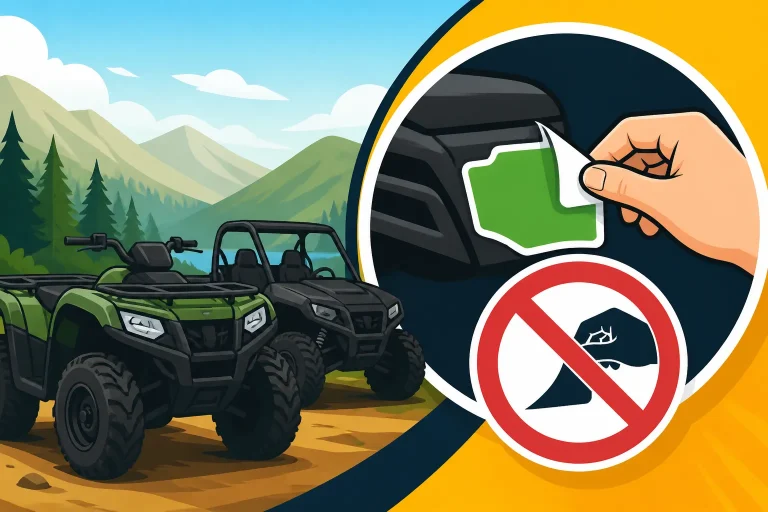
After purchase, display the sticker according to the instructions that come with it. Placement may depend on the type of machine or the relevant plate, so avoid guessing based on where the decal sits on another vehicle. Where the Idaho Sticker Goes on the Plate and Sticker Placement on a Quad’s Fender address common placement questions. A sticker that is in a glove box, stuck to a trailer, or placed somewhere hard to inspect may not meet the display instructions.
Before departing, do a quick check of both machines if you are taking them together:
- Confirm each machine has the sticker or registration required for its use.
- Check the validity and details of each sticker separately.
- Make sure each sticker is displayed as instructed.
- Confirm that the route allows the vehicle type you are bringing.
- Keep the relevant purchase or registration records accessible, without treating them as a substitute for the sticker itself.
The machine that stays home does not need to be stickered simply because another vehicle is going riding. But if you later take that second machine onto land where an OHV sticker is required, it needs to meet the applicable requirements then. Buying or renewing the first machine’s sticker does not solve that later need.
Common second-machine situations
The machines are both owned by the same person
Ownership does not make a sticker valid for multiple machines. Treat each ATV or UTV as a separate vehicle when checking sticker requirements. If you are buying stickers for several machines at once, keep each transaction and decal associated with the right vehicle so there is no confusion later.
A family member will ride the second machine
The rider’s relationship to the owner does not change the machine’s sticker status. A family member riding your second ATV still needs to use a machine that has the required current sticker for the planned location and activity. Also check any age, supervision, or safety requirements that apply to the rider; the sticker does not address those separate rules.
The second machine is borrowed
Do not assume the owner’s other machine’s sticker covers the borrowed one. Check the sticker on the exact vehicle you will ride and confirm that it is current and appropriate for Idaho use. If the machine is from out of state, check the nonresident rules as well. Stickers for a Borrowed Machine and Letting a Visitor Ride Your Quad cover related questions about lending and borrowing.
You bought the second machine during the season
A purchase date does not automatically make the first machine’s sticker valid for the newly acquired one. Check the new machine’s requirements before taking it to public land. The same caution applies if you buy a used vehicle that already has a decal: verify whether it is valid for that machine and whether any ownership or registration changes affect what you need to do. Idaho OHV Sticker for a Machine Bought in July discusses a mid-season purchase.
You are carrying a spare machine on a trailer
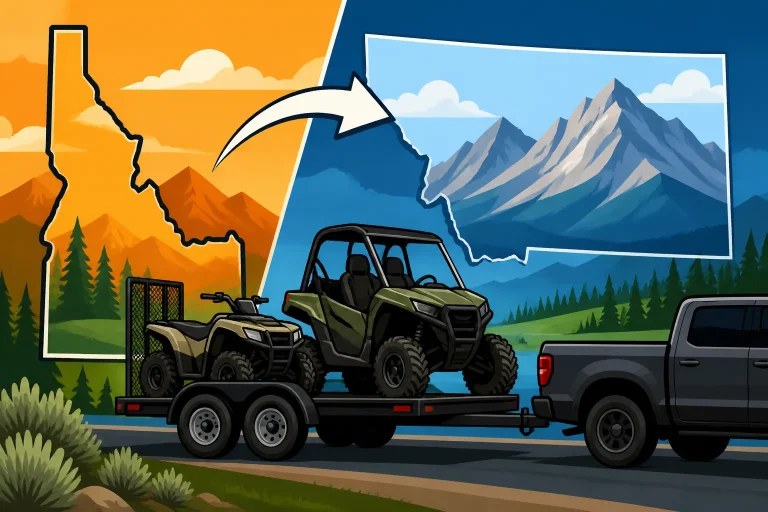
Transporting an OHV is not the same as riding it. The sticker question usually becomes important when the machine is operated in a place where a sticker is required, not simply because it is being hauled. Still, plan ahead: if you unload the second vehicle and ride it, its own paperwork and sticker status matter. Check the rules for the land and route rather than assuming that a machine parked on a trailer is either covered or exempt in every situation.
You sell one machine and keep the sticker
Do not presume that a decal can be transferred to a different machine after a sale. Sticker, registration, and replacement procedures depend on the applicable program rules. Check with the issuing office before moving, removing, or reusing a decal. That avoids treating a sticker issued or recorded for one machine as authorization for another.
The practical rule is simple: check the machine you intend to ride, not just the rider or the household. If you own two OHVs, prepare the paperwork for each separately and verify any exceptions before heading out.
Disclaimer
This article is for general informational purposes only and does not constitute professional advice. Laws, prices and regulations vary by location and change over time. Consult a qualified professional for guidance on your specific situation.