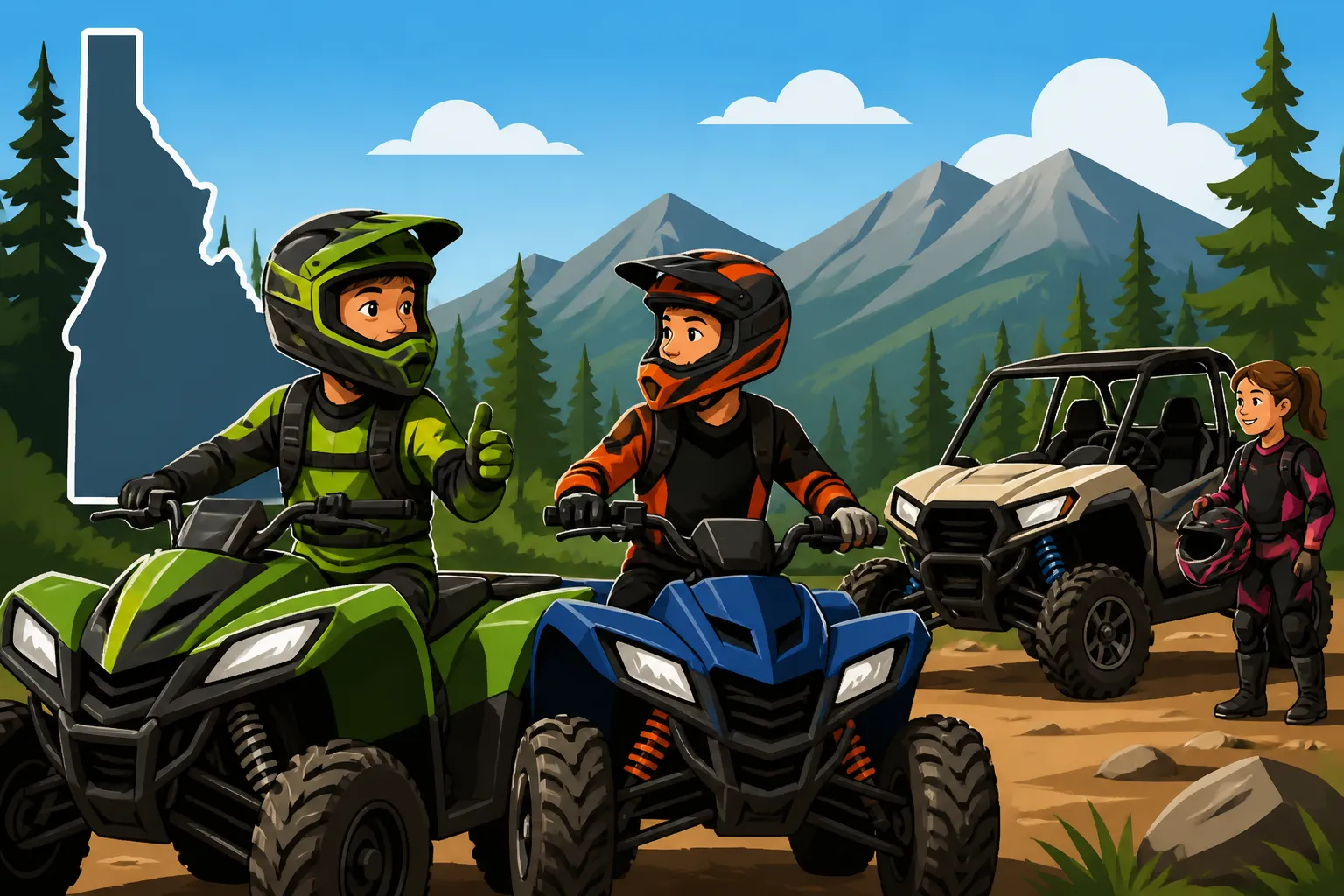
Youth Riders at a Staging Area
A staging area can feel like a safe place to let a child try an ATV or side-by-side before heading onto a trail. But being parked at a trailhead does not automatically make the area private or exempt from Idaho’s riding rules. Here’s how to think through supervision, permits, safety equipment, and the boundary between the staging lot and the trail.
First, find out what kind of staging area it is
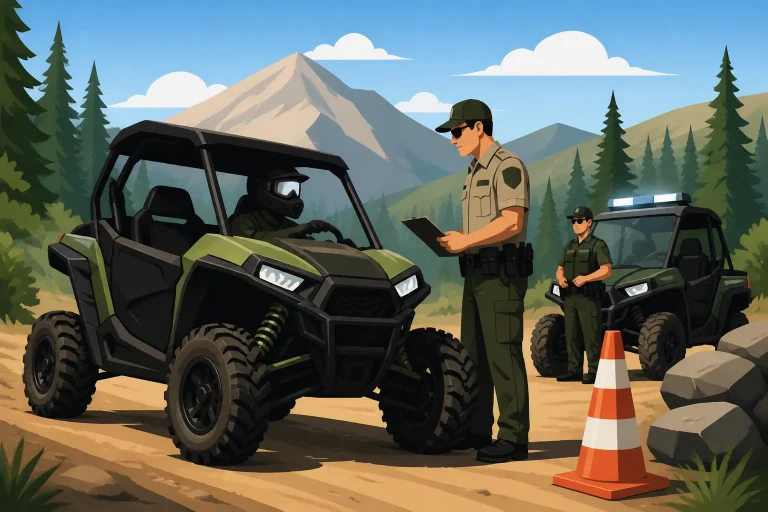
“Staging area” describes a place to unload, park, and prepare to ride. It does not, by itself, tell you which rules apply. A staging area may be on public land, managed by a land agency, or located on private property. The access road and nearby trail may have different rules from the parking area.
Before a young rider starts the machine, check posted signs and identify who manages the site. Look for information about vehicle access, age restrictions, required permits, and whether riding is allowed in the lot. If the signs are unclear, ask the managing agency or site operator rather than assuming that an open gate means riding is allowed.
A public staging area should not be treated as a practice course unless riding there is permitted. A child doing tight turns between trailers or moving vehicles can create a risk even at low speed. Unload and prepare the machine in the designated space, then head only onto routes that are open to that machine and rider.
The same caution applies when a staging lot connects to a road. A child who can operate an ATV safely in an open clearing may not be ready to cross traffic, ride a road section, or manage a busy trailhead. Check the route before setting out, and keep the child off any route they are not legally and practically prepared to ride. What Idaho Requires to Ride a County Road explains why road access is a separate question from trail access.
Supervision and safety requirements for young riders
Idaho has rules that apply to young OHV riders on public land. In general, riders under 16 need the required safety education and must ride under appropriate adult supervision. The details can depend on the rider’s age, the location, and the type of riding. Check the current requirements before the trip; do not rely on a child’s experience, a driver’s license, or a parent’s presence somewhere at the trailhead as a substitute for meeting the rules.
The 300-foot supervision rule is especially important to understand before a child leaves the staging area. Direct supervision is not the same as being in the same parking lot or knowing which trail the child took. An adult should be close enough to monitor the young rider and step in if needed. If you plan to supervise from another machine, make sure you can stay with the child and respond quickly, rather than letting them ride ahead and out of sight. See Idaho Supervision Rules and the 300-Foot Rule and What Counts as Direct Supervision in Idaho for related details.
A staging area is a useful place to review the plan with a child: where the adult will ride, what to do if the group separates, and which turns or trail junctions are off limits. Agree on a simple stopping signal. If the child is not comfortable with the machine or the site is crowded, keep the ride short or wait for a quieter time.
| Before the child rides | What to check |
|---|---|
| Location | Is the staging area public or private, and who manages it? |
| Route | Is the trail open to this machine, and does it include a road section or crossing? |
| Rider | Does the child meet applicable age, supervision, and safety-course requirements? |
| Machine | Is it an appropriate size, in working order, and carrying the required sticker or permit? |
| Gear | Does the rider have a properly fitted helmet and any other required protective equipment? |
| Group plan | Can the adult stay close, see the child, and respond if the child stops or falls? |
Helmets and eye protection deserve attention even when a young rider is only making a short trip from the trailer to the trail. Idaho has helmet requirements for riders under 18 in applicable riding situations; check the rules that cover the place and activity you have planned. A helmet needs to fit securely and be appropriate for the type of riding. If you buy one online, including through Amazon, check the label and the applicable helmet standard rather than assuming that a product described as a “youth helmet” meets Idaho’s requirements. Idaho Helmet Requirements Under 18 and Eye Protection for a Passenger Under 18 cover related questions.
For a child riding in a side-by-side, do not confuse sitting in the passenger seat with being ready to drive. Keep the child in a designated seat, use the machine’s required restraints, and follow the rules for passengers. A child should not ride in a cargo area or anywhere the manufacturer does not designate as a passenger position.
Stickers, permits, and the public-land question
A staging area does not usually replace the permit or sticker requirements that apply to the ride. If the machine will be used on public land, check whether it needs an Idaho OHV sticker or a nonresident permit. These requirements generally relate to the machine and where it is operated, not simply to the age of the person sitting on it. A sticker on a parent’s machine does not satisfy a separate rider safety-course or supervision requirement.
Residents and visitors may have different permit rules. Idaho visitors should not assume that a registration or sticker from another state is accepted in place of Idaho’s required permit. Check Idaho’s Non-Resident OHV Sticker before traveling, and confirm where to obtain the required sticker through Where to Buy an Idaho Non-Resident Sticker. If a machine is rented or borrowed, ask who is responsible for its sticker and verify that it is in place before riding.
A permit or sticker also does not make every route legal. It does not authorize travel on a closed trail, a road prohibited to OHVs, or a route that is too narrow for the machine. Nor does it make an otherwise restricted staging area available for practice. For an Idaho-owned machine, Idaho OHV Sticker Rules at a State Park and Idaho Permit Rules on Public Land can help clarify the permit side of trip planning.
When plans include crossing onto private land, get permission from the owner and make sure you understand where the public route ends. A trailhead can sit near private property, and an open-looking track beyond the parking area is not proof that riders have permission to use it. Idaho Rules on Private Land explains why land status matters.
A practical routine at the trailhead
A consistent routine helps keep the staging area calm and gives a child a clear boundary between preparing and riding.
- Park and unload in the designated area. Keep children away from moving vehicles, trailers, and loading ramps. Don’t use an active parking lane as a riding area.
- Check the posted information. Confirm the manager, allowed routes, and any site-specific restrictions. If riding in the lot is not clearly allowed, do not use it for practice.
- Check the machine and its permit. Confirm the sticker or permit is valid for the intended public-land use, and check fuel, brakes, throttle, tires, and controls.
- Fit the gear before starting. Secure the helmet and eye protection, and use the required restraints for a side-by-side passenger. Make sure nothing is loose or likely to catch on the machine.
- Review the supervision plan. Tell the child which adult will stay with them, where to stop, and what to do if the group separates. Keep the adult close enough to provide meaningful supervision.
- Choose a suitable first route. Avoid starting with road crossings, steep terrain, heavy traffic, or a narrow trail that leaves little room to stop. Match the route to the child’s skills and the machine’s size.
- Stop if conditions change. Crowding, dust, poor visibility, fatigue, or a child who is uncomfortable are good reasons to turn back or take a break.
The staging area is also a sensible place to make a final decision about whether the child should ride at all that day. A young rider who is tired, upset, or unsure of the controls may be safer as a passenger or waiting with an adult. The goal is not to get a child onto the trail as quickly as possible; it is to make sure the rider, machine, route, and supervision all fit together.
Rules can differ by land manager and may change. Before setting out, verify the current Idaho requirements and the specific site’s restrictions with the appropriate official source. When there is uncertainty about whether a young rider may operate in the staging area or on the route beyond it, pause and ask before starting the machine.
Disclaimer
This article is for general informational purposes only and does not constitute professional advice. Laws, prices and regulations vary by location and change over time. Consult a qualified professional for guidance on your specific situation.