Idaho Helmet Requirements Under 18
Idaho Helmet Requirements Under 18
Taking a child or teenager out on an Idaho ATV or UTV means sorting out more than machine size and route access. Helmet rules can apply to young operators and passengers, and a helmet that looks sturdy may not meet the required standard. Here’s how to understand the under-18 rule, choose suitable head protection and plan a ride without mistaking a helmet for permission to ride.
What Idaho requires riders under 18 to wear
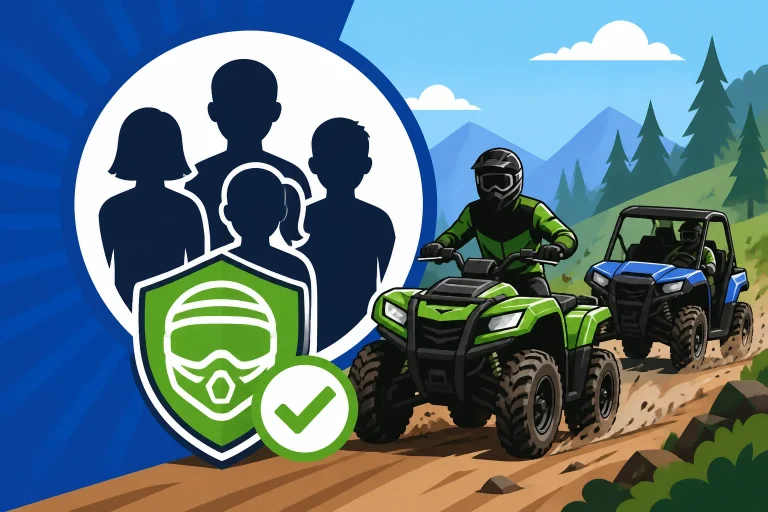
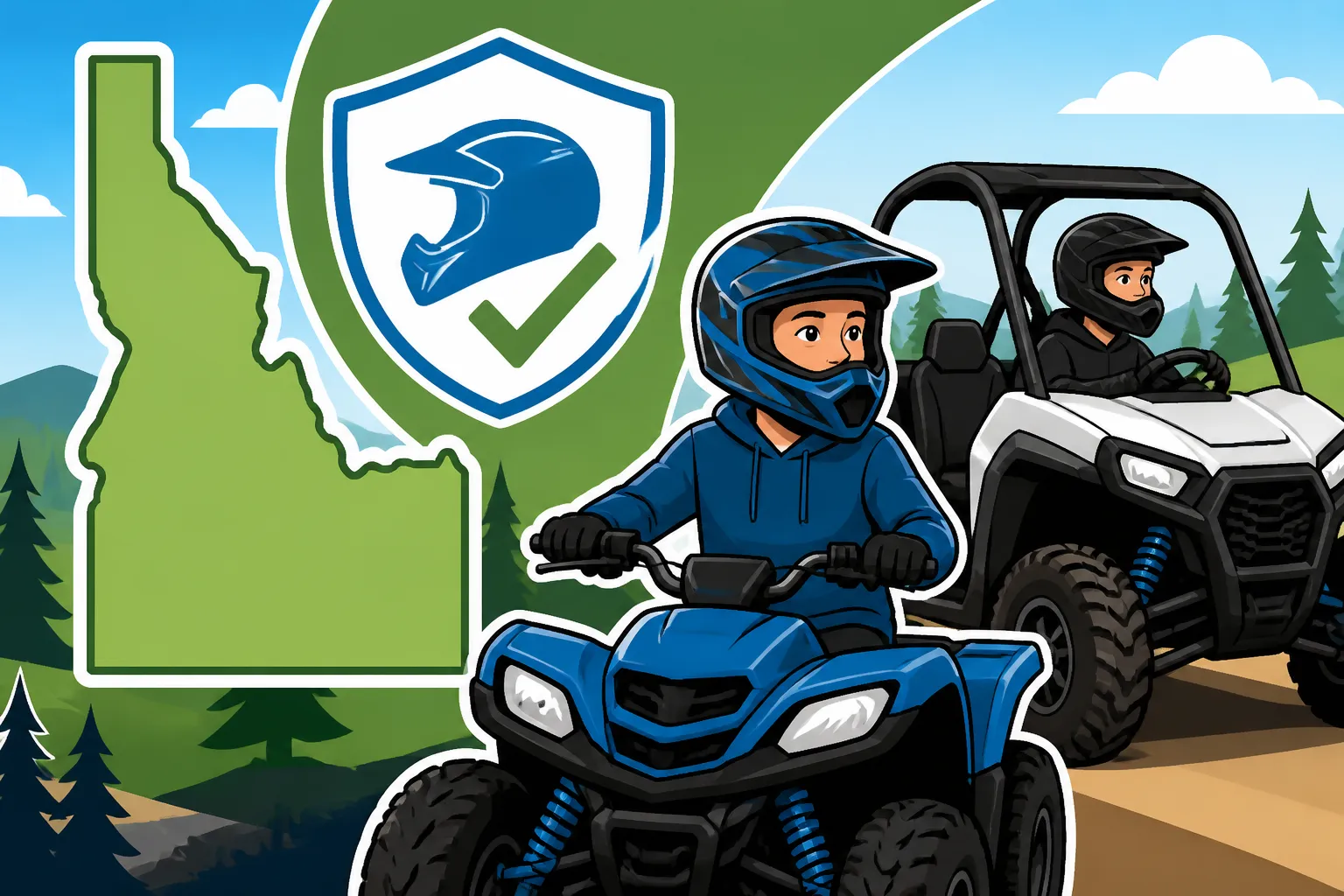
Idaho requires people under 18 to wear protective headgear when operating or riding as a passenger on an off-highway vehicle on public land. That covers youth riding on an ATV or UTV, not just the person driving. A passenger does not get an exception because an adult is operating the machine or because the trip is short.
The helmet must meet the applicable U.S. Department of Transportation standard. A helmet made for ATV or motorcycle use and identified by its manufacturer as meeting the federal motorcycle helmet standard is a sensible place to start. Check the helmet’s labeling and the manufacturer’s information rather than relying on a seller’s description, a brand name or a decorative “DOT” sticker alone. For more on the standard, see DOT Helmet Standards for Trail Riders.
The practical rule is straightforward: if a rider or passenger is under 18 and the machine is being used on public land, plan for that person to wear an appropriate, properly fastened helmet. A helmet hanging from the machine, sitting loosely on the rider’s head or worn with the chin strap undone is not meaningful protection and may not meet the requirement.
A UTV’s roll cage, roof, seat belt, door or side net does not replace a youth passenger’s helmet. Those features help manage different risks. A helmet protects the head; the vehicle’s restraints help keep occupants inside the protected space. A youth passenger in a side-by-side still needs to follow the helmet rule.
| Situation | What to plan for |
|---|---|
| Rider under 18 operating an ATV on public land | Wear a helmet that meets the applicable standard |
| Passenger under 18 on an ATV or UTV on public land | Wear a helmet; being a passenger does not create an exception |
| Youth in a side-by-side with a roll cage and seat belt | Wear a helmet and use the vehicle’s passenger restraints |
| Adult riding with a youth | The youth’s helmet requirement does not depend on whether the adult also wears one |
| Riding only on private property | Public-land rules may not apply in the same way, but permission, safety and any applicable local rules still matter |
The table is a planning aid, not a complete statement of every rule that can apply to a ride. In particular, the answer can depend on where the machine is being operated and whether the route includes a public road, trail or other public land. When the route is unclear, check with the relevant land manager or Idaho Parks and Recreation before setting out.
Helmet requirements are also separate from the rules about a child’s age, machine size, supervision, training, registration or road access. A helmet does not make an otherwise prohibited ride legal. For the broader age and supervision questions, see Idaho Age Rules for Riders Under 16 and Idaho Supervision Rules and the 300-Foot Rule.
Where the helmet rule fits into a ride
“Public land” is the important distinction to keep in mind. A route might include a trail, a forest road, a county road or a connection between riding areas. The fact that a road is unpaved or lightly traveled does not automatically make it private. If an under-18 rider or passenger is going to be on public land, make helmet use part of the ride plan.
A road section can bring additional requirements. First, riders must confirm that the road is open to the type of OHV they are using and that the machine and operator meet the rules for that road. A helmet is only one part of that check. Read What Idaho Requires to Ride a County Road and Idaho’s Restricted Vehicle Plate and Road Use before relying on a road route.
This distinction matters for families who begin on a trail and then follow a road to reach a trailhead, campground or town. The rules can change as the route changes. Do not assume that a helmet worn on the trail is the only requirement to consider once the machine reaches a road, or that a road-legal setup makes every road open to OHV use.
Private property is not a blanket safety exception
The public-land rule should not be confused with a recommendation that helmets are unnecessary on private land. A family ranch, cabin parcel or friend’s property may have different legal requirements, but a crash can happen just as quickly there. A helmet remains a prudent choice for a young rider or passenger, especially when terrain, speed, traffic, other machines or limited supervision are involved.
Permission to ride on private property also does not grant permission to use a public road or neighboring land. If a ride crosses property lines or connects with a public route, check the rules for each part of the trip. [Idaho Rules on Private Land] explains why private-property riding and public access should be treated as separate questions.
Public-road rules are not a substitute for trail rules
Some riders use the terms ATV, UTV, OHV and restricted vehicle interchangeably, but those labels do not answer every legal question. The machine’s classification, the road’s status and the rider’s eligibility can all affect whether a route is allowed. A helmet does not turn a closed road into an open route, and a vehicle plate does not automatically authorize travel on every road.
Youth road rules can add another layer. Before taking a minor onto a road section, check the rider’s age, supervision requirements, equipment and local access rules. Idaho Road Rules for Young Riders is a useful companion, while Idaho Helmet Standards and Who Must Wear One provides more context on helmet rules beyond the under-18 question.
If the trip involves public land managed by a federal or state agency, check that agency’s current route information as well. A map, trail sign, county ordinance or seasonal closure can affect where an OHV may travel. Build in time to confirm access rather than relying on a route someone remembers from a previous visit.
Choosing a helmet that fits and meets the standard
Start with compliance, then focus on fit and condition. A helmet can be expensive, new-looking or advertised for off-road use and still be the wrong choice if it does not meet the applicable standard. Confirm the manufacturer’s certification information and make sure the helmet is designed for the kind of riding planned.
A full-face helmet offers coverage around the chin and face. An open-face helmet leaves more of the face exposed, so goggles or other suitable eye protection become especially important. On dusty or brushy trails, eye protection can help keep grit and branches out of a rider’s eyes. For a young passenger, choose protective equipment that fits the machine and the terrain rather than treating a helmet as a stand-alone safety measure.
When shopping online, including on Amazon, look beyond the product title and photos. Read the manufacturer’s specifications, check the helmet’s labeling and confirm that it is intended for the rider’s activity. Avoid novelty helmets and listings that rely on vague phrases such as “DOT style” or “DOT look.” If the seller’s claims and the manufacturer’s information do not agree, choose a different helmet or ask the manufacturer for confirmation.
Check fit before the ride
A helmet should sit level on the head, not tipped far back or pulled down over the eyes. It should feel snug all around without creating sharp pressure points. When fastened, the chin strap should hold the helmet in place; the helmet should not shift freely when the rider moves their head.
Children can outgrow a helmet even if its shell looks undamaged. Recheck the fit as a child grows and whenever the helmet is shared or stored for a long period. Do not buy a helmet that a child can “grow into” if it is loose now. A poor fit makes the helmet less comfortable and can reduce the protection it provides.
Try the helmet with any goggles the rider will wear. The goggles should fit securely and leave a clear field of vision. If the helmet’s opening presses the goggles into the face or allows dust to enter easily, try a different combination. The rider should be able to see clearly in every direction needed to operate or ride as a passenger.
Before leaving home, make sure the strap is buckled and adjusted. A helmet that is unfastened can come off during a fall or collision. Show younger riders how to secure it, then check it yourself rather than assuming they have done so correctly.
Inspect and replace damaged equipment
Look over the helmet before each trip. Check the shell for cracks, deep gouges or other damage, and examine the straps and fastener for wear. Follow the manufacturer’s instructions for cleaning and care. Harsh cleaners, unapproved alterations or poorly fitted accessories can compromise the equipment.
A helmet that has been involved in a significant impact should be assessed according to the manufacturer’s guidance and may need replacement even if visible damage is limited. Internal materials can be affected without a dramatic crack in the outer shell. Do not rely on appearance alone after a crash.
Also check that the helmet is not so old or worn that its materials, straps or fit have deteriorated. There is no universal age that makes every helmet safe or unsafe; follow the manufacturer’s replacement guidance and consider its history. If you do not know whether a used helmet has been dropped, damaged or involved in a crash, a new, correctly fitted helmet is the more dependable choice.
Planning for a young operator or passenger
Helmet use is one part of fitting a ride to a young person. The machine must also be appropriate for the rider, and the route, speed, terrain and supervision need to match the child’s ability. A child who can reach the controls may still lack the judgment or strength to handle a particular machine in changing conditions.
For a passenger, check that the machine is designed to carry a passenger and has a proper seat and restraint system for that person. Do not carry a child on a one-seat ATV or assume that holding on is an acceptable substitute for a passenger seat. A child should be able to sit in the intended position and use the equipment as designed. See Idaho Rules for a Child Passenger for related passenger considerations.
In a UTV, use the available seat belt and door or side net as directed by the manufacturer. Keep the passenger seated and secured while the machine is moving. A helmet is not a reason to let a child lean outside the vehicle, ride in a cargo area or use a seat that was not designed for passengers.
For a youth who is operating rather than riding as a passenger, evaluate whether the controls, throttle, brakes and steering are within comfortable reach. Give the rider time to practice in a controlled setting before tackling slopes, traffic, narrow trails or unfamiliar terrain. An adult should be close enough to supervise effectively and ready to stop the ride if conditions change.
Rentals and borrowed machines
If a family rents or borrows an ATV or UTV, ask who is responsible for providing helmets and whether the available sizes fit each young rider. Do not assume that a rental includes a suitable youth helmet just because the machine is equipped for passengers. Check the helmet before the ride and bring a properly fitted one if the provided option is unsuitable.
A rental operator may set safety rules that go beyond the legal minimum, including requirements about helmets, passengers, age or permitted routes. Read the rental terms and listen to the safety briefing. A shop’s permission to rent a machine does not override Idaho law or public-land restrictions.
For a borrowed machine, check that the owner is comfortable with the youth using it and that the machine is appropriate for the rider. Confirm the passenger capacity, restraints and route permissions. A quick test in an open area is safer than discovering that a child cannot comfortably control the machine once the group is already on a narrow trail.
Nonresident families
Visitors should not assume that a helmet rule from their home state is the only one that matters. Idaho’s rules apply to riding in Idaho, and a family must also account for public-land access, registration or sticker requirements, youth supervision and any road restrictions. A helmet does not meet those separate requirements.
If you are bringing a machine from another state, sort out the sticker and access questions before leaving for the trail. Idaho’s Non-Resident OHV Sticker explains the nonresident permit issue, while Idaho OHV Rules for First-Time Visitors offers a broader starting point for planning.
A practical pre-ride helmet check
A short check at home can prevent a rushed decision at the trailhead. It also helps adults establish the same routine for every ride, rather than making helmet use depend on the route’s difficulty or how familiar the child is with the machine.
- Confirm who is under 18. Count operators and passengers, not only the person driving. Each young rider should have a helmet that fits.
- Check the route. Identify public land, roads, trail connections, closures and private-property sections. If you are unsure who manages an area, confirm before riding.
- Verify the helmet. Check the manufacturer’s standard and the helmet’s labeling. Do not rely on a sticker or retailer headline without supporting product information.
- Check fit and condition. Make sure the helmet sits securely, the strap fastens and the shell and straps show no damage.
- Fit eye protection. Confirm goggles or other suitable protection work with the helmet and allow clear vision.
- Secure each passenger. In a UTV, use the seat belt and other restraints as instructed. Confirm the child is seated in a designated passenger position.
- Check the rest of the rules. Confirm machine size, supervision, training, sticker or registration status, road eligibility and local restrictions as applicable.
- Reassess when the route changes. A trail ride that adds a road section or crosses into a new area may bring different access requirements.
Carry the helmet and other required equipment on the machine in a way that keeps them clean and undamaged when they are not being worn. Do not leave a child’s helmet loose where it can fall off, become crushed or get contaminated with fuel or chemicals.
If a young rider resists wearing a helmet, pause rather than bargaining over the requirement. Explain that it is part of the ride, demonstrate how it should fit, and make sure it is comfortable. If the fit is poor, replace or adjust the equipment instead of allowing the child to ride without it.
When conditions are hot, dusty or wet, plan breaks and bring water and spare eye-protection supplies. Comfort helps a child keep the helmet on correctly, but comfort does not justify loosening the chin strap or removing the helmet on a public trail. Stop in a safe place before adjusting equipment.
Frequently Asked Questions
Does an under-18 passenger on a UTV need a helmet in Idaho?
Yes. Plan for every person under 18 riding on an OHV on public land to wear a helmet that meets the applicable standard. A UTV’s roll cage, seat belt or side net does not replace the helmet.
Does a child need a helmet on a family’s private land?
The public-land requirement is the key legal distinction, but private land is not risk-free. A helmet is still a sound safety choice. If a route leaves private property or uses a public road or trail, check the rules for that part of the ride.
Is a helmet enough to make a youth ride legal?
No. Helmet use is separate from age, machine-size, supervision, training, passenger, sticker and route-access rules. Check each requirement that applies to the rider, vehicle and location.
Can a child use any helmet labeled for off-road riding?
Do not rely on the activity description alone. Confirm that the helmet meets the applicable standard and fits the rider correctly. Check the manufacturer’s information and the helmet’s labeling, and avoid novelty helmets or unsupported certification claims.
Disclaimer
This article is for general informational purposes only and does not constitute professional advice. Laws, prices and regulations vary by location and change over time. Consult a qualified professional for guidance on your specific situation.