Penalties for an Unstickered OHV in Idaho
There's nothing quite like the feeling of hitting a prime Idaho trail on your ATV or UTV, the engine humming beneath you, the dust flying, and the fresh mountain air filling your lungs. But that feeling can turn to a pit in your stomach pretty quickly if you see an Idaho Parks and Recreation (IDPR) ranger, a Forest Service officer, or a local sheriff's deputy waving you over, especially if you have a nagging suspicion that your machine's OHV sticker might be missing, expired, or improperly displayed. This guide is all about cutting through that uncertainty, explaining exactly what can happen if you're caught without a current, valid OHV sticker in Idaho, and, most importantly, how to avoid those unwelcome surprises so you can keep your focus on the ride ahead.
Why Idaho Demands an OHV Sticker: It's More Than Just a Fee
It’s easy to look at a sticker requirement as just another tax, another hoop to jump through, or another piece of paper to lose. But in Idaho, your OHV sticker plays a crucial role in maintaining the very trails and access points we all love. Without those funds, our riding opportunities would quickly dwindle, and the landscapes we treasure could suffer from neglect.
The Idaho Trail Fund and Sticker Revenue
When you purchase an Idaho OHV sticker, a significant portion of that fee goes directly into the Idaho Trail Fund. This isn't some abstract government pot; it's a dedicated source of funding for the very trails you ride. Think about the last time you saw a freshly cleared path, a well-maintained bridge over a creek, or a clear signpost pointing you to the next waypoint. Those things don't happen by magic. They require resources, equipment, and dedicated crews to plan, build, and maintain. Your sticker fees contribute directly to these efforts.
Imagine a world without these funds: trails would erode, bridges would wash out, and signs would vanish, leaving riders lost or facing impassable routes. The sticker system is truly about investing in our shared riding future, ensuring that the next generation of riders has access to the same, if not better, experiences we enjoy today. It's a collective effort, and your compliance helps everyone. You can learn more about how this money is allocated by looking into [The Idaho Trail Fund and Sticker Revenue].
Legal Compliance for Public Land Use
Beyond funding, the OHV sticker is a fundamental requirement for legal operation on most public lands in Idaho. Whether you're on a Bureau of Land Management (BLM) route, a Forest Service trail, or an open county road that permits OHV use, the sticker acts as your machine's permit to be there. It’s the state’s way of identifying properly registered machines and ensuring that all users are contributing to the infrastructure.
Consider the vast network of trails we have, from the high country of the Sawtooths to the rolling hills near Coeur d'Alene. Each of these areas has regulations designed to protect the environment, ensure rider safety, and manage access. The sticker system is a cornerstone of this management. Ignoring this requirement isn't just about avoiding a fee; it’s about operating outside the established framework that keeps these lands open and enjoyable for everyone. It's similar to needing a fishing license to cast a line in a public stream – it’s a standard operating procedure for responsible use.
What Happens When You're Caught Without a Sticker
The moment of truth arrives: an officer pulls you over, and your heart sinks because you know your sticker situation isn't quite right. It's a scenario many riders dread, and understanding the process can at least help you navigate it with a little less anxiety.
The Initial Stop and Officer Interaction
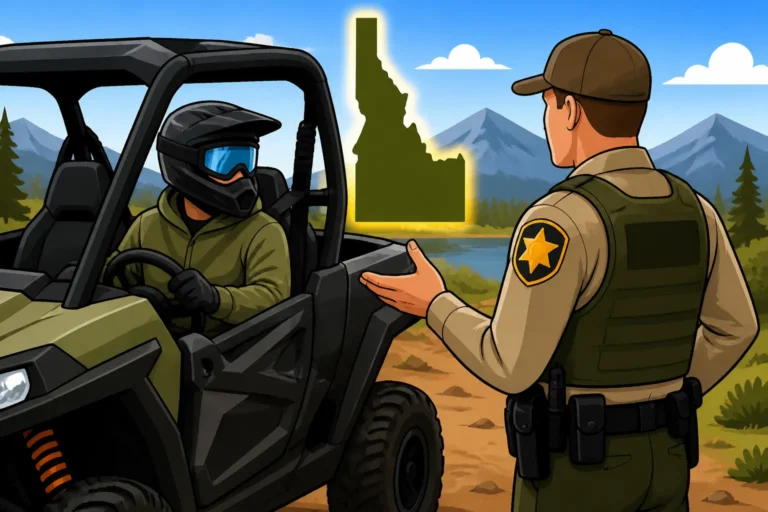
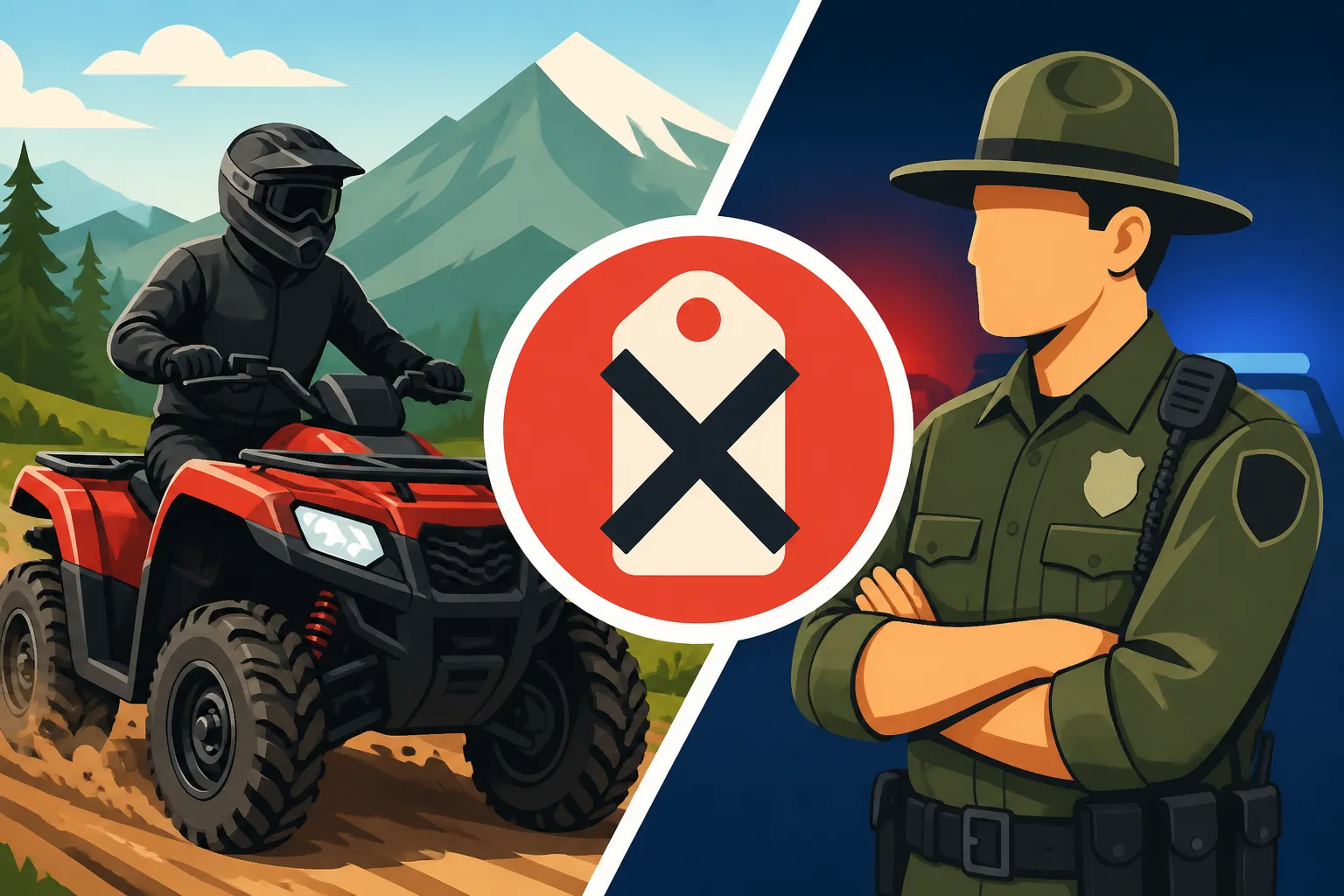
Picture this: you're cruising down a scenic two-track in the Boise National Forest, perhaps near Idaho City, enjoying the solitude, when you spot a marked vehicle coming the other way. It slows, then turns around, and its lights flash. Immediately, you know you're in for it. The officer approaches, asks for your driver's license, and likely for the machine's registration or proof of ownership. This is when they'll specifically look for the OHV sticker.
An officer isn't just looking for the sticker; they're also checking for other compliance issues. Are you wearing a helmet if required? Are you operating responsibly? Is your machine street-legal if you're on a county road? [What an Idaho Deputy Asks a Rider For] can give you a more complete picture of what to expect during such an interaction. The tone of the interaction often depends on your demeanor, so always be polite and cooperative, even if you’re feeling frustrated or disappointed.
Issuance of a Citation or Warning
Not every stop results in a full-blown ticket. Sometimes, especially for minor infractions or if it's clear you're generally a responsible rider and perhaps just made an honest mistake, an officer might issue a warning. This is a discretionary decision on their part and should be taken as a serious notice. However, for a missing or invalid OHV sticker, a citation is far more common, particularly if you’ve been warned before or if other violations are present.
A citation for an unstickered OHV is essentially a ticket, much like a traffic ticket you’d receive on the highway. It will detail the specific violation, the date, time, and location, and usually indicate the associated fine. The officer might also advise you on how to remedy the situation, such as where to purchase a new sticker. While a warning is a good outcome, it doesn't mean you're in the clear long-term; it's a strong encouragement to get compliant quickly.
On-the-Spot Enforcement and Potential for Machine Impoundment
While less common for a simple sticker violation than for, say, reckless operation or riding in a closed area, officers do have the authority to take further action, including ordering you to cease operation or even impounding your machine. This is particularly true if the machine is also unregistered, appears stolen, or if the operator is engaging in other illegal activities like riding under the influence.
Imagine being miles from your truck and trailer, deep in the mountains, and being told you can't ride your UTV any further. You'd be scrambling for a way to recover your machine and get yourself home. This scenario highlights why it's so critical to ensure your machine is fully compliant before you even leave the staging area. While it might feel extreme, officers are tasked with enforcing the law and ensuring public safety and resource protection. They have a range of tools at their disposal to ensure compliance, and you definitely don't want to test the limits of their patience or authority.
Breaking Down the Fines and Penalties
So, you got a citation. What's the actual financial hit? It's important to understand that the costs can add up, and it's not just the initial fine you need to consider.
Base Fines for an Unstickered OHV
The primary consequence of riding an unstickered OHV in Idaho is a monetary fine. While exact amounts can fluctuate and vary depending on local ordinances and the specific nature of the violation, you're generally looking at a base fine that can feel substantial. It's often enough to make you wince, especially when you compare it to the relatively low cost of a yearly OHV sticker. The idea is to make non-compliance a less attractive option than simply adhering to the rules from the start.
For example, a typical fine for a missing sticker might be in the ballpark of several times the cost of the actual sticker itself. This is designed to act as a deterrent. These are not minor parking tickets; they are penalties for operating a recreational vehicle without proper registration on public land. It's a clear signal that the state takes OHV management seriously. You can check [Idaho OHV Sticker Price This Year] to compare what you might pay for the sticker versus the fine.
Court Costs and Administrative Fees
Getting a citation often means dealing with the court system, even if you simply pay the fine. This can come with additional court costs and administrative fees that are tacked onto the base fine. These fees cover the processing of your ticket, court staff time, and other bureaucratic expenses. These can easily add another chunk of change to your overall penalty, making that initially inexpensive sticker seem like an even better deal in hindsight.
Imagine receiving a citation for riding your ATV on a county road without a valid sticker near McCall. The base fine might be one amount, but then the court in Valley County tacks on their standard processing fees. Suddenly, what you thought was a 'one-time' fine has grown significantly. This is why addressing the citation promptly and understanding all potential costs is vital.
Aggravating Factors and Increased Penalties
The situation can get worse if there are aggravating factors involved. For instance, if you're cited for multiple violations at once (e.g., no sticker, reckless riding, or riding in a closed area), the penalties can escalate. If you've been cited for the same offense multiple times, the court might impose stiffer fines or even more severe consequences. Officers also have discretion; if your attitude is combative or uncooperative, it’s less likely you’ll receive any leniency.
Consider a scenario where you're not just missing a sticker but are also riding off-trail in a sensitive habitat. The penalties for environmental damage can be significant and far exceed a simple sticker fine. Similarly, if your machine is not titled correctly, or if there's any suspicion of theft, the situation becomes far more serious. The base sticker violation could become just one part of a much larger, more expensive, and more legally complex problem. For example, ensuring you have a proper bill of sale, perhaps drafted using a template from a service like LawDepot, can protect you against questions of ownership if an officer suspects something is amiss.
Here's a quick overview of potential consequences, though actual amounts and actions vary widely:
| Violation Type | Initial Consequence (Typical) | Potential Additional Costs | Severity Level |
|---|---|---|---|
| Missing/Expired OHV Sticker | Citation, Monetary Fine | Court Costs, Admin Fees | Moderate |
| Improper Sticker Placement | Warning or Minor Fine | None to Minor Admin Fees | Low-Moderate |
| Riding in Restricted Area | Citation, Higher Fine | Court Costs, Resource Damage Fees | High |
| Multiple OHV Violations Concurrently | Multiple Citations, Higher Fines | Accumulated Fees, Legal Action | High |
| Operating Under the Influence (OHV) | Arrest, Significant Fines | Legal Fees, License Suspension | Very High |
Beyond the Fine: Other Potential Issues
While the financial sting of a fine is immediate and undeniable, operating an unstickered OHV in Idaho can lead to other headaches and long-term complications that extend beyond your wallet.
Exclusion from Public Lands
The most immediate non-financial consequence is that you could be told to remove your machine from public lands and not return until it's properly stickered. This means your day of riding is over, likely cut short miles from your vehicle or destination. It's not just a minor inconvenience; it's a significant disruption to your plans and can force you to spend valuable time and resources recovering your machine.
Imagine driving for hours to reach a remote trailhead, unloading your side-by-side, only to be stopped a few miles in and told you can't proceed. That's a wasted trip, wasted fuel, and a wasted day off. This type of enforcement is designed to be a strong deterrent, making it clear that compliance is non-negotiable for using Idaho’s extensive network of OHV trails and roads. These rules apply whether you're a resident or an out-of-state visitor; [Idaho's Non-Resident OHV Sticker] is just as vital.
Insurance Complications and Liability Concerns
Operating an OHV without a valid sticker could, in some cases, complicate insurance claims if you’re involved in an accident. While your insurance policy might cover your machine and liability in general, being in violation of state registration laws could be grounds for an insurer to dispute a claim or reduce payouts. Many policies have clauses about operating legally and within state regulations. If you're not compliant, you might find yourself in a very difficult position.
Think about a minor fender bender with another rider on a trail. If your machine isn't properly stickered, and therefore not legally operating on public land, the other party's insurance or even your own might question your eligibility for coverage. This could leave you personally liable for damages or medical expenses, which can quickly add up to far more than any sticker fine. Always ensure you are fully compliant to avoid leaving yourself vulnerable. [Insuring an ATV in Idaho] covers the broader aspects of OHV insurance.
Difficulty Selling or Transferring Ownership
An unstickered machine can also be a red flag when it comes time to sell it. While the sticker isn't direct proof of ownership, it's tied to the registration process. If a machine hasn't been properly stickered for years, it might raise questions for a potential buyer about its history, whether it was legally operated, or if there are any outstanding issues. A responsible buyer will want to see proof that the machine has been properly maintained and legally registered.
When you go to sell, you’ll want to provide a clear paper trail, including a properly signed title and, ideally, records of past registrations and stickers. If you're ever in a situation where you need to prove continuous ownership or legitimate operation, having consistent sticker records can be helpful. Using a reliable Bill of Sale form, perhaps from a reputable service like LawDepot, can help formalize the sale and protect both parties, but it won't erase the lack of prior registration. [Transferring an Idaho OHV Title After a Sale] outlines the proper process.
How to Avoid Penalties: Getting Stickered Up
The good news is that avoiding these penalties is incredibly straightforward. It boils down to understanding the requirements and taking proactive steps to ensure your OHV is always in compliance.
Understanding Sticker Requirements and Expiration Dates
First and foremost, know the rules! In Idaho, OHV stickers are required for nearly all motorized off-highway vehicles, including ATVs, UTVs, dirt bikes, and snowmobiles, when operated on public lands or designated OHV routes. There are very few exceptions, such as riding exclusively on private land with the owner's permission. [Do You Need a Sticker on Private Land in Idaho?] clarifies this common question.
The sticker year runs from January 1st to December 31st, regardless of when you purchase it. So, if you buy a sticker in July, it still expires on December 31st of that same year. Many riders mistakenly believe it lasts a full 12 months from purchase. Mark your calendar, set reminders, and make a habit of checking your sticker at the beginning of each year. [Idaho OHV Registration Runs January to December] provides more details on the calendar year.
Where and How to Purchase Your OHV Sticker
Getting a sticker is easier than you might think. Idaho has made it convenient with multiple purchasing options:
- Online: This is often the most convenient method. You can renew or purchase a new sticker through the Idaho Parks and Recreation website. It's quick, easy, and your sticker is typically mailed to you. [Renewing an Idaho OHV Sticker Online] is a great resource for this.
- County Assessors/DMV Offices: Most county assessor's offices or DMV locations throughout Idaho sell OHV stickers. This is a good option if you prefer to handle things in person or need a sticker immediately. [Buying an Idaho Sticker at a County DMV] will guide you.
- Authorized Vendors: Many powersports dealers, sporting goods stores, and other retail locations are authorized IDPR vendors. This can be especially handy if you're traveling or need a sticker on a weekend. [Where Idaho Sells OHV Stickers] lists the types of places you can find them.
- IDPR Service Centers: These dedicated centers can also assist with sticker purchases and provide additional information. [IDPR Service Centers and What They Handle] gives you more context on these locations.
The process is generally quick. You’ll need your machine’s VIN (Vehicle Identification Number) and proof of ownership. If you're a new resident or titling a machine for the first time in Idaho, you'll go through the county assessor for the title first, then get your sticker. Ensure you have all your documents in order, perhaps even organizing them in a folder with a checklist created using a template from LawDepot, before heading to an office.
Proper Display of Your Sticker
Once you have your sticker, make sure it’s displayed correctly! This is crucial because an improperly displayed sticker is almost as bad as no sticker at all in the eyes of an enforcement officer. The sticker needs to be clearly visible and affixed permanently.
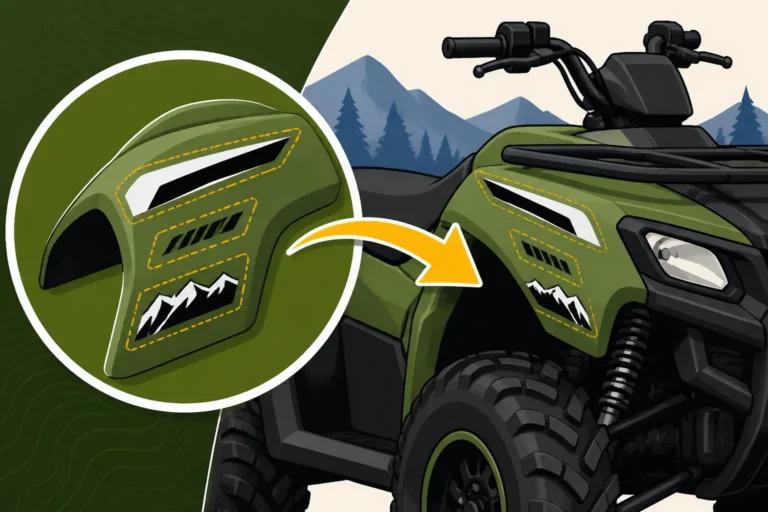
For ATVs and dirt bikes, the sticker typically goes on the left-hand side of the machine, usually on the fender or a visible frame component. For side-by-sides and other larger OHVs, it's often placed on the rear of the machine or on an Idaho Restricted Vehicle (R) plate if you have one. The key is that it must be easily seen by an officer without them having to search for it. [Sticker Placement on a Quad's Fender] and [Where the Idaho Sticker Goes on the Plate] offer detailed guidance on this. Don't just toss it in your glove box or tool bag; it needs to be on the machine.
Common Misconceptions and FAQs
Even with all the information out there, riders still have questions or operate under mistaken beliefs. Let's clear up some of the most frequent ones.
"I Only Ride on My Family's Ranch, So I Don't Need a Sticker."
This is a very common misconception. While Idaho law generally exempts you from needing an OHV sticker if you operate exclusively on private land with the owner's permission, the moment you even cross a public road or briefly use a public trail to access another part of the ranch, you are technically on public land and need a sticker. The definition of "private land" is very strict in this context.
Many riders live on large properties or have access to vast private acreage, but nearly all of them will, at some point, need to use a county road or a Forest Service access road to get from one section of their land to another, or to reach fuel or supplies in a nearby town. If you use any public land, even momentarily, the sticker is required. Don't risk a fine for a quick hop across the road. [Riding a Family Ranch Without a Sticker] dives deeper into this topic.
"My Machine is Old, So It's Grandfathered In / Exempt."
Unfortunately, age does not grant an OHV exemption from the sticker requirement. Regardless of how old your ATV or UTV is, if it meets the definition of an OHV and you plan to ride it on Idaho's public lands, it needs a current sticker. The rules apply equally to a brand-new side-by-side and a classic three-wheeler.
While older machines might have different titling requirements (e.g., [Idaho Title Rules for an Older Machine]), the need for an operating sticker remains consistent across the board for all recreational OHV use on public land. This ensures that every machine benefiting from the trail system contributes to its upkeep.
"I Just Bought My Machine; I Have 30 Days to Get a Sticker."
While there might be a grace period for titling a newly purchased machine in Idaho, the requirement for an OHV sticker to operate on public lands generally takes effect immediately. The moment you take that new (or new-to-you) machine off private property and onto a public trail or road, it needs to be stickered. Don't assume a grace period for operation; it's safest to get your sticker as soon as you complete the purchase.
When you buy a machine from an Idaho dealer, they will often handle the initial sticker paperwork for you or at least make it very clear what you need to do immediately. If you're buying privately, the responsibility falls squarely on you, the buyer. The best practice is to have the sticker in hand, or at least have proof of purchase for a sticker, before your first public ride. This is especially true if you are buying a used machine; verify its current status immediately. A proper [ATV Bill of Sale Wording Buyers Should Insist On] should clarify ownership transfer, but the sticker is your operational permit.
"I'm from out of state, and my state has reciprocity with Idaho."
This is a particularly important point for our out-of-state visitors. As of a few years ago, Idaho ended its OHV reciprocity agreements with other states. This means that all out-of-state machines operating on Idaho's public lands must purchase an Idaho non-resident OHV sticker. Your sticker from Montana, Utah, Oregon, or anywhere else, is no longer valid for riding in Idaho. This change was implemented to ensure that all users of Idaho's trails contribute to their maintenance and development.
Many visitors have been caught unaware by this change, leading to fines and disappointment. It's essential to plan ahead if you're traveling to Idaho with your OHV. You can purchase a non-resident sticker online before your trip, or at various vendor locations once you arrive. Don't let a simple sticker issue ruin your long-planned adventure to ride Idaho's incredible trails. You can find more specific details at [Why Idaho Ended OHV Reciprocity] and [Idaho's Non-Resident OHV Sticker].
Staying informed and making sure your OHV is always properly stickered is not just about avoiding fines; it's about being a responsible rider and contributing to the incredible riding opportunities we all cherish here in Idaho. Don't let a simple oversight turn a great day on the trail into a costly headache.
Disclaimer
This article is for general informational purposes only and does not constitute professional advice. Laws, prices and regulations vary by location and change over time. Consult a qualified professional for guidance on your specific situation.