Small Estate Paperwork for a Machine
Navigating the paperwork after a loved one passes away is rarely easy, and when that paperwork involves an ATV or UTV, it can feel like you're trying to find a trail in the dark. It's a tough time, and dealing with titles, registrations, and legal processes can add unnecessary stress to an already emotional period. This guide aims to clear up some of that confusion, specifically focusing on how to use a small estate affidavit in Idaho to transfer ownership of an off-highway vehicle (OHV) without getting bogged down in lengthy and costly probate court procedures.
Understanding Small Estate Affidavits in Idaho
When someone you care about passes away, their assets—including beloved ATVs or side-by-sides—become part of their estate. Depending on the total value of these assets, Idaho law offers a simplified process to transfer ownership, known as a small estate affidavit. This can be a huge relief for families who just want to settle affairs and maybe even keep riding the trails in memory of their loved one, rather than facing bureaucratic hurdles.
What Qualifies as a "Small Estate" for an OHV?
Idaho law defines a "small estate" based on the total value of all assets left by the deceased, not just the OHV itself. This threshold can change, so it's always wise to check the current figures, but generally, if the entire estate falls below a certain monetary value, you might be able to use this expedited process. For many families, an ATV or UTV might be one of the more significant assets, but when combined with bank accounts, other personal property, and anything else the person owned, the total still might fall within the "small estate" limits. It’s critical to account for everything, not just the machine, to determine if you qualify. This often provides a clear path forward when you're not dealing with millions in assets, but rather a cherished machine and perhaps a few other personal belongings.
If the OHV is truly the most valuable asset, and the total estate is modest, a small estate affidavit can be a lifesaver. This approach spares you the complexities and expenses of formal probate court, which can take months, sometimes even years, to resolve. It's designed for situations where the assets are straightforward and there are no major disputes among potential heirs. Think of it as a quicker, less formal way for family members to step in and take legal ownership of the machine, allowing them to continue its [Titling and Registering an ATV in Idaho] journey or dispose of it as needed.
When a Small Estate Affidavit is the Right Tool
A small estate affidavit is a powerful, yet specific, tool. It's generally appropriate when the deceased did not have a will, or if they did, the will doesn't necessitate full probate due to the estate's overall size and simplicity. It's also ideal when there are no significant debts attached to the OHV, or if any debts are clearly manageable and agreed upon by all parties. For instance, if an older quad was fully paid off and the owner passed suddenly, and their estate consisted primarily of that machine and a few household items, a small estate affidavit would likely be the most efficient route.
This method cuts down on court appearances, legal fees, and the sheer volume of paperwork that traditional probate entails. Instead of a judge overseeing every step, the affidavit essentially allows the rightful heirs to declare under oath that they are entitled to the property. It’s a declaration that carries legal weight, allowing the Idaho Department of Parks and Recreation (IDPR) and county assessor's offices to transfer the [Idaho OHV Title Application at the County Assessor] without extensive court orders. However, it's not a blanket solution for every situation. If there are multiple properties, complex investments, or considerable debts, full probate might still be the necessary, albeit more arduous, path. Knowing the total value of the estate is the first crucial step in determining if this tool fits your specific circumstances.
Step-by-Step: Preparing Your Small Estate Affidavit
Once you've determined that a small estate affidavit is indeed the most appropriate course of action for transferring an OHV in Idaho, the next step is to meticulously prepare the document itself. This process, while simpler than full probate, still requires careful attention to detail to ensure it's legally sound and acceptable to the state authorities. Rushing through this stage can lead to delays and frustration, so take your time and gather everything you need.
Gathering Essential Information and Documents
Before you even start drafting the affidavit, you'll need to collect a few critical pieces of information and several official documents. First and foremost, you'll need the original death certificate for the deceased. This is non-negotiable proof that the previous owner is no longer with us, and it will be required by almost any agency you interact with regarding the estate. You'll also need the vehicle identification number (VIN) for the ATV or UTV. This unique identifier is crucial for locating the vehicle's records and ensuring you're talking about the correct machine. You can usually find the VIN stamped on the frame of the machine, or on the existing title certificate. It's a good idea to also have the current [Idaho OHV Title Application at the County Assessor] in hand, even if it's still in the deceased's name, as it provides all the necessary details.
Next, you'll need to determine the estimated fair market value of the OHV. This helps confirm that the machine, and the estate as a whole, falls within Idaho's small estate limits. You can research this by looking at comparable sales online, checking classifieds, or consulting valuation guides like NADA. Be realistic and honest in your assessment. Finally, identify all potential heirs according to Idaho's intestacy laws (if there's no will) or the will itself. You'll need their full names, addresses, and their relationship to the deceased. This step can sometimes be tricky, especially if the family structure is complex, but it’s vital for ensuring everyone who might have a claim is properly acknowledged in the affidavit. Remember, the goal here is to be thorough and leave no stone unturned, preventing future disputes or challenges.
Drafting the Affidavit: Key Sections and Wording
With all your information in hand, you're ready to draft the small estate affidavit. While specific forms can vary, the core content remains consistent. The affidavit will typically start with a statement identifying the deceased, including their full legal name, date of death, and last known address. You'll then need to clearly describe the ATV or UTV, including its make, model, year, and that all-important VIN. It’s crucial to be precise here, as any discrepancies could cause issues during the transfer process.
The document must also include a sworn statement that the total value of the deceased's estate, excluding certain exempt property, does not exceed Idaho's small estate threshold. This is where your earlier valuation research comes into play. You'll then list all the named heirs, explaining their relationship to the deceased and why they are entitled to the property. If there are multiple heirs, the affidavit should specify how the ownership is to be divided or if one heir is designated to receive the machine on behalf of others. Many folks turn to online resources like LawDepot for pre-made forms that can guide them through the process, providing a structured template to ensure all necessary legal language is included. However, always review such templates carefully and ensure they align with current Idaho law. Clarity, accuracy, and completeness are paramount in drafting this document, as it will serve as the legal basis for the title transfer.
Notarization and Filing Requirements
After you've meticulously drafted the small estate affidavit, the next critical step is to have it notarized. This involves signing the document in front of a public notary, who will verify your identity and witness your signature, then apply their official stamp. Notarization is what gives the affidavit legal weight, affirming that the statements made within it are sworn to be true under penalty of perjury. It's a formal step that adds credibility to your claim. Make sure all relevant heirs who are signing the document are present for this, or that individual affidavits are prepared if circumstances prevent a joint signing.
Once notarized, the small estate affidavit typically isn't filed with a court in the same way a probate petition would be. Instead, it is usually presented directly to the entity that holds the asset—in this case, the Idaho County Assessor's office, which handles OHV titles. When you go to transfer the title, you will bring the original, notarized affidavit along with the death certificate, the existing OHV title (if available), and your identification. While you don't file it with a court, it's always wise to keep a certified copy for your own records. This document, once properly executed and presented, should be sufficient for the Assessor's office to process the title transfer, assuming all other conditions are met. This streamlined approach bypasses court dockets and allows you to move forward with updating the [Titling and Registering an ATV in Idaho] details in a far more timely manner.
Using the Affidavit to Transfer the OHV Title
With your properly prepared and notarized small estate affidavit in hand, you're now ready to tackle the official transfer of the OHV title in Idaho. This is the moment where all your diligent work comes together, allowing the state to recognize the new legal owner of the machine.
Presenting the Affidavit to the Idaho County Assessor
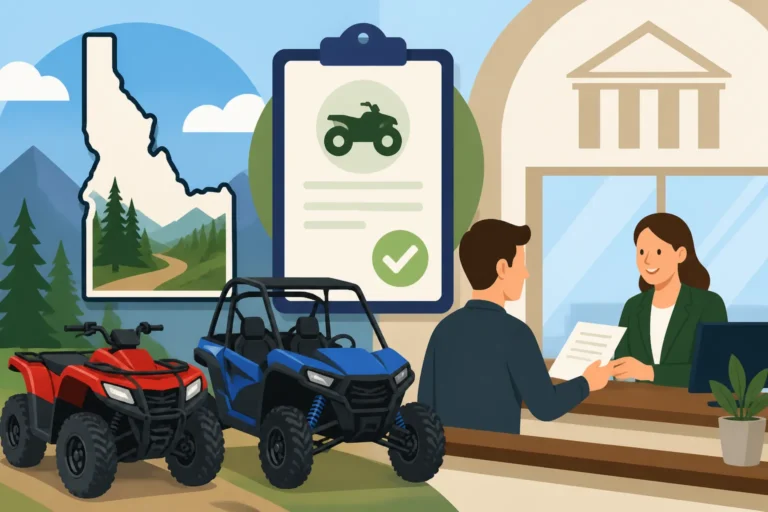
Your primary destination for transferring the OHV title will be your local Idaho County Assessor's office. This is where OHV titles are processed, and they are the authority that will review your small estate affidavit. When you visit, you'll need to bring several key documents: the original, notarized small estate affidavit, the certified death certificate of the deceased owner, and the original Idaho title certificate for the ATV or UTV (if it exists). Even if the title isn't signed by the previous owner, presenting it along with the affidavit helps streamline the process. You'll also need your own valid photo identification and any other paperwork the Assessor's office might require to verify your identity and your right to the machine.
Be prepared for the staff to review your documents thoroughly. They will check that the affidavit meets all Idaho legal requirements and that the values and heir information are consistent. You may need to complete an [Idaho OHV Title Application at the County Assessor] form to initiate the transfer into the new owner's name. They will look for any liens on the title, and if you haven't released them, that will need to be addressed separately (more on that below). This is typically a fairly routine process if all your paperwork is in order, but don't hesitate to call ahead to your specific county assessor's office to confirm their exact requirements and any specific forms they might need you to fill out beforehand. Having all your [Documents to Bring to an Idaho Assessor's Office] organized will make this step much smoother.
Dealing with Multiple Heirs and Disputes
What happens if the deceased left behind several heirs, and they all have a potential claim to the OHV? This can certainly complicate matters, but the small estate affidavit is designed to handle such scenarios, provided there's an agreement among the heirs. If a will exists, it will typically dictate who receives the machine. If there's no will, Idaho's intestacy laws will determine the legal heirs. In situations with multiple heirs, the affidavit should clearly state how the OHV is to be distributed. For example, if two siblings are co-heirs, the affidavit could state that the OHV is being transferred to one sibling with the agreement of the other, or that it is being transferred into both their names as co-owners.
Crucially, if there are disagreements or disputes among potential heirs regarding who should receive the OHV, a small estate affidavit might not be the right solution. The effectiveness of this document relies on everyone being in agreement. If family members are at odds, trying to force a small estate affidavit through could lead to legal challenges down the road. In such cases, seeking legal counsel or pursuing a full probate process, while more involved, may be necessary to ensure a fair and legally binding resolution. It’s always better to address potential conflicts head-on rather than deferring them, especially when emotions are already high during a time of loss.
Transferring Other Related Registrations and Stickers
Once the OHV title is successfully transferred into the new owner's name at the county assessor's office, your work isn't quite done. You'll also need to address the machine's registration and sticker. The title establishes legal ownership, but the registration and sticker allow you to legally ride on Idaho's designated OHV trails and public lands.
The new owner will need to apply for an updated [What an Idaho OHV Sticker Costs Each Year] under their name. This typically involves presenting the newly issued title and paying the appropriate fee. Remember that [Idaho OHV Registration Runs January to December], so you'll want to get this done as soon as possible to avoid any issues if you plan on riding. You might also need to update any specialized plates, like a restricted use plate, if the machine had one. Additionally, it’s a good time to review and update your insurance policy. If the machine was covered under the deceased's policy, that coverage likely ceased upon their death. You'll need to get new [Insuring an ATV in Idaho] coverage in your own name to ensure you're protected when you hit the trails. Taking these additional steps ensures that the OHV is not only legally yours but also fully compliant with all Idaho riding regulations.
Important Considerations and Potential Pitfalls
While a small estate affidavit offers a streamlined path to transferring an OHV title, it's not a one-size-fits-all solution. There are crucial considerations and potential pitfalls that can arise, and being aware of them beforehand can save you a lot of headaches, delays, and even legal complications.
When a Small Estate Affidavit Isn't Enough
The convenience of a small estate affidavit makes it tempting to use, but it's vital to recognize its limitations. If the deceased's total estate value—including bank accounts, real estate, other vehicles, and personal property—exceeds Idaho's defined small estate threshold, then this affidavit simply won't be enough. Attempting to use it when the estate is larger than allowed can lead to the document being rejected by state authorities or, worse, expose you to legal liability. For estates that exceed the limit, or those with complex assets like multiple properties, business interests, or significant investments, a full probate process through the court is usually unavoidable.
Similarly, if the deceased had a complex will with specific instructions for various assets, or if there are significant outstanding debts that need to be settled, a small estate affidavit might not provide the necessary legal framework. Full probate ensures that creditors are properly notified and paid, and that assets are distributed according to the will or state law in a legally supervised environment. The affidavit is designed for clear-cut, simple situations. If there's any doubt about the estate's total value, the existence of a valid will, or significant liabilities, it's always best to consult with an attorney to determine the most appropriate course of action. Trying to bypass the proper legal channels in more complex situations can create more problems than it solves.
Addressing Liens or Outstanding Debts
One of the most significant potential pitfalls when transferring an OHV via a small estate affidavit is the presence of existing liens or outstanding debts. If the deceased had financed the ATV or UTV and hadn't fully paid it off, there will be a lienholder (usually a bank or credit union) listed on the title. A small estate affidavit does not automatically erase this debt or clear the lien. The new owner, or the estate, will still be responsible for satisfying that debt.
Before attempting to transfer the title, it's critical to determine if there's a lien. You can check the existing title certificate for this information. If a lien exists, you'll need to contact the lienholder to discuss their requirements. They may require the debt to be paid in full, or they may be willing to transfer the loan to the new owner, subject to a credit check and their lending policies. Attempting to transfer a title with an active lien without addressing it will almost certainly result in rejection by the county assessor's office. You may even encounter issues if other significant debts of the deceased exist, as creditors may have a claim against the OHV as an asset of the estate. While the small estate affidavit process simplifies transfer, it doesn't absolve the estate from its financial obligations, so always be mindful of [Liens on an OHV Title] and other outstanding financial responsibilities.
Taxes and Fees Associated with Transfer
When transferring an OHV title using a small estate affidavit, you'll encounter certain fees, but generally not sales tax. The primary fee you'll face is the [Idaho Title Fee at the County Assessor], which is a standard charge for processing a new title certificate. This fee is relatively modest and is paid directly to the county assessor's office when you complete the transfer. You will also likely need to purchase a new [What an Idaho OHV Sticker Costs Each Year] under the new owner's name, which also incurs a fee.
However, a key distinction to remember is that inheriting property, including an OHV, generally does not trigger sales tax in Idaho. [Idaho Sales Tax on an ATV Purchase] applies to the purchase of a machine, not its transfer through inheritance. So, you won't be assessed sales tax on the value of the OHV itself when you use the small estate affidavit. One exception might be if the machine is coming from out of state and was not previously titled or registered in Idaho; in some rare cases, [Use Tax When a Machine Comes Into Idaho] could apply, but for an Idaho machine, it's typically just the title and sticker fees. It's always a good idea to confirm any fees directly with your local county assessor's office before you go, so there are no surprises when you're ready to finalize the transfer.
Small Estate Affidavit vs. Full Probate for OHVs
Choosing the right path to transfer an OHV after a loved one's passing can be daunting. Here's a quick comparison to help you understand when a small estate affidavit is your friend, and when full probate is unavoidable.
| Feature | Small Estate Affidavit | Full Probate |
|---|---|---|
| Estate Value | Below Idaho's statutory "small estate" threshold | Above the "small estate" threshold, or complex estate |
| Complexity | Relatively simple, less formal | Complex, court-supervised process |
| Timeframe | Weeks to a few months | Several months to a year or more |
| Cost | Minimal (notary, title, sticker fees) | Significant (attorney fees, court costs, executor fees) |
| Court Involvement | Minimal to none (no judge oversight) | Extensive (court-supervised distribution of assets) |
| Debts & Creditors | Heirs assume responsibility for known debts | Formal process for notifying and paying all creditors |
| Heir Agreement | Requires agreement among all legal heirs | Court resolves disputes based on will/intestacy law |
| Appropriate For | Simple estates, no major disputes, clear ownership | Complex estates, significant assets/debts, potential disputes |
| OHV Title Transfer | Direct presentation to County Assessor with affidavit | Requires court order or Letter of Administration |
This article is for general informational purposes only and does not constitute professional advice. Laws, prices and regulations vary by location and change over time. Consult a qualified professional for guidance on your specific situation.