Idaho’s Restricted Vehicle Plate and Road Use
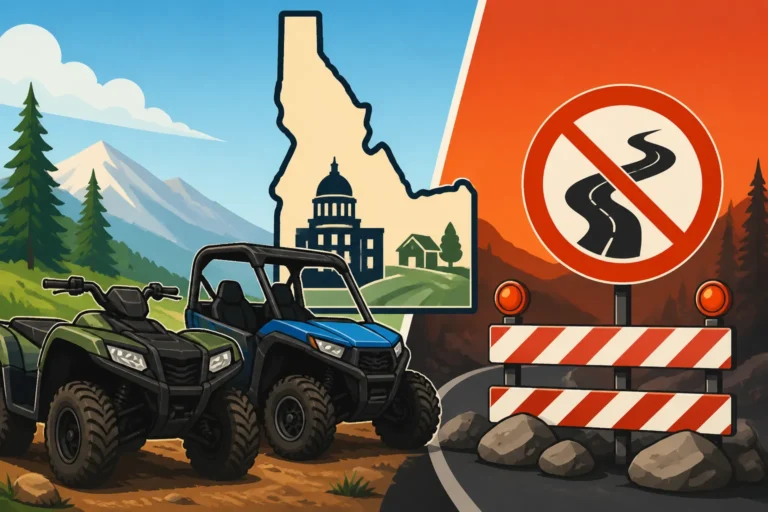
There's nothing quite as frustrating as pulling up to an incredible trail, only to realize the next section of public land is just a half-mile down a paved county road—a road you absolutely cannot legally ride your ATV or UTV on without the right setup. The dream of seamlessly connecting your favorite riding areas, or simply being able to pop into town for gas or a bite to eat, often hits a wall of state and local regulations. This comprehensive guide will unravel the mysteries of Idaho's Restricted Vehicle Plate, explaining exactly what it is, how to get one, and most importantly, how to use it legally and safely to unlock more of Idaho's incredible backcountry.
Understanding Idaho's Restricted Vehicle Plate
Idaho is a paradise for off-road enthusiasts, but the rules for riding on public roads can often feel like a tangled mess of red tape. That's where the Restricted Vehicle Plate, often affectionately called an "R Plate," comes into play. It's designed to bridge the gap between pure off-road trail use and the occasional need to access or cross public roads.
What Exactly Is a Restricted Vehicle Plate?
At its heart, an Idaho Restricted Vehicle Plate is a unique registration for your Off-Highway Vehicle (OHV) that grants it limited permission to travel on designated public roads. Unlike a standard vehicle license plate you'd see on a car or truck, the R Plate signifies that your machine is not fully street legal. It doesn't mean you can drive your side-by-side down US-95 to work every day. Instead, it’s a specific authorization for specific types of roads and specific purposes, primarily to facilitate trail access and local commerce in OHV-friendly areas.
Think of it this way: without an R Plate, your ATV or UTV is generally confined to designated OHV trails and private property. Every time you need to move from one trail system to another, or even just cross a short section of paved road, you’d have to load your machine onto a trailer, drive the truck and trailer, unload, ride, reload, and so on. It’s an exhausting process that eats up valuable riding time. The R Plate cuts through this hassle by giving you that narrow legal window to traverse these short road segments, transforming inconvenient gaps into rideable links. This plate is your ticket to legally operating on certain county and local roads, but it always comes with stipulations about your machine's equipment, your personal licensing, and where you can actually ride.
Why Riders Seek a Restricted Plate
The primary motivation for most Idaho OHV owners to get a Restricted Vehicle Plate is the sheer convenience and expanded access it provides. Imagine planning an epic ride through the mountains where various trails are interspersed with county roads. Without the R Plate, each time your trail ends at a paved or gravel county road that leads to the next trail, you're faced with a dilemma: either illegally ride the road or go through the arduous process of trailering your machine. This not only breaks the flow of your adventure but can also be incredibly time-consuming and disruptive.
Beyond connecting trails, the R Plate is a game-changer for accessing services in small, OHV-friendly towns. Picture yourself deep in the Idaho backcountry, your fuel tank running low, or your group craving a burger after hours on the trail. With an R Plate, you can often legally ride your side-by-side directly into many of these communities to refuel at a gas station, grab a meal, or even pick up supplies at a general store. This ability to integrate your riding experience with local amenities enhances the entire trip, making multi-day excursions or spontaneous stops much more feasible and enjoyable. It transforms the way you experience Idaho’s vast trail networks, making them feel more connected and accessible.
Eligibility and Requirements for an Idaho Restricted Plate
Getting your machine ready for an R Plate isn't just about applying for paperwork; it also involves ensuring your ATV or UTV meets a specific set of equipment requirements that make it safer for road use. These aren't arbitrary rules; they're in place to help your machine be seen and heard by other traffic on shared roads.
What Machines Qualify for an R Plate
Idaho's Restricted Vehicle Plate is generally available for most types of Off-Highway Vehicles (OHVs), which include All-Terrain Vehicles (ATVs), Utility Terrain Vehicles (UTVs), and off-road motorcycles (dirt bikes). The key is that the machine must be designed primarily for off-highway use. Typically, there's a minimum engine size requirement, with machines over 50cc generally needing to be titled in Idaho before they can even be considered for an R Plate. This ensures proper identification and ownership, which is foundational for any vehicle registration. For those who aren't sure if their specific machine qualifies, checking the manufacturer's classification and Idaho’s OHV statutes is always a good starting point.
It's important to distinguish between typical OHVs and other niche vehicles. For instance, while a golf cart might be used on a private golf course, it often falls under different classifications and local ordinances when it comes to road use, rather than qualifying for a standard OHV Restricted Plate. Similarly, snowmobiles, while OHVs, have their own specific rules for limited road crossings and often don't fit the same R Plate category designed for wheeled vehicles. The focus for the R Plate is primarily on your conventional ATVs and UTVs—machines with a Vehicle Identification Number (VIN) that can be clearly identified and titled as an OHV in Idaho. You'll need to have proof of ownership, such as a manufacturer's certificate of origin (MCO) for new machines or a clean Idaho title for used ones, before proceeding with any plate application.
Equipment Mandates for Road Use
Once you’ve confirmed your ATV or UTV is eligible, the next crucial step is ensuring it meets the safety equipment standards for limited road operation. These requirements are in place to enhance visibility and communication on roads shared with traditional vehicles. First and foremost, your machine must be equipped with working headlights and taillights that are visible from appropriate distances, especially if you plan to be out around dawn, dusk, or in less-than-ideal weather conditions. A functional brake light is also mandatory, clearly signaling when you're slowing down or stopping.
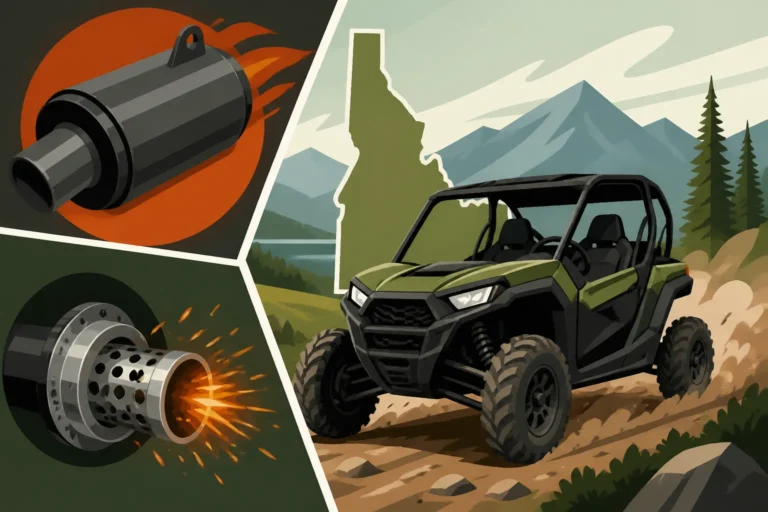
Beyond lighting, you’ll need at least one rearview mirror, typically mounted on the left side of the machine, to give you a clear view of traffic approaching from behind. A horn is also a non-negotiable item, essential for signaling your presence or alerting others to potential hazards. Turn signals are another vital piece of equipment, allowing you to clearly indicate your intentions to other drivers, particularly when navigating intersections or making turns on county roads. Many ATVs and UTVs don't come stock with all these items, so you might find yourself looking into aftermarket upgrades. Companies like SuperATV offer a range of universal turn signal kits, mirrors, and horn setups that can help bring your machine into compliance. Additionally, your OHV must have a spark arrestor on its exhaust system to prevent wildfires and a muffler that keeps noise levels within legal limits, respecting both wildlife and residential areas you might pass through.
The Application Process: Getting Your R Plate
Once you’ve got your machine equipped and ready, the next step is navigating the administrative process to actually get that coveted Restricted Vehicle Plate in your hands. It's a fairly straightforward process, but knowing what to expect can save you a lot of hassle and repeat trips.
Where to Apply and What to Bring
The journey to obtaining your Idaho Restricted Vehicle Plate begins at your local County Assessor’s Office. This is the primary governmental entity responsible for processing OHV titles and registrations, including the R Plates. Before you head out, it's wise to gather all your necessary documentation to ensure a smooth visit. You’ll absolutely need proof of ownership for your ATV or UTV. This typically means bringing your official Idaho title, or if it's a brand new machine, the Manufacturer’s Certificate of Origin (MCO). If you’ve recently purchased a used machine, also bring your bill of sale, especially if the title transfer is still pending or was just completed.
You’ll also need valid identification for yourself, usually a driver’s license. Be prepared to provide the Vehicle Identification Number (VIN) of your machine, which will be cross-referenced with your ownership documents. There will be a fee associated with the R Plate application itself, as well as the required annual Idaho OHV sticker that must be displayed on the plate. While specific costs can change, you should expect to pay these fees at the time of application. The staff at the Assessor's Office can guide you through the specific forms you'll need to fill out. For more details on the titling process, you can refer to [Idaho OHV Title Application at the County Assessor].
Understanding the Waiting Period and Temporary Solutions
Unlike getting a standard vehicle registration sticker, you won't typically walk out of the County Assessor's Office with your physical Restricted Vehicle Plate in hand. After your application is processed and approved, the actual plate will be mailed to you from a central facility. This mailing process means there's a waiting period involved, which can sometimes feel like an eternity when you're eager to hit the trails with your new road-legal privileges. While the exact turnaround time can vary based on workload and postal service, it’s not uncommon for it to take several weeks to arrive.
During this waiting period, it's crucial to understand that you generally cannot legally operate your machine on public roads simply because you've applied for the plate. The law requires the actual, physical R Plate to be properly displayed on your OHV along with a current OHV sticker for it to be considered legal for restricted road use. There are typically no temporary tags or permits issued for the R Plate that allow you to ride while you wait for the permanent one to arrive. This means planning is key; apply well in advance of any trips where you intend to use the road-riding privileges. It's always a good idea to confirm the current estimated waiting times with your County Assessor's office when you apply. You might find more information on this specific timeline in [How Long an Idaho R Plate Takes to Arrive].
Displaying and Maintaining Your R Plate
Once you've gone through the effort of acquiring your Idaho Restricted Vehicle Plate, the job isn't quite done. Proper display and consistent maintenance of your registration are crucial to stay on the right side of the law and ensure your machine is always ready for your adventures.
Correct Plate and Sticker Placement
The Idaho Restricted Vehicle Plate must be displayed prominently and securely on the rear of your ATV or UTV. This isn't just a suggestion; it's a legal requirement designed to ensure that law enforcement and other drivers can easily identify your machine. The plate should be mounted in a horizontal position, clearly visible from behind, and not obstructed by any gear, mud, or aftermarket accessories. Many machines have a designated spot for a license plate, often incorporated into the rear fender or bumper, and it’s best to use these locations. Make sure the mounting is robust enough to withstand the vibrations and jostling of off-road riding, preventing the plate from falling off or becoming unreadable.
Equally important is the placement of your annual Idaho OHV sticker. This sticker must be affixed directly onto your Restricted Vehicle Plate. The sticker signifies that your annual registration fees are paid and that you have current permission to operate your OHV. It's not enough to have the sticker somewhere on your fender; it absolutely needs to be on the plate itself. Make sure to apply it in the designated corner or area, ensuring it's fully adhered and won't peel off easily, especially when exposed to the elements. For more precise guidance on where to place your sticker, you can consult [Displaying a Sticker on an Idaho R Plate] and [Where the Idaho Sticker Goes on the Plate]. A properly displayed plate with a current sticker is your visible sign of compliance, so don't overlook these seemingly small details.
Renewals and Ongoing Compliance
Maintaining your Idaho Restricted Vehicle Plate isn't a one-and-done deal; it requires annual attention to ensure continued legality. While the physical R Plate itself doesn't expire in the same way a temporary tag would, the privilege to use it on public roads is tied directly to your annual OHV sticker. This sticker has a specific expiration date, and it must be renewed each year. The renewal cycle for Idaho OHV stickers typically runs from January to December, regardless of when you initially purchased it during the year. This means you'll need to pay attention to those dates to avoid riding with an expired sticker.
Failing to renew your OHV sticker means your R Plate is no longer valid for road use, even if the physical plate is still attached to your machine. This can lead to citations and fines if you're caught operating on public roads without a current sticker. The Idaho Department of Parks and Recreation (IDPR) usually sends out renewal reminders, but it’s ultimately your responsibility to stay on top of it. Beyond the sticker, it’s also your ongoing responsibility to ensure your machine continues to meet all the equipment mandates for road use. Regularly check your headlights, taillights, brake lights, horn, mirrors, and turn signals to make sure they are all in good working order. Any broken or non-functional safety equipment can put you at risk of a citation, even if your plate and sticker are current. You can find out more about the annual costs associated with your sticker in [What an Idaho OHV Sticker Costs Each Year].
Navigating Idaho Roads with a Restricted Plate
Having an R Plate unlocks new possibilities for your Idaho OHV adventures, but it's vital to understand the precise rules of the road. The "restricted" part of the name isn't just for show; it dictates exactly where and how you can ride.
Which Roads Are Open (and Which Are Closed)
This is perhaps the most crucial aspect of understanding the Idaho Restricted Vehicle Plate: knowing where you can actually ride. Generally, the R Plate grants you access to most county roads. These are typically the paved, gravel, or dirt roads maintained by individual counties that connect smaller communities, lead to trailheads, or simply pass through rural areas. In some cases, specific city streets might also be open to R Plate vehicles, but this is entirely dependent on local city ordinances. These ordinances often designate specific routes or areas where OHVs are welcome, usually to allow access to services like gas stations or restaurants, or to connect to nearby trail systems. It’s a patchwork system, so what’s open in one town might be closed in another.
However, there are significant restrictions. State highways (like those designated as SH-XX) and federal highways (like US-XX or I-XX) are almost universally off-limits to OHVs, even with an R Plate. The exception is typically a direct crossing, where you may be permitted to cross at a 90-degree angle if it’s the safest and most direct route to another legal road or trail. You cannot, under any circumstances, ride along these high-speed, high-traffic thoroughfares. Many Forest Service and Bureau of Land Management (BLM) roads are already open to OHVs without the need for an R Plate, but having the plate can make connecting to these federal routes much easier and more flexible, especially if the access involves a county road. For a more comprehensive overview of road access, check out [Which Idaho Roads Are Open to OHVs] and [Can You Ride an OHV on an Idaho State Highway?]. Always carry a current motor vehicle use map (MVUM) for federal lands and check local county and city ordinances before you ride into unfamiliar territory.
Specific Road Use Rules and Limitations
Beyond knowing which roads are open, there are specific rules about how you operate your OHV on those roads. Just like driving a car, you must obey all traffic laws, including stop signs, yield signs, and speed limits. Idaho law generally sets a maximum speed limit for OHVs on county roads that are open to restricted vehicles. This limit is often lower than the posted speed limit for cars, acknowledging the different handling characteristics of an ATV or UTV. Exceeding this limit can result in a speeding ticket, just like any other vehicle. For instance, even if the road is posted 45 MPH for cars, your OHV might be restricted to 35 MPH or less. You can learn more about specific speed restrictions in [Idaho Speed Limits for Restricted Vehicles].
Furthermore, some local ordinances might have time-of-day restrictions for OHV use on certain roads, especially within town limits, to mitigate noise concerns. When passing through small towns, it’s always best to ride courteously and cautiously, respecting residents and other motorists. The R Plate allows you to access essential services like gas stations, grocery stores, or restaurants, but it doesn't grant you the right to drive recklessly or cause disturbances. Think of it as a privilege that comes with the responsibility of being a good ambassador for the OHV community.
The Driver's License, Insurance, and Helmet Angle
Operating an OHV with an R Plate on public roads in Idaho comes with additional personal requirements. For starters, anyone operating an R-plated machine on a public road must possess a valid driver's license. This means a learner's permit or a simple OHV safety certificate isn't sufficient for road operation. The state requires that you are a licensed driver, just as if you were behind the wheel of a car. This ensures a basic level of driving competency and understanding of traffic laws for anyone sharing the road.
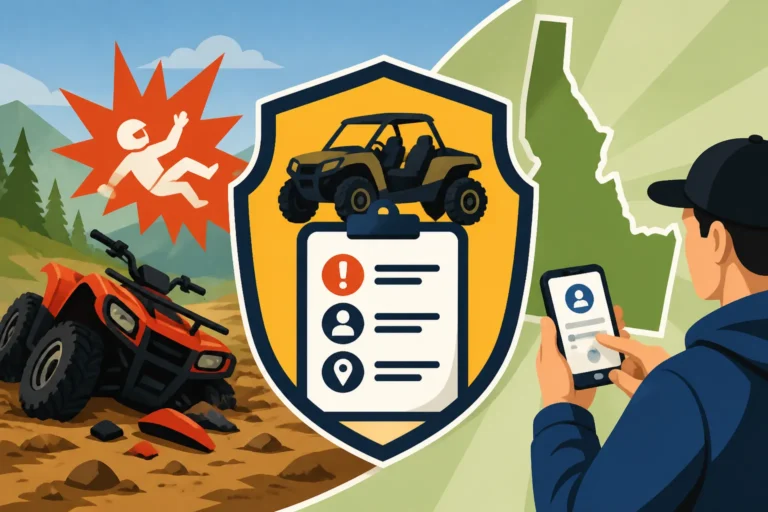
In addition to a driver's license, liability insurance is also a mandatory requirement when operating an OHV on Idaho's public roads with an R Plate. This insurance provides financial protection in case you are at fault in an accident causing injury or property damage to others. While OHV insurance might not be required for pure off-road trail riding, it becomes essential for any road-legal activity. You should always carry proof of insurance with you while riding. Finally, Idaho law mandates helmet use for all OHV riders and passengers under the age of 18, regardless of whether they are on a trail or a restricted road. While adults over 18 are not legally required to wear a helmet, it is always strongly recommended for safety. Be sure to check [Driver's License and Insurance on an Idaho Road Ride] and [Idaho Helmet Rules for Riders Under 18] for comprehensive details on these critical requirements.
Common Misconceptions and Legal Pitfalls
Even with all the information at your fingertips, it’s easy to misunderstand the nuances of the Idaho Restricted Vehicle Plate. Clearing up these common misconceptions can save you from legal trouble and ensure you’re making the most of your road-riding privileges without overstepping boundaries.
The R Plate Is NOT a Full Street Legal Registration
This is perhaps the most critical point to emphasize: the Idaho Restricted Vehicle Plate does not convert your ATV or UTV into a fully street-legal vehicle like a car or truck. It's a common misconception that once you have an R Plate, you can pretty much go anywhere a car can. This simply isn't true. The "Restricted" in the plate's name is there for a reason. It grants you access to certain roads under specific conditions, primarily to facilitate access to trails and services in rural, OHV-friendly areas. You absolutely cannot drive your side-by-side on state highways, interstates, or typically major city arteries. The intent is not for commuting or extensive road travel, but rather for short connector sections.
Many other states have different definitions or processes for "street legal" conversions, often involving much more extensive equipment modifications and higher registration costs to meet passenger car standards. Idaho's R Plate is distinctly different from these. It's tailored for off-road machines needing brief, lawful access to county roads. Trying to use your R-plated OHV as a substitute for a passenger vehicle on roads beyond its legal scope will undoubtedly lead to citations, fines, and potentially even impoundment of your machine. It’s crucial to internalize this distinction and respect the limitations of the R Plate to avoid any unpleasant encounters with law enforcement.
Local Ordinances and Their Impact
Another significant factor that often catches riders off guard is the influence of local ordinances. While Idaho state law provides the framework for the Restricted Vehicle Plate, individual counties and even incorporated cities have the authority to further regulate OHV use within their specific jurisdictions. This means that what is perfectly legal in one Idaho county or town might be prohibited just across the county line or within the city limits of a neighboring community. This creates a patchwork of rules that can be challenging to navigate without local knowledge.
For example, a county road might be open to R-plated vehicles for its entire length in one county, but as soon as you cross into the next county or enter a specific city, that same road might suddenly become off-limits, or have different speed limits or time restrictions. Some towns might designate specific "OHV routes" through their streets to allow access to gas stations or restaurants, while all other streets remain closed to OHVs. It is your responsibility as the rider to be aware of and comply with these local rules. Before embarking on a ride that spans multiple jurisdictions or passes through towns, make it a habit to check the local county sheriff's office or city hall for their specific OHV ordinances. Ignorance of these local laws is not a valid defense if you're cited. For more on this, refer to [Idaho City and County Ordinances That Close Roads].
Penalties for Non-Compliance
Ignoring the rules associated with the Idaho Restricted Vehicle Plate and its road use privileges can lead to a range of penalties, from inconvenient fines to more severe consequences. Operating your OHV on a restricted road without the R Plate, or without a current OHV sticker affixed to it, is a violation that can result in a citation. These fines can quickly add up and put a damper on your riding budget. Think of the cost of a good set of tires or an accessory from SuperATV that you could have bought instead of paying a ticket.
Beyond simply not having the plate or sticker, failing to meet the equipment requirements (like missing a rearview mirror or having non-functional brake lights) while riding on a public road can also lead to citations. Law enforcement officers are trained to look for these compliance issues. In more serious instances, such as repeated violations, reckless operation, or operating on closed roads (like state or federal highways), you could face higher fines, your machine might even be impounded, and your driving privileges could be affected. It's far better to invest the time and minimal cost to ensure full compliance than to face the penalties. Details on specific fines can be found in [Idaho Fines for Illegal Road Riding] and [Penalties for an Unstickered OHV in Idaho]. Always prioritize safety and legality to protect yourself and preserve the privilege of riding on Idaho’s incredible roads and trails.
Enhancing Your Machine for Road Legality
While getting an R Plate addresses the legal aspect of road access, ensuring your OHV is truly prepared for shared road environments often goes beyond the minimum requirements. Thoughtful upgrades can significantly improve safety, visibility, and the overall experience of transitioning from trail to pavement.
Essential Aftermarket Upgrades for Compliance
Most ATVs and UTVs are built primarily for off-road performance, which means they often lack some of the basic safety features mandated for road use. Beyond the factory setup, you'll almost certainly need to invest in some aftermarket accessories to bring your machine into compliance for an Idaho Restricted Vehicle Plate. The big ones are turn signals. Many machines come with basic headlights and taillights, but integrated turn signals are often absent. A universal turn signal kit is a popular and necessary upgrade, clearly signaling your intentions to other drivers, whether you're making a left turn onto a county road or signaling to pull over.
High-quality mirrors are another essential. While a single left-side mirror might meet the minimum requirement, many riders opt for a pair of sturdy side mirrors to improve their field of vision and situational awareness on roads. A loud, reliable horn is also non-negotiable for alerting other vehicles or pedestrians. Many aftermarket horn kits are specifically designed for OHV installation, providing an audible warning that stands out. When considering these upgrades, look for durable, weather-resistant components that can handle both the rigors of off-road riding and the demands of road use. Companies like SuperATV offer a variety of specific aftermarket solutions, from wiring harnesses and LED turn signals to robust mirrors and horns, all designed to make your machine road-legal and safer.
Visibility and Safety Beyond the Minimums
Meeting the minimum equipment requirements is a good start, but enhancing visibility and overall safety for road sections is a smart move that goes above and beyond. Remember, you're sharing the road with much larger, faster vehicles, and anything you can do to make your OHV more conspicuous is a benefit. Consider upgrading your standard lights to brighter LED headlights and taillights, which offer superior illumination and make you more visible to oncoming and trailing traffic, especially around dusk or in adverse weather conditions. Adding additional auxiliary lighting, such as amber marker lights or extra brake lights, can also significantly increase your machine's presence on the road.
Reflective tape is a simple yet highly effective addition. Applying strips of high-visibility reflective tape to the sides and rear of your machine can make a dramatic difference in how well you’re seen by other drivers, particularly in low light conditions or at night. Visibility flags, especially tall whip flags with reflective material or LED lights, are another excellent safety addition, making your machine easier to spot over crests or through dense foliage, especially when riding in groups. While they might feel more like a desert riding accessory, they serve a valuable purpose in indicating your presence on roads too. The goal is to maximize your machine’s profile and ensure that other drivers are aware of your presence long before they are close. You can find more ideas for improving visibility in [Reflective Tape for Dusk Riding].
Pre-Ride Checks for Road Sections
Before you even think about engaging your R Plate privileges and venturing onto a public road, a thorough pre-ride check is absolutely essential. This isn't just about avoiding a ticket; it's about ensuring your safety and the safety of others on the road. Take a few extra minutes to systematically inspect your machine. First, confirm that all your road-legal equipment is fully functional: test your headlights (high and low beam), taillights, brake lights, and most importantly, your turn signals. Give your horn a quick honk. Check that your rearview mirror(s) are securely mounted and properly adjusted to give you a clear view behind you.
Next, inspect your tires. Ensure they are properly inflated to the manufacturer’s recommended pressure for on-road use (which might be different from off-road pressures). Check for any visible damage, cuts, or punctures that could lead to a flat tire on the pavement. Verify that your OHV sticker is current and clearly affixed to your R Plate, and that the plate itself is securely mounted and clean. Also, confirm you have your valid driver's license, proof of insurance, and any other required paperwork (like your OHV safety certificate if applicable) readily accessible. These quick checks can prevent headaches, fines, and potentially dangerous situations on shared roads, allowing you to ride with confidence and peace of mind.
Equipment Requirements for Idaho's Restricted Vehicle Plate
Understanding the difference between what your OHV might come with from the factory and what Idaho requires for road use with an R Plate is crucial. This table summarizes typical requirements:
| Feature | Stock OHV (Typical) | Required for R Plate Road Use (Idaho) |
|---|---|---|
| Headlights | Often present (some may be off-road only) | Yes, operational (high/low beam recommended) |
| Taillights | Often present (some may be off-road only) | Yes, operational (visible from specified distance) |
| Brake Light | Often present | Yes, operational (illuminates upon braking) |
| Turn Signals | Rarely present | Yes, front and rear, operational (amber preferred) |
| Rearview Mirror | Rarely present | Yes, at least one on the left side (two recommended) |
| Horn | Rarely present | Yes, audible from a specified distance |
| Windshield | Optional, partial | Not explicitly required, but eye protection is mandatory for under 18 |
| Seatbelts/Nets | Typically present in UTVs, not ATVs | Required if machine originally equipped; recommended for all passengers |
| Muffler | Yes (with spark arrester) | Yes, with working spark arrester (noise limits apply) |
| License Plate | No (may have registration decal area) | Yes, Idaho Restricted Vehicle (R) Plate |
| OHV Sticker | Yes (for off-road use) | Yes, current sticker affixed to the R Plate |
Disclaimer
This article is for general informational purposes only and does not constitute professional advice. Laws, prices and regulations vary by location and change over time. Consult a qualified professional for guidance on your specific situation.