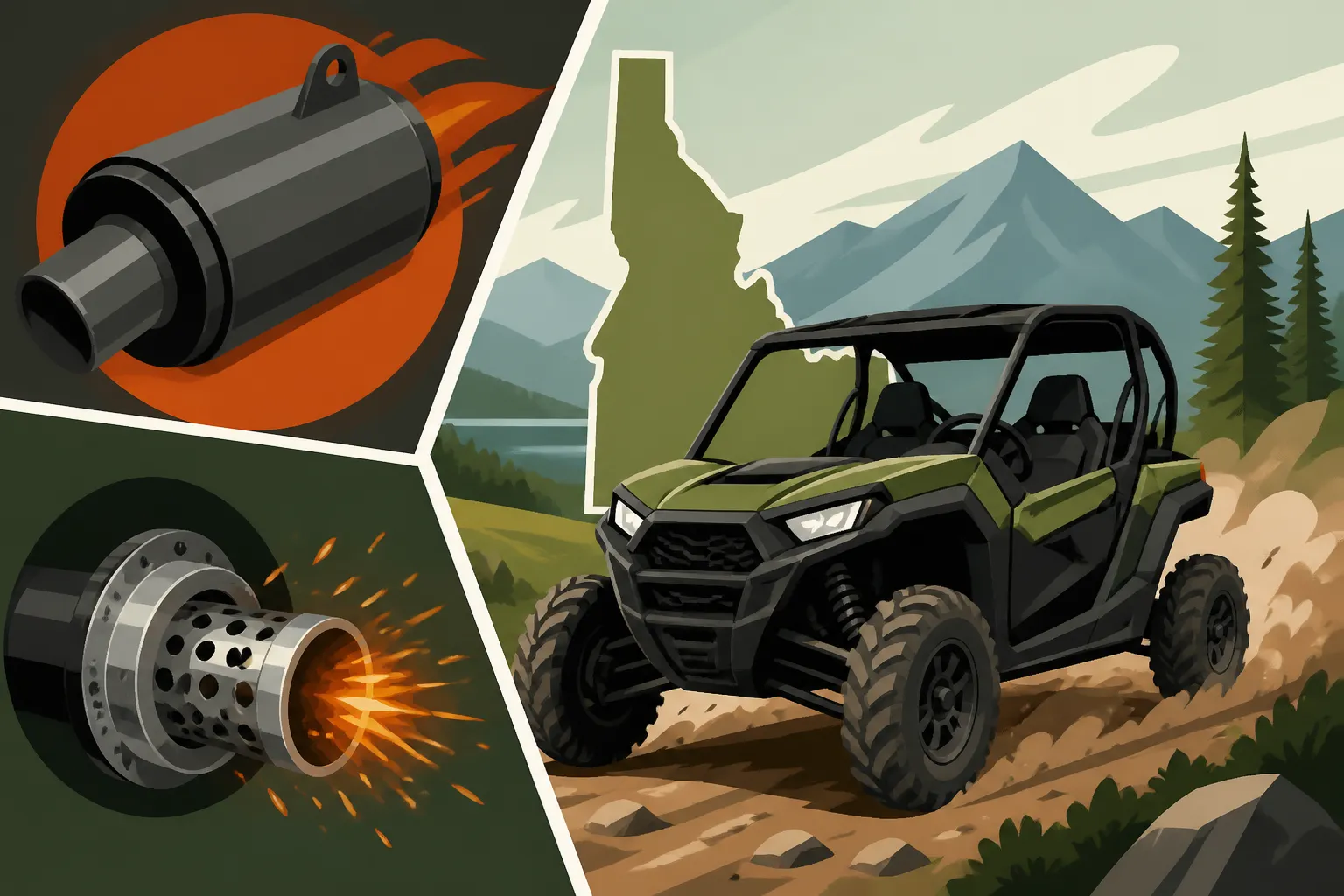
Mufflers and Spark Arresters
It's incredibly frustrating to invest in a fantastic ATV or UTV, dreaming of hitting Idaho's incredible trails and byways, only to worry if your machine is even legal for the ride. Nobody wants to get a citation for something as seemingly minor as exhaust noise or a missing part, especially when you're just trying to enjoy the outdoors responsibly. This guide will walk you through everything you need to know about mufflers and spark arresters for your Idaho off-highway vehicle, ensuring your rides are not only thrilling but also fully compliant with state regulations.
Understanding Idaho's OHV Exhaust Regulations
When you're out exploring the vast landscapes of Idaho, whether you're cruising through the Boise National Forest or navigating county roads, it’s not just about having fun; it’s about being a responsible rider. Idaho, like many states, has specific laws designed to protect both the environment and the peace and quiet of its residents and other recreationists. These laws primarily focus on two crucial components of your OHV's exhaust system: the muffler and the spark arrester. Ignoring these can lead to fines, trail closures, and a bad reputation for the entire OHV community.
Why Noise Limits Matter on Idaho Trails
Picture this: you're enjoying a peaceful day fishing by a pristine mountain stream, the only sounds being the rush of water and the chirping of birds. Suddenly, a roaring OHV tears by, shattering the tranquility. This scenario is precisely why noise limits are in place. Idaho aims to balance recreational opportunities with environmental stewardship and the comfort of others. Excessive noise doesn't just annoy hikers and campers; it can also disturb wildlife, impacting their natural behaviors and habitats.
Idaho law generally requires OHVs to be equipped with a muffler in good working order that effectively prevents excessive or unusual noise. This isn't just a suggestion; it's a legal requirement designed to ensure that the sound your machine makes stays within acceptable limits. Many county ordinances and designated riding areas have specific noise limits, often measured in decibels, which your machine must adhere to. It's not just about having a muffler; it's about having one that does its job effectively. Think of it as a shared responsibility to keep Idaho's wild places enjoyable for everyone. [Idaho Noise Rules Near Mountain Towns] are a perfect example of specific local regulations you might encounter.
The Critical Role of Spark Arresters in Fire Prevention
Idaho is no stranger to wildfire. Every summer, headlines remind us of the devastating impact these fires can have on our forests, communities, and air quality. Many wildfires are human-caused, and unfortunately, OHVs without proper spark arresters can be a significant culprit. A spark arrester is a device incorporated into the muffler or exhaust system that's designed to trap and extinguish hot carbon particles (sparks) that are expelled from the engine. These tiny embers, if not contained, can easily ignite dry grass, leaves, or forest debris, especially in Idaho's often arid conditions.
Because of this very real danger, Idaho law mandates that any OHV operating on public lands must be equipped with a U.S. Forest Service (USFS) approved spark arrester. This isn't just a recommendation; it's a non-negotiable safety feature. If you're caught riding on public land without one, or with one that's not properly maintained, you're not only risking a substantial fine but also putting vast natural resources and lives in jeopardy. This is why when you get your [Idaho OHV Sticker], you're acknowledging these important rules. Always ensure your spark arrester is not only present but also USFS-approved and in good working order.
Mufflers Versus Spark Arresters: What's the Difference?
While often discussed in the same breath, mufflers and spark arresters serve distinct but complementary roles in your OHV's exhaust system. Understanding the difference is key to ensuring your machine is compliant and ready for Idaho's diverse terrain. Think of them as a dynamic duo: one tames the roar, the other snuffs out the danger.
The Primary Function of Your Muffler
Your muffler's main job is exactly what its name implies: to muffle, or reduce, the sound produced by your engine's exhaust. When an engine fires, it creates powerful explosions that push exhaust gases out at high pressure, generating a lot of noise. The muffler contains a series of chambers, baffles, and sometimes sound-absorbing materials like fiberglass packing, all designed to dissipate the sound waves and reduce their intensity before they exit the tailpipe.
A well-functioning muffler makes your ride more enjoyable for you and less disruptive for others. It allows you to converse with passengers, hear approaching hazards, and simply enjoy the sounds of nature around you, rather than just your engine. Over time, mufflers can deteriorate; baffles can break, and packing can burn out, leading to increased noise and potential non-compliance. A common frustration is when a stock muffler degrades, or when an aftermarket one that initially seemed okay becomes too loud, leaving you scrambling for a solution to meet local [Idaho Noise Rules Near Mountain Towns].
How a Spark Arrester Prevents Wildfires
In contrast to the muffler's sound-dampening role, the spark arrester's function is purely preventative, focused on fire safety. It's a fine mesh screen or a series of baffles and chambers that forces hot carbon particles to change direction or spin, causing them to cool and extinguish before they can leave the exhaust system. Imagine tiny, glowing embers being flung out of your exhaust pipe – the spark arrester catches these before they can land on dry brush and ignite a fire.
The key to a spark arrester's effectiveness is its USFS approval, which means it has been tested and certified to meet specific performance standards. These are often stamped directly on the arrester or muffler itself, indicating its compliance. It's crucial that this component is regularly inspected and cleaned, as carbon buildup can clog the screen, reducing engine performance and, ironically, increasing the chance of it failing to arrest a spark effectively. Ignoring this simple maintenance can have serious consequences in fire-prone Idaho. You can find more specific rules under [Spark Arrester Rules on Idaho Public Land].
Inspecting and Maintaining Your OHV's Exhaust System
Regular inspection and maintenance of your OHV's muffler and spark arrester are not just good practice; they are essential for legal compliance and safe riding in Idaho. A neglected exhaust system can lead to loud rides, potential fires, and unwanted interactions with law enforcement. Don't wait until you're pulled over or starting a wildfire to check these vital components.
Checking for Muffler Damage and Excessive Noise
Before every ride, especially if you're heading to public lands or areas with noise ordinances, take a few minutes to visually inspect your muffler. Look for dents, cracks, or holes in the muffler body or pipes. These can indicate internal damage or simply allow sound to escape prematurely, making your machine louder than allowed. Feel around the joints and welds for any exhaust leaks, which can also contribute to excessive noise.
Beyond visual inspection, trust your ears. Has your machine gotten noticeably louder than it used to be? Does it have a raspy or tinny sound? These are often signs that the internal baffles have broken or that the sound-absorbing packing has degraded. Many riders don't realize their exhaust is too loud until a friend points it out, or worse, a ranger does. If you suspect your muffler isn't doing its job, it's time for repair or replacement. Remember, the goal isn't just to have a muffler, but to have one that works effectively to meet [Idaho Muffler and Exhaust Noise Limits].
Ensuring Your Spark Arrester is USFS Approved and Clear
The spark arrester, often located at the very end of your muffler or in a separate chamber, needs special attention. First, confirm it has a USFS-approved stamp or label. Without this, even if it looks like it would catch sparks, it might not meet legal requirements. This stamp is your proof of compliance if you're ever stopped by an officer or ranger. Many aftermarket exhaust systems, like those from SuperATV, will clearly state if they come with a USFS-approved spark arrester, which is a key feature to look for.
Second, and equally important, is to ensure the spark arrester screen or baffling is clean and free of carbon buildup. Over time, exhaust soot and carbon can accumulate, clogging the screen. This not only renders the spark arrester less effective at catching sparks but also restricts exhaust flow, reducing your engine's power and potentially causing it to run hotter. Most spark arresters are designed to be removable for cleaning. Check your owner's manual for specific instructions, but generally, it involves unscrewing an end cap and brushing or scraping away the carbon deposits. A clogged spark arrester is almost as bad as no spark arrester at all when it comes to fire prevention and legal compliance.
Aftermarket Exhaust Systems and Idaho Law
The allure of aftermarket exhaust systems is strong for many OHV riders. The promise of increased horsepower, a throatier sound, or simply a custom look can be very tempting. However, when you're riding in Idaho, diving into the world of aftermarket exhaust requires careful consideration to ensure you remain compliant with state and federal regulations. It's not a free-for-all; there are rules, and breaking them can cost you more than just a performance boost.
Performance Benefits Versus Legal Pitfalls
Many aftermarket exhaust systems are designed to improve exhaust flow, which can, in turn, lead to a slight increase in engine horsepower and torque. They often achieve this with less restrictive designs than stock mufflers, which can also result in a louder exhaust note. This is where the balance becomes tricky. While you might love the aggressive sound and the feeling of a bit more power, Idaho law, as we've discussed, requires effective muffling and prohibits "excessive or unusual noise."
The biggest pitfall is choosing an aftermarket system that exceeds legal noise limits. What sounds great on your private property might be too loud for public trails or roads, leading to citations and negative attention from the OHV community. Always check the manufacturer's specifications for decibel ratings, and if possible, listen to the system on a similar machine before purchasing. Reputable brands like SuperATV often offer exhaust options that are designed with compliance in mind, but it's always the rider's responsibility to confirm. Simply put, don't sacrifice legal compliance for a few extra ponies or a cool sound. Consider [Aftermarket Exhaust and Where You Can Ride] carefully.
Selecting a USFS-Approved Aftermarket Spark Arrester
When considering an aftermarket exhaust, the spark arrester component is non-negotiable for public land use in Idaho. Many aftermarket exhaust systems come with integrated spark arresters, but it is absolutely critical to verify that these are USFS-approved. Do not assume. Look for the official stamp or label on the product itself, or check the manufacturer's documentation. If an aftermarket exhaust doesn't specify USFS approval, or if it requires a separate spark arrester insert that isn't clearly marked, you run a significant risk of non-compliance.
Installing an aftermarket exhaust without a USFS-approved spark arrester, or one that is easily bypassed or removed, is an open invitation for trouble on Idaho's public lands. Forest rangers and deputies are well-versed in checking for this requirement, especially during dry seasons. Some riders attempt to add a generic screen to their aftermarket pipe, but unless it meets the USFS testing standards and is certified, it won't be considered legal. Always prioritize safety and compliance when modifying your machine.
The Problem with "Straight Pipes" and Modified Exhausts
While it might seem thrilling to some, operating an OHV with a "straight pipe" (an exhaust system with no muffler) or a heavily modified muffler that effectively removes its sound-dampening capabilities is illegal on Idaho's public lands and roads. These systems generate extreme noise levels that far exceed any legal limit and are a guaranteed way to draw negative attention and fines. Beyond the noise, many such modifications also eliminate the spark arrester, creating an immediate fire hazard.
Even simple modifications to a stock muffler, like drilling holes or removing internal baffles, can render it non-compliant. These actions often increase noise and can compromise the spark arrester's function if it's an integrated design. Law enforcement in Idaho is trained to spot these types of alterations. The penalties for such violations can be severe, ranging from hefty fines to even having your machine impounded. It's simply not worth the risk, both for your wallet and for the future of OHV access in Idaho.
Riding on Idaho Roads: Special Considerations
Taking your OHV on designated county roads in Idaho offers an amazing way to connect trails and access remote areas. However, with the privilege of road riding comes additional responsibilities and, often, stricter requirements, especially concerning your exhaust system. When your OHV shares space with cars and trucks, noise becomes an even more sensitive issue.
How Road Riding Amplifies Noise Concerns
When you transition from a dirt trail to a gravel or paved county road, the sound your machine makes carries differently. On an open trail, engine noise often dissipates into the trees and terrain. On a road, especially near homes, cabins, or towns, the sound can bounce off surfaces, travel further, and be much more disruptive. This is why many local ordinances for [Riding an ATV on the Road in Idaho] specifically address noise levels.
Deputies and local law enforcement are often more attuned to exhaust noise on roads than forest rangers might be on remote trails, simply because road noise affects more people directly. A muffler that might just barely pass muster on a backcountry trail could be deemed excessively loud on a county road, especially when passing through residential areas or small communities like McCall or Stanley. The expectation for noise reduction is generally higher when you're riding in closer proximity to homes and businesses.
Additional Exhaust Requirements for Road Use
While the USFS-approved spark arrester is primarily a public land requirement, having an effective, quiet muffler is paramount for road riding. Idaho law requires a muffler "in good working order to prevent excessive or unusual noise" for any motor vehicle operating on a highway (which includes most county roads). This broad language gives law enforcement the discretion to determine what constitutes "excessive" noise.
Beyond just the muffler, ensure your entire exhaust system is secure and free of leaks. Rattling pipes or loose components not only create additional noise but can also be a safety hazard, potentially falling off or causing an accident. Some local ordinances might have even more specific decibel limits for road-legal OHVs, so it's always wise to check with the county sheriff's office or local government if you plan extensive road riding. Think about it: if your machine sounds like a race car, you're going to draw attention, and not the good kind. This is part of the broader discussion of [What Idaho Requires Before You Ride a County Road].
Consequences of Non-Compliance
Nobody wants a vacation or a weekend ride ruined by a citation, let alone by causing a wildfire. Understanding the repercussions of not adhering to Idaho's muffler and spark arrester laws can help reinforce why these rules are so important. It's not just about paying a fine; it can impact your ability to ride and the reputation of the entire OHV community.
Fines and Citations for Violations
The most immediate consequence of non-compliance is a fine. Operating an OHV on public lands without a USFS-approved spark arrester, or with a modified or inoperative muffler that creates excessive noise, is a violation of Idaho state law and often local ordinances. These fines can vary, but they are rarely negligible. A citation for a missing or non-compliant spark arrester could be in the same range as other equipment violations. [Idaho Fines for Illegal Road Riding] and [Fines for an Unstickered OHV in Idaho] give you an idea of the costs involved when you don't follow the rules.
Furthermore, these aren't always "fix-it" tickets. Depending on the severity of the violation and the officer's discretion, you might be required to rectify the issue immediately, which could mean ending your ride and trailering your machine home. Repeated violations can lead to more significant penalties, and if your machine is deemed a severe fire hazard, it could even be impounded. It's a costly lesson to learn when it could have been prevented with a simple check.
The Impact on Access and Public Perception
Beyond personal fines, non-compliant exhaust systems have a far-reaching impact on the entire OHV community. Excessive noise and the risk of wildfires are two of the biggest complaints from other public land users (hikers, equestrians, campers) and local residents. When OHVs are consistently loud or pose fire risks, it fuels negative public perception. This negative perception can directly lead to tighter restrictions, trail closures, and even a reduction in funding for OHV trails.
It's a collective responsibility. Every time an OHV rider operates a machine with a straight pipe or a missing spark arrester, it reflects poorly on everyone who enjoys the sport. Communities and land managers are often pressured to limit or close access to trails and roads if OHV noise becomes a nuisance or if fire incidents are linked to OHV use. By ensuring your machine is compliant, you're not just protecting yourself; you're helping to preserve riding access for all of us in the long run.
Choosing and Maintaining Compliant Exhaust Systems
Making sure your OHV's exhaust system is compliant doesn't have to be a headache. Whether you're sticking with stock or venturing into the aftermarket world, a few smart choices and consistent habits will keep you riding legally and responsibly across Idaho.
Stock vs. Aftermarket: Making the Right Choice
For many riders, the stock exhaust system that came with their ATV or UTV is perfectly adequate and, most importantly, fully compliant. Manufacturers design these systems to meet noise and spark arrester regulations from the factory, making them a safe bet. If your stock muffler is in good condition and not excessively loud, there's often no need to change it.
If you're considering an aftermarket exhaust, do your homework. Look for systems specifically advertised as "USFS-approved" and that provide decibel ratings, ideally close to or below the typical 96 dB limit often found in state and federal regulations. Brands like SuperATV offer a range of aftermarket parts, and when looking at their exhaust options, you'll want to confirm USFS compliance for the spark arrester and reasonable noise levels. Don't be swayed solely by promises of huge horsepower gains, as these often come at the expense of compliance. Prioritize systems that offer a balance of performance and legal operation.
A Quick Checklist for Every Ride
Before you head out, make it a habit to run through this quick checklist:
- Muffler Condition: Visually inspect your muffler for any holes, cracks, or loose components. Give it a gentle shake to check for internal rattles. Start your machine and listen for any unusually loud or excessive noise.
- Spark Arrester: Confirm your spark arrester is present and clearly marked as "USFS Approved." If it's removable, pull it out and check for carbon buildup. Clean it if necessary.
- Secure Mounting: Ensure your entire exhaust system is securely mounted to your frame. Loose hangers or bolts can lead to rattles and potential component loss on the trail.
- No Leaks: Listen and feel for any exhaust leaks. These are often audible as a "hiss" or can be felt as hot air escaping from unintended places.
- Listen to Others: Ask riding buddies if your machine sounds louder than normal, especially on the trail. Their objective ears can be a great early warning system.
By being proactive and consistently checking these components, you can enjoy Idaho's incredible OHV opportunities with peace of mind, knowing you're riding responsibly and legally.
| Feature | Stock Exhaust System | Aftermarket Exhaust System |
|---|---|---|
| Noise Level | Designed to meet factory and regulatory noise limits. | Varies widely; can be louder; specific dB ratings crucial. |
| Spark Arrester | Almost always integrated and USFS-approved. | Must verify USFS approval; often an insert or specific model. |
| Performance | Optimized for general use and reliability. | Can offer slight performance gains; sometimes at cost of compliance. |
| Cost | Generally more affordable for replacement. | Can be significantly more expensive; wide range of prices. |
| Legal Compliance | High likelihood of being compliant from factory. | Requires careful selection to ensure compliance. |
| Maintenance | Same general maintenance, spark arrester cleaning. | Same general maintenance, spark arrester cleaning. |
| Sound Profile | Typically quieter, less aggressive tone. | Can be deeper, louder, more aggressive; subjective. |
Disclaimer
This article is for general informational purposes only and does not constitute professional advice. Laws, prices and regulations vary by location and change over time. Consult a qualified professional for guidance on your specific situation.