Idaho Road Rules for Young Riders
It's an exciting time when the younger generation wants to join in the off-road fun, but when it comes to riding ATVs and UTVs on Idaho's public roads, there's a whole different set of rules that parents and guardians need to understand. Many folks get confused between trail riding and road riding, especially when it involves minors, and the thought of a young rider facing a traffic stop can be daunting. This comprehensive guide will walk you through everything you need to know about Idaho's road rules for young ATV and UTV operators, helping you ensure they ride safely and legally.
Understanding Idaho's Philosophy on Young Riders and Roads
Idaho is a state that truly embraces its outdoor recreation opportunities, and that certainly extends to ATVs and UTVs. However, when it comes to mixing these machines with public roads, the state adopts a much more cautious stance, particularly concerning young operators. This isn't just about fun; it's fundamentally about safety and shared responsibility on public byways. The rules are designed to protect not only the young riders themselves but also other motorists and pedestrians.
Why the Rules Exist: Safety and Public Land Management
The primary driving force behind Idaho's specific road rules for young OHV riders is safety. An ATV or UTV, while incredibly fun and useful, is a powerful machine, and operating it on a public road presents different challenges than navigating a dirt trail. You're dealing with traffic, different speed limits, road signs, and the need for quick decisions in dynamic environments. Young riders, by their very nature, may not have the same level of experience, judgment, or physical development as an adult. The state recognizes this, and the regulations are put in place to mitigate potential risks. These rules also align with broader public land management goals, ensuring that all users, whether in a car or on a side-by-side, can safely share access.
Consider the difference in reaction time needed to anticipate a car pulling out of a driveway versus reacting to a sudden dip on a forest trail. On a public road, a young rider needs to be constantly aware of other vehicles, pedestrians, and road hazards, which requires a mature level of attention and decision-making. The state's approach is to gradually introduce young riders to these complexities under controlled conditions and strict supervision until they are old enough and experienced enough to operate independently.
The Core Distinction: Trail vs. Road Riding
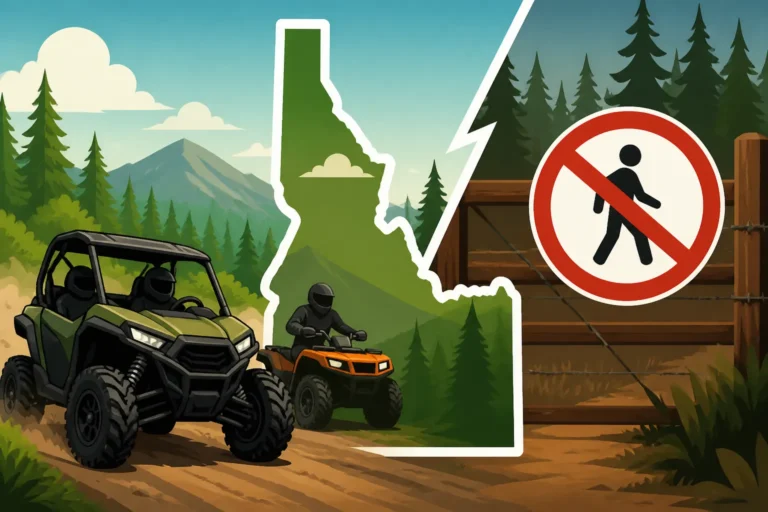
It’s crucial to understand that Idaho makes a very clear distinction between riding an OHV on a designated trail and riding one on a public road. While many of Idaho’s incredible trails might crisscross or temporarily utilize county roads, the rules for that brief road section are significantly different than for the pure off-road experience. For trails, the focus is often on machine size and safety courses, especially for younger riders. For roads, however, the requirements swing heavily towards driver licensing, vehicle equipment, and direct supervision.
Think of it this way: out on the Magruder Corridor, a young rider might be enjoying the wilderness with their family, focused on the terrain and natural beauty. But if that same machine needs to travel a short stretch of paved county road to get to the next section of trail, they immediately step into a different legal framework. On a trail, you might not need a helmet if you're over 18, but on a road, a minor absolutely needs one. This distinction is often a major point of confusion for visitors and even some residents, leading to inadvertent violations. Understanding that this legal line exists is the first step in keeping young riders compliant and safe.
Age and Driver's License Requirements for Young Riders on Idaho Roads
This is where things often get tricky and lead to misunderstandings. Many states have varying age requirements for operating OHVs, but Idaho lays down specific and often stricter rules when a machine ventures onto a public road. It’s not just about how old a rider is; it’s about whether they possess the legal credentials to operate any motor vehicle on that road.
The Driver's License Prerequisite
Here's the essential truth: In Idaho, if a young person is operating an ATV or UTV on any public road that is open to other motor vehicles, they must possess a valid driver's license. This isn't an optional suggestion; it's a legal requirement. This means that if a 15-year-old has a restricted permit but not a full driver's license, they generally cannot operate an OHV on a county road, even with an adult present, unless specific exemptions (like agricultural use) apply. This rule ensures that anyone operating on a road has undergone formal driver education and testing, which covers traffic laws, road signs, and safe driving practices relevant to sharing the road with other vehicles.
Many parents assume that because their child is an experienced trail rider, they are automatically qualified to navigate a short road section. However, the state doesn't differentiate based on skill or experience; it's based on the legal authority granted by a driver's license. The rationale is clear: a driver's license signifies a certain level of comprehensive training and legal accountability that is necessary for operating any vehicle, including an OHV, in a shared traffic environment. Without it, even the most capable young rider is technically operating illegally on a public road. [Driver's License and Insurance on an Idaho Road Ride] details more about these requirements.
Minimum Age for Road Operation
Given the driver's license prerequisite, the de facto minimum age for a young person to operate an ATV or UTV on an Idaho public road is typically 16. This is because 16 is the earliest age at which an Idaho resident can obtain a full, unrestricted driver's license, provided they meet all other requirements like supervised driving hours and passing both written and practical tests. There's no special OHV road permit for younger individuals; if you need a driver's license to operate on a road, then you must be old enough to get that license.
This means that a 12-year-old, even if they've passed an OHV safety course and are a skilled rider on trails, cannot legally drive an ATV or UTV on an Idaho county road. This can sometimes be frustrating for families who want to ride together and use short road sections to connect trails. However, the rule is firm. It underscores the state's prioritization of traffic safety over recreational convenience when it comes to shared road spaces. Remember, these rules are in place to ensure that young riders have the cognitive development and formal training that comes with the driver licensing process.
What About a Learner's Permit?
This is a common question, and unfortunately, a learner's permit alone does not typically qualify a young rider to operate an OHV on an Idaho public road. While a learner's permit allows a supervised young driver to operate a standard passenger vehicle on public roads, the specific statutes regarding OHVs often require a valid driver's license, implying a full, unrestricted license. A permit holder has not yet demonstrated full competency in a driving test, nor have they completed all the supervised hours necessary for independent operation.
The intent behind requiring a full driver's license is to ensure that the operator has completed the entire licensing process, which includes demonstrating proficiency in a road test. A learner's permit is an intermediate step, not a final qualification for independent road use. Therefore, even if a young person with a permit is being supervised by a fully licensed adult, they generally cannot legally operate an OHV on a road open to the public. Always check the very latest Idaho statutes or consult with local law enforcement if there's any ambiguity, but the common interpretation leans towards needing a full license.
Supervision Rules for Minors Operating OHVs on Idaho Roads
Even if a young rider meets the age and licensing requirements (which, as discussed, usually means they are 16 and have a full driver's license), Idaho still maintains specific supervision requirements for anyone under the age of 16 operating an OHV. This is where the famous "300-foot rule" comes into play, creating a buffer of safety and accountability for younger operators, even when they are not on public roads. However, when it comes to road riding, the rules become even more stringent, with the full driver's license requirement often overriding other factors.
The 300-Foot Rule: Direct and Immediate Oversight
The "300-foot rule" is a widely discussed aspect of Idaho OHV law, particularly for riders under 16. It states that an OHV operator under 16 must be under the direct supervision of an adult who is at least 18 years old. This adult supervisor must be within 300 feet of the operator. This rule primarily applies to designated OHV trails and public lands, acting as a crucial safety net for younger, less experienced riders. While essential for trail riding, its application to road riding by minors becomes secondary to the overarching driver's license requirement.
It’s important to clarify: for a minor to legally ride an OHV on an Idaho public road, they must first possess a valid driver's license (meaning they are usually 16 or older). If a 16-year-old with a driver's license is riding an OHV on a county road, they typically do not require the 300-foot direct supervision rule, as they are considered a licensed driver. However, if somehow a younger individual (under 16) were to legally operate an OHV on a road (perhaps via a very specific agricultural exemption, which is rare for general recreational road use), then the 300-foot supervision rule would absolutely apply in addition to any other requirements. [Supervising a Young Rider Within 300 Feet] offers more context on this important rule.
Who Qualifies as a Supervisor?
For the 300-foot rule to be properly applied (again, primarily on trails, but theoretically applicable to rare road exemptions for minors), the supervisor must be an adult aged 18 or older. This adult is responsible for the conduct and safety of the minor they are supervising. They should be experienced in OHV operation, knowledgeable about the terrain, and fully aware of the relevant rules and regulations. This isn't just about being physically present; it's about active oversight and the ability to intervene if necessary.
A good supervisor is someone who isn't just riding in front or behind the young operator but is actively monitoring their riding, the conditions, and their adherence to safety protocols. They should be able to communicate effectively with the young rider, offer guidance, and stop if a situation becomes unsafe. This person is essentially the minor's safety net and legal guardian for that particular ride.
Situations Where Supervision is Non-Negotiable
While the driver's license requirement largely dictates road access for young riders, it’s worth reiterating that the 300-foot supervision rule is non-negotiable for anyone under 16 operating an OHV in general, on public land. This includes trails, designated riding areas, and any other public property where OHV use is permitted. Even if a young rider has completed an [Idaho OHV Safety Course Requirements], they still fall under this supervision rule if they are under 16.
For parents, this means that even if your 15-year-old is a highly skilled rider and has passed a safety course, they cannot legally ride an ATV or UTV by themselves on a public trail or road without an 18-year-old supervisor within 300 feet. The moment they venture beyond that 300-foot radius, or if the adult is not 18 or older, they are in violation of Idaho law. This highlights the state's strong emphasis on protecting minors through consistent adult oversight during OHV operation.
Mandatory Safety Gear for Young Riders on Idaho Roads
Safety gear is paramount for any OHV rider, but for young operators on public roads, certain items are not just recommended, they are legally required. These mandates are designed to reduce the risk of serious injury in the event of an accident, which, unfortunately, can happen even to the most careful riders. Neglecting these requirements can result in citations and put the rider at undue risk.
Helmet Laws for Minors
In Idaho, it is mandatory for all OHV riders under the age of 18 to wear an approved safety helmet whenever they are operating or riding as a passenger on an ATV or UTV. This rule applies universally, whether on a trail, private property, or, crucially, on a public road. This means if your 17-year-old is legally riding a side-by-side on a county road with a restricted vehicle plate, they must have a helmet securely fastened. This is one of the most consistently enforced rules and for good reason: helmets dramatically reduce the risk of head injury, which can be life-altering or fatal.
The helmet itself must meet recognized safety standards, such as those set by the Department of Transportation (DOT). This isn't about just any helmet; it must be specifically designed for motor vehicle use and properly fitted. Parents should ensure that their child's helmet is not only compliant but also comfortable and correctly worn every single time they get on the machine. An ill-fitting helmet offers little protection. [Idaho Helmet Rules for Riders Under 18] provides further detail on these critical safety measures.
Eye Protection: Beyond Helmets
While often overlooked, eye protection is another crucial piece of gear, especially on roads where dust, gravel, and even insects can become significant hazards. Idaho law typically requires that any OHV operator or passenger, including minors, must wear eye protection if their machine is not equipped with a windscreen or windshield that provides adequate protection. This means that if your young rider is on an ATV or an open-air UTV without a full windshield, they need goggles or a face shield.
The rationale is clear: a sudden impact to the eye from debris can cause a rider to lose control, leading to an accident. Imagine hitting a patch of loose gravel on a county road and a stone kicking up, or a bee flying directly into your eye. Such distractions can be catastrophic when operating a motor vehicle. Good quality goggles that fit snugly and provide a wide field of vision are essential. Many full-face helmets incorporate a face shield, which often satisfies this requirement, but open-face helmets will necessitate separate goggles.
Other Recommended Gear for Young Riders
While not all of it is legally mandated, a host of other gear is highly recommended for young riders on Idaho roads. This includes:
- Long Pants and Sleeves: Even in warm weather, durable long pants and long-sleeved shirts can protect against scrapes, minor impacts, and sun exposure. Quality riding jerseys are designed for this purpose.
- Over-the-Ankle Boots: Sturdy boots protect feet and ankles from impacts, debris, and ensure a good grip on footpegs or floorboards. Regular sneakers offer minimal protection.
- Gloves: Riding gloves protect hands from blisters, provide a better grip, and offer some protection in a minor fall. They also shield against sun and cold.
- Chest Protectors (for ATVs): Especially for younger, less experienced ATV riders, a chest protector can guard against impacts to the torso and spine. While more common on trails, the risks are still present on roads.
- Hi-Visibility Clothing: When riding on roads, especially county roads with curves or limited visibility, brightly colored or reflective clothing can significantly increase a young rider's visibility to other motorists. This is a critical safety consideration that extends beyond just the machine's lighting.
Investing in good safety gear, such as those offered by brands like SuperATV, is not just about compliance; it's about providing the best possible protection for young riders in any scenario, particularly when sharing roads with other traffic.
Required OHV Equipment for Road Use by Young Riders
Beyond the personal safety gear, the ATV or UTV itself must be properly equipped to be considered "street legal" on Idaho roads, regardless of the operator's age. These machine-specific requirements are crucial for visibility, signaling intentions, and overall safe operation alongside conventional vehicles. Failing to equip the machine correctly can lead to fines and unsafe conditions.
Lights, Mirrors, and Horns
For any OHV to be legally operated on an Idaho road, it must have specific equipment to ensure it can be seen and heard by other road users. This includes:
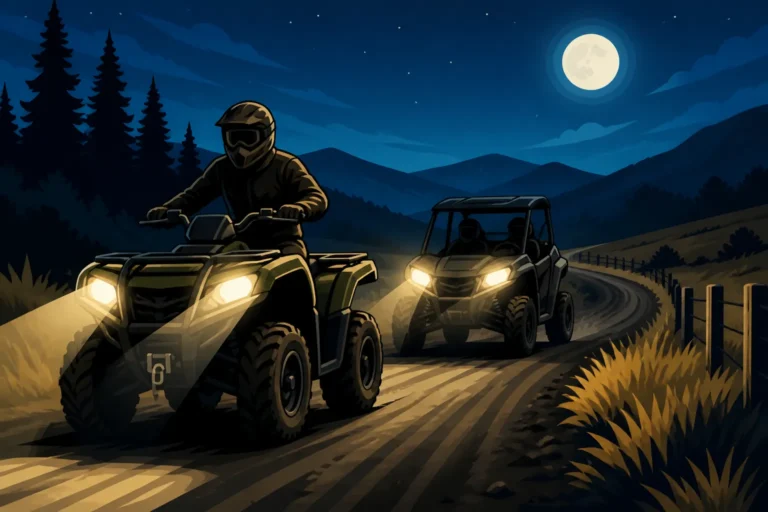
- Headlights: At least one, but preferably two, functioning headlights are required, especially if riding between sunset and sunrise, or at any time visibility is low. These lights must be capable of illuminating the road ahead and making the machine visible to oncoming traffic.
- Taillights and Brake Lights: A functioning taillight is necessary to make the OHV visible from the rear, and a brake light that illuminates when the brakes are applied is critical for signaling deceleration to following vehicles.
- Rear-view Mirrors: At least one rear-view mirror is typically required, positioned to give the operator a clear view of traffic behind them. Some choose to install two mirrors (one on each side) for enhanced situational awareness, which is a smart upgrade. SuperATV, for instance, offers a range of side mirrors designed for UTVs that provide excellent rear visibility, a crucial factor when riding on a shared roadway.
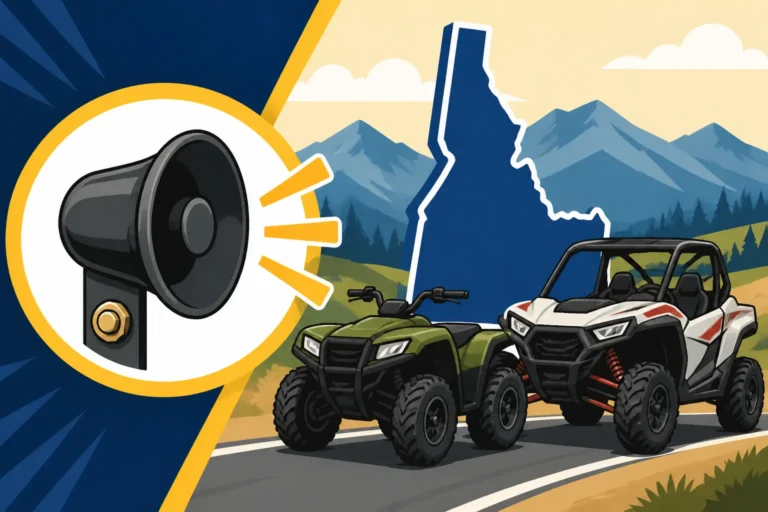
- Horn: A working horn is necessary to alert other drivers or pedestrians to the OHV's presence, especially in situations where a warning might prevent an accident.
These items are basic requirements for nearly all motor vehicles on public roads, and OHVs are no exception. The absence of any one of these can result in a citation and render the machine illegal for road use. [Idaho Headlight Rules After Sunset] covers these requirements in more detail.
Turn Signals and Brake Lights
While ATVs traditionally didn't come with turn signals, their addition (or the addition of hand signals if no mechanical signals are present) is often required for road legality. UTVs, being wider and often having more enclosed cabs, increasingly come with factory-installed turn signals. For older machines or those not equipped with them, aftermarket turn signal kits are available and are a smart, often necessary, upgrade for road use. The ability to clearly signal turns and lane changes is fundamental to safe road operation and prevents confusion with other drivers.
As mentioned, brake lights are also non-negotiable. They immediately communicate to vehicles behind you that you are slowing down or stopping, allowing them to react accordingly. Ensuring all these lights are bright, clean, and functioning correctly before every road ride is a pre-ride safety check that should never be skipped. Companies like SuperATV provide robust aftermarket turn signal kits and brake light solutions that are durable and designed for the demanding conditions OHVs might face, ensuring compliance and enhancing safety.
Mufflers, Spark Arresters, and Noise Limits
When riding on public roads, OHVs are also subject to noise regulations, much like other motor vehicles. A muffler system that effectively reduces exhaust noise to acceptable levels is required. Excessive exhaust noise can be a nuisance to residents, especially in or near communities, and can lead to complaints and citations. Additionally, a spark arrester is legally required on most public lands in Idaho, including any roads that traverse forest or BLM lands. This device prevents hot carbon particles from exiting the exhaust system, which could potentially ignite dry vegetation and cause a wildfire.
While spark arresters are more commonly associated with fire prevention on trails, their requirement extends to public roads that pass through wildland areas. Check your machine's exhaust system to ensure it's in good repair and that any aftermarket modifications comply with local noise ordinances and state spark arrester laws. Being respectful of noise limits is not just about compliance; it's about being a good neighbor and preserving access for all riders.
Navigating Approved Roads and Restricted Zones
Knowing which roads are open to OHVs, and specifically which ones young riders can utilize (assuming they meet all other legal criteria), is critical. Idaho's road network is vast, and the rules vary significantly depending on the type of road and the specific county or city ordinances in place. Misunderstanding these zones can lead to fines, dangerous situations, and even loss of riding privileges.
County Roads Open by Default
Generally, in Idaho, county roads are open to OHV use by default, unless they have been specifically closed by a local ordinance. This means that if you're traveling on a gravel or paved county road, and there are no signs indicating it's closed to OHVs, it's likely permissible to ride there. This is a significant advantage for riders in Idaho, allowing them to connect trails, access remote areas, or simply enjoy a scenic backcountry drive. However, even on these "open by default" roads, all other OHV road rules apply: a valid [Idaho Restricted Vehicle Plate Explained], an [What an Idaho OHV Sticker Costs Each Year] displayed (e.g., [Displaying a Sticker on an Idaho R Plate]), appropriate lighting, and, for young riders, meeting the age and driver's license requirements.
It's crucial to always be vigilant for signage. Counties have the authority to close certain roads to OHV traffic for various reasons, such as residential areas, safety concerns, or to protect specific infrastructure. Always assume that if you see a sign specifically prohibiting OHVs, that road is indeed closed, regardless of the general county road rule. Riders often use apps or county maps to confirm which roads are open. [Idaho Roads Open by Default to Restricted Vehicles] offers an overview of this common scenario.
Highways and Interstates: Strict No-Go Zones
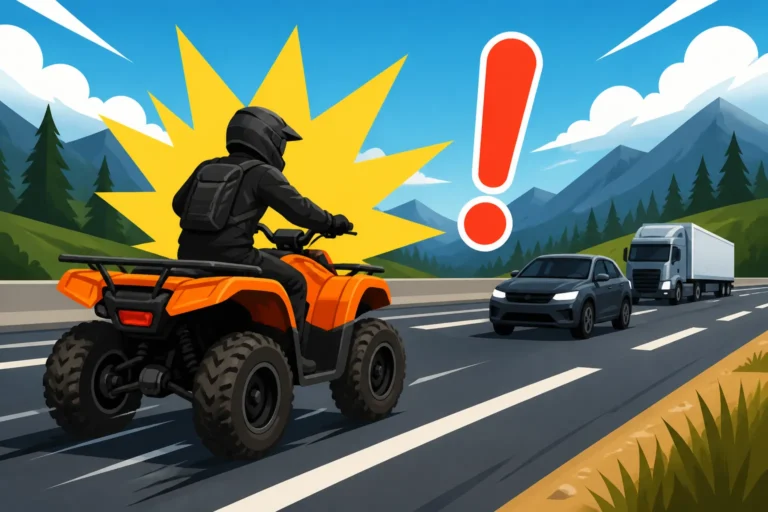
Idaho is very clear on this point: ATVs and UTVs are absolutely prohibited from operating on state highways, federal highways, and interstate highways. There are no exceptions for young riders, adults, or any type of OHV, regardless of how "street legal" you might think your machine is. These roads are designed for high-speed traffic, and OHVs simply do not belong there due to speed differentials, lack of crash protection, and general safety concerns.
This is a rule that sees frequent enforcement, and violations can result in significant fines and potentially dangerous situations. You might need to cross a highway, which is generally permitted at intersections after a full stop and proceeding directly across when safe, but sustained travel on a highway is strictly forbidden. This also includes shoulders, medians, and on/off ramps. Always plan your routes to avoid highways entirely, even for short distances.
City and Town Ordinances
While county roads are generally open, many cities and towns in Idaho have their own specific ordinances regarding OHV use within their municipal limits. These rules can vary widely, from outright prohibitions on all city streets to designated routes that allow OHVs to access services like gas stations, restaurants, or lodging. It's common for smaller, more recreation-focused towns to have more permissive rules, while larger cities tend to be more restrictive.
Before riding an OHV, especially with a young operator, into any incorporated city or town, it is absolutely essential to check their local ordinances. A quick call to the city clerk's office or checking the city's website can save a lot of hassle. Assume that unless you see specific signage indicating OHV access, city streets are generally off-limits. Parking and riding etiquette are also important when in town; ride slowly, be courteous to pedestrians, and park respectfully.
Consequences of Non-Compliance for Young Riders and Their Guardians
Understanding the rules is one thing; adhering to them is another. When young riders or their adult supervisors fail to comply with Idaho's OHV road regulations, there can be significant legal and financial consequences. These aren't just minor inconveniences; they can involve substantial fines, impact driving records, and even lead to legal liability in the event of an accident.
Fines and Citations for Violations
Ignoring Idaho's road rules for OHVs, especially for young riders, can result in various fines and citations. These can range from relatively minor infractions for missing equipment to more serious penalties for operating without a valid license or in a restricted area. For example, operating an unstickered machine, riding on a closed road, or a minor not wearing a helmet are all citable offenses. [Idaho Fines for Illegal Road Riding] gives a sense of the potential costs.
The cost of these citations can quickly add up, and multiple violations can escalate the situation. Beyond the monetary penalties, tickets can sometimes impact a young person's driving record, potentially affecting their ability to obtain a full driver's license in the future or leading to higher insurance premiums. Law enforcement, including county sheriffs and Idaho Parks and Recreation rangers, are present on Idaho's roads and trails to enforce these regulations, and they do take them seriously, particularly when it comes to the safety of minors.
Parental Responsibility and Liability
Idaho law places a significant amount of responsibility on parents or guardians for the actions of minors operating OHVs. If a young rider (under 18) violates OHV laws, the parent or guardian can be held legally accountable. This means that if your child is cited for an infraction, you, as the adult responsible, may also receive a citation or be held liable for any damages or injuries that occur. This parental responsibility underscores the importance of not only teaching young riders the rules but also actively supervising them and ensuring they have the correct machine, gear, and legal qualifications.
In the unfortunate event of an accident where a young, illegally operating rider causes damage or injury, the parent or guardian could face substantial civil liability. This could involve medical bills, property damage claims, and even lawsuits. This is why proper insurance coverage is also critical, though it doesn't absolve responsibility. Ensure your [Insuring an ATV in Idaho] policy covers all scenarios, and that it is active and meets state minimums if you or a young rider plans to ride on roads requiring it. The weight of this responsibility should motivate every parent to fully understand and enforce these regulations.
What to Do If Stopped by Law Enforcement
It's an intimidating experience for anyone, let alone a young rider, to be stopped by law enforcement. The most important thing to remember is to remain calm, respectful, and cooperative. Instruct young riders to:
- Pull Over Safely: Immediately and safely pull the OHV to the side of the road, turn off the engine, and remove their helmet (unless specifically asked to keep it on for identification).
- Keep Hands Visible: Place hands on the handlebars or steering wheel where they can be clearly seen by the officer.
- Provide Documents: Have their driver's license (if required), [Idaho OHV Sticker Cost This Year] (registration), and proof of insurance readily available. These documents should be kept in a waterproof bag on the machine. [Keeping Paperwork on the Machine] is a good practice.
- Answer Questions Respectfully: Answer the officer's questions truthfully and politely. If they don't understand a question, they should ask for clarification.
- Avoid Arguments: This is not the time or place to debate the law. If they believe they have been wrongly cited, they should address it through the proper legal channels later.
Cooperation and respect will always lead to a better outcome than confrontation. Educating young riders on how to handle a law enforcement stop is just as important as teaching them how to ride safely. Understanding these protocols can reduce anxiety and ensure a smoother interaction during what can be a stressful event.
| Rule Category | Age/License Requirement | Supervision Rule | Mandatory Gear (Minor) | Machine Equipment (Road) |
|---|---|---|---|---|
| Road Riding | Full Driver's License (typically 16+) | N/A (if licensed) / 300ft (if rare exemption for under 16) | DOT Helmet, Eye Protection | Head/Tail/Brake Lights, Mirrors, Horn, Turn Signals, Muffler |
| Trail Riding | No License Required (if under 16, must complete safety course) | 300ft from 18+ adult (if under 16) | DOT Helmet (if under 18), Eye Protection | Spark Arrester, Muffler |
Disclaimer
This article is for general informational purposes only and does not constitute professional advice. Laws, prices and regulations vary by location and change over time. Consult a qualified professional for guidance on your specific situation.