Four Things Idaho Riders Must Carry on a Road
There’s nothing quite like connecting trails or heading into town for a quick bite after a long ride, but the thought of hitting a public road on your ATV or UTV can bring a knot to your stomach. What if you get stopped? What paperwork do you need? What about your machine itself? This guide is here to untangle the confusion, laying out exactly what Idaho law requires you to carry—both on your person and your off-highway vehicle—to make those road sections stress-free and legal.
The Absolute Essentials for Every Rider
When you venture onto an Idaho county road, the rules shift from the open trail to something closer to conventional vehicle operation. This means you, as the operator, have a clear set of responsibilities regarding what you must have on your person. Ignoring these can quickly turn a scenic connection into a costly citation.
Driver's License or Permit
First and foremost, if you're going to operate an ATV or UTV on a public road in Idaho, you need to be a licensed driver. This isn't just about knowing how to steer; it's about proving you have the legal privilege to operate a motor vehicle. For most adult riders, this means a valid driver's license from Idaho or any other state. If you can legally drive a car, you can operate an OHV on an authorized road section, assuming you meet all the other requirements.
Now, for our younger riders, the rules get a bit more specific. If you're under 16, you generally can't just hop on a county road, even with a valid driver's license. There are specific age restrictions for road use, often requiring adult supervision within a certain distance, and sometimes even a valid learner's permit in conjunction with an OHV safety certificate. It's crucial to understand [Driver's License Requirements on Idaho Roads] before putting a young rider on any public road. Always make sure the operator has the appropriate documentation for their age and experience level.
Proof of Insurance
Just like your family car, any off-highway vehicle operated on an Idaho public road must carry liability insurance. This isn't optional; it's a legal safeguard for everyone sharing the road. This insurance is designed to cover damages or injuries you might cause to another person or their property in the event of an accident. Without it, you’re not only breaking the law but exposing yourself to significant financial risk should something go wrong.
Idaho law specifies minimum coverage amounts, so it’s not enough to simply have any insurance. Your policy needs to meet these legal thresholds. It's always a good idea to confirm with your insurance provider that your existing ATV or UTV policy extends to road use and meets all Idaho requirements. Don't assume your trail-only policy automatically covers county roads. Make sure you understand [Liability Insurance Idaho Road Riding Requires] to protect yourself and comply with the law.
OHV Registration Sticker or Restricted Plate
This is where many riders get confused. In Idaho, there are generally two forms of "registration" that allow an OHV on public roads: a valid annual OHV sticker or a Restricted Use Plate (often called an "R-plate"). You need one or the other, depending on your primary use and where you plan to ride. An annual OHV sticker primarily permits trail riding on public lands, but it also allows for legal access on designated county roads for short distances. You’ll want to know [What an Idaho OHV Sticker Costs Each Year] and how to properly affix it.
If you plan to use county roads more extensively, or desire a higher degree of "road legality," a Restricted Use Plate might be your best bet. This plate, distinct from a standard vehicle license plate, is specifically designed for OHVs to operate on county and Forest Service roads where permitted. The R-plate itself usually requires your machine to meet certain equipment standards (like turn signals, mirrors, etc., which we'll cover next). It’s important to understand [Idaho's Restricted Vehicle Plate Explained] and that simply having the plate does not exempt you from needing an annual OHV sticker for trail use. You typically need both to be fully compliant for both road and trail riding, with the sticker usually placed as specified, often requiring careful consideration of [Displaying a Sticker on an Idaho R Plate].
Machine-Specific Requirements for Road Legality
Beyond what you carry on your person, your actual off-highway vehicle needs to meet certain standards to be considered road-legal in Idaho. These are not optional upgrades; they are fundamental safety features designed to make your machine visible and controllable in a mixed-traffic environment.
Headlights, Taillights, and Brake Lights
When you're riding on a county road, especially at dusk, dawn, or in adverse weather, visibility is paramount. Idaho law requires your OHV to be equipped with functioning headlights, taillights, and brake lights. Your headlights must project sufficient light to make objects visible for a certain distance, and your taillights must be visible from the rear. This isn't just for you to see; it's so other drivers can see you.
Brake lights are equally crucial. They signal to traffic behind you that you're slowing down or stopping, preventing potential rear-end collisions. For safety, many riders opt to upgrade their factory lights with brighter, more robust aftermarket options. Companies like SuperATV offer a range of high-intensity LED lights that can significantly improve your visibility and help you meet or exceed legal requirements, making your road sections safer for everyone involved.
Mirrors and Horn
Imagine trying to navigate a county road without being able to see what's behind you. It's a recipe for disaster. That's why Idaho law mandates that your OHV must have at least one rearview mirror, positioned to allow you to see at least 200 feet to the rear. Most riders find two mirrors, one on each side, offer much better situational awareness, especially with the wider stance of many side-by-sides. These don’t have to be fancy, but they do have to be functional and securely mounted.
Equally important is a working horn. In an emergency, or simply to alert another driver or pedestrian to your presence, a horn is a critical safety device. It needs to be audible from a reasonable distance, giving you a way to communicate instantly on the road. Many aftermarket accessories, readily available from retailers, can help you add these essential items to your machine if it didn't come with them, or upgrade flimsy stock components for greater durability and functionality.
Turn Signals Where Applicable
While not every OHV that takes to an Idaho county road needs turn signals, they are a requirement for machines outfitted with a Restricted Use Plate. If you've gone through the process of getting an R-plate to extend your road-riding privileges, your machine generally needs to mimic the signaling capabilities of a standard automobile. This means having amber turn signals both front and rear, clearly visible to other drivers.
If your machine doesn't have turn signals and you're not required to have an R-plate for your specific road use (perhaps just short crossings on a stickered machine), then you need to be prepared to use appropriate hand signals for turns and stops. However, for serious road use, especially with a restricted plate, adding a turn signal kit is a wise investment. It makes your intentions unambiguous to other motorists, greatly enhancing safety and reducing the chance of miscommunication.
Muffler and Spark Arrester
These items are often thought of as trail-specific, but they are equally vital for road legality and responsible operation in Idaho. Your OHV must be equipped with an adequate muffler to keep exhaust noise within legal limits. Excessive noise isn't just annoying to residents along county roads; it's also a violation that can result in a fine. We all love the roar of an engine, but on public roads, quiet operation is key to maintaining good relations with communities and ensuring continued access.
Additionally, a spark arrester is a non-negotiable requirement for any OHV operating on public or private forestland, rangeland, or farmland that is not exclusively owned by the operator—and this often includes many of the county roads that traverse such lands. This device prevents hot carbon particles from escaping your exhaust and potentially igniting dry vegetation. It's an essential fire prevention measure, and law enforcement takes it very seriously. Always ensure your spark arrester is in good working order and legally compliant.
Documentation and Personal Identification
Beyond what's physically on you or your machine, having the correct paperwork readily accessible is paramount. When an Idaho deputy or park ranger stops you, they're going to ask for proof that you're legally entitled to be on that road. Fumbling for documents or, worse, not having them at all, can lead to delays, frustration, and potential citations.
Carrying Your Registration/Sticker Proof
Whether you have an annual OHV sticker or a Restricted Use Plate, you need to be able to prove it. This usually means carrying the physical sticker registration card or the R-plate registration document. It's not enough to just have the sticker or plate on your machine; you need the accompanying paperwork to show it's valid and registered to you. Many riders keep a laminated copy in a waterproof bag on their machine, or at least a clear photo on their phone, in addition to the original stored safely at home.
Remember, the sticker or plate itself only shows that you have one. The registration document proves its validity and identifies the vehicle owner. When a deputy asks, you need to be able to produce this. Thinking about [Keeping Paperwork on the Machine] should include making it accessible and protected from the elements.
Carrying Your Proof of Insurance
Just like your driver's license, your proof of liability insurance needs to be immediately available upon request. This could be your insurance card, a copy of your policy, or even a digital version on your phone if your insurer provides one. The key is that it clearly shows your coverage dates, policy number, and the vehicle covered. If you get into an accident or are simply pulled over for a routine check, this document is vital.
Again, consider laminating a copy and keeping it with your other essential machine paperwork. Ensure the dates are current! There’s nothing worse than presenting an expired insurance card. Knowing [Proving Insurance at a Traffic Stop] with ease will save you time and hassle.
Your ID and a Safety Certificate (for Young Riders)
This point really underscores the "on your person" requirement. Always carry a valid form of personal identification, preferably your driver's license. This allows law enforcement to verify your identity and confirm your driving privileges. For adult riders, this is usually straightforward.
However, for riders under the age of 16, there's an additional layer of requirement: an OHV Safety Certificate. If a young rider is operating on designated roads, particularly those under direct adult supervision, they often need to have completed an approved safety course and carry proof of that completion. This certificate demonstrates that they've been educated on safe riding practices and Idaho's specific OHV laws. It's a critical document for ensuring the safety and legality of young riders on public thoroughfares, and understanding [Idaho's OHV Safety Course for Young Riders] and [Carrying a Safety Certificate] is vital for parents and guardians.
| Requirement Category | For Trail Use Only | For Road Use (County/Forest Roads) |
|---|---|---|
| Personal | ID Recommended | Valid Driver's License or Permit |
| Proof of Liability Insurance | ||
| OHV Safety Cert (if applicable) | ||
| Machine Registration | OHV Sticker | OHV Sticker OR Restricted Plate |
| Machine Equipment | Basic (lights vary) | Headlights, Taillights, Brake Lights |
| Rearview Mirror | ||
| Horn | ||
| Turn Signals (for R-Plate) | ||
| Muffler & Spark Arrester | ||
| Documentation | Sticker Proof | All Above Proofs |
Recommended (But Not Required) Items for Road Riding Safety
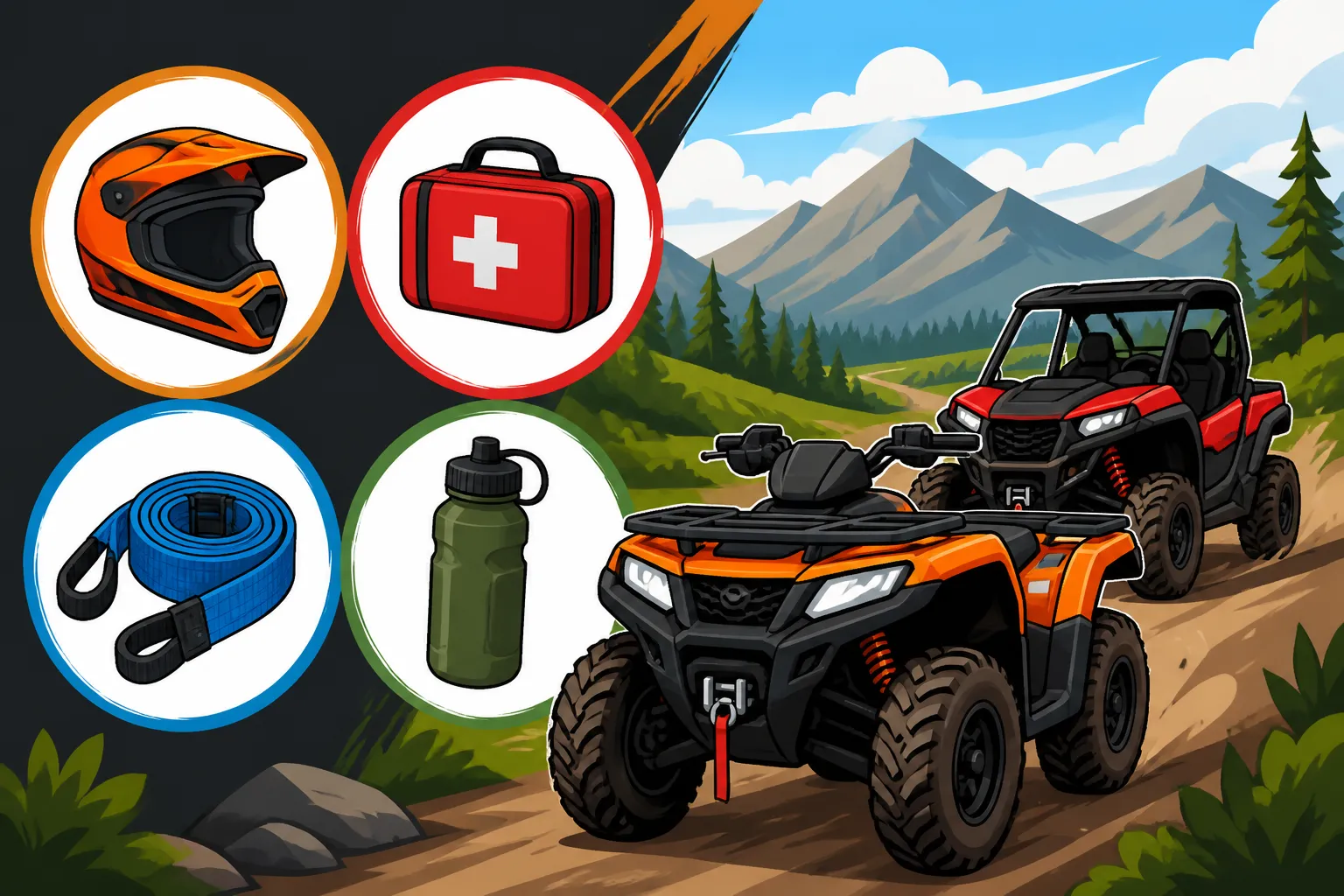
While Idaho law specifies certain must-haves, a truly prepared rider knows that "legal" doesn't always equal "safe" or "prepared." There are several items that, while not strictly required by law for every rider on every road, are highly recommended to enhance your safety, comfort, and peace of mind when hitting the pavement or gravel.
Helmet and Eye Protection (Even for Adults)
Let’s be real. Nobody wants to wear a helmet if they don't have to, especially on a warm day. However, [Idaho Helmet Rules for Riders Under 18] make it clear for minors. For adults, while helmets aren't universally mandated on all Idaho county roads (check specific local ordinances, as they can vary!), wearing one is simply smart. A helmet is your brain's best friend in an accident, even at lower speeds. Head injuries are no joke, and a simple tip-over on pavement can have far more severe consequences than a fall on soft dirt.
Similarly, eye protection like goggles or a face shield is crucial. On the trail, it protects from dust and branches. On the road, it defends against road grit kicked up by other vehicles, bugs, and even small rocks. Maintaining clear vision is paramount for safety, and [Goggles or a Face Shield on the Road] should be a non-negotiable part of your riding gear, regardless of legal mandates.
Essential Tools and Repair Kit
A flat tire or a minor mechanical issue can quickly turn your fun ride into a long walk home, especially when you're connecting trails far from town. While not legally required, carrying a basic tool kit is a sign of a prepared rider. This could include a tire repair kit (plugs, patch kit, small air compressor), basic wrenches, a screwdriver, zip ties, and duct tape. Think of what you'd need for the most common trailside fixes.
Many companies, including SuperATV, offer specialized compact tool kits and tire repair kits designed for OHVs. These can be easily stored in a cargo box or under a seat and can be an absolute lifesaver if you encounter a problem miles from cell service or a tow truck. A small first aid kit is also a no-brainer for any outing.
Communication and Navigation
Cell phone service can be notoriously spotty in the vast Idaho backcountry, even on some county roads. While you should always carry your phone for emergencies or navigation, be realistic about its limitations. Many seasoned riders also carry a satellite messenger or a two-way radio for true backcountry communication in [Cell Service in the Idaho Backcountry] dead zones. These devices can literally be life-savers, allowing you to call for help even when no bars are showing.
For navigation, a GPS unit or a reliable mapping app (like onX Offroad) on your phone is invaluable. Download offline maps before you leave, as you can’t always count on data. However, don't discount the old-school reliability of a paper map. Electronics can die, get wet, or simply malfunction. A good, detailed paper map of the area (like a Forest Service Motor Vehicle Use Map) provides a backup that never needs charging. Knowing [Why a Paper Map Still Earns Its Weight] can prevent you from getting truly lost.
Why These Rules Matter on Idaho Roads
It’s easy to view regulations as just another hurdle, but each of Idaho's OHV road rules is in place for a good reason. They protect you, other road users, and the very access we treasure to our incredible riding areas. Understanding the "why" can make compliance feel less like a burden and more like a shared responsibility.
Avoiding Citations and Fines
Let's face it: nobody wants a ticket. Not having the required documentation, failing to display a proper sticker, or operating a machine without necessary safety equipment on a public road can lead to citations from law enforcement. These aren't just minor annoyances; [Idaho Fines for Illegal Road Riding] can add up quickly, especially if you're hit with multiple violations. For example, a missing restricted plate could result in [Idaho Penalties for a Missing Restricted Plate] that significantly impact your wallet.
Beyond the immediate financial cost, repeated violations can impact your driving record or even your ability to ride in certain areas. Staying compliant is the easiest way to ensure your ride stays enjoyable and doesn't turn into an expensive legal headache. A quick check of your gear and paperwork before you leave camp can save you a lot of grief.
Ensuring Safety for Yourself and Others
Every single item on the "must-carry" list contributes directly to safety. A driver's license ensures you have basic driving competency. Insurance provides financial protection in case of an accident. Lights, mirrors, and horns allow you to see, be seen, and communicate with other vehicles on the road. A muffler reduces noise pollution, which is a safety concern for both wildlife and human residents.
These aren't arbitrary rules dreamed up to make your life harder; they are fundamental components of safe operation on public thoroughfares. By adhering to these regulations, you're not just protecting yourself from potential harm but also ensuring the safety of pedestrians, cyclists, and other motorists who share Idaho's beautiful rural roads.
Maintaining Access to Our Trail Systems
The ability to connect trails via county roads, or even ride into a small town for gas and supplies, is a privilege that OHV riders in Idaho greatly value. However, this access isn't guaranteed; it's often the result of careful negotiation and a demonstration of responsible riding by the OHV community. When riders disregard road rules, it creates negative perceptions, increases safety concerns for other road users, and gives local authorities reasons to restrict or revoke OHV access.
Following the rules, ensuring your machine is properly equipped, and being a courteous road user directly supports the argument for continued and expanded OHV access. By demonstrating that we can safely and responsibly share the roads, we help preserve our riding opportunities for future generations. Understanding [What Idaho Requires to Ride a County Road] isn't just about avoiding a ticket; it's about being a good steward of our shared resources and ensuring the future of our sport.
Disclaimer
This article is for general informational purposes only and does not constitute professional advice. Laws, prices and regulations vary by location and change over time. Consult a qualified professional for guidance on your specific situation.