Idaho Rules for Riders Under 16 on Roads
Trying to figure out where your child can legally ride their ATV or UTV on Idaho's vast network of roads can feel like navigating a maze blindfolded, especially with ever-changing regulations and the added layer of age restrictions. It’s easy to get lost in the details, leaving parents worried about breaking rules they don't fully understand. This guide will cut through the confusion, offering clear, empathetic, and realistic advice on Idaho's rules for riders under 16 operating off-highway vehicles on public roads, helping you keep your family safe and legal.
The Unique Challenges of Young Riders on Idaho Roads
Idaho is a paradise for off-highway vehicle (OHV) enthusiasts, with countless miles of trails and backroads just begging to be explored. For families, this means a fantastic opportunity to share the outdoors, but it also means navigating a complex web of rules, particularly when it comes to young riders and road use. It's not just about knowing where to ride; it's about understanding the specific legal hoops young operators must jump through before ever putting a tire on a gravel county road. Parents often feel the weight of this responsibility, wanting their kids to experience the thrill of the ride while ensuring every outing is safe and within the bounds of the law.
Why Age Matters for Road Access
The simple truth is that operating any vehicle, even an OHV, on a public road comes with a significant increase in responsibility and risk compared to dedicated trails. Idaho law recognizes this distinction, setting stricter guidelines for minors. These regulations aren't arbitrary; they’re designed to protect young riders, other motorists, and pedestrians. Without a proper understanding of these age-specific rules, a fun family ride can quickly turn into a stressful encounter with law enforcement or, worse, a dangerous situation. It’s about more than just having a machine; it’s about the maturity, training, and legal standing of the person behind the handlebars or wheel.
Imagine you're planning a trip to a favorite camping spot, and the only way to get to the trailhead is a short stretch of county road. For an adult, it might be a quick, uneventful connection. But if your 14-year-old wants to drive their own machine, suddenly that simple stretch of road becomes a legal minefield. Does your child have the right license? Are they wearing the correct gear? Is their machine properly equipped? Do you need to be right next to them? These are the questions that keep parents up at night, and Idaho has specific answers that we need to unpack. The consequences of not knowing these details can range from a hefty fine to the suspension of riding privileges, or even liability in an accident.
Parental Responsibility and the Law
As a parent, you are ultimately responsible for ensuring your child complies with Idaho’s OHV laws. This isn't just a moral obligation; it's a legal one. When a minor is operating an OHV, especially on a public road, their actions can reflect directly back on the parent or guardian. This means you need to be proactive, not just in teaching safe riding habits, but also in understanding the legal framework that governs youth operation. It involves making sure your child has the required training, the appropriate safety gear, and is operating a machine suitable for their age and skill level. Many parents find themselves frustrated by the complexity, wishing there was a single, clear handbook for everything, but the reality is that the rules are nuanced and require careful attention.
It’s crucial to understand that simply owning an ATV or UTV and letting your child ride it on private land doesn't automatically qualify them to ride on public roads. The rules shift significantly the moment a tire touches a public thoroughfare, even a seldom-used dirt road. This shift brings with it requirements for licensing, specific safety courses, and direct adult supervision that are not always necessary on private property. The state intends these rules to create a safer environment for everyone sharing the roads, and parents are the primary enforcers of these regulations for their children.
Navigating Age and Licensing Requirements
One of the most common points of confusion for parents is the exact age at which a child can operate an OHV on an Idaho road, and what kind of license or permit they might need. It's not a one-size-fits-all answer, and understanding the nuances can save a lot of headaches – and potential citations. Idaho's approach balances the desire for young people to enjoy OHV recreation with the imperative for public safety.
Minimum Age for Road Use
Generally speaking, a person must be at least 10 years old to operate an OHV in Idaho. However, this minimum age applies primarily to designated OHV trails and private land. When it comes to riding on public roads, the rules tighten significantly. For an OHV operator under the age of 16 to legally ride on any Idaho road that is open to OHV use, they must meet several criteria that effectively raise the bar far beyond just turning ten. This often comes as a surprise to families who might be comfortable with their child riding on trails but haven't considered the road aspect. [Idaho Age Rules for Riders Under 16] delve deeper into these specific age distinctions.
The fundamental rule is this: to operate an OHV on a county or Forest Service road where OHVs are permitted, a rider must possess either a valid driver's license or a driver's permit. This immediately sets a higher de facto age limit, as the earliest a person can obtain a driver's permit in Idaho is typically 14 years old. Even then, possessing a permit alone isn't enough; other conditions must be met, as we'll discuss. This structure ensures that any young person operating on a road has at least some foundational knowledge of traffic laws and vehicle operation, even if it's not in a traditional car or truck.
Driver's License or Permit: What's Required?
For riders under 16, a valid driver's license or a driver's permit is a non-negotiable requirement for road use. If your child has a learner's permit, they can operate an OHV on designated roads, but only under very strict supervision. This means a licensed adult must be present and meet the criteria for "direct supervision," which we’ll explore in detail shortly. A full, unrestricted driver's license, which can typically be obtained at 16, provides more freedom, but even then, specific OHV rules still apply to all riders, regardless of age.
Parents often ask if a standard Idaho driver's license is sufficient, or if there's a special OHV license. The answer is that a standard driver's license or permit is what's required for the road-use aspect. However, this is separate from any OHV-specific training. [Driver's License and Insurance on an Idaho Road Ride] provides broader context on general road-riding requirements. The distinction is vital: the driver's license addresses the 'driving on a road' part, while the OHV safety course addresses the 'operating an OHV safely' part. Both are crucial for young riders on roads.
The OHV Safety Course Mandate
Beyond the age and licensing requirements, Idaho mandates that any person under the age of 16 operating an OHV on public lands, including public roads where OHV use is allowed, must complete an approved OHV safety course. This course is designed to teach essential riding skills, safety practices, and an understanding of Idaho's specific OHV laws. It's not just a suggestion; it's a legal requirement that helps ensure young riders are prepared for the challenges of off-highway operation. [Idaho OHV Safety Course for Young Riders] explains the intricacies of this requirement.
This safety course is incredibly valuable, even for kids who have been riding for years on private land. It instills a sense of responsibility, teaches them how to react in various situations, and covers critical topics like environmental stewardship and trail etiquette. Many parents find that even experienced young riders benefit immensely from the structured learning environment and formalized instruction. It's an investment in their safety and compliance, and it demonstrates to the state that you're taking your parental responsibilities seriously. Remember, simply knowing how to start and steer isn't enough when you're sharing roads with other vehicles and encountering unpredictable conditions.
Strict Supervision Rules for Minors
Even if your child meets the age and licensing requirements and has completed the OHV safety course, they cannot simply ride off on their own on an Idaho public road if they are under 16. Idaho law imposes strict supervision requirements, often creating confusion for parents about what "direct supervision" truly entails. This isn't just about having an adult somewhere in the vicinity; it's about proximity and immediate control.
Defining Direct Supervision
Idaho law is quite specific about what constitutes "direct supervision" for riders under 16 on roads. The supervising adult must be at least 18 years old and possess a valid driver's license. Critically, this adult must be within 300 feet of the supervised rider and must be able to visually observe and communicate with the younger operator at all times. This means the supervisor needs to be riding their own OHV, often directly behind or in front, or even beside the younger rider, especially on wider roads or trails. It rules out situations where the parent is driving a truck on the main road while the child is on an OHV on a parallel dirt track far away.
The intent here is immediate intervention. If the young rider encounters a problem – whether it’s a mechanical issue, a traffic hazard, or a lapse in judgment – the supervising adult must be close enough to respond instantly. This level of supervision is paramount, especially on roads where other traffic, unforeseen obstacles, or changing conditions can arise quickly. It's a significant commitment for the supervising adult, and it's a rule that Idaho enforcement agencies take very seriously.
The 300-Foot Rule in Practice
The "within 300 feet" rule often surprises parents. Three hundred feet is roughly the length of a football field. While that might seem like a decent distance on a wide-open trail, it can feel very close on a winding, dusty backroad or through a wooded section where visibility is limited. This rule means you can't simply send your child ahead on their OHV while you follow leisurely in a different vehicle or at a greater distance. It necessitates active, constant monitoring. [Supervising a Young Rider Within 300 Feet] offers further insights into the practical application of this guideline.
Consider a scenario where you're riding with your 15-year-old on a county road that twists and turns through forested hills. If you take a curve and lose sight of them for more than a few seconds, you could be in violation of the 300-foot rule. This often means adjusting your speed and riding style to match that of the younger, supervised rider. It also emphasizes the need for reliable communication, whether that's hand signals, a helmet-mounted comms system, or simply shouting (though that’s less practical). This rule effectively ties the pace of the group to the youngest, supervised rider, which is a sensible safety measure, but one that demands awareness from all parties.
Who Can Supervise?
The supervising adult must not only be 18 years or older and hold a valid driver's license, but they also need to be someone capable of effectively supervising. This usually means a parent, legal guardian, or another responsible adult designated by the parent. It's not acceptable for an older sibling who is, for example, 17 years old with a driver's permit to act as the primary supervisor for a 14-year-old. The legal age and full licensing requirements for the supervisor are critical.
This also means the supervisor needs to be fully attentive. They can't be distracted by their phone, maps, or other activities that take their focus away from the young rider. The responsibility of supervision is a serious one, carrying legal implications should an incident occur while the minor is riding under their watch. Therefore, the choice of who acts as the supervisor should be made carefully, ensuring they understand their role and the gravity of their responsibility.
Machine Requirements and Safety Gear
Beyond the operator's qualifications, the OHV itself must meet specific requirements to be ridden on Idaho roads by anyone, including riders under 16. Furthermore, there are non-negotiable safety gear mandates, especially for minors. Ignoring these can lead to fines and, more importantly, put your child at significant risk.
Helmet and Eye Protection Mandates
Idaho law unequivocally states that any OHV operator or passenger under the age of 18 must wear an approved safety helmet. This is not optional; it is a critical piece of safety equipment. The helmet must be properly fitted and securely fastened. It's also strongly recommended that all riders, regardless of age, wear a helmet, as head injuries are a leading cause of fatalities in OHV accidents. Along with a helmet, appropriate eye protection is also required for anyone under 18. This usually means goggles or a face shield that is attached to an approved helmet. Standard sunglasses are generally not considered adequate eye protection under the law. [Idaho Helmet Rules for Riders Under 18] and [Goggles or a Face Shield on the Road] offer specific details.
Investing in a high-quality helmet that meets DOT (Department of Transportation) standards is paramount. This isn't a place to cut corners. A poorly fitting or uncertified helmet offers minimal protection. Similarly, proper goggles protect against dust, debris, insects, and low-hanging branches, all of which are common hazards on Idaho's backroads. Imagine a rock kicking up from another vehicle or a sudden branch strike—proper eye protection can prevent serious injury and maintain clear vision, which is essential for safe operation.
Basic Road-Legal Equipment
For any OHV to be legally ridden on Idaho roads, it must be equipped with certain basic features, regardless of the rider's age. These include:
- Headlights: At least one working headlight that emits a white light and is visible for at least 500 feet.
- Taillights and Brake Lights: At least one red taillight and brake light, visible from 500 feet to the rear.
- Reflectors: Required if the machine's lights are not visible from the sides.
- Mirrors: At least one rearview mirror, typically on the left side, though some jurisdictions may require two.
- Horn: A working horn or warning device.
- Muffler and Spark Arrester: A muffler that keeps noise levels within legal limits and a spark arrester that prevents fires.
For UTVs (side-by-sides) that are often wider and used more like small cars, you'll also typically need seatbelts, and some counties might require turn signals if they're being operated under a restricted use plate for road travel. Many riders opt to upgrade their machines with enhanced safety features from companies like SuperATV, ensuring their vehicles meet or exceed legal requirements for road use. From reinforced roll cages to turn signal kits and robust windshields, these aftermarket additions can significantly improve both safety and compliance. A checklist of these items is crucial before every road ride.
Machine Size and Restrictions for Young Riders
Idaho law also addresses the size and type of machine a young rider can operate. Specifically, operators under 16 cannot operate an OHV that has an engine size exceeding the manufacturer's recommended age range. For example, if a manufacturer specifies a particular ATV is for riders 16 and older, a 14-year-old would not be permitted to operate it on a public road, even with all other requirements met. This rule is designed to ensure that young riders are on machines that are appropriately sized and powered for their skill and experience levels.
It’s important to review the owner’s manual or manufacturer specifications for your specific OHV to determine its recommended age range. Often, larger, more powerful machines are intended for adult operators due to their weight, speed, and handling characteristics. Attempting to modify or override these recommendations can lead to serious safety concerns and legal repercussions. Choosing the right-sized machine for a young rider is just as critical as ensuring they have the right safety gear and supervision.
| Requirement | Applies to Riders Under 16 on Roads | Details |
|---|---|---|
| Minimum Age | Yes | De facto 14 years old (with permit), or 16 years old (with full license) |
| Driver's License/Permit | Yes | Valid Idaho Driver's Permit (with supervision) or Full Driver's License |
| OHV Safety Course | Yes | Mandatory for all under 16 operating on public land/roads |
| Direct Supervision | Yes | By a licensed adult (18+) within 300 feet, visual contact |
| Approved Helmet | Yes | Mandatory for operator & passenger under 18 |
| Eye Protection | Yes | Mandatory for operator & passenger under 18 (goggles/face shield) |
| Headlight/Taillight | Yes | Required on machine for road use |
| Brake Light | Yes | Required on machine for road use |
| Rearview Mirror | Yes | At least one, typically left side |
| Horn | Yes | Working warning device |
| Muffler/Spark Arrester | Yes | Required for legal operation |
| Restricted Plate | Yes (often) | If riding on designated county roads, not state highways |
| Manufacturer Age Limit | Yes | Machine must be within manufacturer's recommended age for rider |
Where Young Riders Can (and Cannot) Ride on Idaho Roads
Understanding the legal framework for young OHV operators isn't complete without knowing which roads are open to them. Idaho has a tiered system for road access, and not all roads are created equal when it comes to OHV use, especially for minors. Misinterpreting these rules can lead to citations and unsafe situations.
County Roads and Designated OHV Routes
Many Idaho counties have adopted ordinances that allow OHV use on specific county roads, often those in rural or less populated areas. These are the most common public roads where a supervised rider under 16 might legally operate an OHV, provided all other requirements (license/permit, safety course, supervision, machine equipment) are met. It's crucial to remember that not all county roads are open to OHVs, and access can vary from one county to the next. [Which Idaho Roads Are Open to OHVs] provides a general overview of this complex topic.
Before heading out, always check the specific county’s ordinances or refer to local maps provided by the county or the Idaho Department of Parks and Recreation (IDPR). These maps often delineate which roads are open, which are closed, and any specific time-of-day restrictions. Even on open county roads, young riders and their supervisors must adhere to all traffic laws, including speed limits, stop signs, and yielding rules. A common mistake is assuming that because it's a "dirt road," standard traffic laws don't apply. They absolutely do.
Forest Service and BLM Roads
Similar to county roads, many Forest Service (FS) and Bureau of Land Management (BLM) roads in Idaho are open to OHV use. These federal lands offer vast networks of routes, and many are designated for shared use, meaning OHVs can operate alongside other vehicles. Again, for a rider under 16, all the previous stipulations—valid driver's permit/license, OHV safety course, direct supervision, and properly equipped machine—still apply. These roads are typically unpaved and are often part of a larger trail system.
It's vital to consult a current Motor Vehicle Use Map (MVUM) for the specific national forest or BLM district you plan to visit. These maps are the definitive guide to legal OHV routes on federal lands and are updated regularly. They will clearly mark which roads are open to OHVs and whether any restrictions apply. Riding on a closed road, even inadvertently, can result in significant fines and penalties. While these roads offer incredible opportunities for exploration, they also require diligent planning to ensure legal access for young riders.
State Highways and Interstates: Absolutely Prohibited
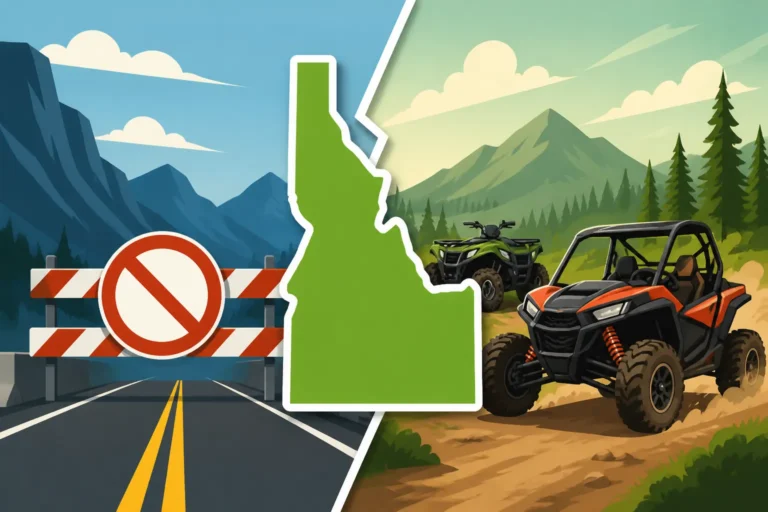
This is perhaps the simplest rule: OHVs are strictly prohibited on Idaho state highways and interstates. There are virtually no exceptions for this, regardless of the rider's age, whether they have a driver's license, or how well-equipped their machine is. These high-speed, high-traffic roadways are simply not designed for OHV travel, and attempting to ride on them is incredibly dangerous and illegal. This includes crossing them at intersections unless specifically marked as an approved OHV crossing point, and even then, specific rules apply. [Can You Ride an OHV on an Idaho State Highway?] provides further clarification.
The only time an OHV might technically be on a state highway is for a brief crossing at a marked intersection or to access an adjacent trail where a specific OHV route is designated. Even in these limited scenarios, the young rider would still need to meet all other requirements (license, safety course, supervision, etc.). For the most part, consider state highways and interstates absolute no-go zones for OHVs. It's a risk not worth taking, both from a legal and a safety perspective.
Consequences of Non-Compliance
Idaho takes its OHV laws seriously, especially when it comes to the safety of young riders. Failing to comply with the rules outlined above can result in a range of consequences, from fines and penalties to the loss of riding privileges and even legal liability in the event of an accident. It's crucial for parents and young riders to understand these potential repercussions.
Fines and Citations
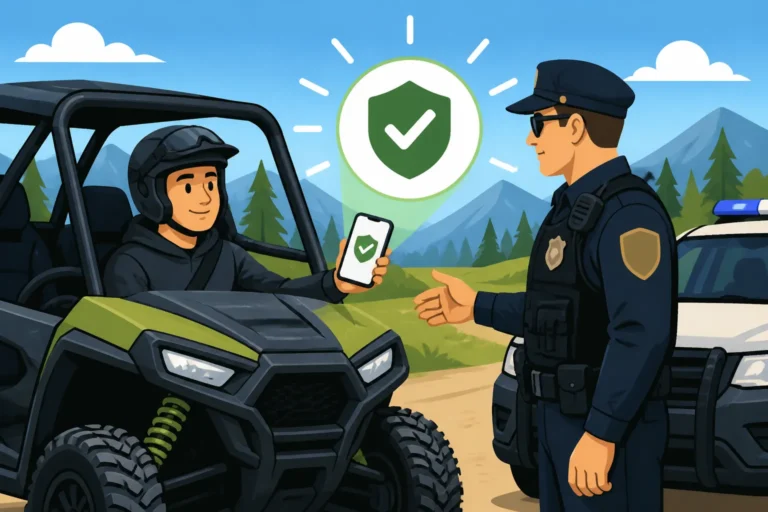
The most immediate consequence of violating Idaho's OHV laws for minors is typically a citation and a fine. These fines can vary depending on the specific violation, but they can quickly add up. For instance, operating an OHV without the required safety course, riding without direct supervision, or not wearing a helmet when required can each result in separate tickets. A law enforcement officer, whether from the local sheriff's department or Idaho Parks and Recreation, has the authority to issue these citations. [Idaho Fines for Illegal Road Riding] offers more specific details on the cost of various violations.
Beyond the initial fine, repeated violations could lead to more severe penalties. It's not just the child who receives the citation; parents or legal guardians can also be held responsible for allowing a minor to operate an OHV illegally. This means parents could face fines and other legal consequences directly. This is why a proactive approach to understanding and enforcing these rules is so important, to avoid not only legal trouble but also to ensure the child is riding safely.
Machine Impoundment and Loss of Privileges
In more serious or repeated cases of non-compliance, an OHV could be impounded by law enforcement. This means the machine is seized and stored, and the owner would have to pay impound fees, fines, and prove compliance before getting it back. This is an expensive and inconvenient consequence that can easily be avoided by following the rules. Furthermore, a minor's riding privileges could be suspended or revoked, meaning they would be prohibited from operating an OHV for a specified period.
This isn't just about a slap on the wrist; it's about the state asserting its authority to ensure safe and responsible recreation. Losing the privilege to ride can be a significant deterrent for a young enthusiast, and it's a measure aimed at promoting compliance with safety regulations. It also places a greater burden on the parents to ensure their child is properly trained and supervised, as their ability to enjoy the sport hinges on adherence to the law.
Liability in Accidents
Perhaps the most severe consequence of non-compliance is the potential for legal liability in the event of an accident. If a minor is operating an OHV illegally (e.g., without a required license/permit, safety course, or proper supervision) and is involved in a crash that causes injury or property damage, the parent or guardian could be held personally liable. This means being responsible for medical bills, property repairs, and other damages, which can amount to substantial financial burdens.
Standard insurance policies may also deny coverage if the OHV was being operated illegally at the time of the accident. This leaves the parent fully exposed to the costs. This serious risk underscores why following every Idaho OHV rule for young riders on roads is not just about avoiding a ticket, but about protecting your family's financial well-being and, most importantly, your child's safety and future. Therefore, ensuring your machine is well-maintained and equipped with proper safety features, perhaps even considering aftermarket upgrades from companies like SuperATV that enhance visibility or control, becomes an essential part of responsible ownership.
Disclaimer
This article is for general informational purposes only and does not constitute professional advice. Laws, prices and regulations vary by location and change over time. Consult a qualified professional for guidance on your specific situation.