State and Federal Highways Idaho Keeps Closed
It's incredibly frustrating when you're geared up for an adventure, ready to hit the open road (or what feels like the open road), only to find that your trusty ATV or side-by-side isn't welcome everywhere. Many riders, especially those new to Idaho or just getting their machines "street legal" with a restricted plate, assume that if it's a road, they can ride it. However, state and federal highways in Idaho present a unique set of restrictions and outright prohibitions that can catch even experienced riders off guard. This guide is here to clarify which major arteries are off-limits and why, helping you avoid a costly citation and keeping your adventures on the right side of the law.
The Distinct Landscape of Idaho's Roadways
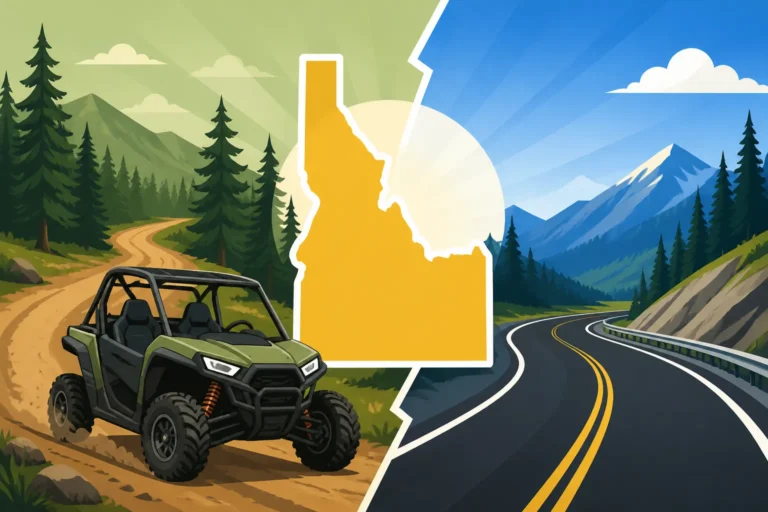
When we talk about "roads" in Idaho, it's not a single, unified system. Instead, it's a patchwork quilt of different jurisdictions, each with its own rules, regulations, and reasons for allowing or restricting off-highway vehicle (OHV) access. This can be incredibly confusing, especially when one minute you're on a perfectly suitable gravel county road, and the next you're staring down a paved section that looks similar but carries a completely different set of rules. Understanding these distinctions is the first step in knowing where you can and cannot ride your ATV or UTV.
Who Manages Which Roads in Idaho?
Idaho's roads are managed by a hierarchy of entities, from local counties to state and federal agencies. This management structure dictates everything from maintenance standards to speed limits and, crucially, which types of vehicles are permitted. County roads, for example, are under the jurisdiction of individual county commissioners and road departments, allowing for significant local variation in OHV rules. Forest Service roads, on the other hand, are managed by the U.S. Forest Service, and Bureau of Land Management (BLM) roads by the BLM, each with their own national and regional policies that get filtered down to Idaho.
State highways are the responsibility of the Idaho Transportation Department (ITD), while federal highways, like interstates and some U.S. routes, fall under the broader umbrella of federal guidelines, often implemented by state agencies. This complex web means that simply seeing asphalt or gravel doesn't tell the whole story. A road that feels remote and quiet might still be a state highway, and thus off-limits, while a busier-looking dirt road could be a county road where OHVs are perfectly legal. It's a key distinction that can mean the difference between an enjoyable ride and an unexpected run-in with law enforcement.
Why Different Roads Have Different Rules for OHVs
The reason for these varied rules isn't arbitrary; it's rooted in safety, design, and the intended purpose of each road type. State and federal highways are engineered for high-speed, high-volume traffic, typically consisting of cars, trucks, and commercial vehicles. They often have higher speed limits, multiple lanes, limited access points, and specific design features like banked curves and shoulders not always conducive to slower, less stable OHVs. Imagine a side-by-side, even one equipped with a SuperATV horn and turn signals, trying to keep pace with semi-trucks on a 75 mph interstate. The safety risks become immediately apparent.
Conversely, many county, Forest Service, and BLM roads are designed for lower speeds, recreational access, and often see less traffic. Their very nature – winding, unpaved, sometimes rough – makes them more compatible with the capabilities and intended use of ATVs and UTVs. While some aftermarket accessories, like SuperATV's windshields or light bars, enhance visibility and comfort, they don't fundamentally alter a machine's ability to safely operate alongside highway-speed traffic. The rules reflect these inherent differences, aiming to keep all road users safe by separating vehicle types that are fundamentally incompatible in high-speed environments.
State Highways: Idaho's Primary Arteries
Idaho's state highway system forms the backbone of its transportation network, connecting cities, towns, and regions across the state. These are the roads you typically think of when planning a cross-state drive, characterized by "ID" route numbers (e.g., ID-55, ID-21, ID-95). While they are crucial for travel, they are almost entirely off-limits for ATVs and UTVs, even if your machine has an Idaho restricted use plate.
Identifying Idaho State Highways
Recognizing an Idaho state highway is usually straightforward. You'll see green highway shields with "IDAHO" prominently displayed, along with a route number. These roads often feature multiple lanes, paved surfaces, and generally higher speed limits than local county roads. For example, if you're driving south from McCall toward Boise, you're on ID-55 – a scenic but definitely off-limits route for your OHV. Similarly, US-95, which stretches the length of the state, is a state-maintained route, making it another no-go zone.
Even if a section of a state highway appears quiet, unpaved, or passes through a rural area, its classification as a state highway prohibits OHV use. This is where the confusion often arises: a rider might see a stretch of ID-75 near Stanley that looks like a perfectly good road for a side-by-side, but its designation means it's still out of bounds. The key is the official designation, not the road's physical appearance or current traffic volume. A quick glance at a road map or GPS will usually confirm its status, showing whether it's an "ID" route, a "US" route, or an interstate.
Why OHVs Are Prohibited on State Highways
The primary reason Idaho bars OHVs from state highways boils down to safety and the fundamental design differences between these vehicles and typical highway traffic. State highways are engineered for sustained high speeds and often carry heavy commercial vehicles. OHVs, even larger UTVs, are generally slower, have a higher center of gravity, and are designed for off-pavement conditions. Their tires might not provide optimal grip on asphalt at highway speeds, and their braking systems might not be as effective in a sudden stop situation on pavement.
Imagine trying to merge onto a state highway with a 65 mph speed limit in a machine that comfortably cruises at 45 mph. It creates a significant speed differential, a major factor in highway accidents. Additionally, OHVs typically lack the crumple zones, airbags, and robust passenger compartments of street-legal cars and trucks, making them inherently more vulnerable in a collision. The state's responsibility is to ensure the safety of all road users, and separating OHVs from high-speed highway traffic is a critical part of that effort. [Why Idaho Bars OHVs From State Highways] details this further.
Federal Highways: Interstates and US Routes
Beyond state highways, Idaho also hosts a network of federal highways, most notably the interstates (I-15, I-84, I-86, I-90) and many US-numbered routes (e.g., US-12, US-20, US-26, US-93). These roads, by their very nature, represent the highest class of roadway designed for long-distance, high-speed travel, and are strictly off-limits to OHVs.
The Strict Rules of Interstate Travel for OHVs
Interstate highways are the epitome of high-speed, limited-access travel, and OHVs are unequivocally prohibited from operating on them. This prohibition extends to all parts of the interstate, including the main travel lanes, on-ramps, off-ramps, and even shoulders. There are no exceptions for restricted use plates, no special permits, and no "brief crossing" allowances for interstates. The dangers are simply too great.
Consider the speed limits on Idaho's interstates, often 80 mph in rural sections. An ATV or UTV, even one accessorized with SuperATV mirrors for better visibility, would be a major hazard attempting to maintain such speeds or even merge safely. The sheer volume of traffic, the size of commercial vehicles, and the design of these roads for rapid transit make them entirely incompatible with OHV operation. Attempting to ride an OHV on an interstate will almost certainly result in an immediate stop by law enforcement, a citation, and potentially your machine being impounded. It's a risk simply not worth taking. [Crossing an Interstate on an Idaho Quad] explains why this is so important.
US Routes and Federal Oversight
Many US-numbered routes (e.g., US-12, US-20) crisscross Idaho, often sharing alignments with state highways or passing through federal lands. While these routes fall under federal designation, their day-to-day management and specific OHV rules in Idaho are typically governed by the state or the local land management agency (like the Forest Service or BLM) through which they pass. However, as a general rule, if a US route is paved and carries significant traffic, it usually falls under the same restrictions as state highways: no OHVs allowed.
For example, US-12 through the Lolo Pass is a stunning drive, but it's a paved federal highway and off-limits for OHV travel, despite passing through vast stretches of national forest. The distinction often comes down to who maintains the road. If it's the state highway department, the state highway rules apply. If a US route has sections that are clearly designated and maintained as Forest Service roads, then Forest Service rules would apply to those specific sections, potentially allowing OHV use where explicitly signed. Always consult local motor vehicle use maps (MVUMs) for detailed guidance on US routes that traverse federal lands.
The Exception: Crossing a State or Federal Highway
While riding on state and federal highways is almost universally prohibited, there is a very narrow and specific exception that allows OHVs to cross these major roads. This is a critical distinction that many riders misunderstand, often leading to violations.
What Constitutes a Legal Crossing?
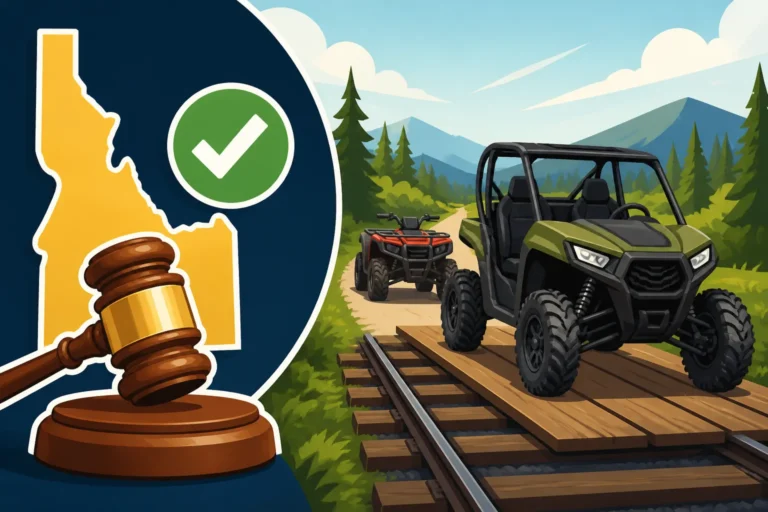
Idaho law generally allows OHVs to cross a state or federal highway at approximately a 90-degree angle to access another legal road or trail. This means you can't ride down the shoulder, make a turn onto the highway for a short distance, or even ride parallel to the highway for any length of time. The crossing must be direct and for the sole purpose of getting from one permitted route to another. Think of it as quickly traversing a dangerous intersection on a busy street to reach the other side.
The intent is not to allow temporary travel on the highway, but merely to bridge a gap between two legal OHV-accessible routes. For instance, if you're on a county road that suddenly dead-ends into a state highway, and there's another county road directly across, you might be able to cross the highway. However, this is always subject to local ordinances and the specific conditions of the crossing. If there's an overpass or underpass available, you would be expected to use that instead. Many riders will even outfit their machines with SuperATV mirrors to ensure maximum visibility for safe crossing maneuvers. [Crossing an Idaho Highway on an OHV] offers more details on these specific regulations.
Safety Precautions and Specific Restrictions for Crossings
Even when a crossing is legally permissible, it comes with a heightened responsibility for safety. You must yield to all highway traffic, and the crossing should only be attempted when it is safe to do so, with clear visibility in both directions. Speed limits, basic traffic laws, and any relevant local ordinances still apply. Some jurisdictions may have specific signage indicating where crossings are permitted or prohibited, so always be on the lookout.
It's also crucial to remember that this "crossing" exception does not apply to interstate highways. You cannot legally cross an interstate with an OHV, even for a brief moment. For interstates, there are no exceptions; they are completely off-limits. For other state and federal highways, a crossing is a momentary transition, not a right to use the highway itself for travel. Always check local regulations, as cities and counties often have their own ordinances that further restrict OHV access, even for crossings within their boundaries. [Idaho City and County Ordinances That Close Roads] can shed light on how local rules vary.
Why These Restrictions Are in Place
It can feel arbitrary, even unfair, when you've invested in making your machine street-legal, only to find you're still confined to certain roads. However, the restrictions on state and federal highways are rooted in very practical concerns about public safety, vehicle compatibility, and infrastructure design. It's not about making things difficult for riders, but about preventing potentially catastrophic accidents.
Safety Concerns for Both OHV Riders and Other Drivers
The stark reality is that OHVs are not designed to safely interact with high-speed, high-volume highway traffic. They typically have a narrower wheelbase, a higher center of gravity, and tires optimized for dirt, not pavement. These characteristics make them less stable at highway speeds and more susceptible to rollovers or loss of control, especially when encountering sudden gusts of wind from passing semi-trucks or making emergency maneuvers.
For other drivers, encountering an OHV on a major highway can be unexpected and pose a significant hazard. The size, speed, and visibility of OHVs differ greatly from cars and trucks. Even with brightly colored SuperATV whips or additional lighting, an OHV can be harder to see, especially at dawn, dusk, or in adverse weather conditions. The potential for a high-speed collision, with its devastating consequences, is a risk that state and federal agencies are unwilling to take.
The Design and Intent of Highway Infrastructure
State and federal highways are massive infrastructure projects designed to facilitate efficient, rapid transit for specific types of vehicles. They are engineered with specific lane widths, shoulder designs, sightlines, and access points that are optimized for cars, trucks, and commercial vehicles. Adding slower, less predictable OHVs to this mix disrupts the intended flow of traffic and can compromise safety.
For instance, acceleration lanes on highway on-ramps are designed for vehicles to quickly match highway speeds. An OHV might struggle to achieve this, creating a dangerous bottleneck. Similarly, the structural integrity of highway pavement is designed to withstand the weight and wear of standard road vehicles; while an OHV might not cause immediate damage, their varied tread patterns and slower speeds could contribute to different wear patterns over time. It's a system built for a specific purpose, and OHVs simply don't fit that purpose without introducing significant risks.
Navigating Idaho with Your OHV: Alternatives and Planning
So, if state and federal highways are largely off-limits, where can you ride your ATV or UTV in Idaho? Thankfully, Idaho is an OHV paradise, offering hundreds of miles of diverse terrain across a variety of road and trail systems. The key is knowing your options and planning your routes accordingly.
The Vast Network of County Roads
Many of Idaho's 44 counties have embraced OHV use on their roads, making them a fantastic alternative to state and federal highways. County roads range from paved rural routes to remote gravel and dirt paths, often providing direct access to trailheads and scenic backcountry areas. The rules vary from county to county, so it's absolutely essential to check local ordinances. Some counties allow OHVs on all their roads, while others have designated specific routes or restricted certain areas.
If you have an [Idaho Restricted Vehicle Plate Explained], you'll find that these county roads are where it really shines. This plate, along with your OHV sticker, typically allows you to operate on county roads where not explicitly prohibited. This opens up incredible opportunities for connecting trails, accessing small towns for fuel and supplies, or simply enjoying a leisurely ride through the countryside. Always keep your essential paperwork, like proof of insurance and registration, handy when riding these roads. [What Idaho Requires Before You Ride a County Road] provides a good overview of the necessary steps.
Forest Service and BLM Roads and Trails
Beyond county roads, Idaho boasts an extensive network of roads and trails managed by the U.S. Forest Service and the Bureau of Land Management (BLM). These federal lands are often the prime destinations for OHV enthusiasts, offering everything from challenging mountain trails to scenic forest roads. These routes are usually well-marked and offer some of the most spectacular riding opportunities in the state.
Crucially, OHV use on Forest Service and BLM lands is regulated by detailed Motor Vehicle Use Maps (MVUMs). These maps are your best friend when planning a ride on federal land, as they clearly designate which roads and trails are open to which types of vehicles (e.g., full-size vehicles, ATVs, motorcycles) and during which seasons. Just because a road is on federal land doesn't automatically mean it's open to OHVs; always consult the current MVUM for the specific area you plan to visit. [Idaho Rules on Forest Service Roads] and [Idaho Rules on BLM Roads] are excellent resources for understanding these specific regulations.
Route Planning and Essential Gear
Careful route planning is paramount when riding OHVs in Idaho, especially given the restrictions on state and federal highways. Utilize reliable maps, GPS devices, and apps like onX Offroad, which often integrate MVUM data. Trace your route to ensure you're sticking to legal OHV roads and trails, and identify any necessary legal crossings of state or federal highways.
| Road Type | General OHV Access (Idaho) | Exceptions/Notes | Speed Limits/Safety Concerns |
|---|---|---|---|
| Interstate Highways | Absolutely Prohibited | No exceptions for riding or crossing. | High speed (70-80 mph), high volume, extreme danger for OHVs. |
| State Highways | Generally Prohibited | May cross at 90-degree angle to access legal routes (not on interstates). | High speed (55-75 mph), higher volume, safety risks. |
| US Routes | Generally Prohibited | If state-maintained, rules similar to State Highways. Check MVUMs for federal lands. | Varies, but often similar to State Highways. |
| County Roads | Often Allowed | Varies by county; check local ordinances. May be restricted by time/area. | Lower speeds (25-55 mph), mixed surfaces. |
| Forest Service Roads | Often Allowed | Check Motor Vehicle Use Maps (MVUMs) for specific designations and seasons. | Varies greatly (5-35 mph), often unpaved. |
| BLM Roads | Often Allowed | Check Motor Vehicle Use Maps (MVUMs) for specific designations and seasons. | Varies greatly (5-35 mph), often unpaved. |
| Private Land | With Permission Only | Obtain explicit landowner permission. | No public access rules, but trespass laws apply. |
Beyond navigation, always carry essential recovery gear, a first-aid kit, plenty of water, and extra fuel, especially if you're venturing into remote areas. Even on roads, unexpected breakdowns can leave you stranded miles from help. Aftermarket accessories from brands like SuperATV can significantly enhance your machine's capability and your safety, from upgraded suspension for rough roads to winches for self-recovery. Planning ahead ensures your Idaho OHV adventure is safe, legal, and unforgettable. [Where to Ride an ATV in Idaho] can help you discover some fantastic destinations.
Disclaimer
This article is for general informational purposes only and does not constitute professional advice. Laws, prices and regulations vary by location and change over time. Consult a qualified professional for guidance on your specific situation.