Golf Carts and Low-Speed Vehicles in Idaho
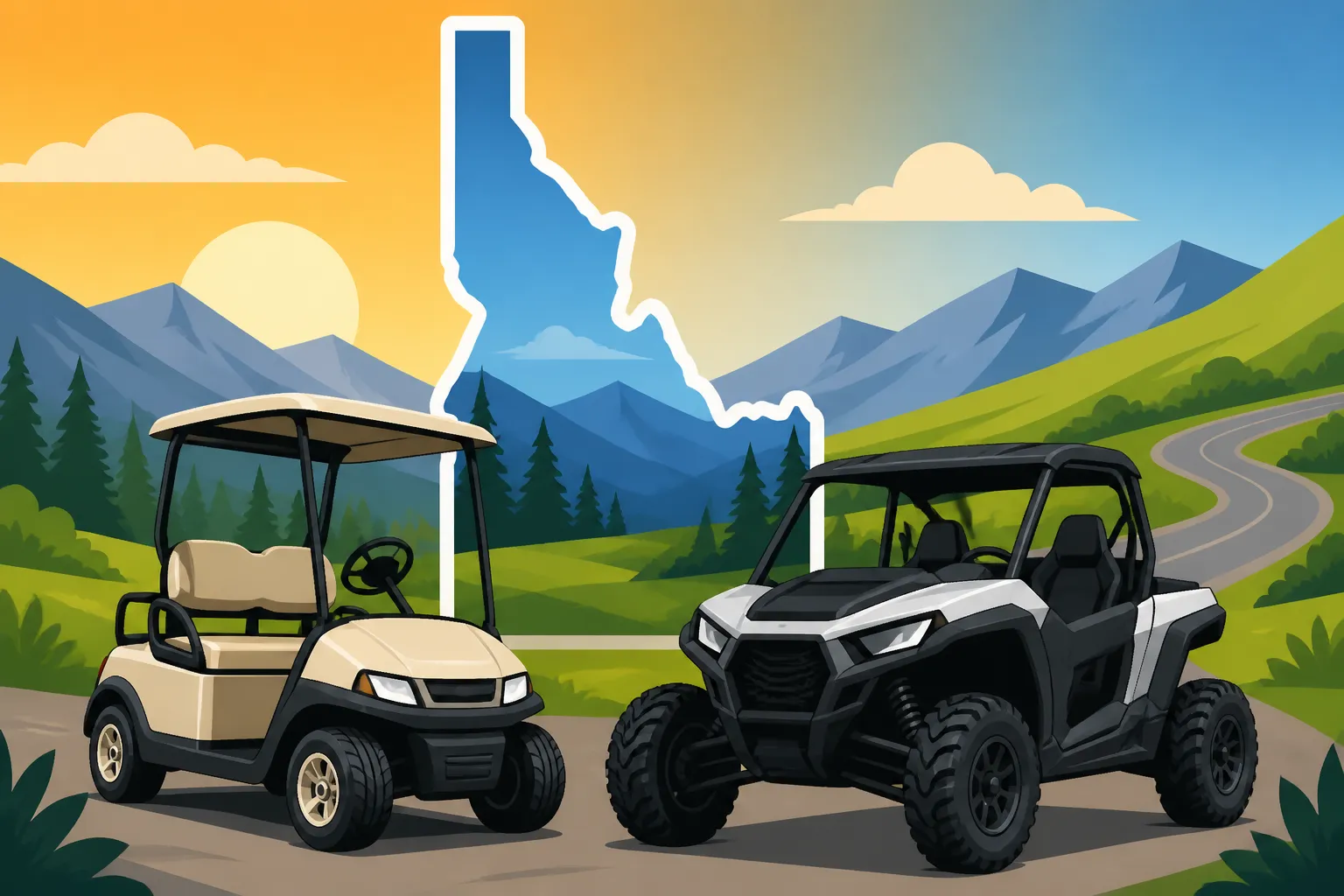
It’s a common sight in certain Idaho communities: golf carts puttering down the road, sometimes alongside full-size vehicles. This often leaves folks who own ATVs and UTVs wondering, "If they can do it, why can't I just take my side-by-side or quad on the pavement?" The truth is, the Gem State has very specific, and often confusing, rules that differentiate golf carts, low-speed vehicles (LSVs), and your typical off-highway vehicles (OHVs) when it comes to road use. This guide will clarify those distinctions, explain what each vehicle requires to be street-legal, and help you navigate the intricate web of Idaho’s road-riding regulations.
Understanding the Basics: What are Golf Carts and LSVs?
Before we dive into the nitty-gritty of Idaho law, it's vital to understand what we're actually talking about. The terms "golf cart" and "low-speed vehicle" are often used interchangeably, but legally, they are very different animals, especially in Idaho. This distinction is the root of much of the confusion, and getting it wrong can lead to serious headaches and fines.
Defining a Golf Cart
At its heart, a golf cart is designed for just what its name implies: navigating golf courses. These are small, electric or gasoline-powered vehicles built for low-speed travel over relatively flat, manicured terrain. They typically have a top speed of around 15 to 20 miles per hour and are not engineered with many of the safety features required for operation on public roadways, such as extensive lighting, robust braking systems for higher speeds, or safety glass.
In Idaho, there isn't a statewide definition that automatically grants golf carts widespread road access. Instead, their legality on public roads is almost entirely dictated by local city or county ordinances. This means a golf cart that's perfectly legal for street use in a planned community like Eagle or Sun Valley, where specific local rules have been enacted, might be completely illegal to drive on the streets of a neighboring town that hasn't passed such an ordinance. It's a localized permission slip, not a blanket right.
Defining a Low-Speed Vehicle (LSV)
Now, let's talk about Low-Speed Vehicles, or LSVs. These are a different breed entirely. Unlike golf carts, LSVs are purpose-built or modified to meet federal safety standards for limited public road use. Idaho law specifically defines an LSV as a four-wheeled vehicle whose top speed is greater than 20 miles per hour but not greater than 25 miles per hour. This speed limitation is crucial. If it goes faster than 25 mph, it's generally considered a regular vehicle, and if it goes slower than 20 mph, it's usually just a golf cart.
Because LSVs are designed for road use, they come equipped with specific safety features from the factory or require significant upgrades to meet these standards. This might include safety belts, headlamps, tail lamps, turn signal lamps, stop lamps, reflex reflectors, an exterior mirror on the driver's side and either an exterior mirror on the passenger's side or an interior mirror, a parking brake, a VIN, and a windshield. Essentially, an LSV is a street-legal vehicle designed for slow-speed urban or community travel, bridging the gap between a golf cart and a traditional car. It's important to recognize that many off-highway vehicles, even when modified with aftermarket kits from companies like SuperATV, still won't meet the specific federal and state criteria to be classified as an LSV.
How They Differ from Traditional OHVs
So, where do your ATVs, UTVs, and other Off-Highway Vehicles (OHVs) fit into this picture? An OHV is designed for off-road use – trails, fields, dunes, and unpaved surfaces. While many modern side-by-sides boast impressive speeds and features, they are fundamentally different from golf carts and LSVs in their primary intended use and regulatory framework.
In Idaho, to operate an OHV on certain paved county roads, you typically need an [Idaho's Restricted Vehicle Plate Explained]. This "R" plate allows limited road access as a means to connect trails, access services in specific areas, or traverse short segments of county roads where permitted by local ordinance. However, even with an "R" plate, an OHV is still primarily an off-road machine, subject to different speed limits, equipment requirements, and operational restrictions than an LSV or a street-legal golf cart. The "R" plate doesn't magically turn your UTV into a street-legal car, nor does it make it an LSV. It's a specific permit for a specific type of vehicle, allowing limited road use under strict conditions.
Idaho's Legal Framework for Golf Carts on Public Roads
The rules for golf carts on Idaho's public roads are perhaps the most perplexing, precisely because they aren't uniform across the state. This fragmented approach means what's permissible in one town might land you a citation just a few miles down the road. It’s crucial for anyone considering road use for their golf cart to understand this patchwork of regulations.
State-Level Restrictions on Golf Carts
At the state level, Idaho law generally does not recognize golf carts as vehicles permitted for widespread use on public highways or streets. Unlike LSVs, which have clear state definitions and equipment requirements, golf carts are typically not considered "motor vehicles" in the same vein as cars, trucks, or even motorcycles for the purpose of general road access. This means that, by default, you cannot simply drive a golf cart on any public road in Idaho. There's no statewide registration or titling process for a golf cart to make it universally street-legal.
This lack of a statewide framework means golf carts are often in a legal gray area. Without specific local ordinances, driving one on a city street or county road could be considered illegal operation of an unregistered or unapproved vehicle. This isn't just a minor issue; it could lead to significant fines, impoundment of the vehicle, and even liability problems if an accident were to occur. It's a frustrating reality for many who live in areas where golf carts could be a convenient mode of local transportation, but the state has largely left it up to local control.
The Power of Local Ordinances
Here's where the situation gets interesting and a bit complicated. While the state doesn't generally permit golf carts on roads, Idaho Code does grant individual cities and counties the authority to pass their own ordinances allowing golf cart operation on specific public streets within their jurisdiction. These local rules are the sole pathway for golf cart owners to legally use their machines on paved roads.
A city might, for example, designate certain residential streets or streets within a specific development as permissible for golf cart use, often with conditions like speed limits, specific hours of operation, or even requirements for additional lighting or safety flags. These ordinances are highly localized and can vary wildly from one community to the next. What's allowed in McCall might be strictly forbidden in Sandpoint, or even in a different part of the same county. This is why you might see golf carts cruising around a resort town like Donelly, but not on the main highways leading into it. It's imperative that you check with the specific city or county planning department or sheriff's office for the exact wording of any local golf cart ordinances before you ever consider taking your cart off private property.
Where You Might See Them and Where You Won't
Given the reliance on local ordinances, you're most likely to see golf carts legally operating on public roads in specific types of communities. These often include:
- Planned Residential Developments: Many newer subdivisions or communities designed with golf courses or extensive internal road networks may have homeowner association rules and corresponding city ordinances that permit golf carts for local travel.
- Resort Towns: Communities that cater to tourism, especially those with golf courses or large recreational areas, sometimes pass ordinances to allow golf carts for convenience, often to reduce vehicle traffic. Think of resort areas or lake communities.
- Rural Villages or Small Towns: Some very small, low-traffic towns might have local ordinances that permit golf carts on their less-trafficked streets.
Conversely, you will generally not see golf carts legally allowed on:
- State Highways or Federal Routes: These are almost universally off-limits to golf carts due to state and federal regulations concerning vehicle speed, safety features, and traffic flow.
- Busy City Arterials: Even in cities with golf cart ordinances, these main thoroughfares with higher speeds and traffic volumes are typically excluded for safety reasons.
- Any Public Road Without a Specific Local Ordinance: If a city or county hasn't explicitly passed a law allowing golf carts, they are generally prohibited from public road use.
The takeaway here is critical: never assume. Just because you see a golf cart on a street doesn't mean it's legal everywhere, or even legal where you are. Always verify local regulations.
Idaho's Legal Framework for Low-Speed Vehicles (LSVs)
Unlike golf carts, which exist in a regulatory gray area dependent on local whims, Low-Speed Vehicles (LSVs) have a much clearer and more consistent legal framework in Idaho. They are recognized by state law as a distinct category of motor vehicle, and as such, they have specific requirements for titling, registration, equipment, and operation. This clarity makes LSVs a more predictable option for those seeking a street-legal, low-speed vehicle, provided they meet all the necessary criteria.
Titling and Registration for LSVs
Because LSVs are considered motor vehicles in Idaho, they are subject to the same general titling and registration processes as a car or truck, albeit with specific distinctions related to their classification. If you purchase a new LSV from a dealer, they will typically handle the initial paperwork for you, much like any other vehicle sale. For a private sale or if you're importing an LSV into Idaho, you'll need to work with your county assessor's office to [Idaho OHV Title Application at the County Assessor] and register the vehicle.
Key steps for LSV titling and registration often include:
- Proof of Ownership: You'll need a Manufacturer's Statement of Origin (MSO) for a new vehicle, or a properly assigned title from the previous owner if it's used.
- Identification: Bring your driver's license and proof of residency.
- Verification: The county may verify that the vehicle meets the definition of an LSV, especially regarding its top speed and safety equipment.
- Fees and Taxes: You will pay state sales tax (or use tax if bringing it from out of state) and registration fees, similar to other motor vehicles.
Once successfully titled and registered, your LSV will receive standard Idaho license plates, not the restricted "R" plates used for OHVs. This plate signifies its legal status for road use where permitted.
Essential Equipment for LSV Road Legality
This is perhaps the most critical distinction for LSVs. To be legally operated on Idaho public roads, an LSV must be equipped with specific safety features that meet federal motor vehicle safety standards. These are not optional; they are mandatory for the vehicle to be classified and registered as an LSV. Without these features, it simply isn't an LSV in the eyes of the law, regardless of its speed.
The required equipment includes:
- Headlamps: At least two headlamps, providing adequate illumination.
- Tail Lamps: Two tail lamps visible from the rear.
- Stop Lamps (Brake Lights): Two stop lamps that activate when the brake pedal is pressed.
- Turn Signal Lamps: Front and rear turn signals for indicating turns.
- Reflex Reflectors: Reflectors on the sides and rear for enhanced visibility.
- Exterior Mirror: At least one on the driver's side, and either another on the passenger's side or an interior rearview mirror.
- Parking Brake: A fully functional parking brake.
- Windshield: A DOT-approved safety glass windshield.
- Seat Belts: All seating positions must have seat belts.
- Vehicle Identification Number (VIN): A permanent, federally compliant VIN.
Many people try to convert their UTVs into street-legal machines, and while aftermarket parts from companies like SuperATV can significantly upgrade a UTV, simply adding a horn and turn signals might not be enough to meet the full federal safety standards required for an LSV. The entire vehicle must be certified or manufactured to these standards, which is a much more comprehensive process than just bolting on a few accessories. It's not about making it look street legal; it's about making it be street legal according to strict federal guidelines.
Driver's License and Insurance Requirements
Operating an LSV on Idaho public roads comes with the same responsibilities as driving any other motor vehicle. This means you absolutely need a valid driver's license. There's no exception for LSVs; if you're driving it on a public road, you must be a licensed driver. This also extends to [Idaho Alcohol Limits for OHV Operators]; the same laws that apply to cars and trucks regarding driving under the influence apply to LSVs.
Furthermore, just like any other registered motor vehicle, an LSV must carry current liability insurance. This isn't optional; it's a legal requirement to protect yourself and others in case of an accident. You'll need to provide proof of insurance when registering the vehicle, and you should always carry proof of insurance while operating the LSV on public roads. Your standard auto insurance policy may not automatically cover an LSV, so it's critical to speak with your insurance provider to ensure you have adequate coverage specifically for this type of vehicle. Don't assume your existing policy extends to it.
Comparing Golf Carts, LSVs, and OHVs in Idaho
The lines between golf carts, Low-Speed Vehicles (LSVs), and Off-Highway Vehicles (OHVs) can seem blurry, especially when you see them all on various types of roads in different parts of Idaho. However, legally, they are distinct categories with unique capabilities, limitations, and requirements for road use. Understanding these fundamental differences is key to staying legal and safe on Idaho's diverse road network.
Speed, Size, and Purpose
The most immediate and obvious differences lie in their design, speed capabilities, and intended purpose:
- Golf Carts:
- Speed: Typically under 20 mph, often around 15-18 mph.
- Size: Relatively small, lightweight, and designed for tight spaces like golf courses.
- Purpose: Primarily recreational, for short-distance travel on private property or within specific permitted communities. Not built for sustained public road use or high traffic volumes.
- Low-Speed Vehicles (LSVs):
- Speed: Must be capable of exceeding 20 mph but not exceeding 25 mph. This is a critical legal definition.
- Size: Generally similar footprint to a golf cart but often more robustly built with a heavier chassis to meet safety standards.
- Purpose: Designed as a street-legal option for local errands, community travel, and situations where higher speeds aren't needed. They bridge the gap between a golf cart and a full-size car.
- Off-Highway Vehicles (OHVs – ATVs/UTVs):
- Speed: Widely variable, from slower utility models to high-performance machines capable of speeds well over 60 mph.
- Size: Can range from single-person quads to multi-seat side-by-sides that are significantly larger and heavier than golf carts or LSVs.
- Purpose: Built for rugged, off-road terrain. While some UTVs can be highly customized with parts from companies like SuperATV to enhance performance and utility, their primary design is for trails, dirt, and challenging environments, not paved roads.
This fundamental difference in purpose dictates everything from their construction to the legal framework governing their use.
Different Plates and Stickers
One of the easiest ways to visually distinguish these vehicles (and their legal standing) in Idaho is by the plates and stickers they display:
- Golf Carts:
- Generally, golf carts operating under local ordinances do not have state-issued license plates or stickers. Some local jurisdictions might issue their own permits or identification, but this is not a statewide standard. If you see one with a regular license plate, it's likely actually an LSV, not just a golf cart.
- Low-Speed Vehicles (LSVs):
- LSVs carry standard Idaho license plates, just like cars and trucks. These plates are issued by the county assessor's office upon successful titling and registration. This is the clearest indication that the vehicle has met state and federal requirements for limited road use.
- Off-Highway Vehicles (OHVs):
- OHVs used on public lands and certain county roads in Idaho require an annual OHV sticker issued by Idaho Parks and Recreation. Additionally, to legally [Riding an ATV on the Road in Idaho] on designated county roads, they must display an [Idaho Plates That Begin With R]. This "R" plate is specifically for restricted vehicle use and does not grant the same rights as a standard license plate. It's a key identifier for limited trail-to-trail connectivity, not general street legality.
The type of identification on the vehicle tells you a great deal about its legal classification and what roads it's allowed on. Trying to put an "R" plate on an LSV or expecting a golf cart to be covered by an OHV sticker is a misunderstanding of the Idaho vehicle code.
Road Access and Limitations
The most critical distinction for owners is where each vehicle can legally go:
- Golf Carts:
- Road access is strictly limited to private property or public roads where a specific local city or county ordinance has expressly permitted their use. These ordinances usually come with significant restrictions, such as speed limits, designated streets, and specific times of day. They are almost universally prohibited on state and federal highways.
- Low-Speed Vehicles (LSVs):
- LSVs with proper titling, registration, and insurance can generally operate on any public road in Idaho where the posted speed limit is 25 mph or less. They are explicitly prohibited from roads where the posted speed limit exceeds 25 mph. This means they are ideal for residential streets, neighborhood connectors, and certain city roads but cannot be used on higher-speed arterials or highways. Local ordinances can sometimes restrict LSV use further, but generally, state law provides clearer guidelines.
- Off-Highway Vehicles (OHVs):
- With an [Idaho OHV Sticker for a Machine Bought in July] and an "R" plate, OHVs can access designated county roads where allowed by local ordinance or [What Idaho Requires to Ride a County Road] for connecting trails or accessing services. OHVs are strictly prohibited from state and federal highways, even with an "R" plate, except for direct perpendicular crossings. [Idaho City and County Ordinances That Close Roads] can further limit where OHVs can ride, even on county roads. The purpose of OHV road access is primarily for connectivity, not general transportation. This is a common point of confusion for riders moving from states with more permissive road access laws.
| Feature / Vehicle Type | Golf Cart | Low-Speed Vehicle (LSV) | Off-Highway Vehicle (OHV) |
|---|---|---|---|
| Top Speed | < 20 mph | 20-25 mph | Varies, often > 25 mph |
| Road Legal Status | Local Ordinance Only | Statewide with Restrictions | Restricted Plate for Limited Road Use |
| License Plate | None (Local Permit Possible) | Standard Idaho License Plate | Idaho "R" Plate (Restricted Use) |
| OHV Sticker Required? | No | No | Yes, for Public Land Use |
| Driver's License? | Often Required by Local Ord. | Yes | Yes, for Road Use |
| Insurance Required? | Often Required by Local Ord. | Yes | Yes, for Road Use |
| Required Equipment | Basic (Lights often added) | Specific FMVSS standards (Lights, Signals, Belts, etc.) | Basic (Lights, Brakes, Spark Arrester; Road-specific additions for "R" Plate) |
| Primary Use | Golf course, private property, local community | Local street travel (25 mph or less roads) | Trails, unpaved surfaces |
| Federal Standards | No | Yes, FMVSS 500 | No (EPA/CARB for emissions) |
Practical Considerations for Idaho Owners
Understanding the legal definitions and requirements for golf carts, LSVs, and OHVs is one thing, but putting that knowledge into practice brings its own set of challenges. From ensuring you're properly insured to knowing what to expect from law enforcement, these practical considerations are crucial for any Idaho resident or visitor considering street use for their low-speed vehicle or OHV.
Insurance Implications for Each Vehicle Type
Insurance is not just a legal requirement; it's a vital safety net. However, coverage varies significantly across these vehicle types:
- Golf Carts: Since their road legality is highly localized, obtaining specific road-use insurance for a golf cart can be tricky. Often, they might be covered under a homeowner's policy for use on private property, but this coverage typically doesn't extend to public roads. If a city or county ordinance allows golf carts on their roads, they almost always require proof of liability insurance. You'll need to work with your insurance agent to find a policy that specifically covers public road use, as standard auto or home policies likely won't suffice. The risk here is significant: without proper coverage, an accident could lead to devastating financial consequences.
- Low-Speed Vehicles (LSVs): This is straightforward. Because LSVs are titled and registered like motor vehicles, they require a standard motor vehicle liability insurance policy. Your existing auto insurance provider should be able to write a policy for an LSV, and it's essential to confirm that your policy explicitly lists the LSV and provides the minimum [Idaho Liability Insurance Minimums for Riders] required by Idaho law. Always carry proof of this insurance when driving your LSV.
- Off-Highway Vehicles (OHVs): For OHVs, insurance requirements depend on where and how you ride. If you're only riding on private property, insurance might be optional but highly recommended. However, if you're riding on public lands, and especially if you're using an [Idaho Restricted Vehicle Plate Cost] for road use, you must carry liability insurance. This is a specific requirement to drive an OHV on any public road in Idaho, including those designated as "open to OHVs." Many riders add their OHVs to their existing auto or powersports policies, but it's crucial to confirm the extent of coverage for both off-road and limited on-road use. [Does Homeowners Insurance Cover an Idaho ATV?] is a common question, and the answer is usually "no" for public road or trail use.
Modifications and Aftermarket Parts
The temptation to modify any vehicle is strong, and OHV, golf cart, and LSV owners are no different. Aftermarket parts can enhance performance, comfort, or safety, but they can also inadvertently push a vehicle outside its legal classification.
- Golf Carts: While you can add lights, mirrors, or even turn signals to a golf cart, these additions do not automatically make it street-legal at the state level. They might help meet requirements of a local ordinance, but they won't transform it into an LSV. Be wary of kits advertised as making your golf cart "street legal" without thoroughly understanding Idaho's specific LSV definition and requirements.
- Low-Speed Vehicles (LSVs): LSVs are built to a specific standard. While cosmetic modifications are generally fine, altering performance components like the engine or drivetrain in a way that allows it to exceed 25 mph would disqualify it as an LSV and make it illegal for its intended road use. If you enhance speed, it would then be considered a regular car, subject to much more stringent safety and crash test standards it likely cannot meet.
- Off-Highway Vehicles (OHVs): This is where companies like SuperATV really shine, offering a vast array of parts for UTVs – from lift kits and larger tires to full cabs and plowing attachments. Many OHV owners outfit their machines with turn signals, horns, and mirrors to meet the requirements for an "R" plate. These modifications are generally permissible and necessary for limited road access for OHVs. However, just because you've added all the "street-legal" accessories doesn't make your OHV an LSV or a street-legal car. It remains an OHV with restricted road access. Understanding this nuance is key to avoiding penalties.
Enforcement and Penalties
Idaho law enforcement, including county sheriffs and Idaho State Police, is becoming increasingly vigilant about improper vehicle use on public roads. Ignorance of the law is rarely an excuse.
- Golf Carts: If you operate a golf cart on a public road where no local ordinance permits it, you could face citations for operating an unregistered or uninsured vehicle. Fines can be substantial, and the vehicle could be impounded. [Idaho Fines for Illegal Road Riding] can be a serious deterrent.
- Low-Speed Vehicles (LSVs): Operating an LSV without proper registration, insurance, or a valid driver's license will result in tickets similar to those for a regular car. If you take an LSV on a road with a speed limit over 25 mph, you're breaking the law and could be cited for illegal operation.
- Off-Highway Vehicles (OHVs): Misusing an OHV with an "R" plate can also lead to penalties. This includes riding on state highways, exceeding posted speed limits for OHVs on county roads, or riding where a local [Idaho City and County Ordinances That Close Roads] specifically prohibits OHVs. An OHV without a valid OHV sticker or "R" plate where required will also incur fines. Always [What an Idaho Deputy Asks a Rider For] if you're stopped is your license, registration/title, and proof of insurance.
The penalties for operating any of these vehicles improperly can range from hundreds of dollars in fines to vehicle impoundment and even points on your driving record. It’s always better to be fully informed and compliant than to risk a costly encounter with law enforcement.
Common Misconceptions and Local Variances
The landscape of low-speed vehicle use in Idaho is rife with misunderstandings. Many people hear anecdotes or see others doing something and assume it's universally legal. This can be a costly mistake. Navigating this area requires not just understanding the specific rules but also being proactive in verifying information, especially due to the significant role of local ordinances.
The "Street Legal UTV" Myth vs. LSV Reality
One of the most pervasive myths in the powersports community is the idea that you can easily make your UTV "street legal" in Idaho just by adding a few accessories. While it's true that you can equip your UTV with turn signals, a horn, mirrors, and a windshield – often using kits from reputable aftermarket providers – to meet the criteria for an [Idaho's Restricted Vehicle Plate Explained], this does not make it a Low-Speed Vehicle (LSV) or a fully street-legal vehicle like a car.
An "R" plate on a UTV allows very specific, restricted access to certain county roads for the purpose of connecting trails or accessing services. It's not for general transportation. Your UTV, even with an "R" plate, cannot legally operate on state or federal highways (except for perpendicular crossings), nor can it typically operate on city streets without a specific, rare local ordinance. The "R" plate signifies an off-highway vehicle with limited road access, not a transformation into an LSV. An LSV, by contrast, is a vehicle that meets stringent federal safety standards and a specific top speed range (20-25 mph), and is titled and registered like a car. The requirements for an LSV are far more comprehensive than simply adding road-oriented accessories to a UTV. This distinction is crucial and often misunderstood by eager UTV owners.
Checking Local Regulations Before You Ride
Because golf cart legality is almost entirely dependent on local ordinances, and even LSVs and OHVs with "R" plates have restrictions based on city and county rules, it is absolutely paramount to check local regulations before you venture onto any public road. What's legal in your rural county might not be allowed once you enter an incorporated city limit, or vice-versa.
Here's how to be proactive:
- Contact the Local City or County Office: For golf carts, call the city clerk's office, planning department, or local sheriff's department in the specific area you plan to ride. Ask if there's an ordinance permitting golf cart use on public streets and what the exact parameters are (which streets, times, equipment, insurance).
- Review County Ordinances for OHVs: For OHVs with "R" plates, check the specific county's website for their OHV ordinance. Many counties have maps or lists of [Which Idaho County Roads Allow OHVs] and which are closed. Remember, [Idaho City and County Ordinances That Close Roads] can override default state allowances.
- Don't Rely on Observation: Just seeing someone else doing it doesn't mean it's legal or safe for you. They might have a special permit, be operating illegally, or be in a different jurisdiction with different rules.
- Stay Updated: Laws and ordinances can change. If you ride regularly in an area, it's a good idea to periodically check for updates.
Failing to verify local rules is one of the quickest ways to receive a citation, even if your intentions are good.
Navigating Conflicting Information
It's easy to get confused when discussing golf carts, LSVs, and OHVs because information can be conflicting. You might hear different rules from a friend, a neighbor, or even from different sources online. This often stems from:
- Jurisdictional Differences: As discussed, what's true for one Idaho city or county isn't true for another. Information shared without a specific geographic context can be misleading.
- Misinterpretation of State vs. Local Law: People often confuse statewide rules (like those for LSVs or the "R" plate for OHVs) with local ordinances (like those for golf carts).
- Outdated Information: Laws change. What was permissible five years ago might not be today. Always seek the most current information.
- Marketing Hype: Some aftermarket companies might advertise "street legal kits" without fully explaining that these kits only meet some requirements, or that true street legality (especially for LSVs) involves federal standards beyond just bolt-on parts. While SuperATV provides excellent products, users must ensure their modified vehicles fully comply with Idaho's specific LSV or OHV road-use requirements.
To navigate this, always prioritize official sources: the Idaho Transportation Department, Idaho Parks and Recreation, and the specific city or county government where you plan to operate. If in doubt, a quick call to the local sheriff's non-emergency line or city hall can save you a lot of grief. Understanding the legal definitions is the foundation; applying them requires diligent research into the specific area you intend to ride.
Disclaimer
This article is for general informational purposes only and does not constitute professional advice. Laws, prices and regulations vary by location and change over time. Consult a qualified professional for guidance on your specific situation.