Idaho Rules on Private Timber Roads
It's incredibly frustrating, isn't it? You're out for a fantastic ride on your ATV or UTV in Idaho, enjoying the stunning scenery, and then you hit a gate or a sign that leaves you scratching your head. Are you on public land or private? Can you keep going, or are you about to break the law? Navigating the rules around private timber roads in Idaho can be confusing, but this guide is here to clear up the uncertainty and help you understand when and where you can legally ride these winding routes.
Understanding "Private" on Idaho Timber Roads
Idaho is a state blessed with vast forests, and it's easy to assume that any dirt or gravel road winding through the trees is fair game for your off-highway vehicle (OHV). However, that's simply not the case. Many of those roads, even if they look just like public forest service routes, are actually private. It's a critical distinction every rider needs to understand to avoid problems.
The Difference Between Public and Private Land
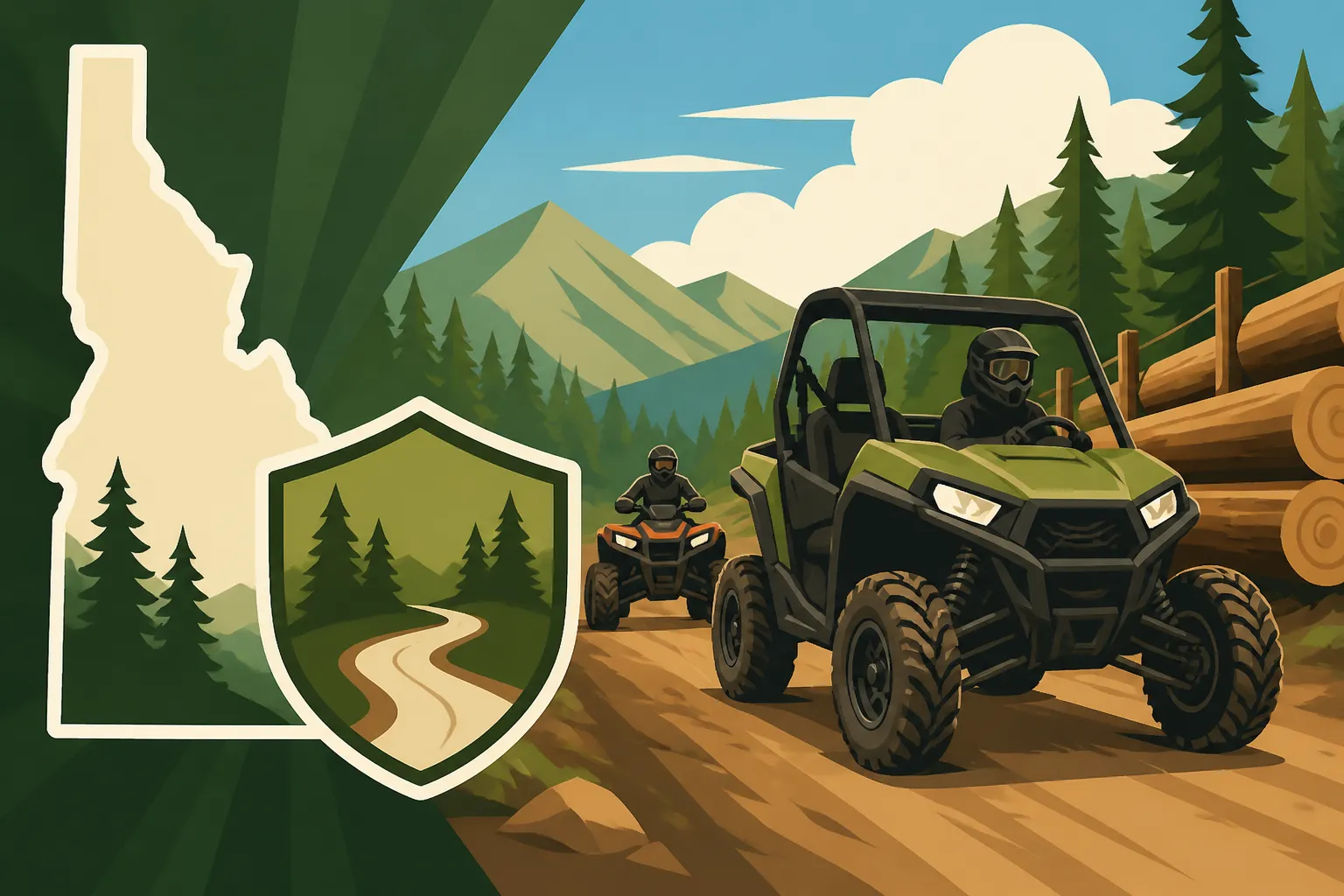
Imagine yourself cruising along a beautiful, well-maintained gravel road that seems to stretch for miles through dense ponderosa pines. There are no obvious signs, no gates, and it feels just like any other public forest road. But then you see a logging truck rumble by, or a stack of freshly cut timber, and a little bell goes off. Many of these roads are, in fact, owned by timber companies, private ranches, or other landholders. They're built and maintained for industrial purposes—primarily logging—not necessarily for public recreational access.
This can be a huge point of confusion. Riders often spend hours exploring, thinking they're on open public access, only to discover later (sometimes the hard way) that they've been trespassing. These private lands, while integral to Idaho's economy through forestry and agriculture, come with strict rules because they are, after all, someone else's property. The appearance of a road can be deceptive; a high-quality gravel road is just as likely to be private as a rutted two-track, especially if it leads into active timber operations.
Why Access Rules Exist: Safety and Stewardship
Landowners, whether they're large timber corporations or individual families, have very good reasons for restricting access to their private timber roads. First and foremost, safety is a massive concern. Active logging operations involve heavy machinery, falling trees, and busy truck traffic. An unexpected ATV or UTV rider around a blind corner could lead to a catastrophic accident. These are industrial zones, not recreational playgrounds, and they are inherently dangerous when active.
Beyond immediate safety, landowners are also responsible for the stewardship of their property. Unregulated access can lead to a host of problems: littering, resource damage, wildfire risk from improper use, and even vandalism. Maintaining these roads costs money, and landowners are typically not compensated for public recreational use, nor do they want the added liability of an accident on their property. Think of it from their perspective: they've invested significantly in land and infrastructure, and they need to protect that investment and ensure safe, efficient operations. Understanding these reasons can help riders appreciate why the rules are in place, even if it limits riding opportunities in certain areas.
Navigating Access: What Riders Need to Know
When it comes to riding on private timber roads in Idaho, there's one golden rule that stands above all others. Ignoring this rule can lead to serious consequences, not just for you but potentially for the broader OHV community. Knowing how to identify private land and respecting those boundaries is fundamental to responsible riding in the Gem State.
The Golden Rule: Permission is Paramount
Let's be absolutely clear: if a road or property is private, you cannot ride your ATV or UTV on it without explicit permission from the landowner. No "maybe," no "it looked open," no "I didn't see a sign." Permission is the non-negotiable requirement. This can be challenging because, unlike designated public trails, private timber companies aren't typically set up to handle individual recreational access requests.
So, how do you know if land is private? You can't rely solely on what you see. The best approach is proactive research. Before you head out, consult tools like county assessor's maps, which often show property boundaries and ownership. Online mapping apps sometimes have land ownership overlays that can be incredibly useful. Look for obvious signs like "No Trespassing," "Private Property," or "Road Closed." Even if a gate is open, that doesn't grant you permission to enter; always leave a gate as you found it, but ideally, if it's private and you don't have permission, you should turn around. Sometimes, a private timber company might offer specific, managed access during certain seasons or for particular activities, but this is usually clearly communicated through their websites or local offices. Without such an explicit invitation or direct permission, assume it's off-limits.
Identifying and Respecting Restricted Areas
Private timber roads often have distinct characteristics that, once you know what to look for, can help you identify them. While some are completely unsigned, many will feature clear "No Trespassing" signs, or signs indicating active logging operations, which should immediately tell you to turn around. You might also see signs indicating "Industrial Lands" or "Entry by Permit Only." These are not suggestions; they are directives. Gates, whether locked or simply closed, are another strong indicator of private land. It's crucial not to climb over or go around gates, as this is a clear act of trespassing.
Many of these roads are on vast tracts of industrial timberlands. These companies are actively managing timber harvests, planting new trees, and maintaining their infrastructure. Your presence as a recreational rider, no matter how careful you are, can interfere with their operations, create safety hazards, and potentially lead to damage. Responsible riders recognize that these are working landscapes. If you're outfitting your machine for serious off-road adventures, perhaps with robust skid plates or A-arms from a company like SuperATV, remember that such gear is for legitimate trails, not for breaching private property. The goal is always to respect the land, whether public or private.
Here’s a quick overview of how different types of roads are typically managed:
| Road Type | Typical Ownership | Common Access Rules |
|---|---|---|
| Forest Service (USFS) | Public (Federal) | Generally open, follow MVUMs, designated OHV routes |
| BLM (Bureau of Land Mgmt) | Public (Federal) | Generally open, follow travel management plans |
| Idaho Dept. of Lands (IDL) | Public (State Trust Land) | Open for non-motorized, motorized often restricted |
| Private Timber Roads | Private Corporations/Families | No access without explicit landowner permission |
| County Roads | Public (Local Government) | Open, but OHV use may be restricted; check local ordinances |
Consequences of Trespassing and Best Practices
It's tempting to think that a quick ride down an unmarked, un-gated private road won't hurt anyone, but the reality is quite different. Trespassing on private timber roads in Idaho carries significant risks, both legal and practical. Understanding these repercussions is key to making smart decisions out on the trails.
Legal and Financial Repercussions
The legal consequences of trespassing on private property in Idaho, including private timber roads, can be quite severe. You're not just looking at a slap on the wrist. Depending on the specific circumstances and whether it's a first offense, you could face substantial fines, impoundment of your ATV or UTV, and potentially even criminal charges. Law enforcement, including county sheriffs and Idaho Fish and Game officers, does patrol these areas, and timber companies actively monitor their properties. Ignorance of ownership is rarely an accepted legal defense.
Beyond immediate penalties, there's the issue of liability. If you're injured while trespassing on private land, you generally have no legal recourse against the landowner. In fact, you could be held liable for any damages you cause to the property, even unintentionally. Imagine accidentally causing a small fire, damaging a gate, or impacting timber operations – the costs associated could be astronomical. These are not idle threats; landowners have a vested interest in protecting their property and will pursue legal action if necessary. It's a risk simply not worth taking when so many legitimate riding opportunities exist.
Being a Responsible Idaho Rider
The best defense against trespassing is a good offense: preparation. Always confirm land ownership before you ride. Utilize modern tools like GPS units, mapping apps on your phone (some offer land ownership overlays for a fee), and official maps like the [Reading an Idaho Motor Vehicle Use Map] before you even leave home. These resources clearly delineate public versus private land and will show designated OHV trails. Make it a habit to cross-reference your planned route with these maps.
When you're out riding, pay attention to your surroundings. Look for signs, gates, and property markers. If you're unsure, it's always safer to turn back or find an alternative route that you know is public. Respecting private property is not just about avoiding legal trouble; it's about being a good ambassador for the entire OHV community. Disregard for private land can lead to further restrictions, more gates, and less access for everyone, even on legitimate public lands if relationships with landowners sour. Stick to marked trails, pack out what you pack in, and leave no trace. Equip your machine with quality, durable components, like those from SuperATV, not just for performance but for reliability on approved trails, ensuring you can navigate challenging terrain without causing damage or getting stuck where you shouldn't be. Remember, the goal is to enjoy Idaho's incredible backcountry responsibly.
Where to Find Official Information and Public Alternatives
The confusion around private timber roads is a common challenge for riders. However, Idaho offers numerous resources to help you identify where you can and cannot ride, and thankfully, there are vast public lands that welcome OHV enthusiasts. Knowing where to look for official information and embracing the amazing public options will ensure your rides are always legal and enjoyable.
Resources for Identifying Land Ownership
One of the most valuable tools for any Idaho OHV rider is a good map. Forget the old-school folded paper map that only shows major roads; you need detailed land ownership information. Your first stop should be your local county assessor's office, or their website, which often provides property ownership maps. These can clearly show you parcel lines and who owns what.
Next, familiarize yourself with Motor Vehicle Use Maps (MVUMs) issued by the U.S. Forest Service. These maps are specific to national forests and show exactly which roads and trails are open to motorized use, and what types of vehicles are allowed. Similarly, the Bureau of Land Management (BLM) provides maps for the lands they manage, detailing access rules. While these federal maps won't show private timber company lands directly, they will indicate where federal land ends and other jurisdictions begin. For state-managed lands, like those overseen by the Idaho Department of Lands (IDL), understand that motorized access is often more restricted than on federal lands, and it's best to check with the local IDL office for clarification. Apps like onX Offroad or other GPS-enabled mapping services can also integrate many of these layers directly onto your phone or tablet, providing real-time location tracking relative to property boundaries. Always have multiple sources to cross-reference.
Exploring Legitimate Public Riding Opportunities
Idaho is a paradise for OHV riders, with millions of acres of public land available for exploration. You absolutely do not need to risk trespassing on private timber roads to have an incredible adventure. Instead, focus your energy on the designated trail systems and open roads within Idaho's national forests and BLM lands. Areas like the Boise National Forest, Sawtooth National Forest, and the Idaho Panhandle National Forests offer thousands of miles of trails and roads suitable for ATVs and UTVs. [Where to Ride an ATV in Idaho] is an excellent resource for discovering these legitimate opportunities.
Many of these public areas feature fantastic scenic routes, challenging technical trails, and even opportunities to ride through [Idaho Ghost Towns You Can Ride To] or access incredible fishing and camping spots. Planning your trip around these known public access points, referring to [Planning an Idaho Riding Trip] guidelines, will guarantee a worry-free experience. Equip your side-by-side or quad for these adventures with reliable parts and accessories that stand up to rugged use, such as those offered by SuperATV, ensuring your machine is ready for whatever legal public trail you choose to conquer. By sticking to these designated areas and respecting all signage and regulations, you contribute positively to the OHV community and help preserve access for future generations.
Disclaimer
This article is for general informational purposes only and does not constitute professional advice. Laws, prices and regulations vary by location and change over time. Consult a qualified professional for guidance on your specific situation.