Riding a Logging Road in North Idaho
North Idaho is a paradise for ATV and UTV enthusiasts, offering some of the most stunning backcountry experiences you can find. But if you've ever tried to plan a trip up into those rolling timberlands, you've probably felt that familiar tug of confusion. You see all these amazing logging roads snaking through the mountains, beckoning you to explore, but then you wonder, "Can I even ride my machine on that?" It's a valid question, as the rules for navigating these working arteries of the timber industry can be a bit opaque. This guide is here to untangle that complexity, giving you clear, actionable insights into how to safely and legally enjoy North Idaho's logging roads.
Understanding Logging Roads in North Idaho
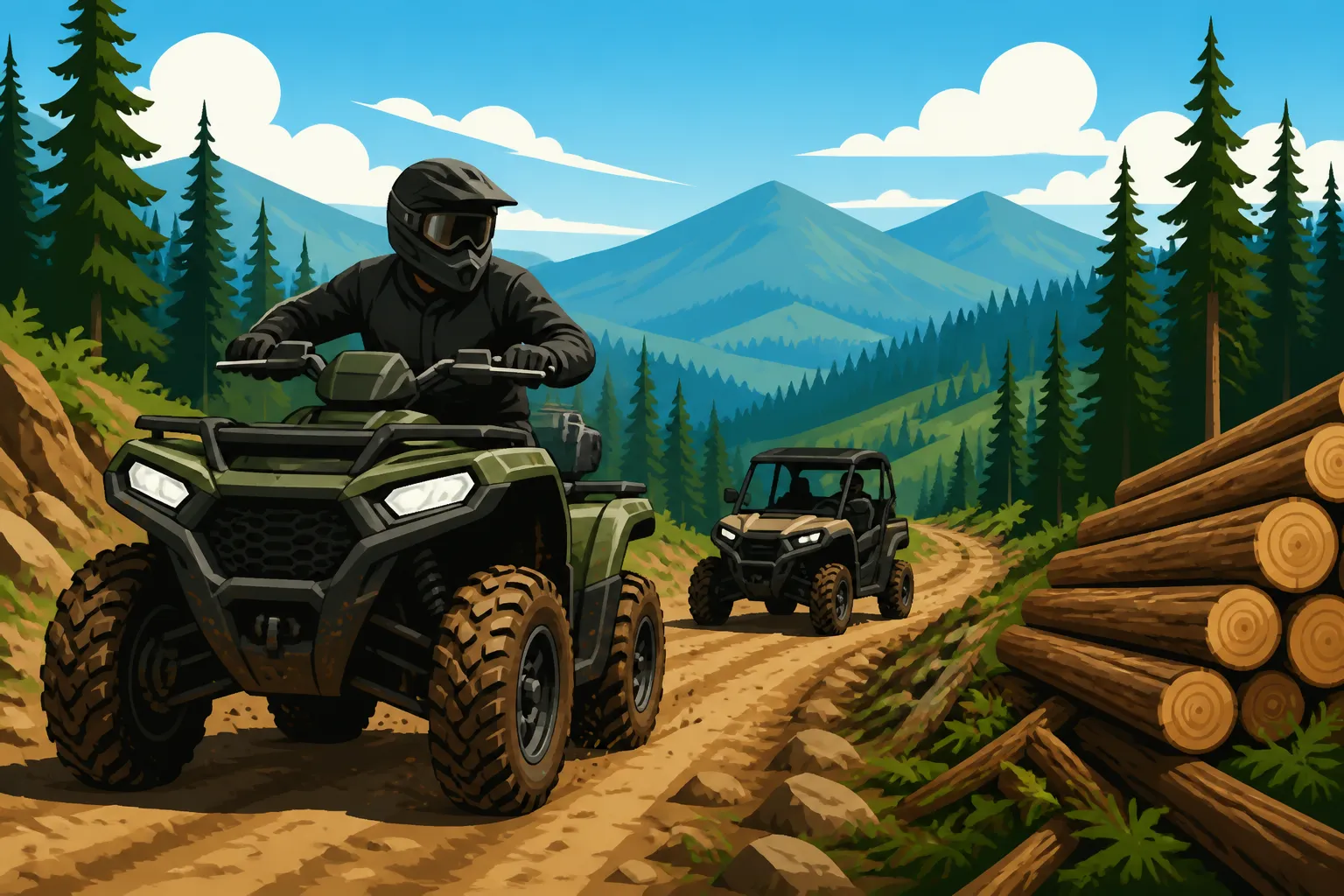
When you think of North Idaho, images of dense forests, towering pines, and rugged mountains probably come to mind. These landscapes are crisscrossed by a vast network of logging roads, some well-maintained and heavily used, others overgrown and barely discernible. These roads are the lifeblood of the timber industry, providing access for harvesting, hauling, and forest management. For ATV and UTV riders, they represent an incredible opportunity to explore vast tracts of wilderness, access breathtaking viewpoints, and link up with miles of trails. However, the very nature of these roads—their purpose and ownership—is what creates much of the confusion for riders. They aren't always designed for recreational use, and their status can change dramatically depending on who owns the land and what activities are currently underway.
Public vs. Private Timber Land
This distinction is perhaps the most critical one to understand before you ever put a tire on a logging road. Ignoring it can quickly lead to trouble.
Public Lands (National Forests, BLM): Much of North Idaho's forested land falls under the management of the U.S. Forest Service or the Bureau of Land Management (BLM). On these public lands, many logging roads are open to OHV use, but with specific rules. The key here is the Motor Vehicle Use Map (MVUM), which we’ll dive into more deeply later. These maps are your official guide to where you can and cannot ride. Generally, if a road is designated open, you’ll need to ensure your machine is properly registered with an Idaho OHV sticker. This sticker helps fund trail maintenance and access, so it's a vital piece of the puzzle for public land riding. You can learn more about [What an Idaho OHV Sticker Costs Each Year] and [Where Idaho Sells OHV Stickers] to ensure you're compliant.
Private Timber Company Lands: This is where things get a bit more restrictive. Large timber companies own significant portions of North Idaho's forests. These are private working lands, and while some companies might allow recreational access on certain roads, others strictly prohibit it. Often, these roads are gated, clearly marked with "No Trespassing" signs, or have notices about active logging. It's not uncommon to find areas temporarily or permanently closed due to operations, fire danger, or road conditions. Always assume private land is closed unless you have explicit permission from the landowner, which is rare for individual riders on logging roads. Trespassing can lead to fines, your machine being impounded, and a significant headache, so always err on the side of caution. Remember, [Idaho Trespass Law for Riders] is enforced, and ignoring signs for private timber land can have serious consequences.
The Dynamic Nature of Logging Roads
Unlike paved roads or even dedicated recreational trails, logging roads are constantly in flux. They are built, used, maintained, and sometimes decommissioned based on timber operations. This means the road you rode last year might look completely different this year, or even next month.
Rapidly Changing Conditions: You might encounter a freshly graveled section perfect for riding, only to round the corner and find a washout that's impassable, or a section churned into a mud bog by heavy equipment. New logging areas can create deeply rutted roads, and in some cases, roads may be completely blocked by fallen trees or debris from recent operations. You might even find a bridge has been removed, making a previously passable route suddenly a dead end. This dynamic environment means that real-time information and flexibility are crucial for any logging road adventure. Checking conditions with local ranger districts or online forums before you go is always a smart move, especially during certain seasons. [Spring Runoff on Idaho Back Roads] can turn well-graded roads into impassable soup, and [Idaho Road Closures During Fire Season] can shut down entire areas with little notice.
Navigating the Rules of the Road (Literally)
So, you've identified some public logging roads you want to explore. Great! Now, what do you need to have in order to legally and safely traverse them? The rules can feel like a patchwork quilt because they often depend on the specific land manager (Forest Service, BLM, State Land, County), and whether the road in question is also considered a county road or public highway. It’s not always a simple answer, which can be a major source of frustration for riders just trying to enjoy the outdoors.
Essential Paperwork and Equipment
To avoid a run-in with law enforcement or a Forest Service ranger, make sure you have these basics covered.
Idaho OHV Sticker: This is non-negotiable for riding on any designated public OHV trail or road in Idaho, including most logging roads on Forest Service or BLM land. The sticker signifies that you've contributed to the maintenance of these areas and that your machine meets basic state requirements. It's a simple, affordable item that prevents a hefty fine. You should always display it prominently on your machine.
Driver's License and Restricted Vehicle Plate: This is where it gets a little trickier, especially if your logging road adventure involves crossing or riding on county roads. If you plan to connect trails via county roads, or if a logging road itself is also designated as a county road open to OHVs, you'll need a valid driver's license. Additionally, your ATV or UTV will need to be equipped for street legality with an Idaho Restricted Vehicle Plate (R Plate). This plate signifies your machine meets basic requirements like headlights, taillights, brake lights, mirrors, and a horn. These are crucial if you're mixing with regular traffic, even on quiet gravel roads. You can learn more about [Idaho's Restricted Vehicle Plate Explained] and [What Idaho's $3 Restricted Use Plate Covers] to understand its full scope. Many riders upgrade their machines with accessories from companies like SuperATV, adding turn signals, mirrors, or full cab enclosures, which not only enhance safety and comfort but also help meet those road-legal requirements.
Insurance and Safety Gear: Liability insurance is often a requirement if you're venturing onto any roads open to licensed vehicle traffic, even those remote logging roads that double as county routes. This protects you in case of an accident. Check out [Liability Insurance Idaho Road Riding Requires] for more details. Furthermore, safety gear is paramount. Helmets are required for all riders and passengers under the age of 18, and eye protection is always a good idea for everyone, especially on dusty logging roads. Your machine also needs a proper spark arrester to prevent forest fires, and an adequate muffler to keep noise levels down. Bright headlights and taillights are vital, particularly if there’s any chance of riding in low light conditions or if you're trying to be visible to industrial traffic. Many riders find that high-quality LED light bars or auxiliary lighting, like those offered by SuperATV, significantly improve visibility and safety in the backcountry. For deeper insight into sound requirements, consider [Mufflers and Spark Arresters].
Understanding Access Rules and Closures
Knowing what you need on your machine is one thing; knowing where you can actually ride it is another.
Motor Vehicle Use Maps (MVUMs): For public lands (National Forests, BLM), the MVUM is your absolute best friend. These are official, agency-issued maps that clearly designate which roads and trails are open to motorized use, what types of vehicles are allowed (e.g., 50-inch restriction, full-size vehicles), and any seasonal closures. They are updated regularly, so always make sure you have the most current version. You can usually find them for free at Forest Service or BLM ranger stations, or download them online. Never rely on general-purpose maps or old information; MVUMs are the definitive source. Understanding [Reading an Idaho Motor Vehicle Use Map] is a skill every backcountry rider should cultivate.
Private Land "No Trespassing" and Permits: As mentioned earlier, private timber lands are not generally open for recreational OHV use without explicit permission. If you see gates, "No Trespassing" signs, or signs indicating private property, respect them. Some timber companies occasionally issue permits for specific activities (like hunting access), but this is not typical for general OHV riding on their logging roads. When in doubt, stay out. The legal repercussions aren't worth the risk.
Seasonal Closures and Active Logging: Beyond private property, even public logging roads can experience seasonal or temporary closures. These are often due to:
- Fire Season: During hot, dry periods, roads and entire areas may close to reduce the risk of wildfires. [Idaho Road Closures During Fire Season] are common and strictly enforced.
- Winter/Spring Mud: Roads can become impassable or severely damaged by OHV use during wet periods, leading to closures to protect the roadbed and water quality.
- Active Logging Operations: This is paramount. If you encounter active logging (log trucks, heavy machinery, freshly cut areas), you MUST turn around and find an alternate route. These are dangerous industrial zones, and you are putting yourself and logging crews at extreme risk by entering them. There are no exceptions to this rule. Always give way to logging equipment and remember they are working, often under tight schedules.
Here's a quick comparison of general access rules for public and private logging roads:
| Feature | Public Forest Service / BLM Roads | Private Timber Company Roads |
|---|---|---|
| Primary Purpose | Forest management, public access, recreation | Timber harvesting, industrial operations |
| General OHV Access | Generally allowed on designated routes (check MVUM) | Generally restricted, often prohibited (private property) |
| Required Paperwork | Idaho OHV Sticker, sometimes Restricted Plate for road sections | Explicit permission/permit from landowner (rare for general riding) |
| Closures | Seasonal (fire, mud), temporary for forest operations, MVUM updates | Frequent (active logging, fire, road conditions, landowner discretion) |
| Signage | MVUMs, road numbers, informational signs, occasional closure signs | "No Trespassing," "Private Property," "Active Logging," gates |
| Industrial Traffic | Possible (Forest Service vehicles, contractors) | Frequent (log trucks, heavy equipment) – ALWAYS YIELD |
| Permit/License | Idaho OHV sticker for machine, driver's license for road riding | None typically available for public OHV riding |
Safe and Respectful Riding Practices on Logging Roads
Logging roads aren't your typical groomed recreation trails. They are working thoroughfares, and treating them with respect—and a healthy dose of caution—is essential for everyone's safety, including yours. It's frustrating to encounter unexpected hazards or industrial traffic, but being prepared and riding defensively can make all the difference.
Sharing the Road with Industrial Traffic
This is arguably the most critical aspect of riding logging roads in North Idaho. These aren't private playgrounds; they're bustling industrial corridors.
Log Trucks and Heavy Equipment: These vehicles are enormous, heavy, and often moving at considerable speed. They have massive blind spots, and their drivers are focused on their work, not necessarily on spotting a small OHV around a blind curve. Always assume a log truck is just around the next bend. When you see one, or even hear one approaching, pull over immediately to the side of the road, give them plenty of space, and wait for them to pass. They always have the right of way. If you’re riding a side-by-side, consider adding a visibility flag to your machine, especially if you have a roof or cab enclosure that might make you less noticeable on the horizon. Companies like SuperATV offer a range of sturdy flags and mounts that can increase your presence on these roads. Their aftermarket mirrors can also help you keep an eye out for approaching traffic.
Communication and Visibility: In some actively logged areas, industrial operators may use CB or GMRS radios to communicate their location and direction of travel. While it's not strictly required for recreational riders, having a radio and monitoring common channels can be a huge safety advantage. Always ride defensively, especially on blind curves, at intersections, and over hillcrests. Keep your headlights on, even during the day, to maximize your visibility.
Dust and Visibility: Logging roads, especially during dry summer months, can produce immense amounts of dust. This isn't just an annoyance; it's a serious visibility hazard. If you're following another vehicle or riding in a group, leave plenty of space to allow the dust to settle. If you encounter oncoming traffic, slow down, pull to the side, and wait for the dust cloud to clear before proceeding. Breathing in excessive dust isn't good for you or your machine, so consider dust masks or helmets with good filtration. For more on this, see [Dust on a Dry Gravel Road].
Speed Limits and Control: Even if there isn't a posted speed limit, logging roads often have conditions that necessitate a slow, cautious pace. Loose gravel, potholes, washouts, and unexpected dips can all throw you off balance. Always ride within your skill level and be prepared to stop or swerve quickly. Maintaining a reasonable speed also gives you more time to react to oncoming traffic or hazards. Consider the dangers of [Speed on an Idaho County Road] even on seemingly empty backroads.
Environmental and Community Stewardship
Being a responsible rider means more than just following the rules; it means being a good steward of the land and a respectful neighbor.
Stay on Designated Trails/Roads: This cannot be stressed enough. Logging roads and designated trails are established routes for a reason. Riding off-trail can damage fragile ecosystems, disturb wildlife, spread noxious weeds, and create erosion. It also blurs the lines between legal and illegal riding areas, making it harder for land managers to maintain access. Stick to the designated routes, and remember that [Penalties for Riding Off the Trail] are in place for a reason.
Pack It In, Pack It Out: Whatever you bring into the backcountry, bring it back out. This includes all trash, food scraps, and anything else you didn't find there. Leave no trace of your passage.
Respect Private Property Boundaries and Noise: Even on public lands, you might be riding near private inholdings, cabins, or rural residences. Be mindful of noise, especially early in the morning or late in the evening. Excessive engine noise can disturb residents and wildlife, leading to complaints that could jeopardize future access. Consult [Idaho Noise Rules Near Mountain Towns] for guidance on respectful riding in proximity to communities. Give wildlife ample space, and never harass animals. If you encounter cattle or other livestock, slow down and yield to them.
Carry Essential Gear: Because logging roads can take you deep into remote areas, being prepared for emergencies is vital. Always carry a first aid kit, extra water and food, tools for basic repairs, a spare tire or tire repair kit, and a way to communicate (satellite messenger if cell service is unreliable). It's also wise to have a map, compass, and GPS device. For a comprehensive list, check out [What to Carry on a Remote Ride].
Planning Your North Idaho Logging Road Adventure
Embarking on a logging road adventure in North Idaho requires more than just filling up your tank and hitting the road. Thoughtful planning can transform a potentially frustrating or even dangerous outing into an unforgettable experience. The key is preparation and leveraging the right resources.
Mapping and Navigation
Getting lost in the vastness of North Idaho's forests is a real possibility if you're not prepared. Cell service is notoriously spotty or non-existent in many remote areas, so relying solely on your phone for navigation is a recipe for trouble.
Physical Maps and Digital Tools: Always carry physical maps, such as U.S. Forest Service maps or an Idaho Gazetteer. These provide a broad overview and can be invaluable when your electronics fail. Supplement these with digital navigation tools like a dedicated GPS unit or mapping apps like onX Offroad on your smartphone or tablet. These apps often overlay MVUM data, showing you exactly where you are in relation to open and closed routes. Many riders mount their GPS devices or tablets with robust mounts from companies like SuperATV, ensuring they stay secure even on the roughest logging roads. It's crucial to download maps for offline use before you leave any area with cell service. Familiarize yourself with [onX Offroad for Idaho Trails] to get the most out of this valuable resource.
Checking Conditions: Before you head out, make it a habit to check current conditions. Contact the local Forest Service or BLM ranger district for the area you plan to ride. They can provide up-to-date information on road closures, fire restrictions, active logging operations, and recent weather impacts. Many districts have websites or social media pages where they post alerts. This simple step can save you hours of backtracking or prevent you from unknowingly entering a dangerous area.
Best Practices for a Smooth Trip
Once your route is planned and your navigation is sorted, a few final preparations can ensure your trip goes off without a hitch.
Tell Someone Your Plans: This is a golden rule for any backcountry excursion. Inform a trusted friend or family member of your exact route, your expected return time, and who is with you. If you don't check in by your designated time, they'll know to initiate a search. This simple act could be a lifesaver, especially in areas with [Cell Dead Zones in Central Idaho]. For ultimate peace of mind, consider carrying a satellite messenger or personal locator beacon; these devices can send emergency signals even when you have no cell service, allowing you to get help when you truly need it. Explore options for [Carrying a Satellite Messenger Into Dead Zones].
Fuel Management and Group Riding: Logging roads can be long, with few opportunities for refueling. Always start with a full tank and consider carrying extra fuel, especially if you’re planning a multi-day trip or venturing into very remote areas. Know your machine's fuel range and plan your route accordingly. When riding in a group, establish clear communication signals, agree on a pace, and designate a lead and sweep rider. Never leave anyone behind, and always regroup at turns and intersections. [Fuel Planning for an Idaho Trail Day] is a crucial skill to develop.
Emergency Preparedness: Beyond navigation and communication, pack for contingencies. A basic tool kit for minor repairs, a tire repair kit, an air compressor, and a small shovel can get you out of many jams. Carry enough water and snacks for everyone for at least 24 hours longer than you expect to be out. A small tarp, some rope, and a headlamp are also excellent additions to your emergency kit. Being self-sufficient is paramount when help is hours, not minutes, away.
| Essential Planning Step | Details | Benefit |
|---|---|---|
| Consult MVUMs | Download or pick up current Motor Vehicle Use Maps for public lands. | Identifies legal riding routes, vehicle types, and seasonal closures. |
| Check Local Conditions | Contact ranger districts, check websites for fire danger, closures, weather. | Avoids unexpected obstacles, dangerous areas, or wasted trips. |
| Carry Multi-Format Maps | Physical maps (Forest Service, Gazetteer) & GPS/offline digital maps (onX). | Ensures navigation even if electronics fail; provides detailed route info. |
| Inform a Contact Person | Share your detailed route, timeline, and who is with you. | Critical for search and rescue if you don't return as planned. |
| Pack Emergency Gear | First-aid kit, extra water/food, tools, satellite messenger, survival items. | Self-sufficiency in remote areas; ability to call for help. |
| Manage Fuel | Start with a full tank, carry extra fuel for remote or long routes. | Prevents running out of gas miles from civilization. |
| Ride with a Group | If possible, for safety and assistance. Establish communication. | Shared resources, assistance with breakdowns, added safety. |
Following these guidelines will not only keep you safe and legal but will also help preserve access for all riders on North Idaho's incredible logging roads.
Disclaimer
This article is for general informational purposes only and does not constitute professional advice. Laws, prices and regulations vary by location and change over time. Consult a qualified professional for guidance on your specific situation.