Gas Stations That Serve Riders
There's nothing quite like the feeling of exploring Idaho's incredible backcountry on your ATV or UTV, but the worry of running on fumes when you're miles from the nearest town can quickly turn adventure into anxiety. Many riders experience that knot in their stomach, wondering if the next small town even has a gas station, let alone one that's easy to navigate with a wider side-by-side or a trailer. This guide is all about helping you understand how to effectively plan your fuel stops and confidently navigate gas stations as an off-highway vehicle (OHV) rider across our beautiful state.
The Unique Fuel Challenges of Idaho OHV Riders
Riding an ATV or UTV in Idaho is an experience like no other, offering access to some of the most stunning landscapes imaginable. However, this freedom comes with its own set of logistical challenges, particularly when it comes to fuel. We're not just driving cars here; our machines and the places we ride them present a different puzzle.
Why a Car-Centric World Doesn't Always Work for Us
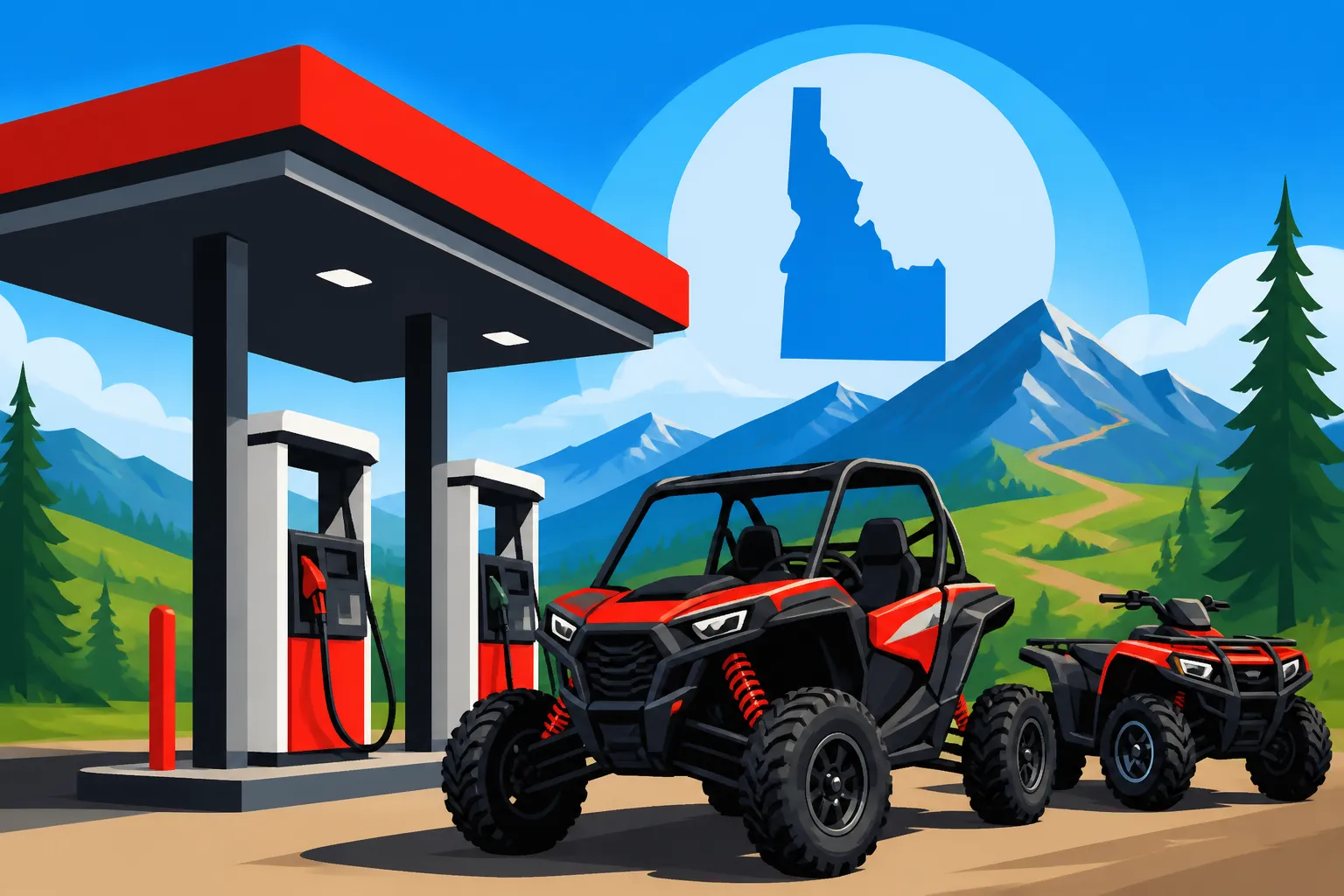
Think about it: most infrastructure, including gas stations, is built with cars and trucks in mind. Our OHVs, especially modern side-by-sides, can be wider, longer, and certainly louder than the average passenger vehicle. Pulling a trailer with multiple machines adds another layer of complexity. Many rural gas stations, while a welcome sight, often have tight parking lots, narrow pump islands, or limited space for maneuvering. It's easy to feel like you're creating a traffic jam just trying to fill up.
Beyond the physical space, there's the anxiety of being remote. Unlike highway driving where a gas station is usually just a few miles away, Idaho's backcountry can stretch for tens, even hundreds of miles, between services. That little fuel gauge flickering can induce genuine panic when you know the nearest town might be over the next mountain pass, and cell service is non-existent. Our fuel tanks are often smaller than those in a typical vehicle, meaning our range is more limited, and the need for frequent, well-planned stops is paramount.
Planning Your Fuel Stops: More Than Just a Tank Fill
Successful fuel management on an Idaho OHV trip starts long before you ever hit the trail. It's not just about looking for a gas station sign when your tank is low; it's about proactive, strategic planning. Understanding your machine's average fuel consumption and tank capacity is your first step. Do you know how many miles you can typically get on a full tank during various types of riding – cruising on forest roads versus climbing steep, technical trails? This knowledge is your most valuable tool.
Next, integrate fuel stops into your route planning. When you're poring over those [Motor Vehicle Use Map]s or using apps like onX Offroad, don't just mark trails; mark potential fuel stops. Consider the elevation changes on your route; climbing uses more fuel. Factor in potential detours or side adventures. Remember, a planned stop in a small town like Idaho City, Stanley, or Salmon isn't just for gas. It's a chance to stretch your legs, grab a snack, or check your map again, all while topping off your tank. You can’t assume every little dot on the map has fuel, so checking ahead or having a backup plan is always wise.
Finding OHV-Friendly Fuel Stops on Your Idaho Adventure
Identifying reliable fuel sources is crucial for any extended OHV trip in Idaho. While major highways offer plenty of options, our adventures often take us far from these well-trodden paths. Knowing where to look and what to look for can save you a lot of headache and keep your ride running smoothly.
Identifying Trail Towns and Their Services
The good news is that many of Idaho's smaller towns have grown to embrace OHV tourism. These "trail towns" are often situated at the nexus of popular trail systems and understand the specific needs of riders. Towns like Stanley, McCall, Salmon, and Island Park are prime examples where you'll find businesses, including gas stations, actively catering to the OHV crowd. You might see other side-by-sides parked outside the local diner, signs advertising OHV services, or even designated OHV parking areas. These are excellent indicators that the gas station in that town will likely be more accommodating to your rig.
When you're rolling into one of these towns, look for stations with larger, more open pump areas, especially those located on the outskirts of town or near major junctions rather than deep in a congested downtown core. Stations with a convenience store attached are often a bonus, providing not just fuel but also snacks, drinks, and sometimes even basic OHV supplies. Planning to base your trip out of one of these communities can simplify your logistics considerably. [Idaho Trail Towns Worth a Base Camp] are often your best bet for consistent fuel access.
Using Technology and Local Knowledge
In today's connected world, technology can be a powerful ally in finding fuel. Apps like GasBuddy or even standard mapping applications on your phone can help identify gas stations along your planned route. However, remember that [Cell Service in the Idaho Backcountry] can be spotty at best. Download maps offline before you leave home. Websites for local chambers of commerce or tourism boards in OHV-friendly areas sometimes list services specifically for riders.
Beyond apps, don't underestimate the power of local knowledge. Chatting with other riders at a trailhead, asking staff at a local outfitter, or even stopping in a small-town cafe can yield invaluable insights into where the best fuel stops are, which ones carry ethanol-free gas, or if there's a particular station that's known for being easy to get in and out of with a large rig. Sometimes, the most reliable information comes from those who ride these trails every weekend.
Practical Tips for Fueling Your Machine in Trail Towns
Once you've identified a gas station, the actual process of fueling your OHV still requires a little thought and consideration. It’s not just about pulling up to the pump; it’s about doing so efficiently, safely, and with respect for other patrons.
Navigating the Station and Your Machine
Many modern side-by-sides are wider than a compact car, and if you're pulling an ATV trailer, you've got a significant footprint. Approach gas stations cautiously. Look for the pumps that are easiest to access, often those furthest from the main entrance or on the corners of the lot. Avoid trying to squeeze into tight spots, especially if the station is busy. It's almost always better to park a little further out and walk a few extra steps if it means you can maneuver your machine safely and without blocking traffic.
If you have a wider side-by-side, consider pulling into a pump that allows you to easily exit without having to do a complicated reverse maneuver. If you're towing a trailer, it might be more practical to unhook the trailer and park it in a designated area (if available) before pulling your OHV to the pump. This makes turning and exiting much simpler. Keep an eye out for potential hazards like bollards, tight turns, or low awnings that might scrape taller machines or those with aftermarket roll cages. For practical advice on where to park your rig while you fuel up or grab supplies, check out [Parking a Side-by-Side on an Idaho Main Street].
Fuel Types and Your OHV's Needs
This is a critical point for OHV riders. Not all fuels are created equal, and your machine likely has specific needs. Most modern ATVs and UTVs are designed to run perfectly fine on regular unleaded gasoline (85-87 octane). However, a significant concern for small engines, especially older ones or those that sit for periods, is ethanol. Ethanol in gasoline can corrode fuel lines, carburetors, and other components, leading to costly repairs. Many riders actively seek out "ethanol-free" gasoline, which some stations in Idaho's trail towns do carry.
Check your owner's manual for specific octane requirements. Unless your manufacturer specifies premium (91+ octane), you're likely wasting money by buying it. It won't give your engine more power or make it run cleaner if it's not designed for it. When you’re planning long rides or venturing into truly remote areas, carrying extra fuel is a smart move. For those really long stretches where gas stations are few and far between, investing in quality auxiliary fuel tanks or robust mounting systems can be a game-changer. Companies like SuperATV offer a range of solutions, from durable fuel cans designed to withstand trail conditions to ingenious racks that securely hold your extra supply, giving you peace of mind on those remote Idaho routes. Always ensure any extra fuel is stored in approved containers and secured properly. Knowing [What to Carry on a Remote Ride] includes being prepared for fuel emergencies.
Here’s a quick overview of fuel types you might encounter:
| Fuel Type | Typical Octane | Ethanol Content | Common Use for OHVs | Pros | Cons |
|---|---|---|---|---|---|
| Regular | 85-87 | Up to 10% | Most modern ATVs/UTVs | Widely available, most affordable | Ethanol can degrade fuel system components over time |
| Mid-Grade | 88-90 | Up to 10% | Some specific models | Slightly higher octane for certain requirements | Still contains ethanol, often unnecessary |
| Premium | 91-93 | Up to 10% | High-performance OHVs | Recommended for high-compression engines | More expensive, can be wasteful if not required |
| Ethanol-Free | Varies (87-91) | 0% | All OHVs, especially older ones or for storage | Protects fuel systems, extends fuel life, better for small engines | Less common to find, usually higher price point |
Beyond the Pump: Services and Etiquette at Trailside Gas Stations
A gas station in a trail town is more than just a place to fill up; it's often a hub for quick supplies, a brief respite, and an opportunity to connect with the local community. How you conduct yourself during these stops reflects on all OHV riders.
More Than Just Gas: Snacks, Supplies, and Restrooms
When you pull into a gas station after hours on the trail, it's a chance to refuel yourself as much as your machine. These places often serve as mini-convenience stores, offering a treasure trove of snacks, cold drinks, and sometimes even hot food options. It's a perfect opportunity to grab that much-needed candy bar, a cold soda, or a bottle of water to rehydrate. Don't forget any last-minute essentials you might have overlooked, like bug spray, sunscreen, or even a basic first-aid item. Many trail towns also have small grocery stores or cafes nearby, so fueling up can coincide with a quick meal. For instance, if you're riding near a place like Salmon, you might consider [Riding to a Restaurant in Salmon] for a proper sit-down meal after you've topped off your tank.
Always make use of the restrooms if they're available. It’s a civil amenity that’s much appreciated, especially after miles of bumping down dusty roads. Remember to leave them as you found them, clean and tidy, showing respect for the business and other customers. These small gestures contribute positively to the perception of OHV riders in these communities.
Being a Good Ambassador for the OHV Community
Our machines, by their nature, can be noisy and dusty. When pulling into a gas station, be mindful of those around you. Keep your engine idling at a reasonable level, or better yet, turn it off while you're fueling and inside the store. Excessive revving or loud aftermarket exhausts can be irritating to residents and other customers. Respect [Idaho Noise Rules Near Mountain Towns], especially in residential areas or small town centers. We want to be welcomed, not seen as a nuisance.
Park thoughtfully. Avoid blocking gas pumps for extended periods, especially if others are waiting. If you're just running inside for a snack, move your machine to a designated parking spot or an out-of-the-way area if the pumps are busy. Clean up after yourself; don't leave mud, trash, or other debris in the parking lot. A gas station stop is a public interaction, and every rider is an ambassador for the entire OHV community. By being courteous, clean, and considerate, you help foster a positive relationship between riders and the towns that welcome us. Before you head out, always remember [What Idaho Riders Need Before They Ride] to ensure you're prepared for any interaction on the trail or in town.
Disclaimer
This article is for general informational purposes only and does not constitute professional advice. Laws, prices and regulations vary by location and change over time. Consult a qualified professional for guidance on your specific situation.