Do You Need a Driver’s License to Ride an Idaho Road?
It's a common question that pops up in nearly every conversation about off-roading in Idaho: "Do I really need a driver's license to ride my ATV or side-by-side on the road?" The simple answer might surprise or even frustrate some riders who are used to hitting the trails without a formal license. But when you venture onto Idaho's public roads, even those seemingly quiet county gravel routes, the rules shift dramatically, and understanding these changes is crucial to avoid tickets, ensure safety, and comply with state law. This guide will walk you through everything you need to know about driver's license requirements for off-highway vehicles (OHVs) on Idaho roads.
The Core Requirement: Driver's License for Road Use in Idaho
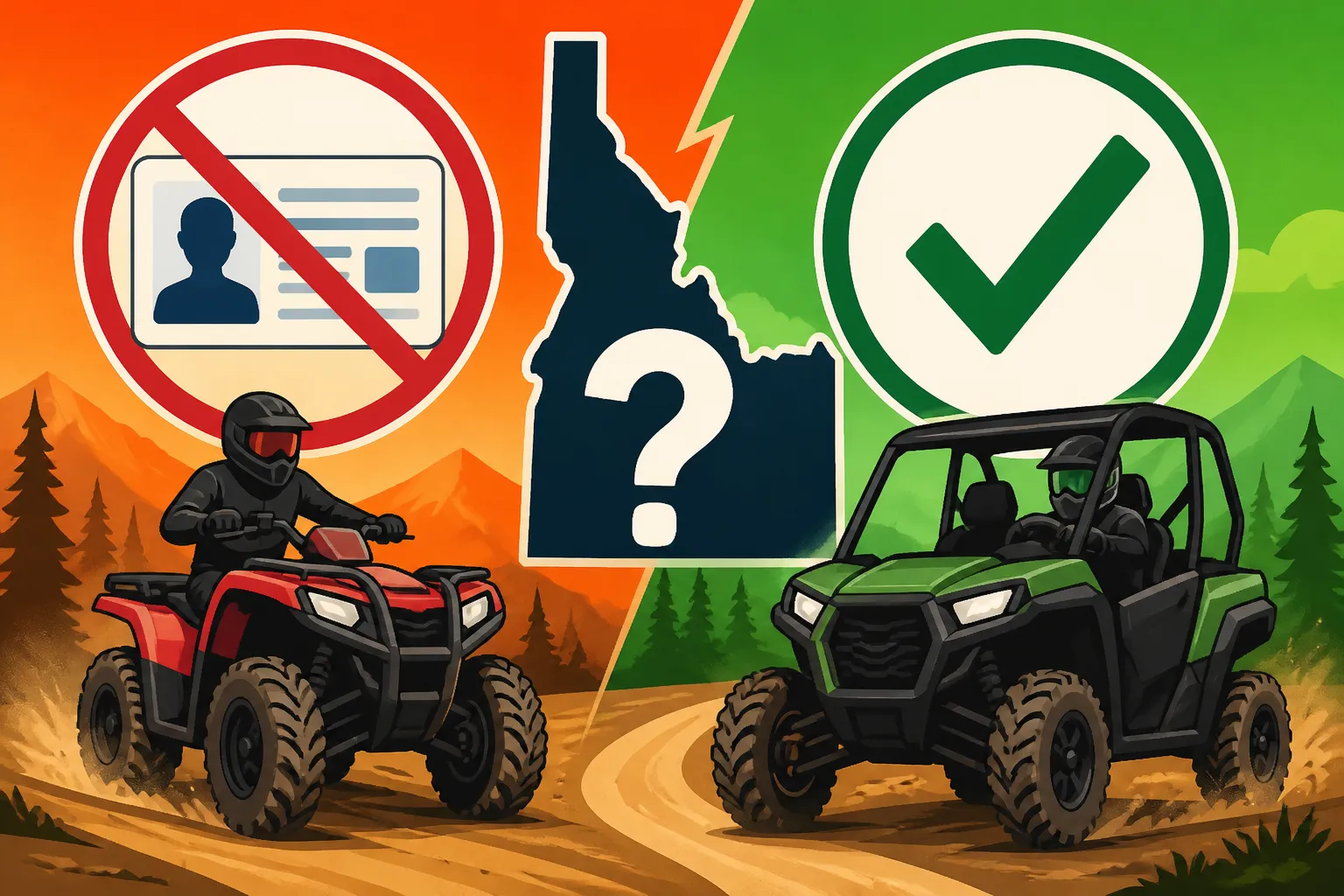
Let's get right to the heart of the matter: if you plan to operate your ATV or side-by-side on any public road in Idaho where OHVs are permitted, you absolutely need a valid driver's license. This isn't a suggestion; it's a legal requirement designed to ensure that anyone operating a motor vehicle on a public roadway possesses a fundamental level of driving knowledge and experience. The state treats your OHV as a vehicle when it's on a public road, and that means the same basic licensing standards apply as if you were driving your car or truck.
Why It's Not Like the Trail
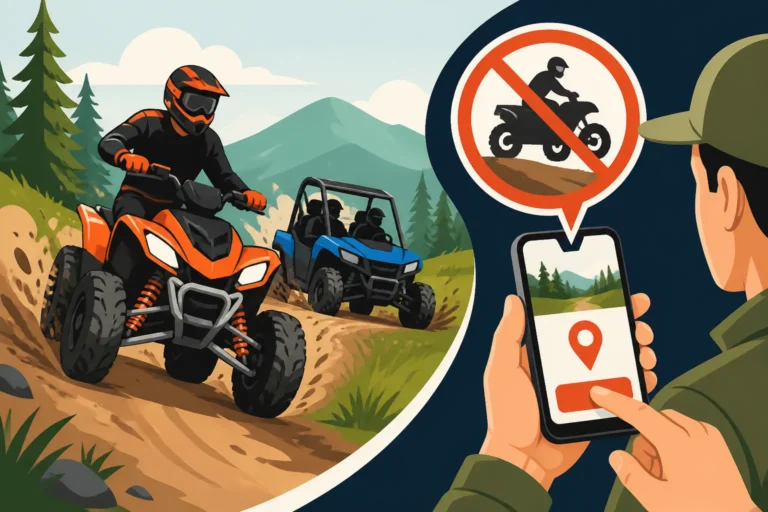
Many riders are accustomed to the freedom of the trails, where in many cases, a driver's license isn't a prerequisite for operation, especially on designated OHV routes on public lands. This distinction is vital. On private property, or within an established, managed OHV park, the rules are often tailored specifically for off-road recreation, focusing more on machine suitability and rider safety gear. However, the moment your tires touch a public road – even a dirt or gravel one – you're entering a different jurisdiction with a different set of expectations. Public roads are shared spaces, and the rules are in place to manage diverse traffic, from farm equipment to passenger cars to, yes, OHVs. The state needs assurance that all operators sharing these spaces understand traffic laws, right-of-way, and safe operating practices.
Imagine pulling out of a trailhead onto a county road. You might be focused on the next turn or the dust cloud behind your buddy. But now, you're not just dealing with natural obstacles; you're sharing the space with potentially oncoming vehicles, pedestrians, cyclists, and mail carriers. The skills learned to navigate a technical trail are different from those required to safely merge into traffic or make a legal turn. That's why the state requires a standard driver's license – it's a baseline for road competence.
Minimum Age and License Types
To legally operate an OHV on an Idaho public road, you must possess a valid driver's license issued by Idaho or another state. This means you need to be at least 16 years old and have passed the required tests for a standard driver's license. A learner's permit, for example, typically won't suffice on its own for operating an OHV on a public road, as permits often require a licensed driver to be in the vehicle or immediately present. [Driver's License Requirements on Idaho Roads] provides more detail on this.
The type of driver's license required is generally a standard Class D (operator's) license, the same one you'd use to drive your everyday car. You don't usually need a special motorcycle endorsement or commercial driver's license unless you're operating an OHV that falls under different classifications for specific purposes. The key is that it must be current, valid, and not suspended or revoked. Carrying your physical license with you when you ride on roads is also a must, as law enforcement may ask to see it during a stop.
Supervised Riding for Younger Operators
Idaho law has specific provisions for younger riders, particularly concerning trail use. However, when it comes to riding on public roads, the driver's license requirement for OHV operators generally means the age minimum is effectively 16, just like for any other vehicle. While a 12-year-old with a valid OHV safety certificate can often ride on designated trails, this privilege does not extend to public roadways if they do not possess a valid driver's license.
There can be limited exceptions for supervised riding on specific road types, such as some Forest Service or BLM roads that might be interpreted more like trails in certain contexts, but these are highly localized and can be subject to local ordinances or specific agency rules. For the vast majority of county roads and other public thoroughfares where OHVs are permitted, if you're operating the machine, you need a driver's license, regardless of who is supervising you. Parents need to be especially mindful of [Idaho Rules for Riders Under 16 on Roads] and understand that the "300-foot rule" for supervision on trails doesn't typically negate the driver's license requirement on public roads.
Idaho's "Restricted Use" Plate and What It Means for Your License
Idaho offers a special "Restricted Use" plate, often referred to as an "R plate," for OHVs. This plate is a game-changer for riders looking to legally access many county and secondary roads, allowing them to connect trails or reach amenities. However, it's crucial to understand that obtaining and displaying this plate does not, in any way, waive the requirement for the operator to have a valid driver's license when on those roads.
The Plate as a Permit, Not a License Waiver
Think of [Idaho's Restricted Vehicle Plate Explained] as a special permit for your machine, not for you as the operator. The plate indicates that your OHV meets specific equipment standards (like having headlights, taillights, brake lights, mirrors, and a horn) and that you've paid the necessary fees to grant the machine legal access to designated public roads. It's permission for the OHV to be there.
However, the state still expects the person operating that OHV to be legally qualified to drive a motor vehicle on a public road. So, while the R plate gets your side-by-side onto that gravel road, your driver's license gets you behind the wheel legally. Without both, you're still in violation. This distinction is often a point of confusion for riders, leading to unexpected tickets.
The Importance of a Valid Driver's License With the Plate
Operating an OHV with an R plate on an Idaho road without a valid driver's license is akin to driving your pickup truck down that same road without a license, even if your truck has valid registration and insurance. The R plate signifies the machine's compliance, but your driver's license signifies your compliance as an operator. Law enforcement officers patrolling these routes will check for both.
When you're stopped, they'll verify that your OHV has its current OHV sticker and, if applicable for road use, an R plate. Then, they'll ask for your driver's license and proof of insurance. If any of these elements are missing, you could face citations. [Driver's License and Insurance on an Idaho Road Ride] details how critical carrying both is. The R plate opens up a world of road-connecting possibilities, but only for licensed drivers.
Equipment Requirements Beyond the License
Beyond the driver's license, having an R plate means your OHV must be properly equipped to be considered "street legal" on these designated roads. This includes, but isn't limited to:
- Headlights and Taillights: Operational and visible from required distances.
- Brake Lights: Functioning properly when the brakes are applied.
- Mirrors: At least one rear-view mirror, typically mounted to offer a clear view of traffic behind. Many riders choose aftermarket options from companies like SuperATV for durability and better visibility. [Mirrors on a Road-Legal Side-by-Side] offers more insight.
- Horn: An audible warning device.
- Turn Signals: Required for indicating turns, though sometimes hand signals are permitted if your machine is not equipped. However, having dedicated turn signals, often part of an aftermarket kit from a brand like SuperATV, significantly enhances safety and clarity for other road users. [Turn Signals on an Idaho Restricted Vehicle] covers this.
- Muffler and Spark Arrester: To control noise and prevent wildfires.
- Safety Belts: If the machine was originally equipped with them.
While you don't need a driver's license to purchase or install these upgrades, they are fundamental for the OHV to meet the standards the R plate signifies. The R plate itself doesn't grant you a license; it just allows a properly equipped machine, operated by a licensed driver, onto certain public roads.
Exceptions and Nuances: When a License Might Not Be Required (or Rules Differ)
While the general rule is "license required for public roads," Idaho's diverse landscape and varying land uses mean there are a few scenarios where the rules might bend or specific exemptions apply. It's crucial to understand these nuances, as misinterpreting them could still lead to problems.
Private Land and Agricultural Exemptions
Perhaps the most straightforward exception is riding on private property. If you own the land, or have explicit permission from the landowner, you generally do not need a driver's license to operate an OHV on that private property. The state's public road laws simply don't apply there. This includes your own ranch, farm, or undeveloped acreage.
Idaho also provides certain [Idaho Agricultural Road Exemptions] for OHVs being used strictly for agricultural purposes on public roads, primarily for traversing between fields or accessing parts of a farm operation. In these very specific instances, the driver's license requirement might be modified or waived, but the machine must be clearly identifiable as farm equipment and used exclusively for farm work. This isn't a loophole for recreational riding; it's a narrowly defined exemption for essential agricultural activities. If you're using your UTV for plowing snow on your property, a license isn't an issue. If you're taking that same UTV down the county road to pick up supplies, you'll need one.
Crossing a Highway: Brief Encounters With Pavement
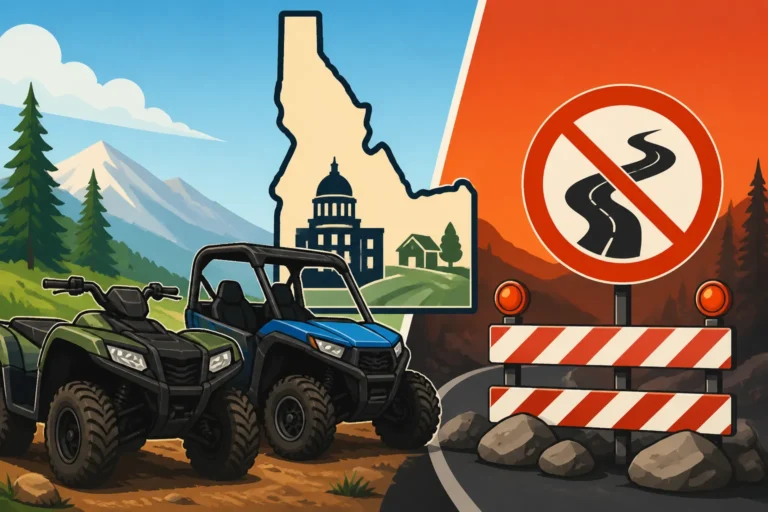
What about those moments when an OHV trail or county road requires you to briefly cross a paved state highway or even a U.S. highway? Generally, [Can You Ride an OHV on an Idaho State Highway?] is a resounding "no," and federal highways are also off-limits. However, Idaho law does permit OHVs to cross state or federal highways at an intersection, but this is a very specific maneuver, not an opportunity to ride on the highway.
When making such a crossing, you must yield to all traffic, come to a complete stop, and proceed only when it's safe to do so. Critically, during this brief crossing, the operator still needs a valid driver's license. The crossing is a specific, limited allowance, and all other road rules, including licensing, remain in effect. It's about minimizing the time spent on prohibited roadways, not about creating an exception for unlicensed drivers.
Specific County Ordinances and Variations
Idaho state law sets the baseline, but individual counties, and sometimes even cities, have the authority to create their own ordinances regarding OHV access on local roads. While a county can open roads to OHVs, they typically cannot override the state's requirement for a driver's license. So, while [Idaho Roads Open by Default to Restricted Vehicles] might be a great starting point, always check local rules.
It's common for counties to define which specific roads or classes of roads are open to OHVs, set speed limits, or even restrict access during certain times of the year. For example, one county might permit OHVs on all gravel roads, while a neighboring county might only allow them on specific designated routes. Regardless of these local variations, the requirement for the operator to hold a valid driver's license when riding on any public road typically remains consistent. Always check with the local sheriff's office or county planning department for the most current information on local OHV ordinances before heading out.
| Scenario for OHV Use | Driver's License Required? | Idaho OHV Sticker Required? | Restricted Use Plate Required? |
|---|---|---|---|
| Designated OHV Trail | No (unless age 16+ for certain machines, or specific exceptions) | Yes | No |
| Private Land (with permission) | No | No | No |
| Idaho County Road (OHV permitted) | Yes (for all operators) | Yes | Yes (if road-legal) |
| Crossing a State/Federal Highway | Yes (for all operators) | Yes | Yes (if road-legal) |
| Agricultural Use on Public Road | Usually No (with strict exemptions) | Often No (farm exemption) | No (farm exemption) |
| Forest Service Road (Open to OHVs) | Yes (unless specifically designated "trail" where license isn't needed) | Yes | Yes (if specified for road) |
Consequences of Riding Without a License on Idaho Roads
Ignoring the driver's license requirement for OHV road use in Idaho can lead to a host of unpleasant consequences, ranging from immediate legal penalties to long-term financial headaches. It's not just about getting caught; it's about the broader implications for your safety and legal standing.
Potential Fines and Citations
If you're stopped by law enforcement while operating an OHV on an Idaho public road without a valid driver's license, you're likely facing a citation. Operating a motor vehicle without a valid license is a serious offense, and the fines can be substantial. [Idaho Fines for Illegal Road Riding] can include penalties for other violations that might be discovered during the stop, such as an expired OHV sticker or a machine that doesn't meet the equipment standards for road use.
Beyond the initial fine, there's the possibility of your OHV being impounded, which adds towing and storage fees to your financial burden. Furthermore, such a violation could impact your driving record, potentially leading to increased insurance premiums for your other vehicles or even the suspension of future driving privileges. It's simply not worth the risk.
Insurance Implications
This is where things can get particularly complicated and costly. Most insurance policies, whether for your OHV or your personal auto policy, have clauses about legal operation. If you're involved in an accident while operating your OHV on a public road without a valid driver's license, your insurance company could deny your claim. They might argue that you were operating the vehicle illegally, thereby voiding coverage.
Imagine an accident where you're at fault, and you don't have a license. You could be personally liable for all damages, including medical bills for injured parties and repairs to their vehicles, which can quickly add up to tens or even hundreds of thousands of dollars. Even if you aren't at fault, your ability to recover damages for your own machine or injuries might be severely hampered if you were operating without a license. This potential financial catastrophe far outweighs the convenience of not getting a license. [Insuring an ATV in Idaho] is important, but that coverage is predicated on legal operation.
Safety and Responsibility
Ultimately, the driver's license requirement is in place for public safety. Operating any motor vehicle on a public road, be it a car or an OHV, demands a certain level of skill, awareness, and adherence to traffic laws. A driver's license signifies that you've demonstrated at least a basic understanding of these principles.
Riding an OHV without a license on roads also carries a significant ethical responsibility. You're putting yourself, your passengers, and other road users at undue risk. In the event of an accident, particularly if injuries are involved, the legal ramifications and moral burden for an unlicensed driver can be immense. Adhering to the license requirements is a fundamental part of being a responsible rider and ensuring that OHVs continue to have a positive reputation for access in Idaho. The laws, including those for [Idaho Penalties for Reckless Riding], aim to foster a safer environment for everyone.
Disclaimer
This article is for general informational purposes only and does not constitute professional advice. Laws, prices and regulations vary by location and change over time. Consult a qualified professional for guidance on your specific situation.