Plated Jeeps and Idaho OHV Stickers
It's a common head-scratcher when you're gearing up for a backcountry adventure in Idaho: you've got your trusty Jeep, it's got a license plate, and it's perfectly legal on the street. But as you look at those gnarly forest roads and rocky trails, a question pops up – does this street-legal rig also need an Idaho OHV sticker? It's a point of confusion for so many, blurring the lines between what's considered a regular vehicle and an off-highway one. This guide will cut through the fog, explaining exactly when and why your plated Jeep might or might not need that little sticker to stay on the right side of Idaho's rules.
Understanding Idaho's OHV Sticker System
Idaho takes its off-highway vehicle (OHV) program seriously, and for good reason. Our state boasts an incredible network of trails and backcountry roads, and the fees from those little stickers are what help maintain them, build new ones, and keep our wild spaces accessible. But the system can be a bit opaque if you're not deeply entrenched in it, leading many to wonder about their particular machine.
What an OHV Sticker Really Means
At its heart, an Idaho OHV sticker is a user fee. It's not a registration in the same way your car's license plate is; rather, it's a permit to operate on specific public lands, trails, and, in some cases, designated county roads. Think of it as your passport to Idaho's expansive trail system. The money collected goes directly into the Idaho Parks and Recreation Department's OHV Fund, which then gets distributed for trail grooming, signage, mapping, and general upkeep. It’s a vital contribution to keeping our favorite riding areas pristine and accessible. [Where Idaho Sells OHV Stickers]
This sticker is explicitly for off-highway use. It signifies that your machine is contributing to the trails it uses. Without it, you’re essentially getting a free ride on a system funded by other users, which can lead to penalties if you’re caught. It’s all about shared responsibility for the resources we all enjoy, from the high mountain passes to the desert trails.
Which Machines Typically Need a Sticker
Generally speaking, any motorized vehicle designed for off-highway use that operates on Idaho's public lands needs an OHV sticker. This includes your standard ATVs (all-terrain vehicles), UTVs (utility terrain vehicles, often called side-by-sides), off-road motorcycles (dirt bikes), and sometimes even snowmobiles (though they have their own specific sticker). The key descriptor here is "off-highway design." These machines are built with rugged suspension, knobby tires, and often lack many of the features required for legal street operation, such as turn signals, rearview mirrors, or DOT-approved tires and windshields. [Machines Idaho Requires a Title For]
The rules are pretty clear for these dedicated off-highway machines. If you're riding a quad through the Danskin Mountains or navigating your side-by-side up the Lolo Motorway, that sticker needs to be prominently displayed. It's the universal sign that you're a responsible user and contributing to the network. Even if you only ride a few times a year, that sticker ensures the trails are there for you when you want them.
The Difference: Plated Vehicles vs. OHVs
The real complexity arises when you start talking about vehicles that can go off-road but are primarily designed for, and legally registered for, highway use. This is where Jeeps, full-size pickups, and other "street-legal" 4x4s enter the conversation, creating a distinct category from what Idaho typically defines as an OHV.
When a Jeep is Just a Car (and When it's an OHV)
A Jeep, or any other full-size vehicle like a Toyota Tacoma or Ford Bronco, when registered with a standard license plate, is considered a "motor vehicle" in Idaho – just like any other car or truck on the highway. It's built to meet federal highway safety standards, has all the necessary lights, mirrors, and equipment, and pays road use taxes through its fuel purchases and registration fees. When you drive your plated Jeep to the grocery store, nobody is asking for an OHV sticker.
However, the moment that plated Jeep leaves the pavement and ventures onto a trail specifically designated for OHV use, the lines can blur in people's minds. The critical distinction for Idaho's sticker program isn't just about where you're driving, but what kind of vehicle you're driving, as defined by its primary purpose and registration. If your vehicle is plated for highway use, it's generally not considered an OHV in the context of the sticker requirement. Think of it this way: your sedan technically can drive on a dirt road, but it's still a car, not an OHV. The same principle applies, albeit with more capability, to your Jeep.
The Legal Line in Idaho Sand
Idaho law defines an "off-highway vehicle" as a motor-driven vehicle designed to travel over any terrain, self-propelled, and having an unladen weight of two thousand five hundred pounds (2,500) or less, or a width of fifty inches (50) or less. This definition primarily targets smaller, purpose-built machines like ATVs, UTVs, and dirt bikes. Larger, heavier vehicles like Jeeps, even modified ones, typically exceed these weight and width parameters for the OHV definition, and crucially, they are registered as "motor vehicles" for road use.
This distinction is fundamental. A vehicle registered as a street-legal motor vehicle—meaning it has a standard, non-restricted license plate—is already paying its way into the system through standard vehicle registration and fuel taxes. These funds contribute to road maintenance, including many of the unpaved forest and county roads that Jeeps commonly use. The OHV sticker, on the other hand, is specifically for those smaller, lighter machines that don't contribute to the road fund in the same manner and operate on a different, often more narrow, trail system. [Idaho Plates That Begin With R]
Do Plated Jeeps Need an Idaho OHV Sticker? (The Core Answer)
Alright, let's get to the bottom of the burning question that brings so many to this article. It's a common point of confusion, especially when you see those little stickers on everything else out on the trail.
The Specific Idaho Requirement
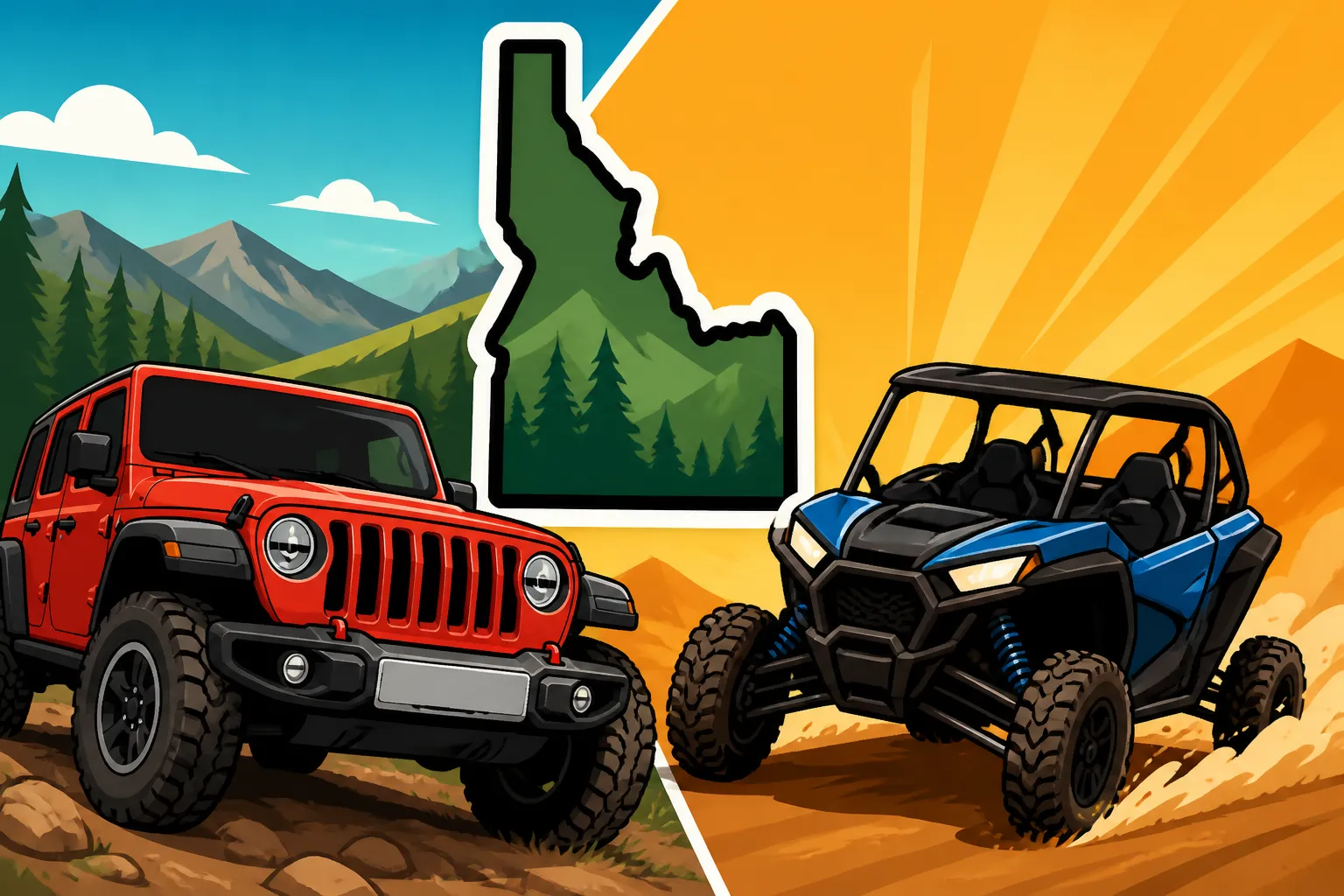
Here's the direct answer, plain and simple: A vehicle with a valid, current Idaho license plate (a standard, unrestricted plate, not a restricted vehicle plate) generally does NOT need an Idaho OHV sticker, even if you are driving it off-road on designated OHV trails or public lands.
This applies to your Jeep, your 4×4 truck, or any other full-size, street-legal vehicle that carries a standard license plate issued by the state. The reason is that these vehicles are already registered and taxed for road use, and their registration fees and fuel taxes contribute to the overall transportation infrastructure, which often includes the very unpaved roads and wider trails you’ll be exploring. The OHV sticker program is designed for vehicles that aren't street-legal or don't meet the criteria for a standard motor vehicle registration, and thus need a specific mechanism to contribute to trail maintenance. If you're driving a standard, full-size vehicle on a road that is part of a national forest system or Bureau of Land Management (BLM) land, and that road is open to traffic, your regular plate is usually sufficient. [Idaho Rules on Forest Service Roads]
Why the Distinction Matters on the Trail
The distinction between a plated motor vehicle and an OHV is more than just semantics; it reflects different regulatory frameworks and funding mechanisms. When you see a sign that says "OHV Route," it doesn't automatically mean only vehicles with an OHV sticker are allowed. It means that off-highway vehicles are permitted, alongside regular plated vehicles if the route is also considered a road open to general traffic.
The biggest reason this matters on the trail is avoiding unnecessary hassle. If you have a fully street-legal Jeep and a standard plate, a ranger or deputy who stops you on a forest road will be looking for your driver's license, vehicle registration, and proof of insurance—just like on any other road. They won't typically ask for an OHV sticker because your vehicle falls under a different category. Trying to put an OHV sticker on a plated Jeep might actually raise more questions than it answers, as it indicates a misunderstanding of the separate systems.
Practical Implications for Dual-Sport Adventures
Understanding this difference has real-world consequences for how you plan your trips and what gear you might consider for your plated rig.
Navigating Mixed-Use Trails and Roads
Idaho's backcountry is often a patchwork of different types of routes: paved state highways, gravel county roads, forest service roads, and then dedicated OHV trails. Your plated Jeep is perfectly legal on all the roads, paved or unpaved, that are open to general traffic. However, you need to pay close attention to signs. Some true OHV trails, especially those that are narrow single-track or specifically signed for machines like 50-inch ATVs, might not be suitable or even legal for wider, heavier full-size vehicles. These trails are often maintained by OHV sticker funds and are physically designed for smaller machines. [Where to Ride an ATV in Idaho]
If you're unsure, always consult a current Motor Vehicle Use Map (MVUM) for the area you're exploring. These maps are the definitive guide for what vehicles are allowed on which routes. They will clearly delineate routes open to highway-legal vehicles, routes open to OHVs (which may or may not include wider ones like UTVs or full-size Jeeps), and those that are totally closed to motorized use. Ignorance of these maps is not an excuse, and riding a heavy, plated vehicle on a trail meant for smaller machines can cause significant resource damage, leading to fines and trail closures.
Accessories for Your Plated Rig
While you don't need an OHV sticker, if you're serious about taking your plated Jeep off-road, you'll still want to equip it properly. Outfitters like SuperATV offer a huge range of aftermarket parts specifically designed to enhance off-road performance and durability for various vehicles, including Jeeps. This could mean heavy-duty suspension, bigger tires, winches, or protective armor like skid plates and rock sliders. These additions aren't about sticker compliance, but about safety, capability, and enjoying your adventure without getting stuck or damaging your rig.
For instance, if you're planning a trip down a rough forest road, robust SuperATV A-arms or heavy-duty tie rods might be invaluable, preventing costly damage. A winch is always a smart addition for self-recovery, especially if you're exploring alone. These types of accessories are for improving the experience and safety of your off-road travels, regardless of whether your vehicle needs a sticker.
Other Considerations for Plated Vehicles in Idaho's Backcountry
While the sticker question is a common one, there are other important aspects to consider when driving a plated vehicle on Idaho's trails and forest roads. These often differ from the rules that apply strictly to non-plated OHVs.
Road Access and Restricted Plates (A Comparison)
It's important to distinguish between a standard Idaho license plate and an "Idaho Restricted Vehicle Plate," often referred to as an "R plate." An R plate does require an OHV sticker and is specifically for OHVs that have been modified to meet minimal road-legal requirements (like mirrors, horn, turn signals, and a windshield) to allow them to cross or use certain county roads where permitted. The R plate essentially allows an OHV to act like a street-legal vehicle on certain roads, but it still falls under the OHV classification for sticker purposes. [Idaho's Restricted Vehicle Plate Explained]
A plated Jeep, on the other hand, is a standard motor vehicle from the outset. It doesn't need an R plate because it already has a full, unrestricted license plate. Therefore, a plated Jeep isn't subject to the same limited road use rules as an R-plated OHV; it can generally use any public road, unless explicitly closed to all traffic or to full-size vehicles due to specific restrictions (e.g., width limits on certain trails, not roads).
Enforcement and What to Expect
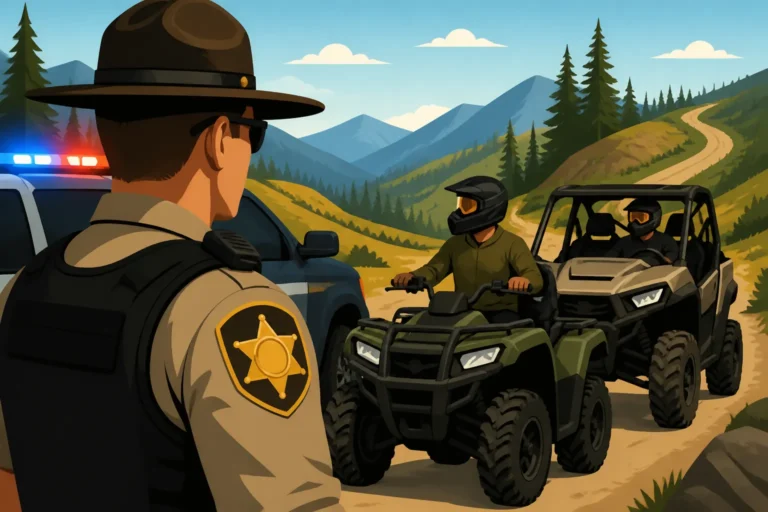
When you're out on public lands in your plated Jeep, law enforcement—whether it's a county sheriff, a state patrol officer, or a Forest Service ranger—will treat your vehicle as a standard motor vehicle. This means they'll expect you to have your driver's license, vehicle registration, and proof of liability insurance, just as if you were driving on a paved highway. [What an Idaho Deputy Asks a Rider For]
They'll also enforce standard traffic laws, such as speed limits, reckless driving prohibitions, and open container laws. What they won't typically be checking for is an OHV sticker. If they do, a polite explanation that your vehicle is a plated motor vehicle, not an OHV requiring a sticker, should clear up any confusion. Carrying your registration and insurance paperwork with you is always a good idea, as it can quickly demonstrate your compliance with the law. This approach ensures that all users, whether on dedicated OHVs or plated Jeeps, contribute to safety and responsible use of Idaho's incredible outdoor resources.
Comparing Vehicle Types and Sticker Requirements
To help clarify the differences between vehicle types and their sticker needs in Idaho, here's a quick comparison.
| Vehicle Type | Primary Design | Idaho Plate Type | Idaho OHV Sticker Required? |
|---|---|---|---|
| Jeep, 4×4 Truck (Plated) | Highway-legal motor vehicle | Standard (Unrestricted) | NO |
| ATV, UTV, Dirt Bike | Off-highway vehicle | None (or Restricted "R") | YES |
| OHV with Restricted Plate | Modified off-highway vehicle | Restricted ("R" Plate) | YES (in addition to plate) |
| Farm/Ranch Machine | Agricultural (specific use) | Often None (Exemptions) | NO (with specific use exemption) |
This table illustrates that the key differentiating factor for the OHV sticker is whether the vehicle is primarily designed and registered as a standard, unrestricted highway-legal motor vehicle, or if it's an off-highway vehicle by design.
Disclaimer
This article is for general informational purposes only and does not constitute professional advice. Laws, prices and regulations vary by location and change over time. Consult a qualified professional for guidance on your specific situation.